Planters
Planters and Pots for Apartment Plants
A pot decides how fast the mix dries, how much the whole thing weighs and whether the surface underneath survives. Everything else about it is styling.
By Scooter M., enthusiast · Published · Last updated
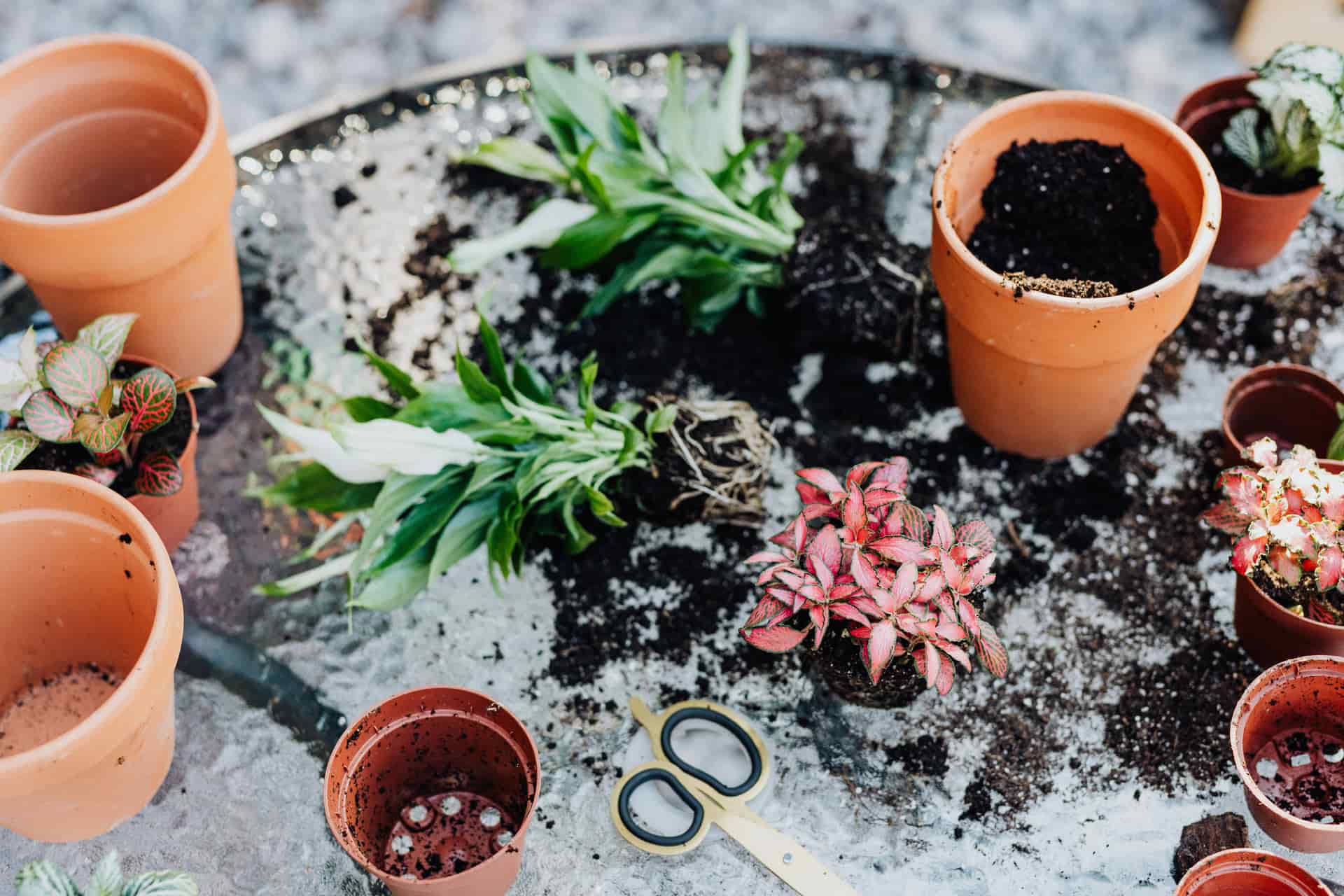
The short answer
Buy a pot with a drainage hole and a saucer, in the smallest size the root ball actually fits. Glazed ceramic for plants that like to stay evenly moist, unglazed terracotta for anything that rots easily, plastic when the pot is going on something whose weight rating you do not know. A self-watering pot is worth it for one specific problem — travel — and is a liability for succulents.
Disclosure Pot & Prop earns a commission when you buy through the Amazon links on this page, at no extra cost to you. It does not change which products get recommended or what we say about them, and we have not been given any of them. How this site is funded.
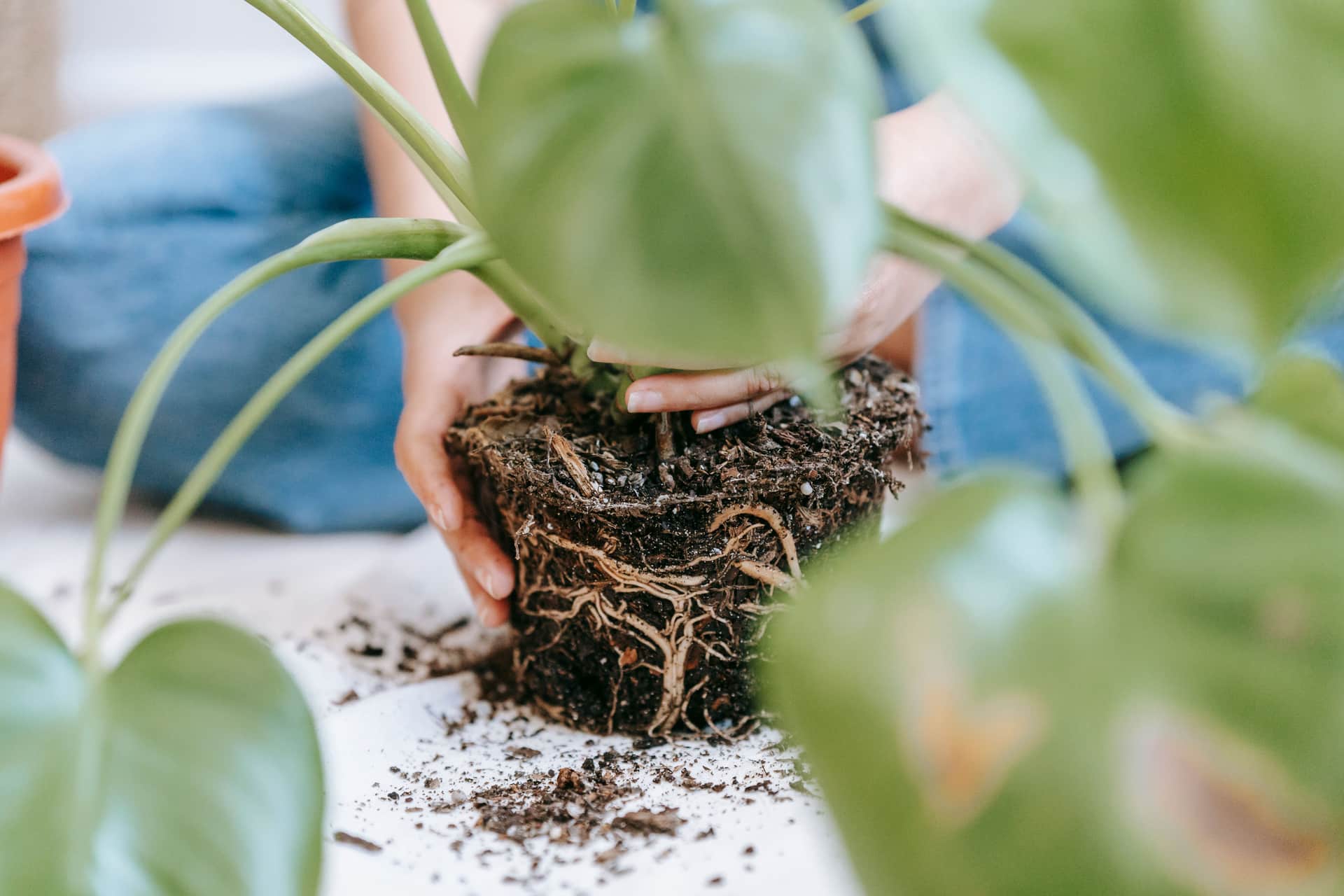
Almost every houseplant that dies indoors dies wet. Not from too much water in one go, but from mix that never gets a chance to dry, which happens for exactly two reasons: the pot cannot drain, or the pot is too big for the root ball so most of the mix has no roots pulling water out of it. Both are purchase decisions, made before the plant ever comes home, and both are fixable for a few dollars. That is why this section leads with drainage and treats finish as a tiebreak.
The second thing a pot decides is what the whole assembly weighs, and that is where this section connects to the rest of the site. A 12-inch pot holds roughly half a cubic foot of mix; saturated, that mix alone computes to about 25.5 lb before the pot and the plant are counted. Put it on a plant stand with no published rating and you are guessing. Hang it from an adhesive hook and the guess gets expensive. Here is the arithmetic, and here is how we apply it.
How to choose within this category
Three axes, in order of how much they matter. Nothing else about a pot changes an outcome.
- A drainage hole, and a saucer that catches what comes out. Clemson's extension service is blunt about this: containers need drainage, and pots should never sit directly on carpet, flooring or furniture. A cachepot with no hole is a reservoir with a plant balanced in it. If you already own beautiful holeless pots, keep the plant in a nursery pot and drop it inside — that is the whole fix.
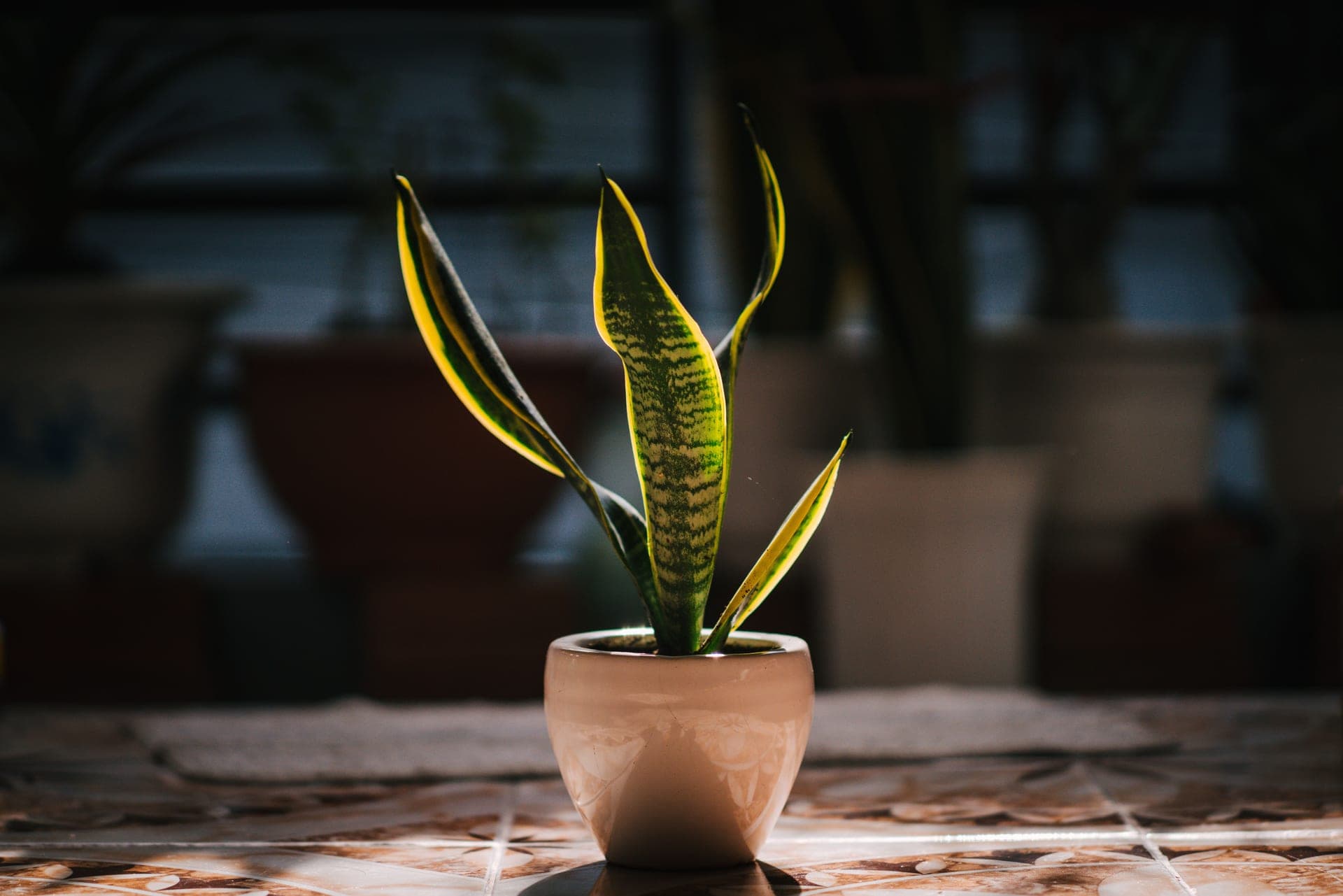
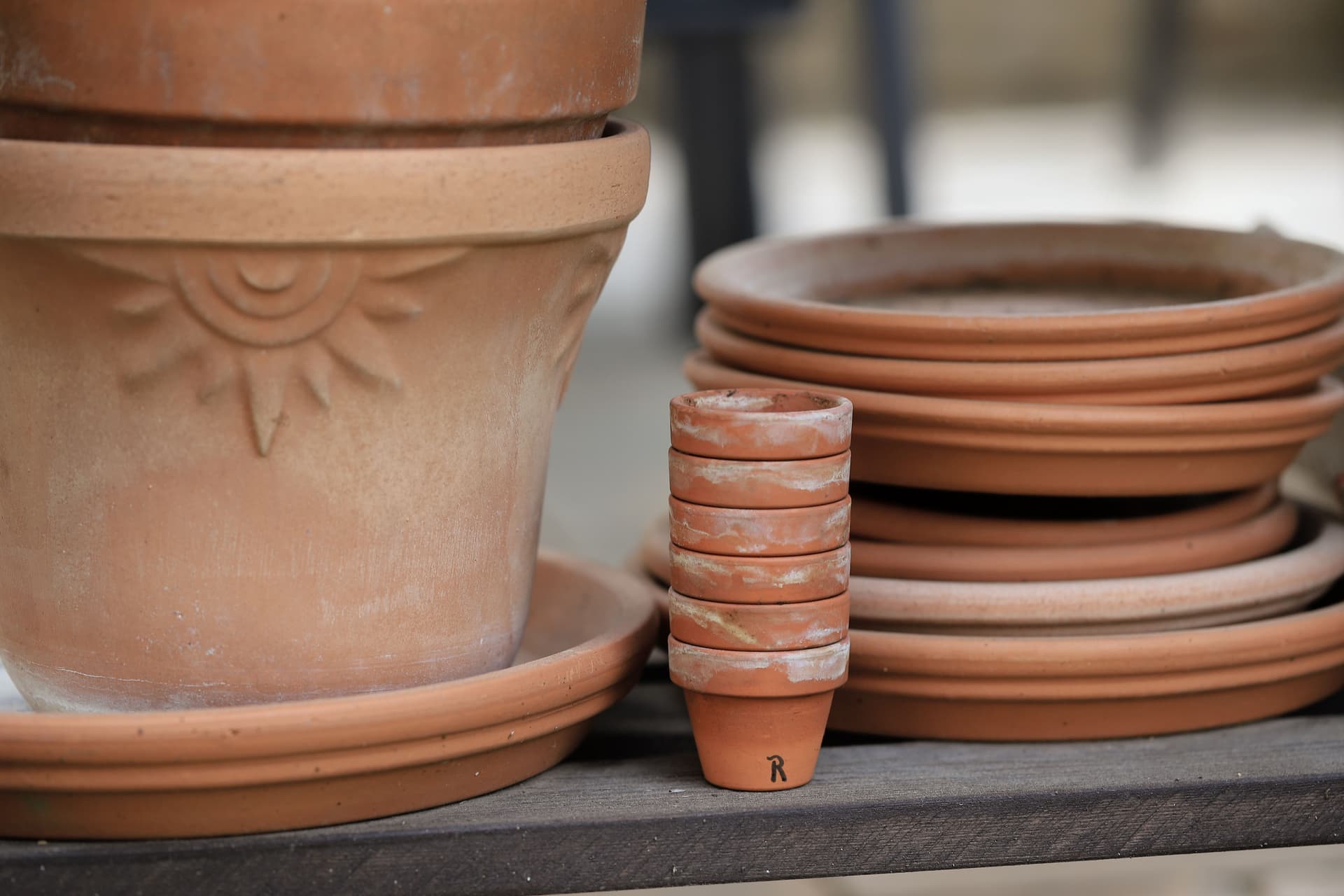
- Material, which is really drying rate. Unglazed terracotta is porous and loses water through its own wall, so mix in clay dries measurably faster than the same mix in glaze or plastic. That is a feature for cacti, succulents, snake plants and anything you tend to overwater; it is a nuisance for ferns and calatheas, which then need watering twice as often.
- Volume, which is really weight and drying rate again. Going up more than one pot size at a repot leaves a ring of wet, unrooted mix around the root ball that stays wet for weeks. It also adds weight fast, because volume scales with the cube of the diameter: a 12-inch pot holds about 3.4 times the mix of an 8-inch one, not 1.5 times.
What the small-space constraint changes
In a house you buy the pot you like and put it where it goes. In an apartment three things bite. First, almost every surface is someone else's property: a wet pot base on a rented wood floor leaves a ring that comes off your deposit, which makes saucers and pot feet non-optional rather than accessories. Second, floor plants are the ones you cannot move to a sink, so their pot has to work where it stands — which is an argument for a saucer deep enough to hold a full watering, or for putting the pot on a rated caddy so it can be pushed rather than lifted.
Third, in a small apartment the pot is furniture whether you meant it to be or not, because it is at eye level and there is nowhere for it to recede into. That is the one place where matching sets genuinely earn their price: six plants in six mismatched nursery pots read as clutter in a room where six plants in matched pots read as a collection.
What a pot of each size weighs
Computed from published potting-mix densities, saturated, for the mix alone. Your pot and your plant sit on top of these figures — a 12-inch ceramic pot is itself several pounds empty.
| Pot size | Mix volume | Dry | Watered | Rating needed |
|---|---|---|---|---|
| 5 in | 0.034 cu ft | 0.7 lb | 1.8 lb | 3 lb |
| 6 in | 0.058 cu ft | 1.3 lb | 3.2 lb | 5 lb |
| 8 in | 0.137 cu ft | 3 lb | 7.5 lb | 12 lb |
| 10 in | 0.268 cu ft | 5.9 lb | 14.7 lb | 23 lb |
| 12 in | 0.463 cu ft | 10.2 lb | 25.5 lb | 39 lb |
What we deliberately do not recommend
Pots with no drainage hole, sold as planters. They are the single most common cause of a dead houseplant in an apartment, and the fact that the category exists at all is a triumph of styling over horticulture. We also do not recommend self-watering pots for succulents, cacti or snake plants — the entire mechanism is designed to keep the lower mix permanently damp, which is the one condition those plants cannot survive. And we do not recommend upsizing a pot by more than one step to save a repot later; it buys a few months and costs a root system.
Start here
If you are replacing nursery pots, start with the best indoor planters with drainage. If your problem is that you travel, go to self-watering planters — and read the honest comparison first, because for a lot of plants the answer is no. If you are not sure which material you want, terracotta against ceramic against plastic is the short version. And if the plant in question is a snake plant, it has its own rules: the pots that suit it are the ones that dry out fastest. For a floor plant, large indoor planters covers the sizes where weight starts to decide the purchase, and saucers and pot feet is the cheap purchase that protects the floor underneath all of it. Orchids are the exception to most of what this section argues: they are not potted in soil at all, so orchid pots are judged on airflow rather than on drying rate. And if the problem is not the pot at all but a fortnight away from it, self-watering inserts and spikes convert the pots you already own — with the arithmetic for how much water each one actually needs. If you came here with a specific plant in mind, five of the most-asked-about have their own pages: pots for a monstera, which is really a pot-and-pole purchase; pots for spider plants, whose roots lift the plant out of anything too small; pots for pothos, which wants to stay small; pots for a peace lily, the one plant this section recommends a self-watering pot for without a caveat; and pots for a fiddle leaf fig, where the pot is a load before it is a pot. An aloe is its own case again — pots for an aloe vera is the one page here that ranks on how heavy the empty pot is, because a mature aloe tips over long before it rots. A Christmas cactus inverts nearly all of that — pots for a Christmas cactus is the one page here that argues for keeping the pot small and skipping the terracotta. And African violet pots untangles two different designs sold under one name — only one of which drains. If the plant climbs rather than sits, moss poles is the support half of that purchase, including the moisture question the sellers contradict each other on. And before buying anything to tell you when to water, soil moisture meters works out what lifting the pot already tells you for free.
The picks this category starts with
We have not handled any of these. What follows is what each listing publishes, what that means once you put a watered pot on it, and who should buy something else.
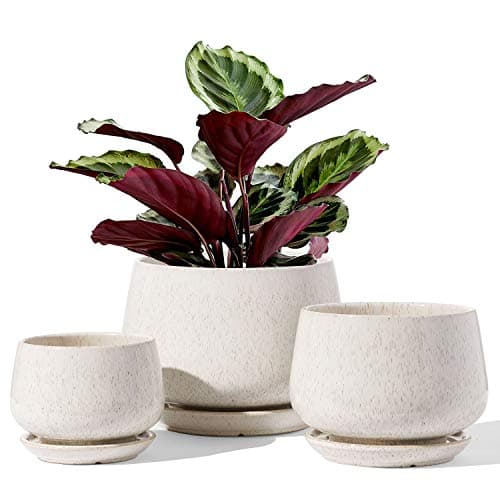
1. Three sizes that actually drain
LE TAUCI Ceramic Plant Pots with Drainage and Saucer, set of 3
Three graduated sizes with a real hole and a matched saucer in each, which is a lower bar than it sounds and one most decorative ceramic fails.
- What the listing publishes
- 4.1, 5.1 and 6.5 in; drainage hole and a matched saucer on every pot
- Against a 10-inch pot
- No weight rating is published for this product, so there is nothing to check. That counts against it here rather than being treated as neutral.
Saturated mix in these three sizes computes to about 0.9, 1.8 and 3.7 lb, light enough that any shelf holds them and the interesting question is drainage rather than load.
A matched saucer is not decoration. Buying a saucer separately means guessing a diameter, and a saucer an inch too small overflows onto whatever is underneath.
Graduated sets are how you pot up a plant without a second order. A rooted cutting goes in the 4-inch, moves to the 5-inch in a season and the 6.5-inch after that.
What is good
- Every pot has a hole and a matching saucer
- Three sizes cover a potting-up sequence
- Glazed inside, so they do not wick like bare terracotta
What is not
- Nothing here fits a plant bigger than a small pothos
- Ceramic chips if it goes over
- Glazed pots dry slower than terracotta, which suits some plants and kills others
Skip it if you overwater. A glazed, non-porous pot is the least forgiving container for that habit, and terracotta is the fix.
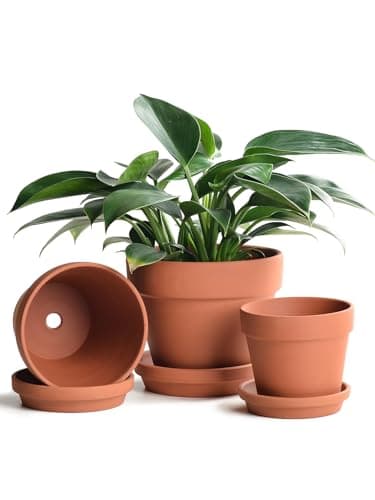
2. Plants that must dry out between waterings
INGOFIN Terracotta Pots with Saucers, 5, 6 and 7 in
Porous clay, the only pot material that actively removes water from the mix, and the reason succulents live longer in terracotta than in anything else.
#ad · Price as of October 18, 2026. How we are funded
- What the listing publishes
- 5, 6 and 7 in unglazed clay, drainage hole and saucer per pot
- Against a 10-inch pot
- No weight rating is published for this product, so there is nothing to check. That counts against it here rather than being treated as neutral.
Unglazed terracotta breathes through the wall, so the mix dries from the sides as well as the top. For a plant that rots when wet that is a feature you cannot get from a plastic pot with a bigger hole.
It also means the pot itself is damp. Terracotta sitting directly on wood leaves a ring, which is what the pot feet elsewhere in this section exist for.
Clay adds real weight for its size. On a shelf with no published rating, a set of three terracotta pots is meaningfully heavier than the same set in plastic.
What is good
- Dries the mix from the sides, not just the top
- Three sizes for potting up
- A heavy base resists being knocked over
What is not
- Damp clay marks wood floors and shelves
- Heavier than plastic at the same size
- Dries so fast that thirsty plants need watering twice as often
Skip it if you travel or forget to water. Terracotta is the least forgiving material for an under-waterer, and glazed ceramic is the fix.
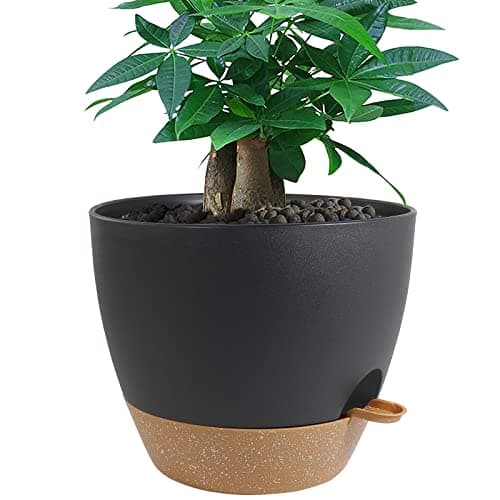
3. Two weeks away from home
UOUZ 12 in Self Watering Pot, 60 oz reservoir
The only pot here that publishes its reservoir volume, which is the number that decides how long the plant survives without you.
#ad · Price as of October 18, 2026. How we are funded
- What the listing publishes
- 12 in; published 60 oz removable reservoir; multi-mesh drainage
- Against a 10-inch pot
- No weight rating is published for this product, so there is nothing to check. That counts against it here rather than being treated as neutral.
60 fluid ounces is about 3.9 lb of water, and it sits under the mix rather than in it. That is added weight the moment you fill it: a full 12-inch self-watering pot computes to roughly 29 lb against 25.5 lb for the same pot without a reservoir.
Reservoir volume is the specification that matters and almost nobody prints. Without it, self-watering is a shape rather than a duration.
A removable reservoir is what makes it cleanable. Fixed-reservoir pots grow things in the bottom that you cannot reach.
What is good
- Publishes the reservoir volume, which most competitors do not
- Removable reservoir can actually be cleaned
- Wicking beats a schedule for anyone who travels
What is not
- Adds about 4 lb of water weight to an already 25 lb pot
- Self-watering suits thirsty plants and drowns succulents
- Plastic at 12 inches flexes when carried full
Skip it if you are growing cacti, succulents or a snake plant. A permanently damp root zone is the specific way those plants die.
Everything in this category
Best with drainage
The Best Indoor Planters with Drainage
Ceramic, plastic and clear nursery pots that drain, each with a saucer included, ranked by how much of a plant collection one purchase actually covers.
Top pick: LE TAUCI Ceramic Plant Pots with Drainage and Saucer, set of 3
$36.99 · 19% off
Best for travel
The Best Self-Watering Planters
Reservoir pots for people who travel, ranked by published reservoir size and whether you can see the water level without dismantling the plant.
Top pick: UOUZ 12 in Self Watering Pot, 60 oz reservoir
Head to head
Self-Watering Pot or Plain Drainage Hole?
A plant-by-plant answer to whether a reservoir pot helps or kills, with the pick for each side of the decision.
Head to head
Terracotta, Ceramic or Plastic?
How the three common pot materials differ in drying rate, weight and durability, and which plants and situations each one suits.
Best for succulents
The Best Planters for Succulents
Shallow ceramic bowls and terracotta pots suited to succulent root systems, ranked by depth, drainage and how much of an arrangement each one holds.
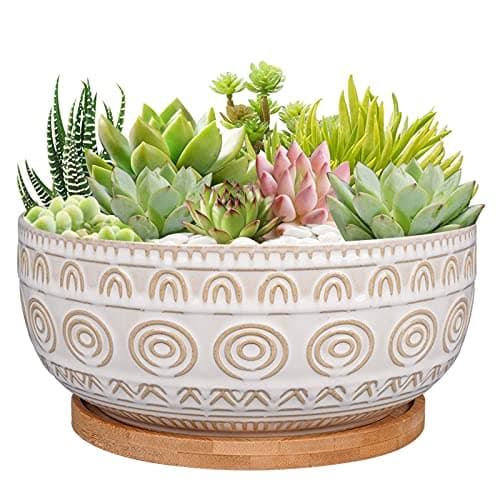
Top pick: Eightpot 8 in Shallow Ceramic Succulent Pot with Drainage and Saucer
Best for herbs
The Best Planters for Indoor Herbs
Windowsill boxes and small herb pots ranked by depth, drainage and sill width, plus an honest note on which herbs a kitchen window can actually support.
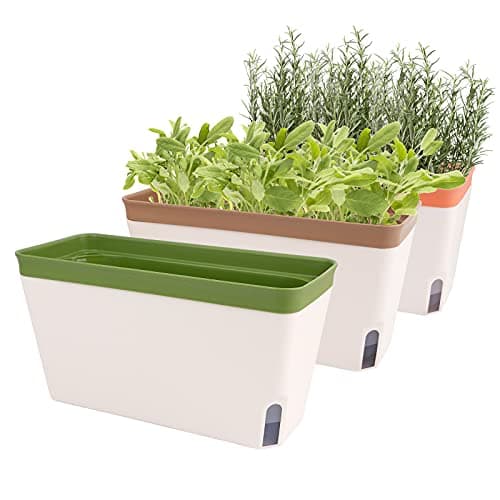
Top pick: OurWarm Windowsill Herb Planter Box, self watering, 10.5 in, set of 3
Best for snake plants
The Best Planters for Snake Plants
Terracotta and ceramic pots suited to a plant that rots before it wilts, ranked by drying rate, drainage and how stable they are under tall top-heavy leaves.
Top pick: INGOFIN Terracotta Pots with Saucers, 5, 6 and 7 in
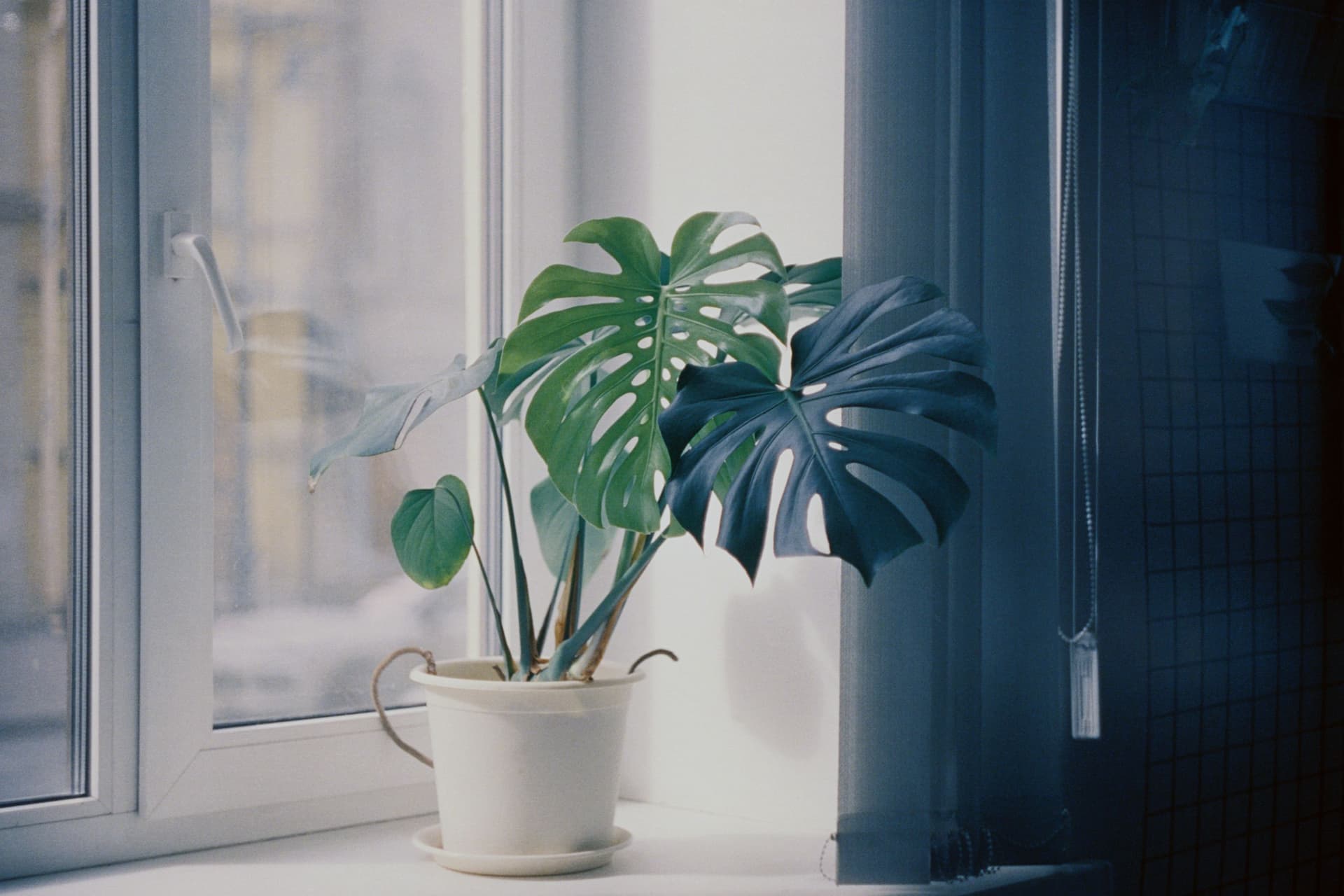
Best large planter
The Best Large Indoor Planters
Floor-sized planters from 12 to 20 inches, ranked by drainage, material weight and whether the finished plant is still something you can move.
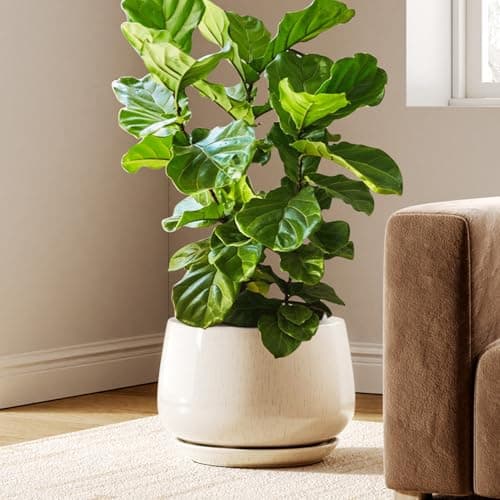
Top pick: LE TAUCI 12 in Ceramic Planter with Drainage and Saucer
$89.99 · 6% off
Best floor protection
The Best Plant Saucers and Pot Feet
Saucers, pot feet, humidity trays and pebbles, ranked by whether they actually fit the pots people own and whether they keep the pot base out of standing water.
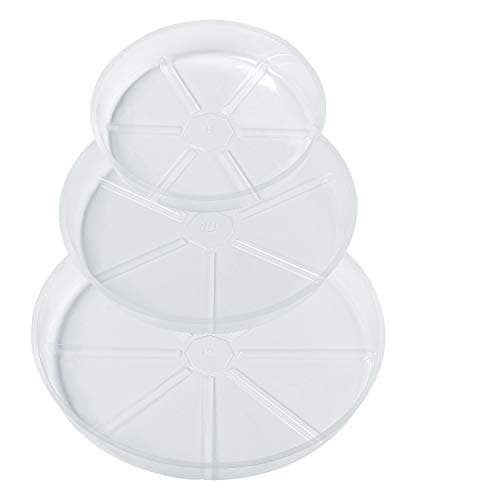
Top pick: Idyllize Clear Plant Saucers, 6, 8 and 10 in, 15 pack
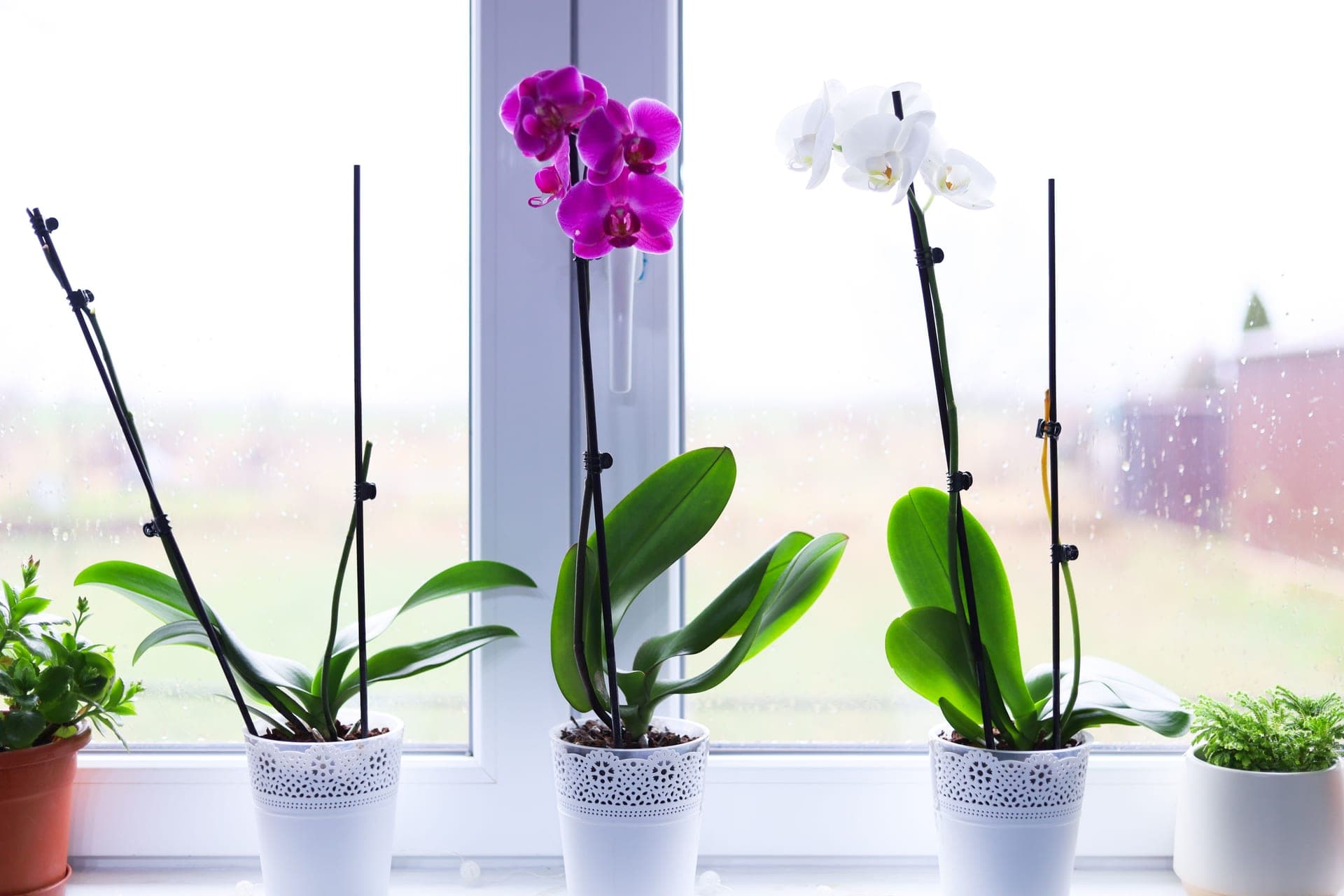
Best for orchids
The Best Planters for Orchids
Slotted, clear and ventilated ceramic orchid pots ranked by airflow, published size and whether you can read root color through the wall.
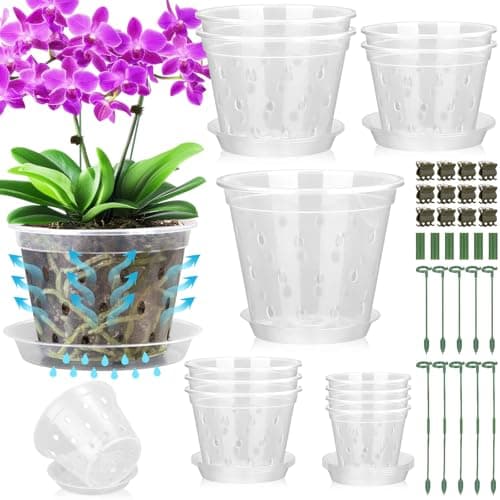
Top pick: Tetutor Clear Slotted Orchid Pots, 3 to 7 in, 12 pack with stakes and clips
$18.99 · 5% off
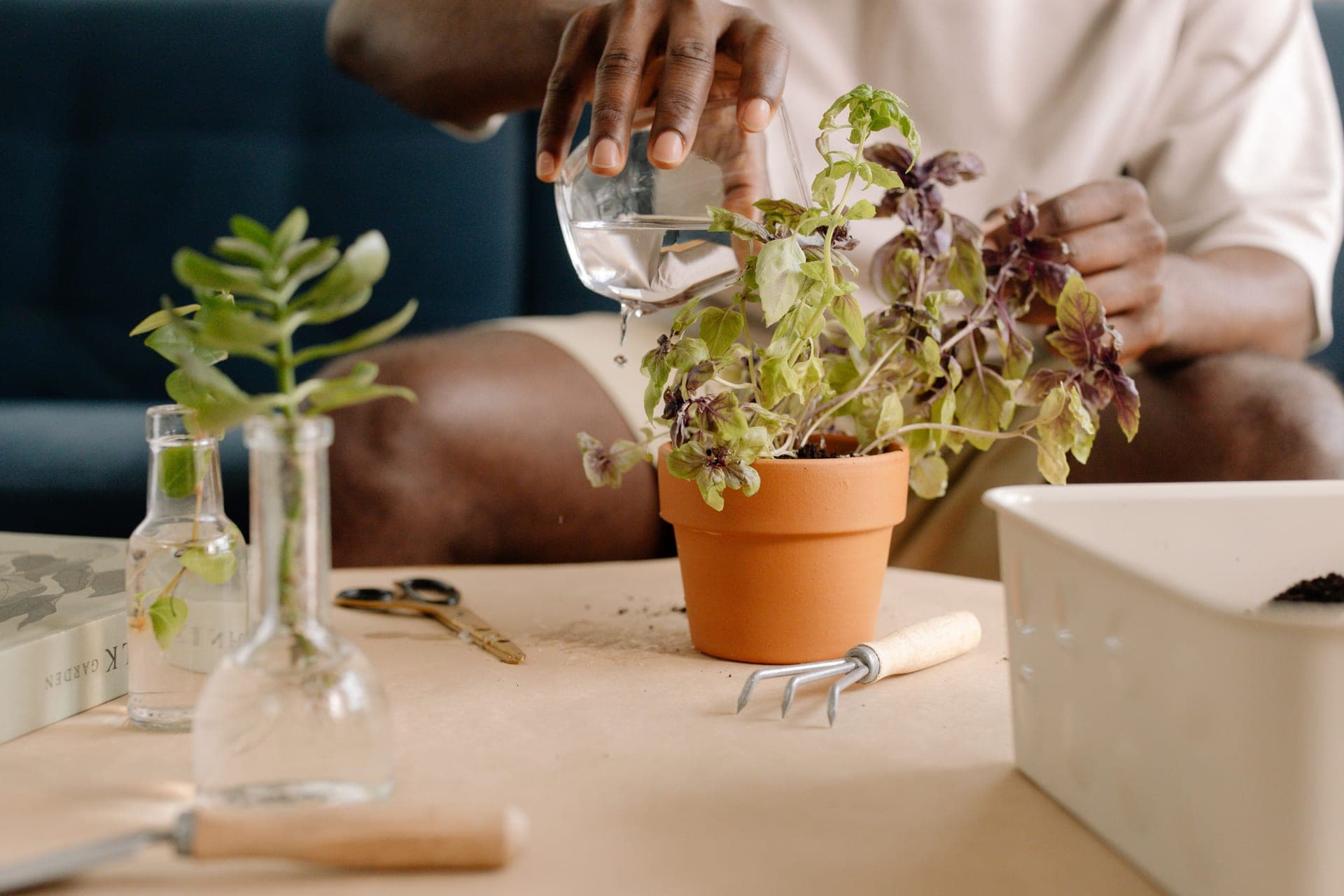
Best for a trip
The Best Self-Watering Planter Inserts
Watering spikes, wicks, globes, inserts and pump timers for pots you already own, ranked by published capacity against what a pot actually drinks.
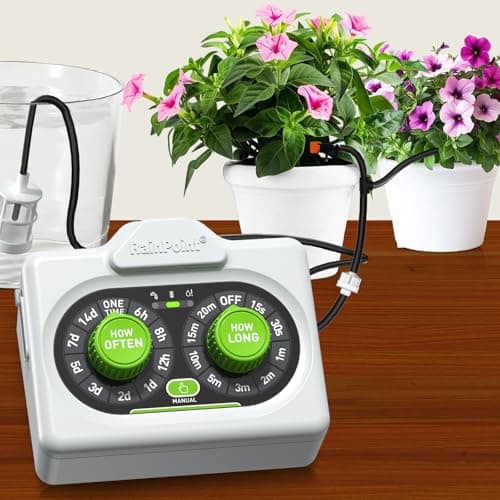
Top pick: RAINPOINT Automatic Plant Waterer, battery pump, adjustable emitters
Best for a monstera
The Best Pots for a Monstera
Pots and moss poles for a monstera, sized by what a planted pot weighs and by how fast it dries, with the arithmetic shown.
Top pick: LE TAUCI 12 in Ceramic Planter with Drainage and Saucer
$89.99 · 6% off
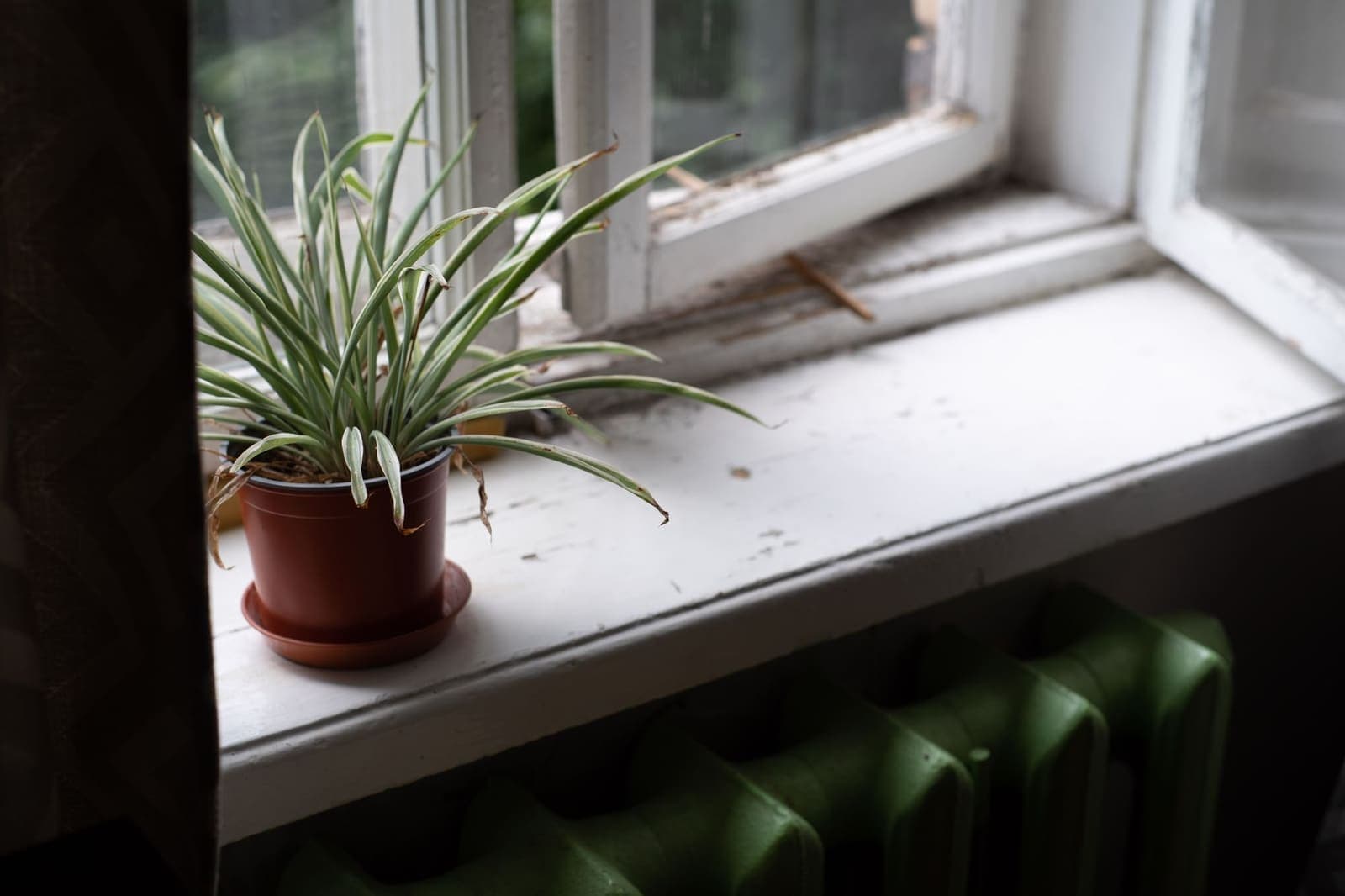
Best for spider plants
The Best Pots for Spider Plants
Hanging and shelf pots for a spider plant, chosen for drainage and for roots that lift the plant out of the pot, with hook loads worked out.
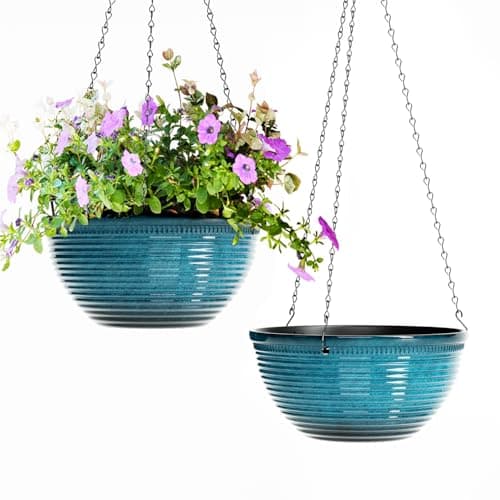
Top pick: 10 in Hanging Planter, glazed finish, drainage holes with plug, 2 pack
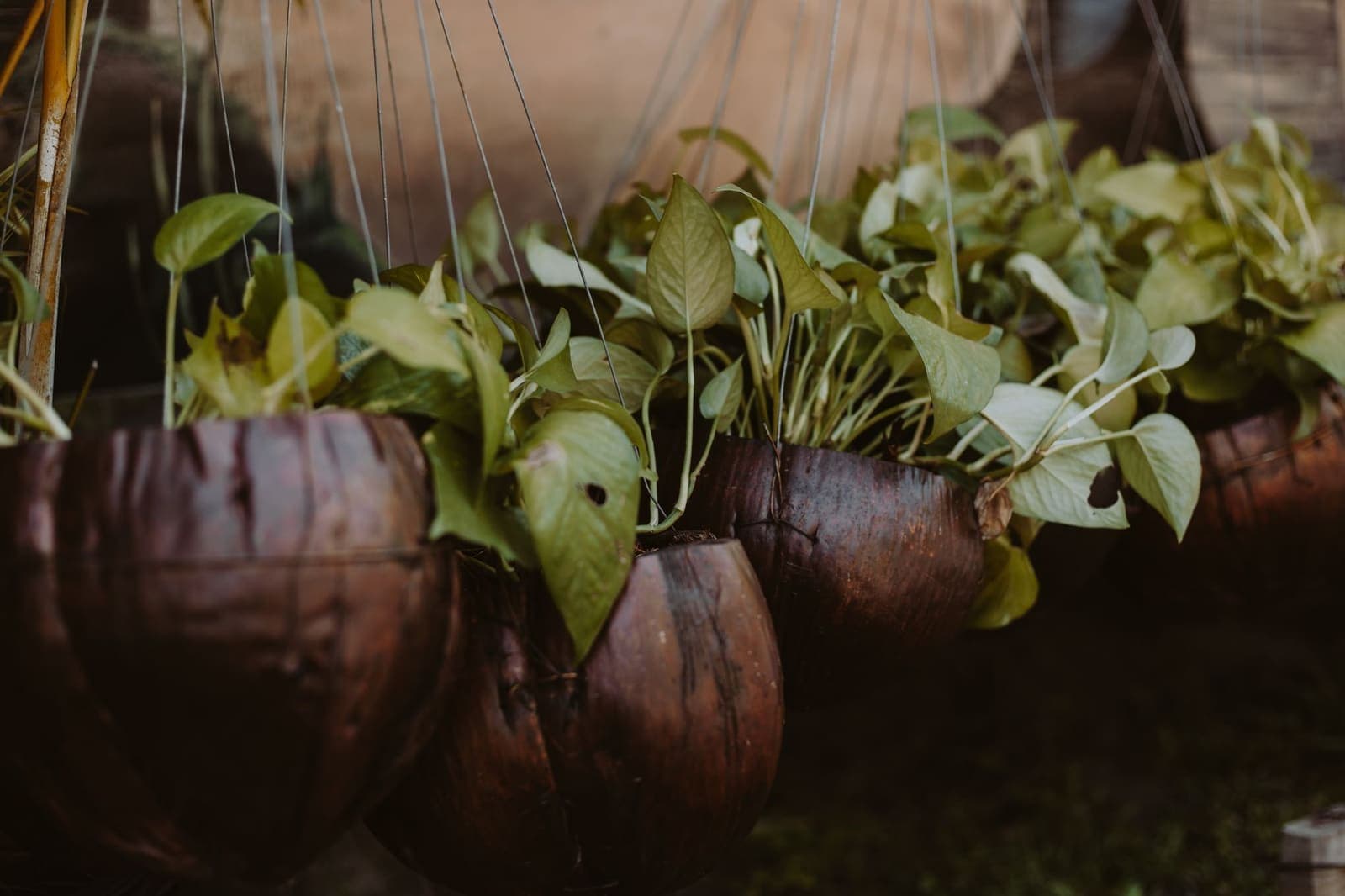
Best for pothos
The Best Pots for Pothos
Shelf, hanging and nursery pots for a pothos, sized small on purpose for a plant that rots in oversized pots, with hook loads worked out.
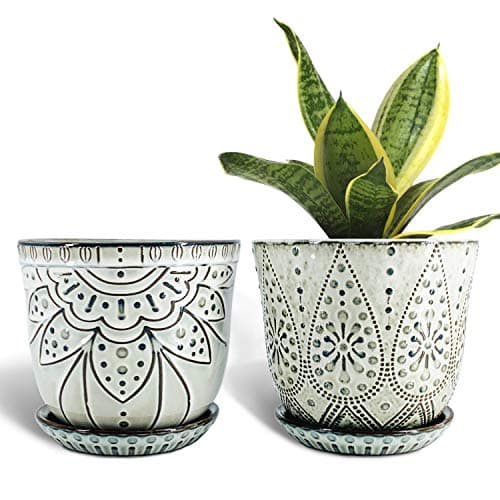
Top pick: Gepege 6 in Ceramic Plant Pots with Drainage and Saucers
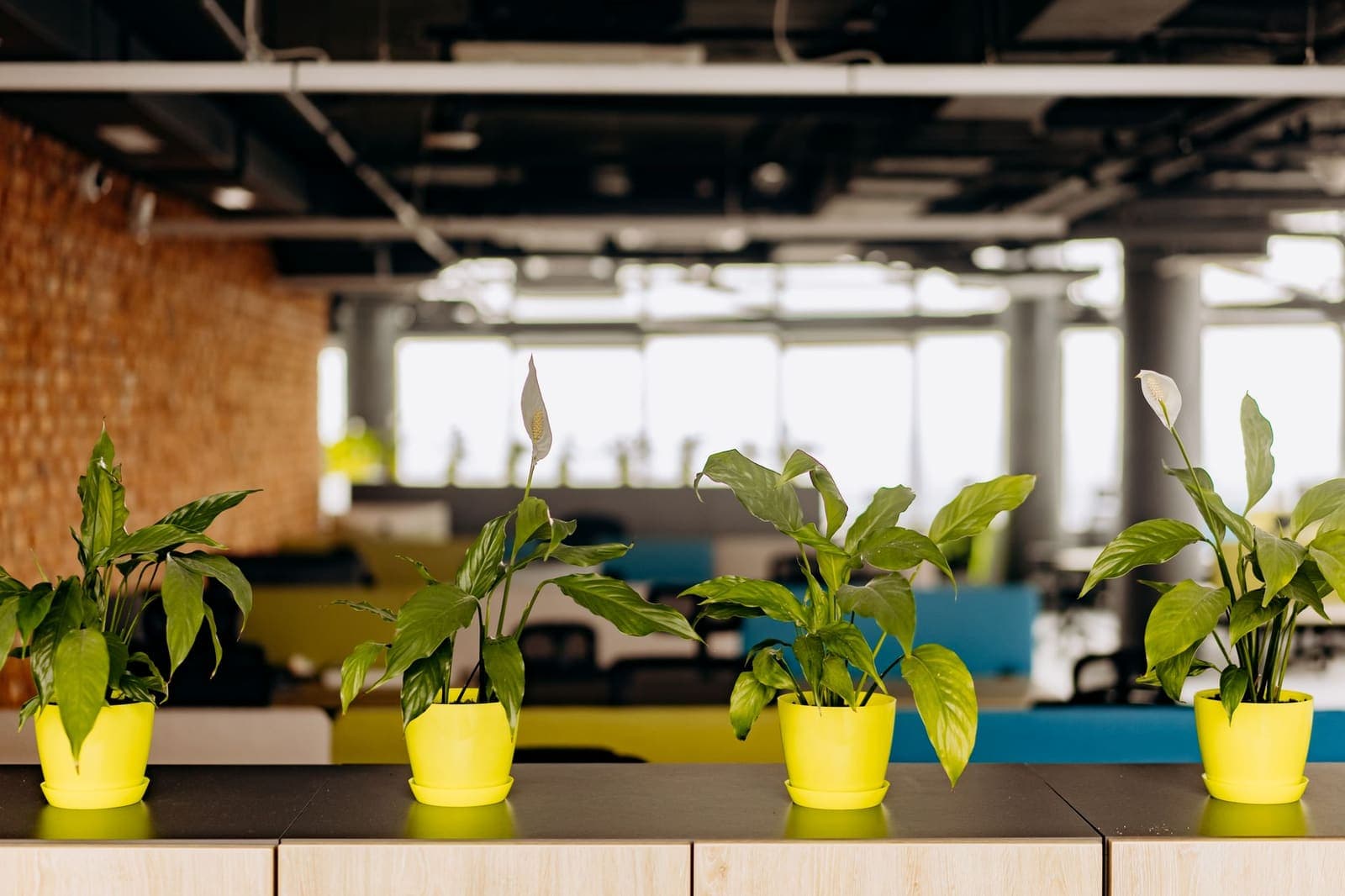
Best for a peace lily
The Best Pots for a Peace Lily
Self-watering and drained pots for a peace lily, with reservoir capacities checked against what a pot of each size actually drinks.
Top pick: UOUZ 12 in Self Watering Pot, 60 oz reservoir
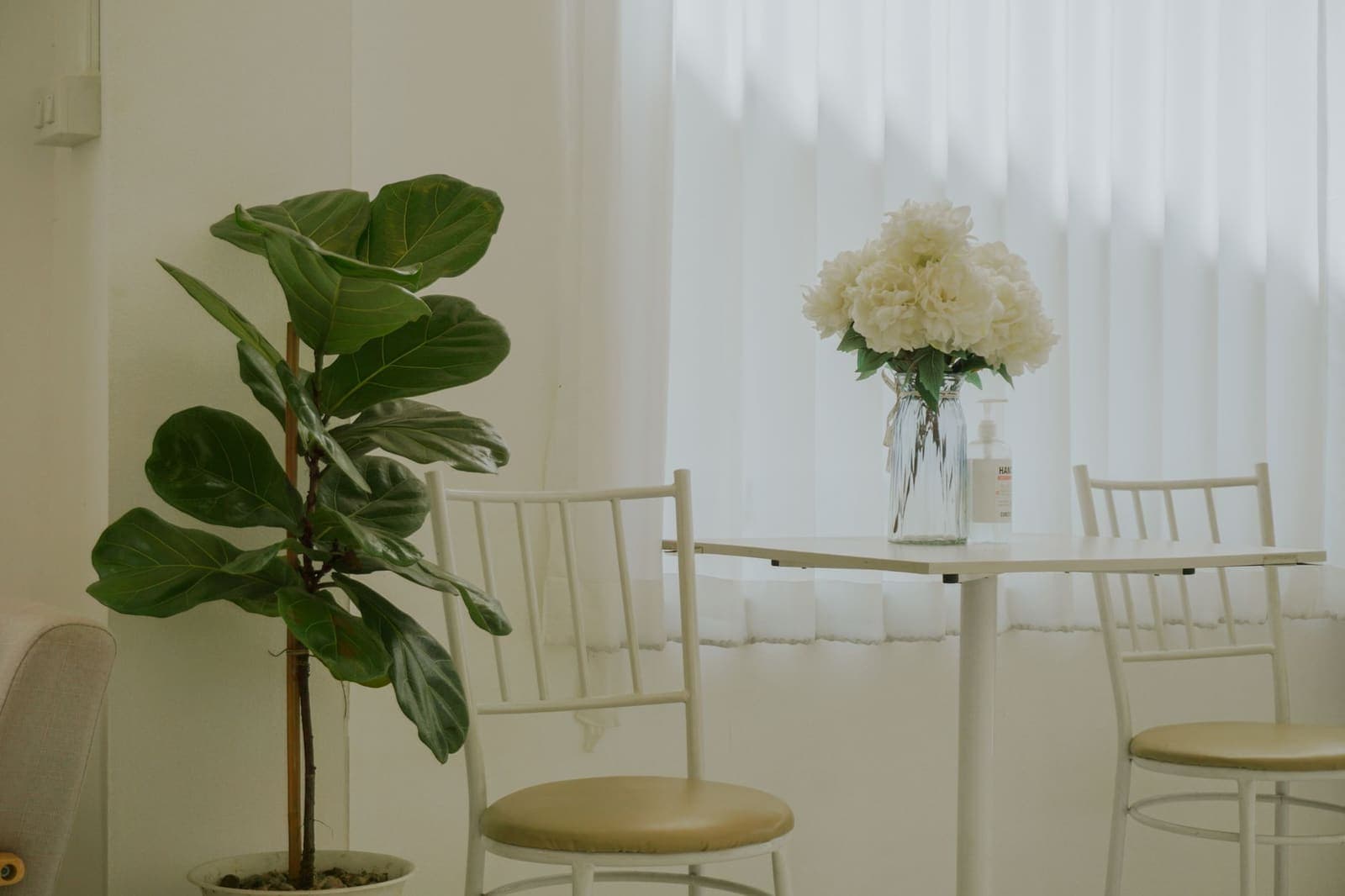
Best for a fiddle leaf fig
The Best Pots for a Fiddle Leaf Fig
Pots for a fiddle leaf fig sized by what they weigh once planted, with the drainage rule, the one-size-up rule and the caddy that moves a 40 lb pot.
Top pick: LE TAUCI 12 in Ceramic Planter with Drainage and Saucer
$89.99 · 6% off
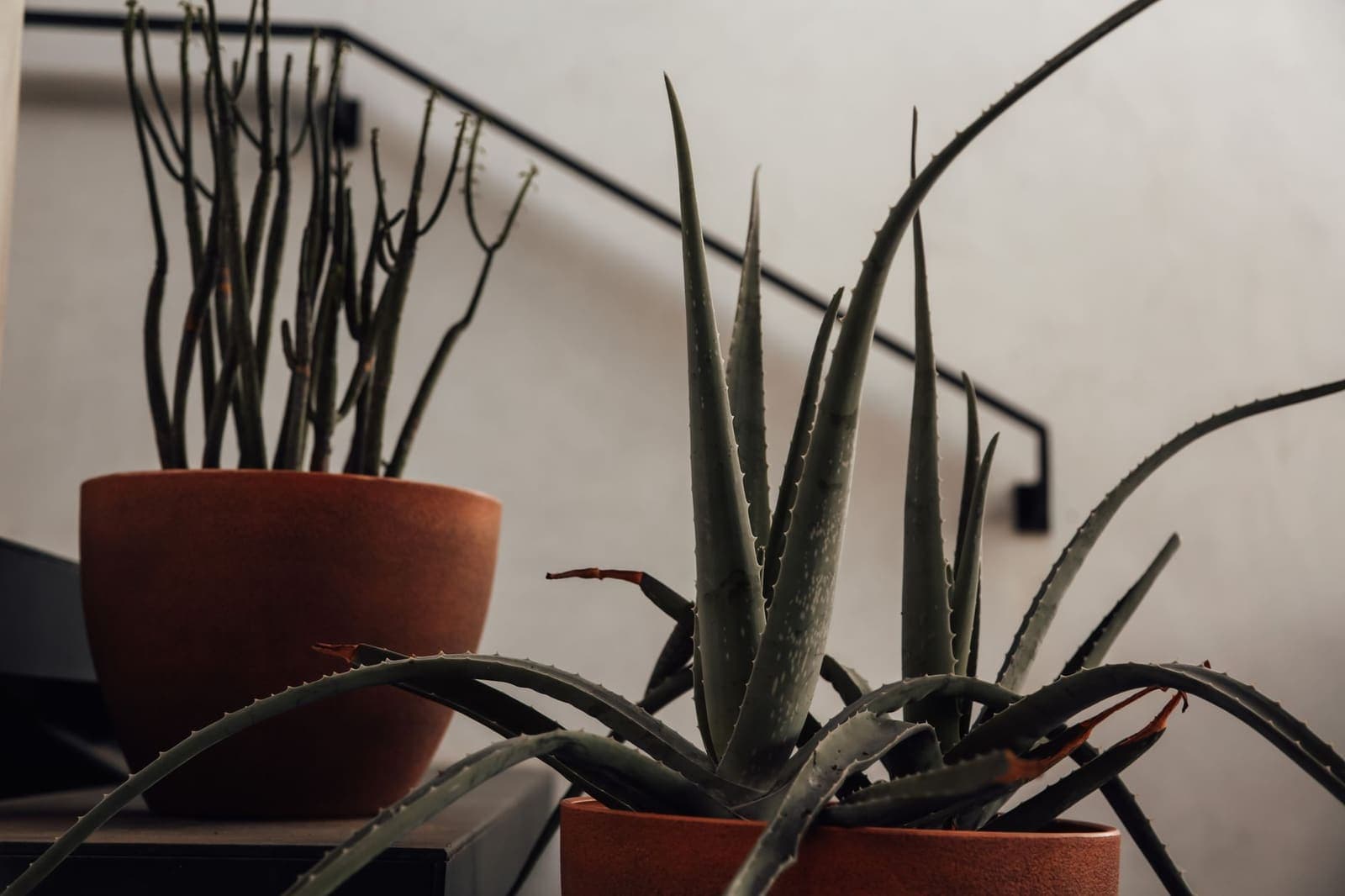
Best for aloe vera
The Best Pots for an Aloe Vera
Wide, shallow terracotta and ceramic pots for an aloe vera, ranked on drying rate and on the empty-pot weight that keeps a top-heavy plant upright.
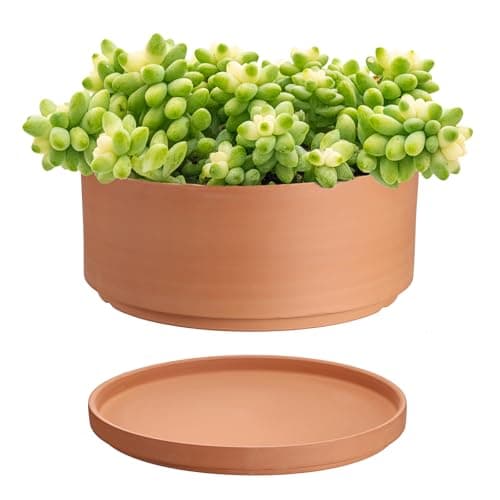
Top pick: JUXYES 10 in Shallow Terracotta Pot with Drainage and Saucer
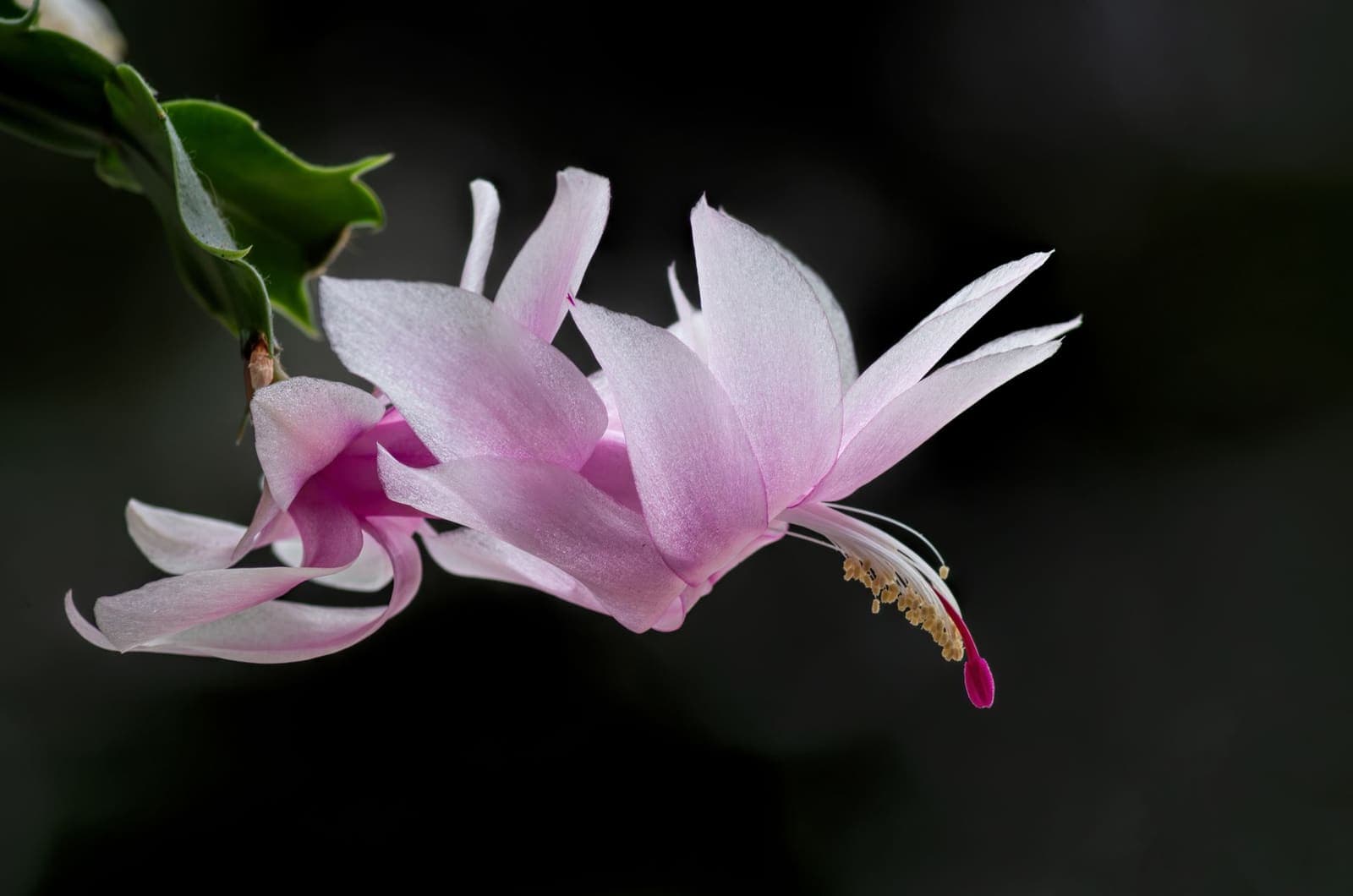
Best for a Christmas cactus
The Best Pots for a Christmas Cactus
Small, shallow and hanging pots for a Christmas cactus, with the hook load computed from published pot weights and the case for not sizing up.
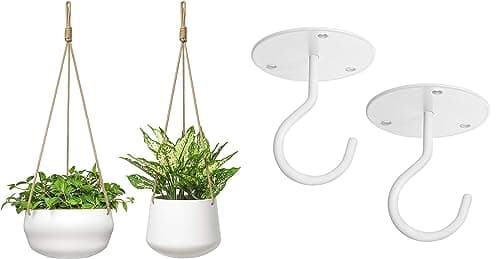
Top pick: Mkono Ceramic Hanging Planters, 8 in shallow and 6 in deep, 2 pack with ceiling hooks
$36.98 · 7% off
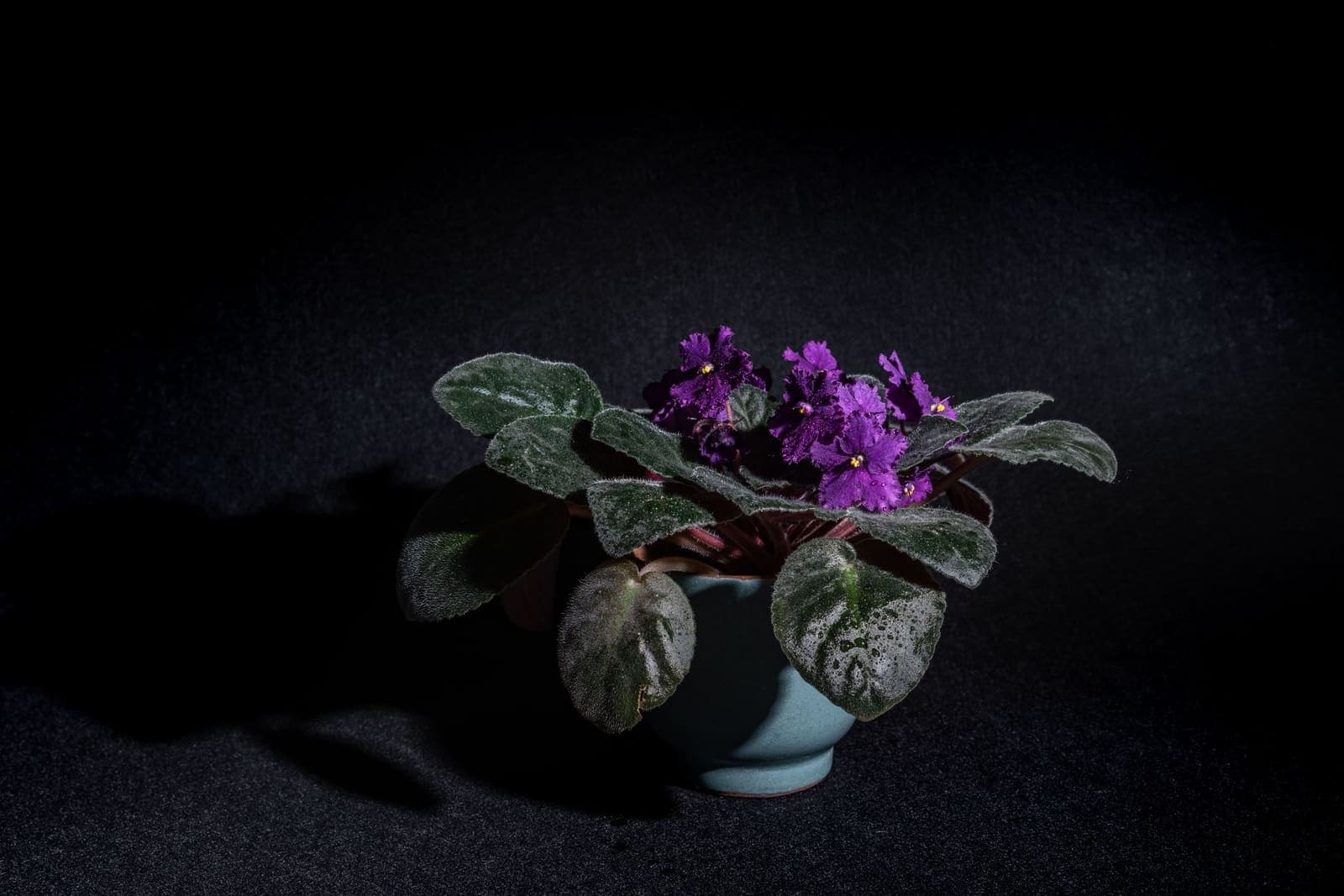
Best for African violets
The Best African Violet Pots
Wick pots, two-piece ceramic violet pots and small drained pots for African violets, ranked against what extension guidance says about drainage and clay.
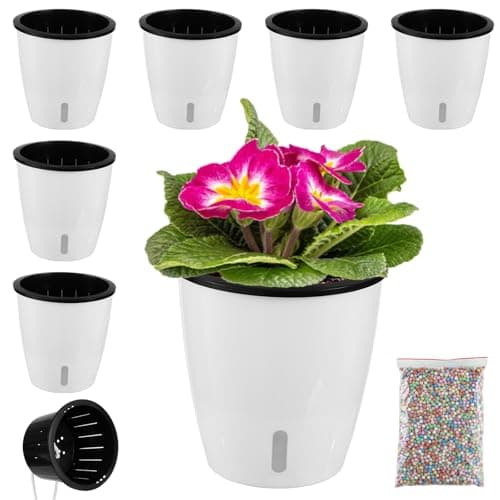
Top pick: Planterhoma 5 in Self Watering Wick Pots with Drainage Holes and water-level indicator, 6 pack
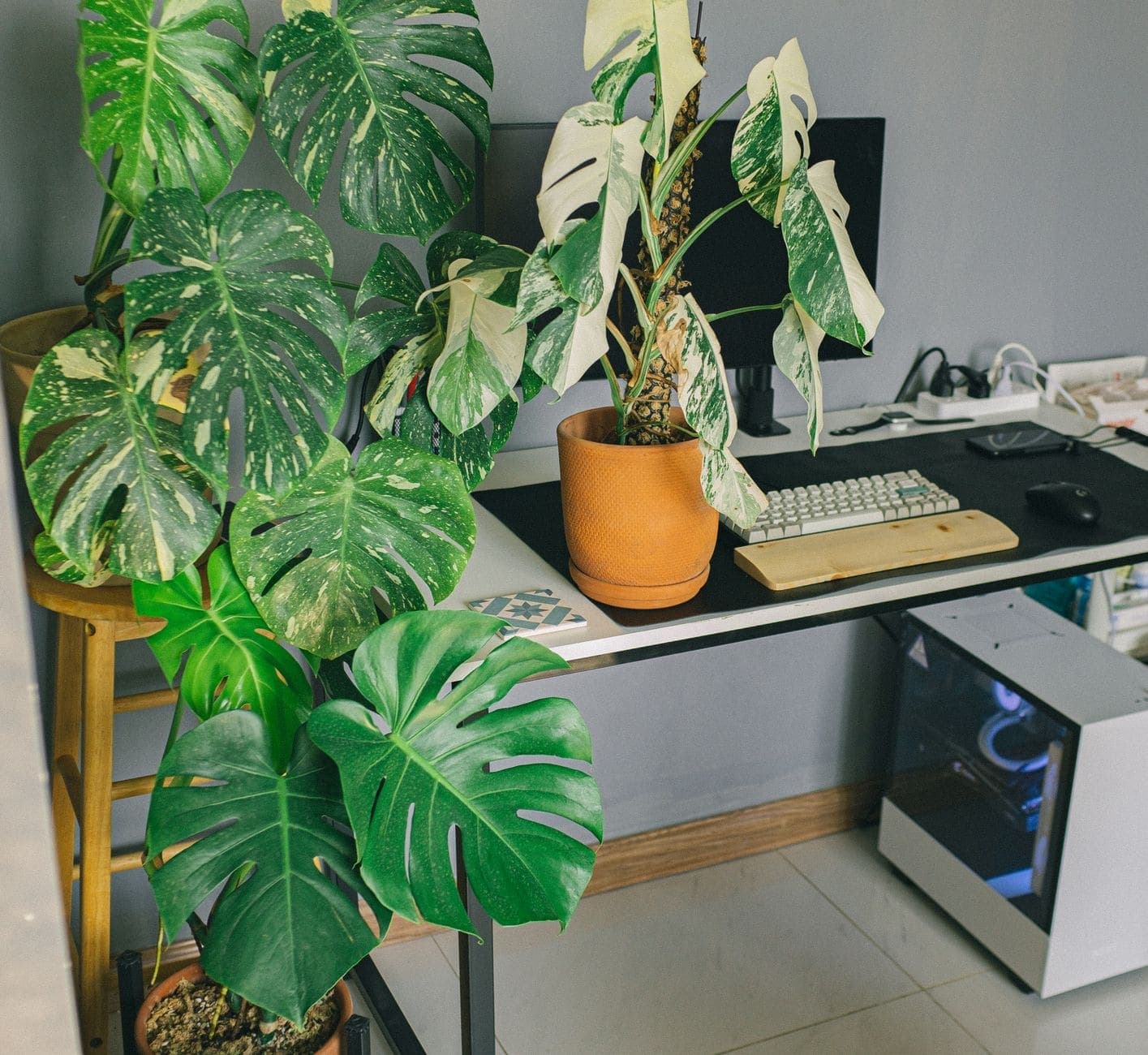
Best moss pole
The Best Moss Poles for Monstera and Climbing Plants
Coir and mesh moss poles ranked on published length, how they stack, and the moisture question the listings contradict each other on.
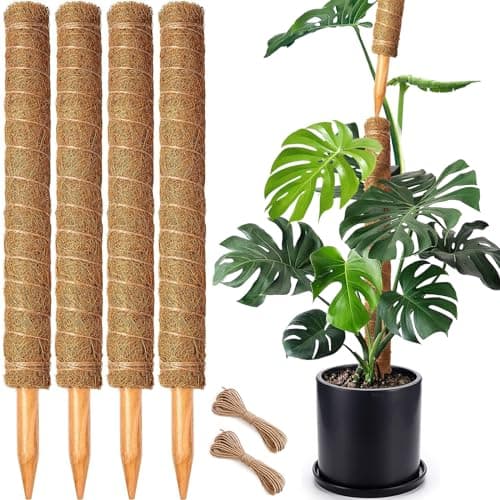
Top pick: CHIAFFI Stackable Coir Moss Poles, 22 in each, 4 pack
$21.99 · 10% off
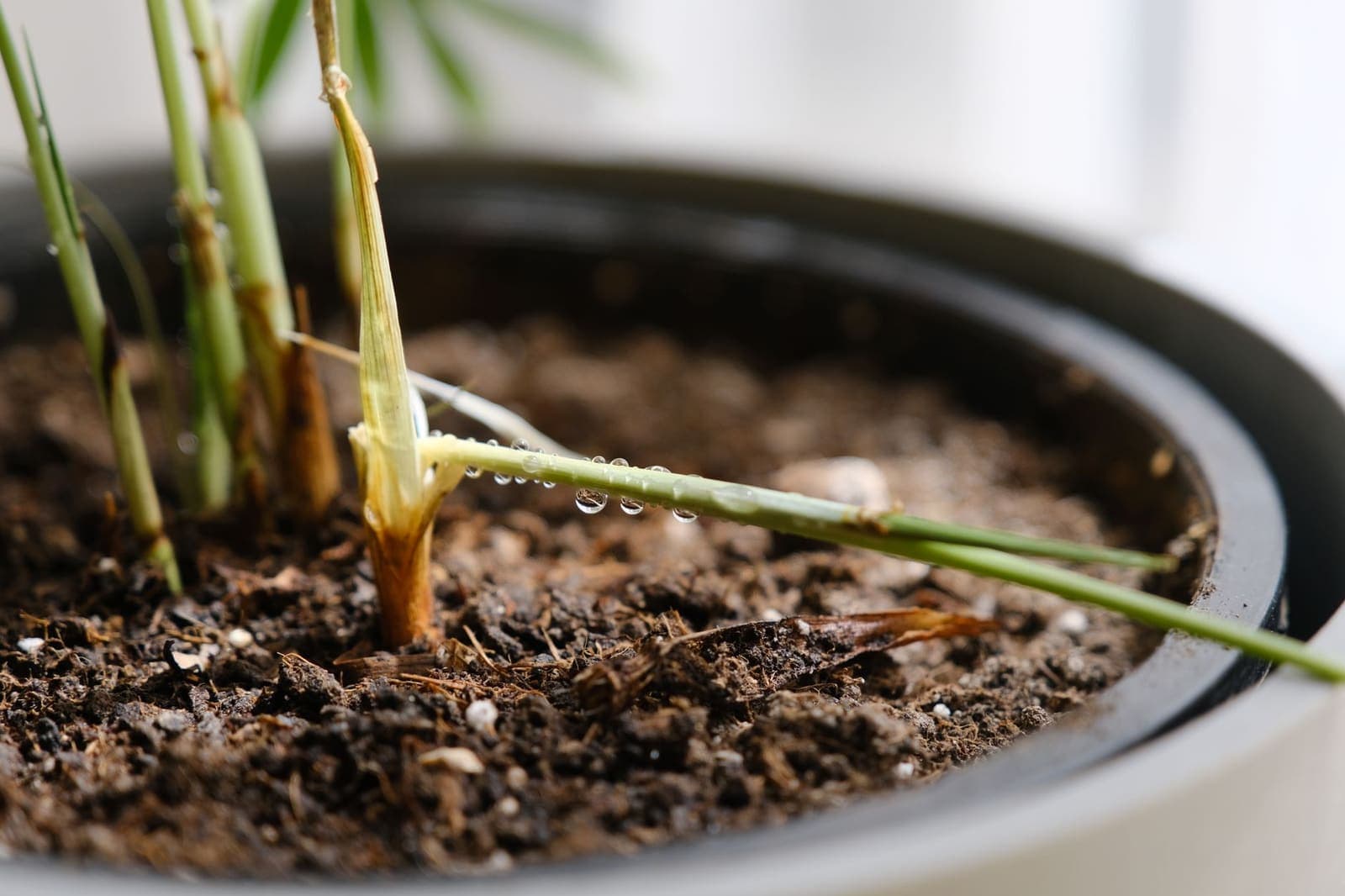
Best moisture meter
The Best Soil Moisture Meters for Houseplants
Six soil moisture meters ranked on what their listings actually publish, plus the free weighing method that replaces one for most pots.
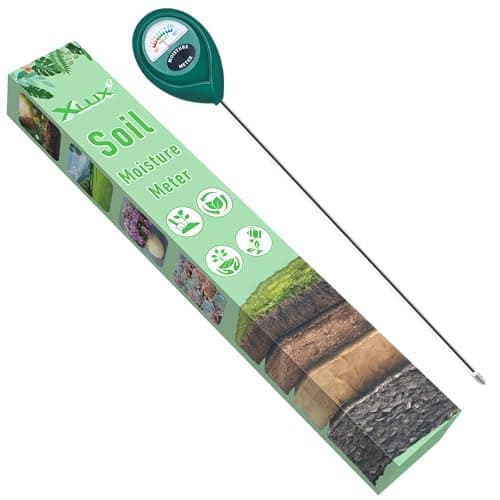
Top pick: XLUX Long Probe Soil Moisture Meter, 40 cm, battery-free
Best watering can
The Best Watering Cans for Indoor Plants
Indoor watering cans ranked on published capacity against the computed water a pot takes, plus spout and rose behavior.
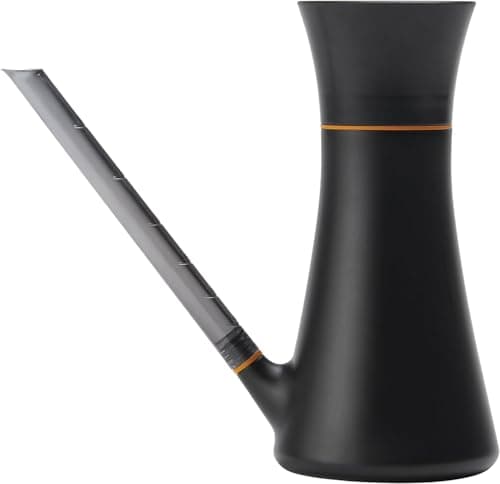
Top pick: Fiskars Indoor Watering Can, 40 oz, long reach spout
Best plant mister
The Best Plant Misters for Houseplants
Plant misters ranked on capacity, nozzle and sealing — with the honest account of what misting does and does not do for humidity.
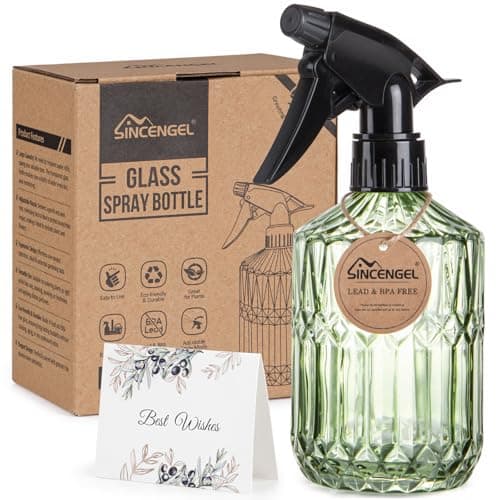
Top pick: Sincengel Glass Plant Mister, 13.5 oz, adjustable nozzle
Best cachepot
The Best Cachepots and Plant Pot Covers
Decorative pot covers and baskets for the double-pot method, with the water-management problem that sinks most of them.
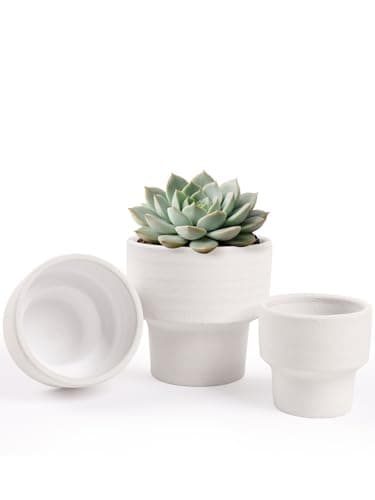
Top pick: INGOFIN Ceramic Cachepot Set of 3, 4, 5 and 6 in, no drainage hole
$21.99 · 20% off
Best repotting mat
The Best Repotting Mats and Soil Scoops
Repotting mats and soil scoops ranked on published size against the computed mix volume a repot of each pot size actually consumes.
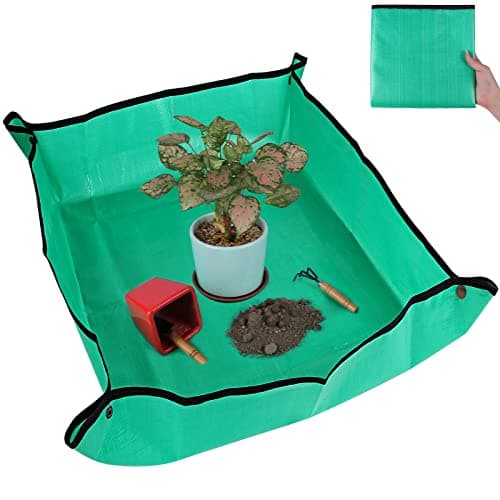
Top pick: Azureblue Repotting Mat, 39.4 by 39.4 in, snap corners
Best orchid mix
The Best Orchid Potting Mix and Bark
Orchid bark, ready blends and sphagnum moss ranked on published particle grade and actual bag volume, with the quarts a repot really takes.
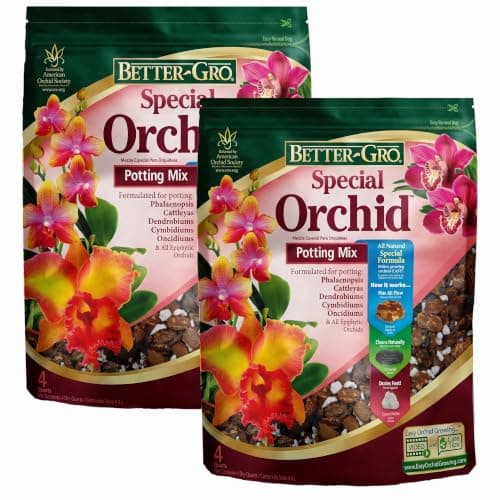
Top pick: Better-Gro Special Orchid Mix, bark, charcoal and sponge rock
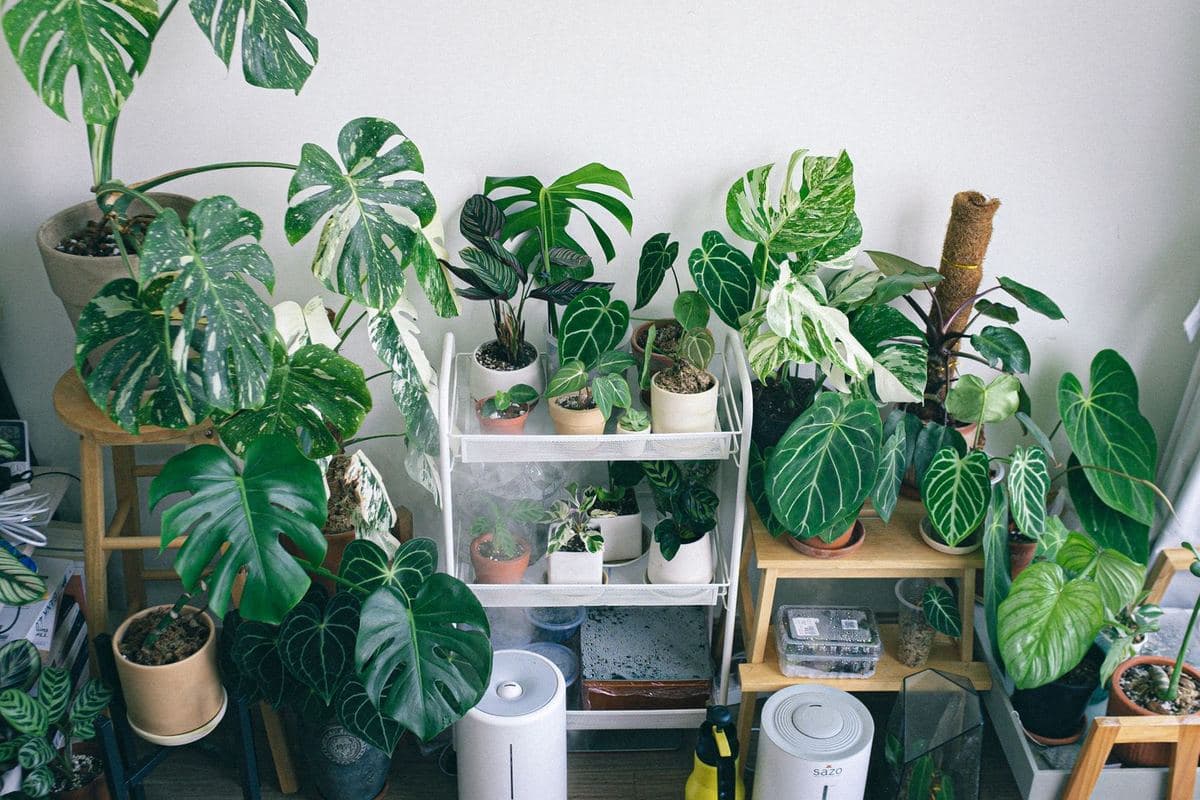
Best plant humidifier
The Best Humidifiers for Indoor Plants
Plant humidifiers ranked on published and derived mist output, refill interval and whether a humidistat lets them target a humidity level at all.
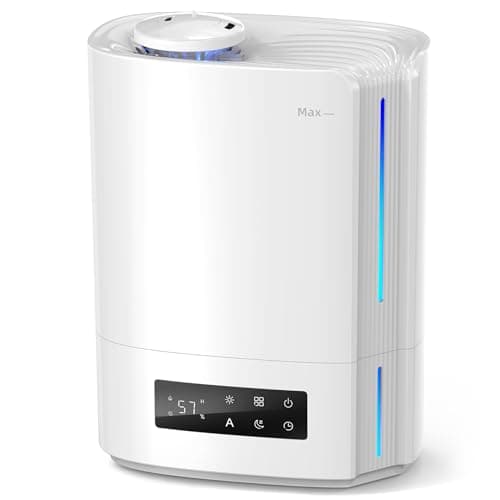
Top pick: BREEZOME Ultrasonic Humidifier, 6 L, with humidistat
$49.99 · 20% off
Best fungus gnat traps
The Best Fungus Gnat Traps for Houseplants
Sticky traps ranked on count, adhesive and placement, with the honest account of what cards cannot do and the watering change that actually ends it.
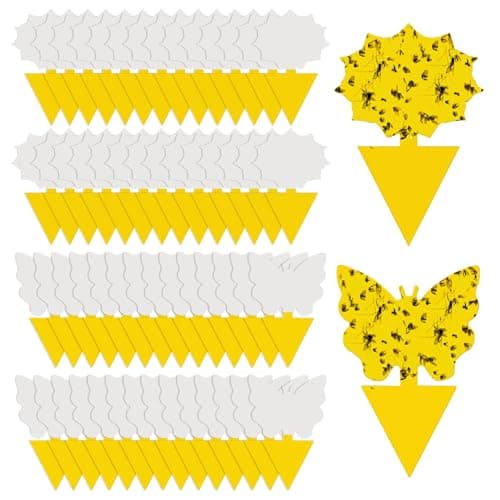
Top pick: Cleanuper Yellow Sticky Gnat Traps, 58 pack, stake mounted
$9.99 · 40% off
Best houseplant fertilizer
The Best Houseplant Fertilizer
Houseplant fertilizers ranked on published N-P-K analysis and dilution, with each bottle's published dose converted into waterings covered.
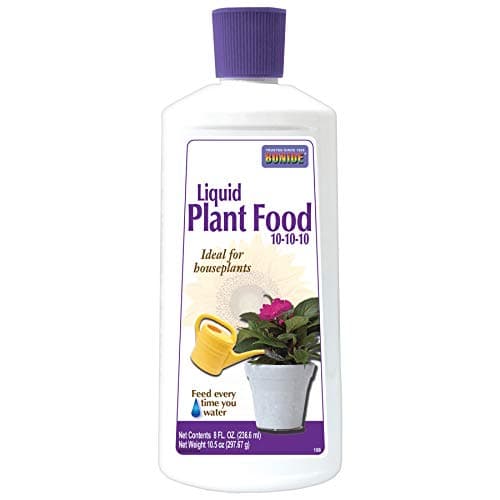
Top pick: Bonide Houseplant Liquid Plant Food, 10-10-10, 8 oz concentrate
$9.91 · 40% off
Best indoor plant trellis
The Best Indoor Plant Trellises and Supports
Indoor trellises ranked on published soil insertion depth against exposed height, with the pot depth each one actually requires.
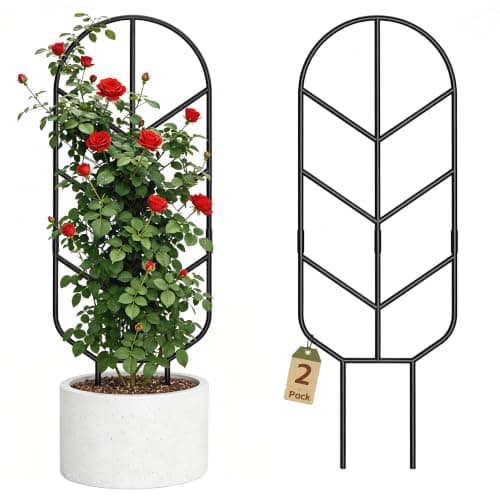
Top pick: saffruff Metal Plant Trellis, 30 in, 2 pack
Best soil amendment
The Best Soil Amendments for Houseplants
Perlite, coco coir and coir chips compared on what they actually do to a mix, with how much of each a standard bag of potting soil takes.
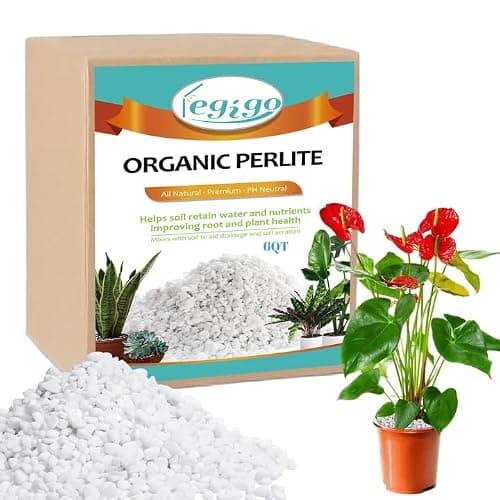
Top pick: Legigo Coarse Perlite, 6 quarts
$16.99 · 6% off
Best hygrometer
The Best Hygrometers for Plant Rooms
Indoor hygrometers ranked on published accuracy against the humidity band houseplants want, and why one meter is rarely enough.
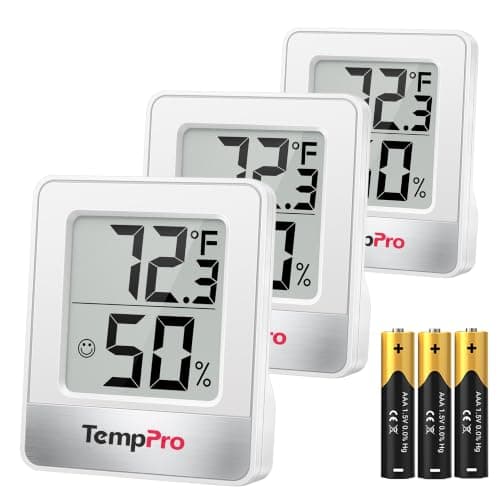
Top pick: TempPro Digital Hygrometer and Thermometer, 3 pack
$28.99 · 21% off
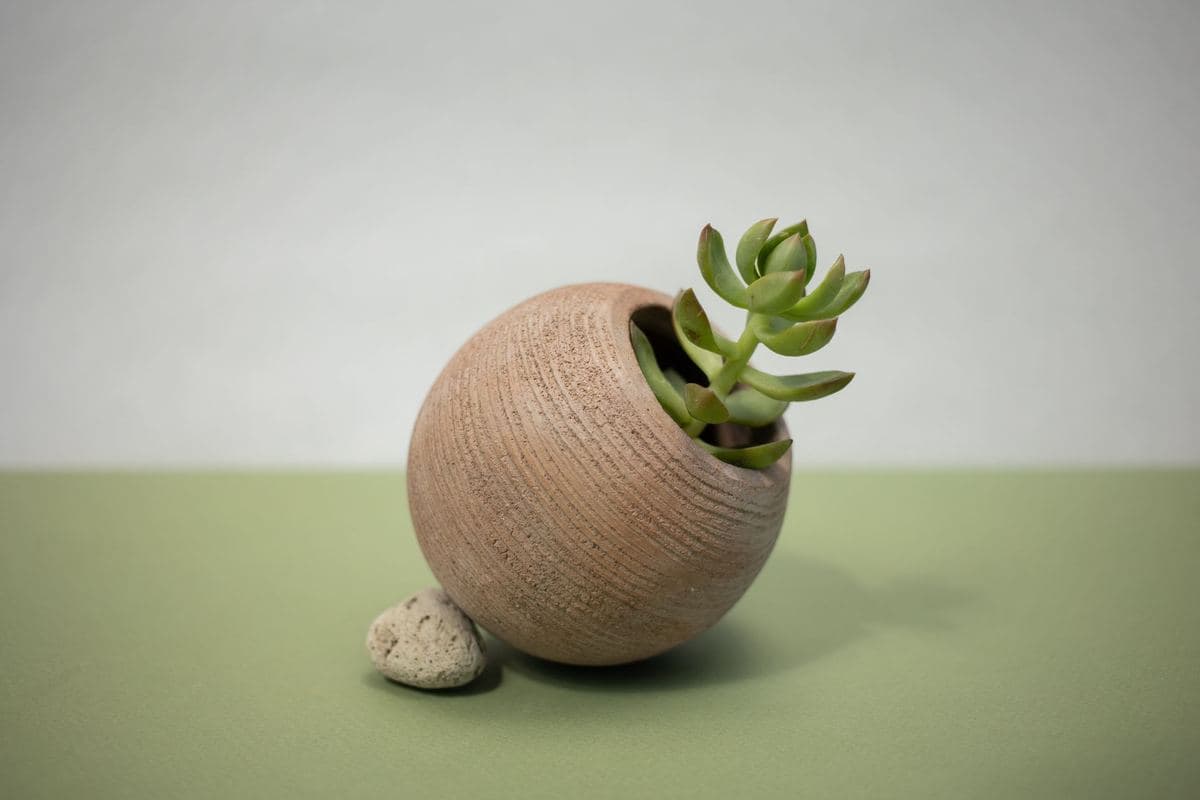
Best for a jade
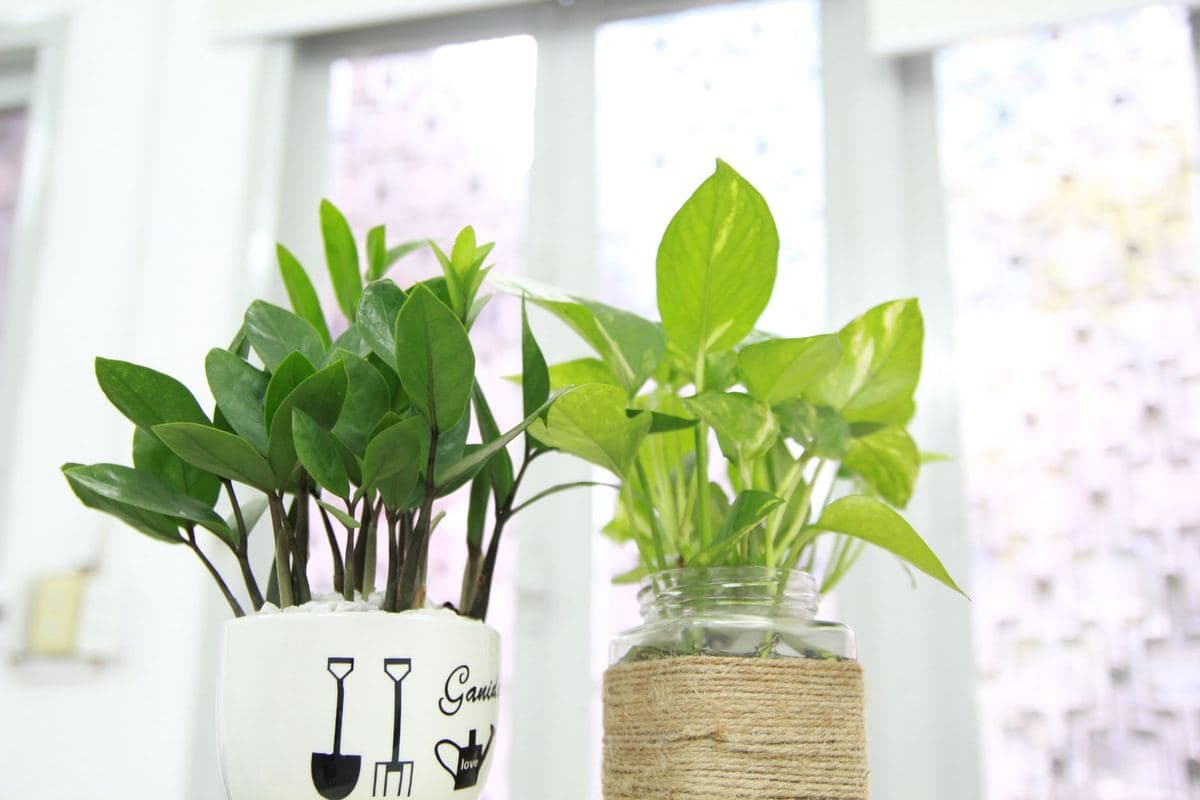
The Best Pots for a Jade Plant
Terracotta pots for a jade, ranked on rooting depth and ballast against the five-foot top-heavy tree Clemson describes, not against a rosette succulent.
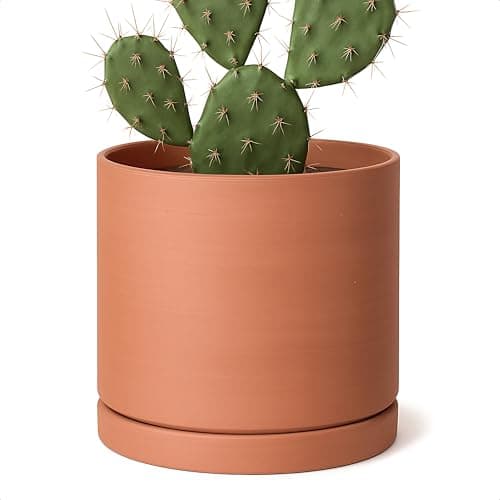
Top pick: D'vine Dev Terracotta Cylinder Pot with Saucer, 8 in, unglazed
$55.99 · 20% off
Best for a money tree
The Best Pots for a Money Tree
Pots for a Pachira aquatica ranked on drainage and ballast against the six-to-eight-foot indoor height NC State publishes, with the keep-it-in-the-nursery-pot alternative.
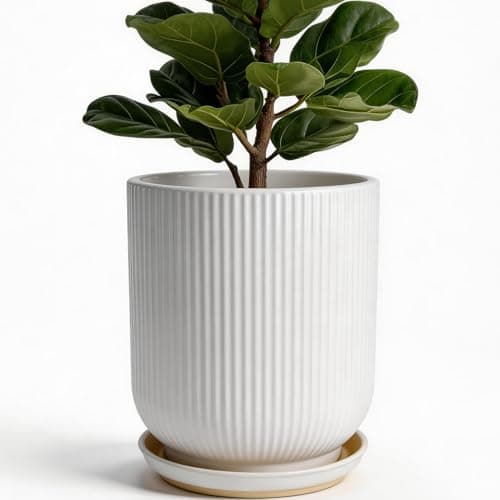
Top pick: Deep Dream 10 in Ceramic Pot, tall profile, drainage hole and saucer
$45.99 · 10% off
Head to head
Bottom Watering or Top Watering?
The two watering methods judged against extension guidance, with the arithmetic for how much water a basin has to hold and why bottom watering alone is not enough.
The guides behind these picks
The arithmetic and the reference tables the recommendations on this page are built from. All of it is on the methodology page too, in one piece.
Guide
Do Planters Need Drainage Holes?
What happens in a pot with no drainage, why a gravel layer makes it worse rather than better, and the cachepot method that fixes it for free.
Guide
Nursery Pot Size Chart
Nursery pot sizes by measured diameter with computed soil volume and watered weight, and why trade gallon labels are unreliable.
Guide
What Size Pot Does My Plant Need?
How to size a pot to a plant, when repotting is actually due, and what each size step costs in weight once the mix is watered.
Guide
Pebble Trays: How to Use One, and What It Can Do
Setting up a pebble tray correctly, the one mistake that turns it into a rot risk, and an honest account of how much humidity it adds.
Questions people actually ask
Do planters really need drainage holes?
What size pot should I use when I repot?
Is terracotta better than ceramic?
How heavy is a large planter once it is full?
Sources
- Cornell University, Greenhouse Management: bulk density of greenhouse media components
- Biology Insights: how much a cubic foot of potting soil weighs, dry and saturated
- Clemson HGIC: Indoor Plants — cleaning, fertilizing, containers and light requirements
- Clemson HGIC: Indoor Plants — watering
Product specifications are quoted from each seller's own listing and are the seller's claim, not a measurement of ours.