Planters
The Best Plant Misters for Houseplants
Sold as a humidity solution, useful as a leaf-cleaning tool, and actively wrong for some plants. Here is the honest version, then the bottles.
By Scooter M., enthusiast · Published
The short answer
Buy a mister to wash dust off broad leaves, not to raise humidity — a spray evaporates in minutes and nothing about it changes the moisture content of a room. If humidity is the actual problem, University of Minnesota Extension's advice is grouping plants and pebble trays, aiming at 40 to 60 percent. And do not mist fuzzy-leaved plants at all: both UMN and Clemson warn that water on African violet foliage causes leaf spots. Choose on capacity, a nozzle that closes, and whether you will leave it out.
Disclosure Pot & Prop earns a commission when you buy through the Amazon links on this page, at no extra cost to you. It does not change which products get recommended or what we say about them, and we have not been given any of them. How this site is funded.
Almost every plant mister is sold on the same promise: mist your tropicals to raise the humidity around them. It is a lovely ritual and it is not what happens. A fine spray lands on leaves, evaporates within minutes, and leaves the room's humidity where it was. The plants that supposedly benefit — calatheas, ferns, alocasias — want sustained humidity in the 40 to 60 percent range that University of Minnesota Extension describes, and a spray bottle cannot deliver a sustained anything.
That does not make a mister useless. It makes it a different tool from the one on the label, and once you know which tool it is the purchase gets easy — because the jobs it genuinely does are ones you can judge a bottle against.
What a mister is actually good for
- Washing dust off broad leaves. This is the real one. Dust on a monstera, fiddle leaf or rubber plant physically blocks light from the leaf surface. Misting and wiping is genuine plant care, and one of the picks here leads its own listing with exactly this use.
- Wetting the surface of propagation medium without flooding a tray of cuttings, where a stream from a can would wash them out.
- Damping a moss pole, which is the one place a spray bottle does something nothing else on this site does — see the moss pole page for why that is contested.
- Newly sown seed trays, where the surface must stay moist and a watering can is too blunt an instrument.
- Applying foliar sprays where the product instructs it — the delivery method, not the effect, is the mister's contribution.
Notice what is not on that list. Raising the humidity of a room, keeping a calathea from crisping, or substituting for watering the medium. A mister does none of those, and a bottle that claims otherwise is claiming something no listing on this page publishes a figure for.
If humidity is the real problem
University of Minnesota Extension puts the range plants want at 40 to 60 percent, and its suggestions for getting there are grouping plants together and standing them on trays of pebbles and water — with the pot sitting above the water line, never in it. That is a passive, continuous approach, which is the opposite of a spray that has evaporated before you have finished the shelf.
The pebble tray guide covers the setup and the hardware it needs. It costs about the same as a mister and it works while you are at the office, which the mister does not.
The plants you should not mist
Fuzzy leaves are the clear line. University of Minnesota Extension warns that getting water on African violet leaves can cause leaf spots, and Clemson adds that cold water in particular causes spots and ring patterns on them. That rules out African violets, and by the same logic other hairy-leaved plants where water sits on the surface instead of running off.
The second group is anything with a tight crown that holds water — a wet crown in still air is how rot starts. And the third is any plant already struggling with fungal spotting, where wet foliage in a room with no air movement makes the problem worse rather than better.
What to judge a mister on
| Specification | Why it matters | What to look for |
|---|---|---|
| Capacity | Refilling mid-shelf is why misters get abandoned | 10 oz for a few plants, 13-16 oz for a collection |
| Nozzle that closes | An open nozzle weeps onto the shelf it stands on | A locking trigger or a nozzle that screws shut |
| Glass or plastic | Decides whether it lives on the shelf or in a cabinet | Glass to display, plastic to use hard |
Quick picks
Ranked, with the published figure each pick turns on. Tap a row for the full reasoning further down this page.
| # | Product | Best for | Price |
|---|---|---|---|
| 1 | 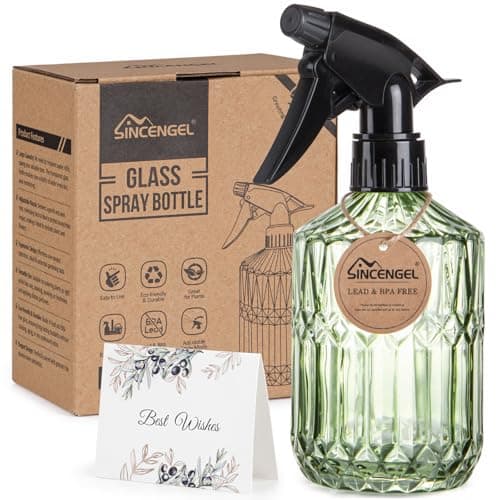 Sincengel Glass Plant Mister, 13.5 oz, adjustable nozzleGlass, larger than the plastic misters, and with a nozzle that closes properly — which is the only specification that stops a mister ruining a shelf. | A mister you leave out rather than put away | |
| 2 | 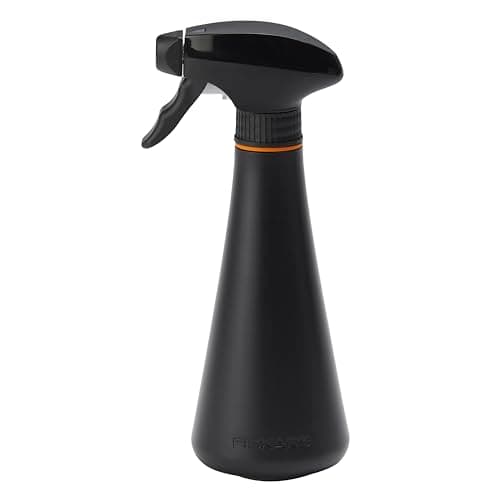 Fiskars Plant Mister Spray Bottle, 10 oz, locking nozzleA plain, light, lockable mister from a brand that warranties it — and the listing is honest enough to lead with leaf cleaning rather than pretending a spray bottle raises humidity. | Washing dust off leaves without a bottle that leaks in a drawer | |
| 3 | 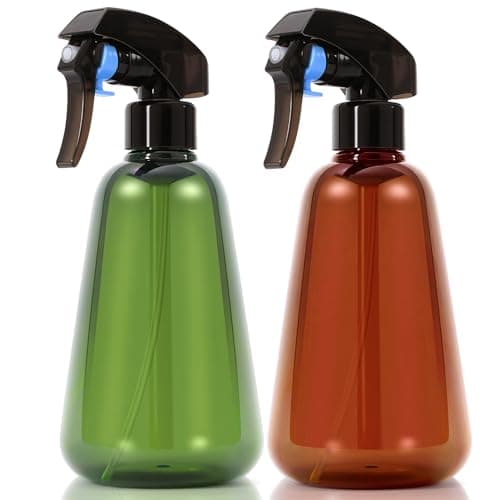 Bealee Plant Mister Spray Bottles, 16 oz, 2 packThe cheapest way to have a mister in the room where the plants are and another where they also are, which is the real reason misting stops happening. | Two bottles for less than one of anything else here | $7.17 at Amazon $7.97 · 10% off |
| 4 | 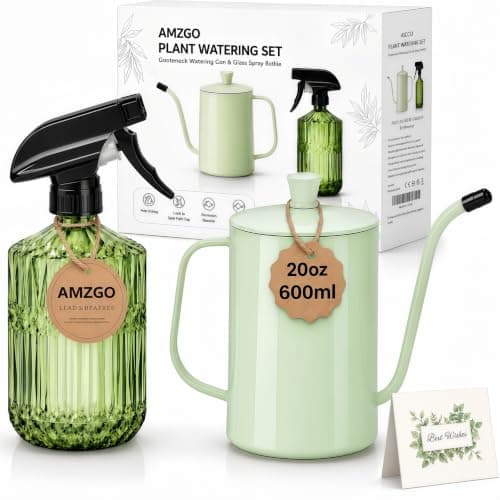 AMZGO Stainless Watering Can 20 oz and Glass Mister 13.5 oz, 2 piece setThe only metal can here and the only one with engraved capacity lines, sold with a glass mister — which makes it the tidiest way to buy both jobs at once. | A small metal can that looks like it belongs on the shelf |
Links to Amazon are affiliate links. Prices and availability are Amazon's and change without notice.
How we ranked these
Capacity first, because an empty bottle is an unused bottle; then whether the nozzle seals; then whether it is an object you will leave within reach. The Sincengel glass bottle leads on all three — largest single capacity here, a nozzle that closes fully, and the only one that looks like something you would leave on a shelf. The Fiskars is the better tool if you mist hard and often: lightest in the hand, a locking nozzle, and a listing honest enough to lead with leaf cleaning rather than humidity. The Bealee two-pack wins on the practical problem nobody accounts for, which is that the mister is always in the other room. The stainless can and glass mister set is fourth here for the same reason it is third on the watering can page — it is two decent tools at one price, and the mister in it is real glass.
Using one without doing harm
- Mist in the morning, so foliage dries during the day rather than sitting wet overnight.
- Use room-temperature water. Clemson's warning about cold water spotting leaves is specific to African violets, but tepid water costs nothing anywhere else.
- Wipe, do not just spray. For dust the mist is the softener; a cloth is what actually removes it.
- Keep it off fuzzy leaves and tight crowns, per the extension guidance above.
- Empty it if you leave it standing for weeks. Stagnant water in a warm room is not what you want to be spraying on foliage.
- Do not count it as watering. The medium still needs a can and a drainage hole.
What we deliberately do not recommend
Buying a mister to solve a humidity problem — it will not, and the pebble tray guide is the honest alternative. Misting African violets or anything else with hairy leaves. Misting in a dark room in the evening, where foliage stays wet for hours. Treating misting as watering, which is how a plant dies with a damp surface and a bone-dry root ball. And paying a premium for a bottle whose only claimed advantage is a finer mist, since no listing here publishes a droplet figure anyone could check.
Every pick, in full
We have not handled any of these. What follows is what each listing publishes, what that means once you put a watered pot on it, and who should buy something else.
1. A mister you leave out rather than put away
Sincengel Glass Plant Mister, 13.5 oz, adjustable nozzle
Glass, larger than the plastic misters, and with a nozzle that closes properly — which is the only specification that stops a mister ruining a shelf.
#ad · Price as of September 21, 2026. How we are funded
- What the listing publishes
- Published 13.5 oz glass bottle; adjustable 360 degree nozzle stated to move between a fine mist, a steady stream and fully closed; stated leak proof; 7.5 in tall, 0.66 lb empty
- Against a 10-inch pot
- No weight rating is published for this product, so there is nothing to check. That counts against it here rather than being treated as neutral.
The adjustable nozzle is doing two jobs. Fine mist is for foliage; a steady stream is for getting water into a small pot without a can; closed is what keeps it from weeping onto the shelf it is standing on.
Glass is heavier — two thirds of a pound empty before water — and it will break if it goes off a shelf. In exchange it does not cloud, does not retain smells from whatever was in it last, and looks like something you chose.
13.5 ounces is the largest mister here, which is the right way round: the bottles people actually leave out are the ones that do not need refilling every third plant.
What is good
- Largest capacity of the misters here at 13.5 oz
- Nozzle closes fully, which is what stops shelf drips
- Glass does not cloud or hold residues
What is not
- 0.66 lb empty, and heavier still full
- Glass breaks, and this one lives on a shelf edge
- No published spray droplet figure — fine mist is a claim, not a spec
Skip it if you have shaky hands or a hard floor. A dropped glass bottle among plant pots is a bad afternoon.
2. Washing dust off leaves without a bottle that leaks in a drawer
Fiskars Plant Mister Spray Bottle, 10 oz, locking nozzle
A plain, light, lockable mister from a brand that warranties it — and the listing is honest enough to lead with leaf cleaning rather than pretending a spray bottle raises humidity.
#ad · Price as of September 21, 2026. How we are funded
- What the listing publishes
- Published 10 oz capacity; fine even mist; locking nozzle to prevent accidental spraying in storage; body stated to be 30 percent post-consumer recycled plastic; 9 in tall, 0.14 lb; lifetime warranty stated
- Against a 10-inch pot
- No weight rating is published for this product, so there is nothing to check. That counts against it here rather than being treated as neutral.
The most useful thing a mister does is wash dust off broad leaves, which the listing names directly. Dust on a monstera or fiddle leaf genuinely reduces the light reaching the leaf, and wiping or misting it off is real plant care rather than ritual.
The locking nozzle matters more than it sounds. An unlocked trigger bottle in a drawer sprays the drawer, and that is how most misters end up half empty and unused.
Ten ounces is small. For a handful of plants that is a feature — it is light in the hand for the minutes it takes — and for a large collection it is two or three refills.
What is good
- Locking nozzle, so it does not spray in storage
- Light at 0.14 lb empty, which matters over a long misting session
- Lifetime warranty stated, and a 30 percent recycled body
What is not
- 10 oz empties fast across a large collection
- Trigger bottles tire the hand faster than a pump sprayer
- Plastic, where the glass options look better on a shelf
Skip it if you want something to leave out on display. This is a tool, and the glass misters here are the ones that look like objects.
3. Two bottles for less than one of anything else here
Bealee Plant Mister Spray Bottles, 16 oz, 2 pack
The cheapest way to have a mister in the room where the plants are and another where they also are, which is the real reason misting stops happening.
- What the listing publishes
- Published 16 oz (500 ml) per bottle, 2 pack; PET and PP construction stated BPA-free; leakproof 360 degree cap closure with an O-ring; 7.1 in tall, 0.45 lb for the pair
- Against a 10-inch pot
- No weight rating is published for this product, so there is nothing to check. That counts against it here rather than being treated as neutral.
Sixteen ounces each is the largest capacity on this page and there are two of them. If your plants are split across a bedroom and a living room, the honest reason a mister goes unused is that it is always in the other room.
The sealing is the part worth noting: a twisting 360 degree cap with an O-ring, stated leakproof. On a bottle this cheap that is the specification most likely to be optimistic, but it is at least a stated mechanism rather than a claim of quality.
These are plain semi-transparent bottles. Nobody will compliment them, and being able to see the water level without picking the bottle up is a small daily advantage over opaque plastic and tinted glass.
What is good
- 16 oz each, the largest capacity here, and two of them
- Named sealing mechanism — O-ring in a 360 degree cap
- Semi-transparent, so the level is visible
What is not
- Plainest-looking option on the page
- PET bottles scratch and cloud with age
- Leakproof at this price is the claim most likely to be tested
Skip it if you want one nice bottle on display. This is the practical two-room answer, not the decorative one.
4. A small metal can that looks like it belongs on the shelf
AMZGO Stainless Watering Can 20 oz and Glass Mister 13.5 oz, 2 piece set
The only metal can here and the only one with engraved capacity lines, sold with a glass mister — which makes it the tidiest way to buy both jobs at once.
#ad · Price as of September 21, 2026. How we are funded
- What the listing publishes
- Published 20 oz stainless steel can with a gooseneck long spout and laser-engraved capacity lines, plus a 13.5 oz glass mister with an adjustable 360 degree nozzle; can stated 9.2 by 5.43 by 3.35 in; powder-coated exterior; 1.29 lb for the set
- Against a 10-inch pot
- No weight rating is published for this product, so there is nothing to check. That counts against it here rather than being treated as neutral.
Twenty ounces is small — about 0.6 liters, which is two thirds of what a 6-inch pot takes for a full soak. This is a can for a desk, a windowsill and a few small pots, not for a collection. Bought as a can for floor plants it will disappoint immediately.
What it does well is sit out. Stainless with a powder-coated finish and a gooseneck spout is an object you leave on the shelf rather than hide under the sink, and the engraved capacity lines mean it measures as well as the marked plastic can does.
The mister in the box is a real glass bottle with an adjustable nozzle rather than a token extra, which is why this appears on both the watering and misting pages. Two decent tools at the price of one mid-range one.
What is good
- Stainless steel with engraved capacity lines
- Gooseneck spout waters at soil level without wetting leaves
- Includes a genuine glass mister, not a throwaway
What is not
- 20 oz is under one full soak for even a 6-inch pot
- Metal and glass together weigh more than either plastic alternative
- Two small items to store rather than one
Skip it if you have more than a few small pots. The capacity makes this a desk tool, and a 1.8 L can is the one that waters a collection.
Questions people actually ask
Does misting plants actually increase humidity?
What is a plant mister good for then?
Which plants should not be misted?
Glass or plastic plant mister?
How often should I mist my plants?
Can I mist instead of watering?
Sources
- University of Minnesota Extension: African violets — containers, wick watering and care
- Clemson HGIC: African Violet — light, watering, fertilizing and problems
- Michigan State University Extension: Smart Gardening — growing houseplants indoors
- Clemson HGIC: Indoor Plants — watering
Product specifications are quoted from each seller's own listing and are the seller's claim, not a measurement of ours.