Planters
The Best Humidifiers for Indoor Plants
Two units here publish the same mist rate from tanks three times apart. Once you see that, the whole category stops being confusing.
By Scooter M., enthusiast · Published
The short answer
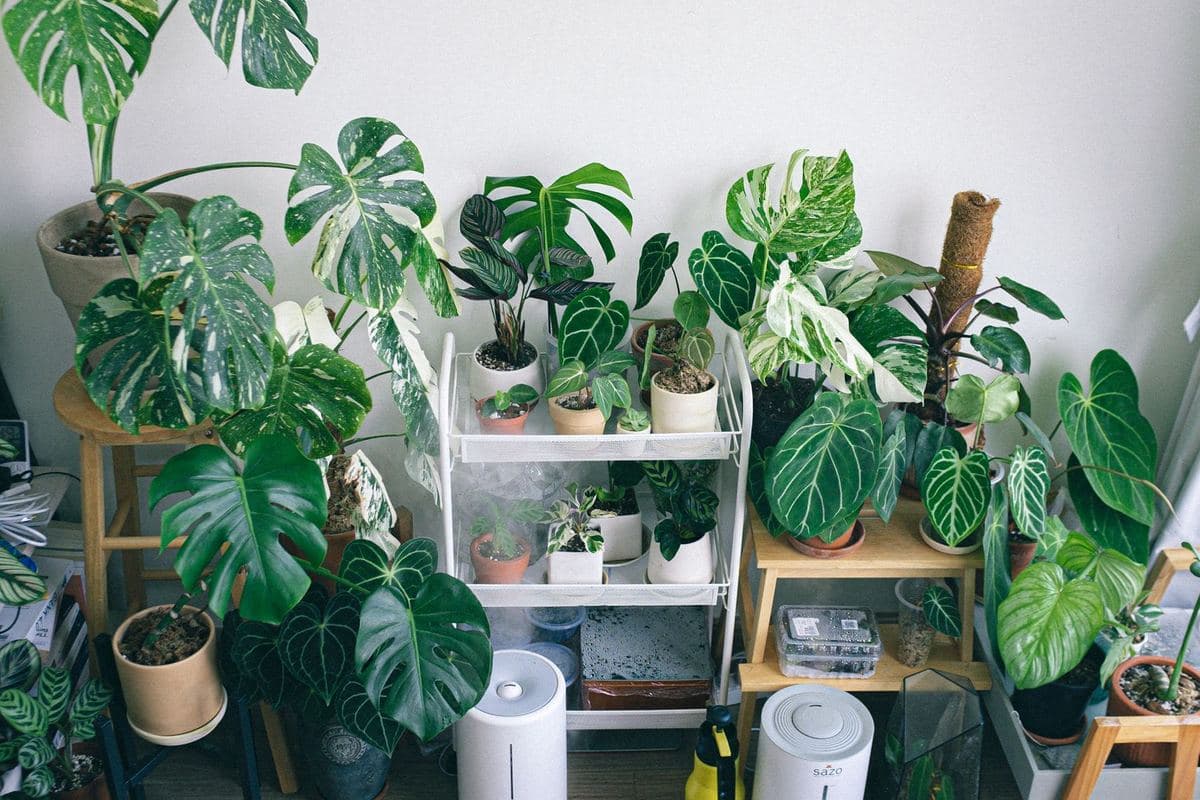
Buy a humidistat if you can, because it is the only feature that targets a humidity level rather than just making mist until the tank runs dry — and 40 to 60 percent is the band University of Minnesota Extension describes for houseplants. Ignore tank size as a measure of power: the 2 L and the 6 L unit on this page publish the identical 200 mL/h output, so the bigger tank buys refill interval, not humidity. Put the unit near the plants rather than in the middle of the room, and treat every "covers 500 sq ft" claim as marketing, because none of them states what humidity it reaches or under what conditions.
Disclosure Pot & Prop earns a commission when you buy through the Amazon links on this page, at no extra cost to you. It does not change which products get recommended or what we say about them, and we have not been given any of them. How this site is funded.
This site has spent a while telling people what does not work. Misting does not raise humidity — the mister page says so plainly and declines to credit any spray bottle with a figure. A pebble tray does something genuinely useful but small and local, which is its own guide. Neither page ever got around to the appliance that actually moves the number.
So here it is, with the same discipline applied. A humidifier does real work. It is also sold on two specifications that tell you almost nothing, and the thing that matters most is a feature roughly a fifth of them have.
Tank size is not power
This is the finding that reorganizes the whole category, and it fell out of reading five listings side by side.
That is not a criticism of either product. It is the correct way to read the category: tank volume is a refill interval, and mist rate is the output. Once those are separated, choosing gets easy, because you can work out both for every unit here.
tank volume in mL / published runtime in hours = mL per hour
6,000 mL / 60 h = 100 mL/h. 2,500 mL / 25 h = 100 mL/h. 2,000 mL / 10 h on high = 200 mL/h. 800 mL / 10 h = 80 mL/h.
Derived from each listing's own two published figures, not quoted. The derivation is checkable on the one listing that publishes both: it states 200 mL/h AND 10 hours on high from a 2 L tank, and 2,000 divided by 10 is exactly 200. Where a runtime is given "on low", the derived rate is the low rate.
Run that across the page and the output rates land between roughly 80 and 200 mL an hour whatever you spend. What changes is how often you refill.
| Unit | Tank | Output | Time per fill |
|---|---|---|---|
| Humidistat 6 L | 6,000 mL | ~100 mL/h (derived, low) | Up to 60 h stated |
| Top-fill 6 L | 6,000 mL | 200 mL/h (published) | About 30 h at full output |
| Quiet 2.5 L | 2,500 mL | ~100 mL/h (derived, low) | Up to 25 h stated |
| Shelf 2 L | 2,000 mL | 200 mL/h (published) | 10 h high, 24 h low stated |
| Cordless 800 mL | 800 mL | ~80 mL/h (derived) | About 10 h stated |
The feature that actually matters: a humidistat
Almost every humidifier is an open loop. You set a dial, it produces mist at that rate, and it keeps producing mist until the tank is empty — regardless of whether the room is at 25 percent humidity or 70. It has no idea. It is a kettle with a fan.
A humidistat closes that loop. You set a target, the unit measures the room, and it runs until it gets there and then stops. If your actual goal is the 40 to 60 percent range University of Minnesota Extension describes for houseplants — and it should be — this is the only feature on the page that can aim at it. Exactly one unit here has one.
Why "covers 500 sq ft" is not a specification
Coverage claims appear on most of this category and they are the emptiest number in it. "Up to 500 square feet" does not say to what humidity, from what starting point, at what temperature, in how long, or with the door open or shut. Two of the five units here publish a square footage; two publish none at all; and not one attaches a humidity target to it.
Compare that with the mist rate, which is a real physical quantity you can divide into a tank. This site will use the rate and record the coverage claim as a claim. No product on this page is credited with bringing any room to any humidity level, because no listing here publishes that figure and we have not measured one.
Put it near the plants
The pebble tray guide already established the physics that matters here: a room's air is constantly being replaced, and in winter the heating is drying the whole space faster than any one appliance wets it. That is why a tray does local work rather than room work.
A humidifier is far more powerful than a tray and the same principle still applies at the edges. Aimed into an open room from the middle of the floor, a 100 mL/h output is fighting the ventilation of the entire space. Standing beside a shelf of plants with the nozzle pointed at them, the same output does obvious, visible work. Group the plants, put the unit with them, and you get the effect you were paying for.
- Point the nozzle at the plants, not at a wall. Mist landing on plaster is a damp problem, not a humidity strategy.
- Do not aim it directly at the foliage from six inches away. Continuously wet leaves in still air invite the fungal spotting the mister page warns about, and fuzzy-leaved plants should not be wetted at all.
- Group plants around it. Plants transpire; a cluster holds its own local humidity far better than the same plants spread across a room.
- Keep it off wooden furniture and away from electronics. Ultrasonic mist settles, and it carries whatever is dissolved in your tap water.
- Watch the windows. Condensation running down cold glass means you have passed the point where the room can hold more, and that is a mold problem rather than a plant benefit.
The two things that go wrong
White dust. Ultrasonic humidifiers — which is all five here — atomize whatever is in the water, minerals included. In a hard-water area that means a fine white film on nearby surfaces and on leaves. Distilled or filtered water removes it entirely; nothing else really does.
Biofilm. A warm tank of standing water is exactly what you would design to grow things in, and a humidifier that is never cleaned disperses that into the air you and your plants are in. This is the real maintenance cost of the category and it is why one listing here leads on tank access rather than on another coverage claim. Empty it when it is not in use, rinse it regularly, and buy the one you will actually be willing to scrub.
Quick picks
Ranked, with the published figure each pick turns on. Tap a row for the full reasoning further down this page.
| # | Product | Best for | Price |
|---|---|---|---|
| 1 | 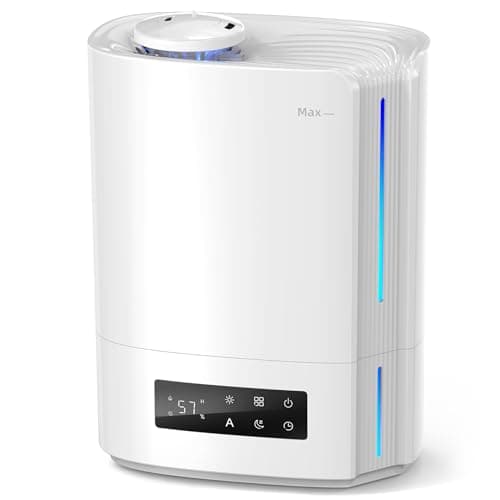 BREEZOME Ultrasonic Humidifier, 6 L, with humidistatThe only unit here that closes the loop. Everything else in this category makes mist until the tank is empty; this one measures the room and stops. | Actually holding a humidity level instead of just making mist | |
| 2 | 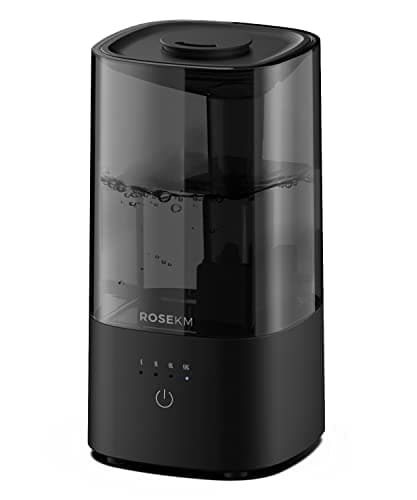 Rosekm Cool Mist Humidifier, 2 L, published 200 mL/hPublishes its mist rate — almost nothing in this category does — and the figure it gives is the same 200 mL/h as the 6 L unit here at nearly twice the price. | A plant shelf, from the listing that publishes the number that matters | |
| 3 | 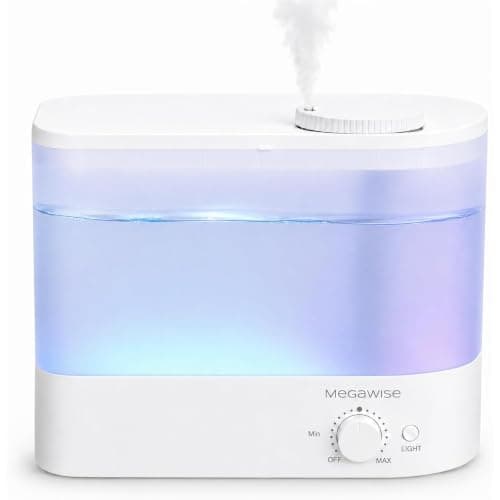 MEGAWISE Top Fill Cool Mist Humidifier, 6 L, published 200 mL/hThe same published 200 mL/h as the 2 L unit, in three times the tank. That is what you are paying the difference for: thirty hours at full output instead of ten. | The longest gap between refills at a published output rate | $42.49 at Amazon $49.99 · 15% off |
| 4 | 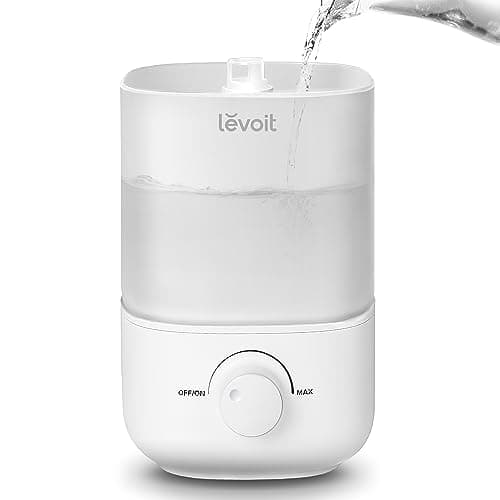 Levoit Top Fill Cool Mist Humidifier, 2.5 L, 25 dBThe quietest published figure here by a small margin, from the brand that made top-fill standard — and the only one whose listing leads with cleaning access. | A bedroom where the plants live and you need it genuinely silent | $29.79 at Amazon $39.99 · 26% off |
| 5 | 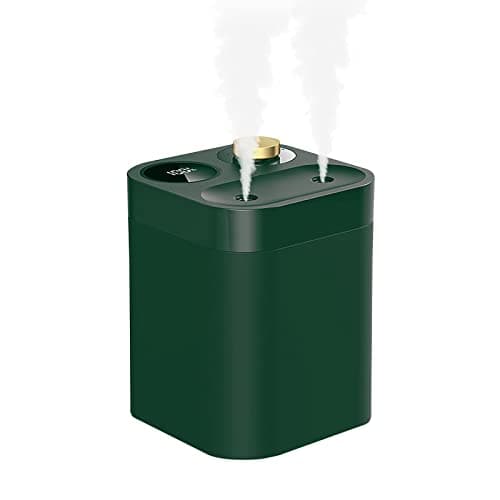 Orfonbi Cordless Plant Humidifier, 800 mL, batterySolves a problem none of the others address, which is that the plant shelf and the nearest socket are usually not in the same place. | A plant shelf with no outlet anywhere near it |
Links to Amazon are affiliate links. Prices and availability are Amazon's and change without notice.
How we ranked these
On whether the unit can target a humidity level at all, then on published output, then on refill interval, then on the practical things — noise, footprint, how you fill it. The humidistat unit leads because closing the loop is the only genuine functional difference in this category and everything else is an open loop with a dial. The 2 L shelf unit is second on the strength of publishing a mist rate that cross-checks against its own runtime, having a published footprint small enough to actually sit among pots, and costing the least here. The 6 L top-fill is third: the same published 200 mL/h in three times the tank, which is the clearest illustration of this page's whole argument. The 2.5 L unit is fourth for the lowest published noise figure and a listing built around cleaning access, which is where these really fail. The cordless unit is last and is here for one reason nothing else addresses — the plant shelf and the nearest socket are usually not in the same place.
| Your situation | Buy | Why |
|---|---|---|
| You want a humidity level held | Humidistat 6 L | The only unit here that measures and stops |
| A shelf of plants, tight space | Shelf 2 L | Published 5.1 in square footprint and a real rate |
| You do not want to refill daily | Top-fill 6 L | Same 200 mL/h, about 30 h at full output |
| It lives in the bedroom | Quiet 2.5 L | 25 dB published, lights off |
| No socket near the plants | Cordless 800 mL | Nothing else here runs off a cord |
| You are not sure the room is dry | A hygrometer first | Measure before you buy an appliance |
| One or two plants on a sill | A pebble tray | Local, passive, and a fraction of the cost |
What we deliberately do not recommend
Choosing on tank size as if it were power — the 2 L and 6 L units here publish the same output. Believing a coverage figure that names no humidity target. Buying an appliance before checking with a hygrometer whether the room is actually dry. Running one in the middle of an open room and expecting the plants in the corner to notice. Aiming continuous mist at foliage at close range, and misting fuzzy-leaved plants at all. Running hard tap water through an ultrasonic unit and then wondering about the white film. And leaving water standing in a tank between uses, which is the one maintenance failure that turns a helpful appliance into a problem.
Every pick, in full
We have not handled any of these. What follows is what each listing publishes, what that means once you put a watered pot on it, and who should buy something else.
1. Actually holding a humidity level instead of just making mist
BREEZOME Ultrasonic Humidifier, 6 L, with humidistat
The only unit here that closes the loop. Everything else in this category makes mist until the tank is empty; this one measures the room and stops.
#ad · Price as of September 27, 2026. How we are funded
- What the listing publishes
- Published 6 L (1.6 gallon) tank with stated runtime up to 60 hours; states an intelligent humidistat that maintains a pre-set humidity level and displays the real-time reading; top-fill with a detachable tank; sleep mode and auto shut-off when dry; listing claims rooms up to 500 sq ft
- Against a 10-inch pot
- No weight rating is published for this product, so there is nothing to check. That counts against it here rather than being treated as neutral.
A humidistat is the difference between a humidifier and a fog machine. Without one you are running open-loop — the unit produces mist at whatever rate you dialed in, regardless of whether the room is at 30 percent or 70. With one, you set a target and it works toward it and stops. If you care about the 40 to 60 percent band extension guidance describes, this is the only feature on this page that can aim at it.
The real-time readout matters almost as much as the control. It turns the question "is my apartment actually dry?" from a guess into a number, and it is common to discover the room was at 45 percent all along and the crisping leaves were something else.
Six liters at the listing's stated 60 hours works out to about 100 mL an hour on its low setting — a derivation from two published figures rather than a spec, but it puts the unit in the same output band as everything else here. What the tank buys is two and a half days between refills.
What is good
- Publishes a humidistat that targets and holds a set level
- Shows the real-time humidity reading, so you can check the premise
- Longest stated runtime here at up to 60 hours
What is not
- Most expensive unit on this page
- The 500 sq ft claim comes with no target humidity or conditions attached
- A 6 L tank full of standing water needs cleaning on a schedule you will not enjoy
Skip it if you want to put it on a plant shelf. At 13.4 in tall with a 6 L tank this is a floor-standing object, and the small units here fit a shelf.
2. A plant shelf, from the listing that publishes the number that matters
Rosekm Cool Mist Humidifier, 2 L, published 200 mL/h
Publishes its mist rate — almost nothing in this category does — and the figure it gives is the same 200 mL/h as the 6 L unit here at nearly twice the price.
#ad · Price as of September 27, 2026. How we are funded
- What the listing publishes
- Published 2 L tank with four mist levels up to a stated 200 mL/h; stated 24 hours on low and 10 hours on high; below 26 dB; published 5.1 by 5.1 in footprint; filter-free with a 360 degree nozzle; listing claims rooms up to 320 sq ft
- Against a 10-inch pot
- No weight rating is published for this product, so there is nothing to check. That counts against it here rather than being treated as neutral.
Two published numbers that agree with each other is a rare thing in this category and worth pointing out. The listing states 200 mL/h at maximum and 10 hours of runtime on high. Two liters divided by ten hours is exactly 200 mL/h. The specification sheet is internally consistent, which is more than most of this category manages and is the reason the same derivation is trusted elsewhere on this page.
Now compare it with the 6 L unit further down: identical published 200 mL/h. Three times the tank, the same mist rate. That single comparison is the whole argument of this page — you are buying refill interval, not humidifying power.
A 5.1 by 5.1 inch footprint is published, which matters if this is going on a shelf beside plants rather than on the floor. Most of this category publishes overall dimensions and leaves you to work out whether it fits.
What is good
- Publishes an actual mist rate, and it cross-checks against its own runtime
- Small published footprint that genuinely fits a plant shelf
- Filter-free, so there is no consumable to forget
What is not
- No humidistat, so it runs open-loop until the tank empties
- Two liters is one day at a useful output setting
- The 320 sq ft claim has no target humidity attached to it
Skip it if you will not be there to refill it daily. At its own published rate, 2 L is ten hours at maximum, and the larger tanks exist for exactly that reason.
3. The longest gap between refills at a published output rate
MEGAWISE Top Fill Cool Mist Humidifier, 6 L, published 200 mL/h
The same published 200 mL/h as the 2 L unit, in three times the tank. That is what you are paying the difference for: thirty hours at full output instead of ten.
- What the listing publishes
- Published 6 L top-fill tank; ultrasonic system stated rated at 200 mL/h, adjustable by rotary dial; stated below 28 dB(A); low-water mist stop with a red indicator; optional tank light
- Against a 10-inch pot
- No weight rating is published for this product, so there is nothing to check. That counts against it here rather than being treated as neutral.
Put this next to the 2 L unit and the category stops being confusing. Both publish 200 mL/h. Six liters at 200 mL/h is thirty hours flat out; two liters is ten. The extra money buys you twenty more hours before you carry a tank to the sink, and nothing else.
Top-fill is the feature that decides whether you keep using a humidifier. Bottom-fill units have to be lifted off the base, turned upside down, unscrewed and carried back dripping; a top-fill lid means you pour a jug in where it stands. On a 6 L tank that difference is the whole ownership experience.
It publishes a rate and a noise figure and then stops. There is no humidistat, no coverage claim and no real-time reading, so you are setting the dial by eye and judging the result by how the plants look.
What is good
- Publishes its 200 mL/h rating rather than implying it
- Six liters at that rate is about thirty hours at full output
- Top-fill, which is what makes a large tank livable
What is not
- No humidistat, so there is no way to target a humidity level
- Publishes no coverage figure at all, not even a marketing one
- Ultrasonic units disperse hard-water minerals as white dust
Skip it if you want the unit to manage itself. Without a humidistat this runs until you turn it off, and the humidistat unit here is the one that stops on its own.
4. A bedroom where the plants live and you need it genuinely silent
Levoit Top Fill Cool Mist Humidifier, 2.5 L, 25 dB
The quietest published figure here by a small margin, from the brand that made top-fill standard — and the only one whose listing leads with cleaning access.
- What the listing publishes
- Published 2.5 L tank with stated runtime up to 25 hours on low; stated noise as low as 25 dB with all lights off; top-fill single-step design; knob-adjustable mist with a 360 degree nozzle; auto shut-off when the tank is empty or removed
- Against a 10-inch pot
- No weight rating is published for this product, so there is nothing to check. That counts against it here rather than being treated as neutral.
Twenty-five decibels is the lowest published noise figure on this page, and in a bedroom that is the specification that decides whether the thing stays plugged in. The lights-off detail is part of the same thought: a humidifier with a glowing tank is a night light you did not ask for.
No mist rate is published, but the arithmetic is available: 2.5 liters over the stated 25 hours on low is about 100 mL an hour. That is a derived figure rather than a quoted one, and it lands in the same band as everything else here.
Cleaning is the feature this listing actually argues for — a wide tank opening, detachable parts and no hard-to-reach corners in the base. Given that the real failure mode of a humidifier is biofilm in a tank nobody wants to scrub, that is a more honest selling point than another coverage claim.
What is good
- Lowest published noise figure here at 25 dB, with lights off
- Built around tank access, which is where these actually fail
- Auto shut-off when empty or when the tank is lifted
What is not
- Publishes no mist rate, so the output has to be derived
- No humidistat and no humidity readout
- "Large room" appears with no square footage behind it
Skip it if you need it to run unattended for days. Two and a half liters is one day, and the 6 L units here are the answer to that problem.
5. A plant shelf with no outlet anywhere near it
Orfonbi Cordless Plant Humidifier, 800 mL, battery
Solves a problem none of the others address, which is that the plant shelf and the nearest socket are usually not in the same place.
#ad · Price as of September 27, 2026. How we are funded
- What the listing publishes
- Published 800 mL tank with a stated 2000 mAh battery giving up to 10 hours cordless and a 2 hour recharge; USB plug-and-play when wired; five spray modes across one or two nozzles; stated 28 dB; optional 4 or 8 hour auto shut-off
- Against a 10-inch pot
- No weight rating is published for this product, so there is nothing to check. That counts against it here rather than being treated as neutral.
Cordless is the entire reason to consider this. A grow shelf in a corner, a windowsill across the room, a plant stand in a rental with two outlets — the constraint is real, and every other humidifier here needs to be within a cord's length of a wall. Ten hours on a charge covers a working day beside the plants.
Eight hundred milliliters is a small tank and the listing's own figures make that plain: up to 10 hours cordless, or about 8 depending on the spray mode. That derives to roughly 80 to 100 mL an hour, so the output is comparable to the mains units and the tank is what runs out.
Dual nozzles and five modes sound like padding but the intermittent modes are the useful part on a small tank — running half the time roughly doubles how long a fill lasts, which on 800 mL is the difference between a morning and a day.
What is good
- Genuinely cordless, which no other unit here is
- Small enough to sit among the pots rather than beside them
- Intermittent modes stretch a small tank through a whole day
What is not
- 800 mL is the smallest tank here by a wide margin
- A battery is a part that degrades, unlike everything else on this page
- No humidistat, no coverage figure and no published mist rate
Skip it if there is a socket near your plants. You are paying for a battery you do not need and accepting a fifth of the tank to get it.
Questions people actually ask
Do indoor plants actually need a humidifier?
What size humidifier do I need for plants?
Where should I put a humidifier for my plants?
What is a humidistat and do I need one?
Can a humidifier hurt my plants?
Why does my humidifier leave white dust?
Is a humidifier better than a pebble tray?
Sources
- University of Minnesota Extension: African violets — containers, wick watering and care
- Michigan State University Extension: Smart Gardening — growing houseplants indoors
- Clemson HGIC: Indoor Plants — cleaning, fertilizing, containers and light requirements
Product specifications are quoted from each seller's own listing and are the seller's claim, not a measurement of ours.