Planters
Pebble Trays: How to Use One, and What It Can Do
They work, in a small way, in a small area. Here is how to set one up properly and what to expect from it.
By Scooter M., enthusiast · Published · Last updated
The short answer
Fill a wide, shallow tray with pebbles, add water to just below the top of the pebbles, and stand the pot on the pebbles — not in the water. The pot base must stay above the waterline, which is the mistake that turns a humidity aid into a rot risk. Expect a modest, local effect in the air immediately around the plant, not a change to the room.
Disclosure Pot & Prop earns a commission when you buy through the Amazon links on this page, at no extra cost to you. It does not change which products get recommended or what we say about them, and we have not been given any of them. How this site is funded.
Pebble trays occupy an odd position in plant advice: recommended constantly, dismissed regularly, and rarely explained. The mechanism is simple — water evaporating from a tray raises humidity in the air immediately above it — and so is the limitation. The volume of air affected is small, the room's ventilation constantly replaces it, and central heating in winter is drying the whole space faster than one tray can wet it. Where that gap is too wide for a tray to close, a humidifier is the appliance that actually closes it.
That does not make them useless. It makes them a local, modest intervention, which is worth knowing before you judge whether one is working. If your calathea's leaf edges are crisping, a pebble tray is a reasonable thing to try; it is not a substitute for a humidifier if the room genuinely runs very dry.
Setting one up
- Choose a tray wider than the pot — ideally noticeably wider, because the evaporating surface is what does the work and a tray the same size as the pot is mostly covered by it.
- Fill it with pebbles to about three quarters of its depth. Polished stones, gravel, expanded clay — anything that will not break down in water.
- Add water to just below the top of the pebbles. The waterline must sit below the level the pot base will rest on.
- Stand the pot on the pebbles. On, not in. This is the whole point of the pebbles.
- Top up as it evaporates, and empty and rinse the tray every few weeks.
The mistake that matters
Letting the pot base sit in the water. At that point you have not built a humidity tray, you have built a reservoir — the mix wicks water up through the drainage hole continuously, the lower root zone stays saturated, and you get exactly the condition that causes root rot. The pebbles exist solely to hold the pot above the waterline. If the pot is heavy enough to settle between the stones, use larger pebbles or a rack.
What to realistically expect
| Situation | Realistic effect |
|---|---|
| One plant on a tray, still air | A modest local increase right around the plant |
| Several plants grouped on trays | Better — plants transpire and help each other |
| Plant near a radiator in winter | Largely overwhelmed by the heat source |
| A drafty spot or near a vent | Almost nothing — the air is replaced too fast |
| Whole room humidity | No measurable change |
What works better, in order
- Grouping plants together. Plants release water vapor as they transpire, so a cluster creates its own slightly humid pocket. It is free and it is more effective than a tray.
- Moving the plant away from a heat source. A radiator directly below a plant undoes any tray you can build.
- A humidifier, if the room is genuinely dry and the plants genuinely need it. This is the honest answer for calatheas and maranta in a heated apartment in winter.
- A pebble tray, which is cheap, harmless when set up correctly, and worth doing alongside the above rather than instead of them.
- Not misting. The effect lasts minutes, and on some plants persistently wet foliage encourages fungal problems.
Every pick, in full
We have not handled any of these. What follows is what each listing publishes, what that means once you put a watered pot on it, and who should buy something else.
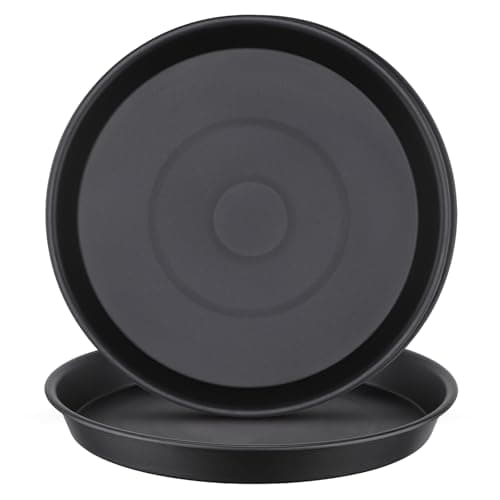
1. A big pot that needs a saucer and some humidity
GREANER 12 in Plant Saucer and Pebble Tray, 2 pack
A 12-inch saucer with enough depth to double as a pebble tray, which is the size that is expensive to buy separately.
#ad · Price as of October 18, 2026. How we are funded
- What the listing publishes
- 12 in saucers, deep enough to hold pebbles and water under a large pot
- Against a 10-inch pot
- No weight rating is published for this product, so there is nothing to check. That counts against it here rather than being treated as neutral.
12 inches is the saucer size that matches the floor pots people actually own, and buying one alone usually costs more than a two-pack does here.
Deep enough for pebbles means the pot sits above the water rather than in it, so it works as a humidity tray as well as a drip catcher.
Black hides the mineral scale that clouds a clear saucer, at the cost of not being able to see the water level.
What is good
- The awkward large saucer size, in a two-pack
- Deep enough to work as a pebble tray
- Hides hard-water scale
What is not
- Opaque, so you cannot see standing water
- 12 in only
- Plastic flexes when carried full
Skip it if you need to see the water. A clear saucer shows a flooded tray at a glance and a black one does not.
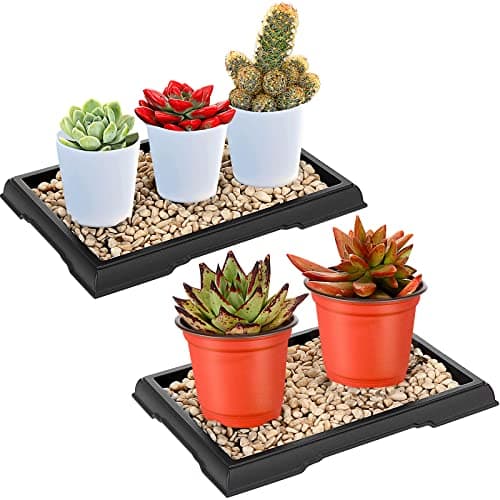
2. Raising humidity around one small plant
Pinkunn Bonsai Humidity Tray, 7.8 by 5.5 in, 2 pack
A shallow rectangular tray sized to sit under a single pot, which is the only shape a pebble tray actually works in.
#ad · Price as of October 18, 2026. How we are funded
- What the listing publishes
- 7.8 by 5.5 in rectangular plastic trays, designed to hold pebbles and water
- Against a 10-inch pot
- No weight rating is published for this product, so there is nothing to check. That counts against it here rather than being treated as neutral.
A pebble tray raises local humidity by evaporation, and evaporation is proportional to surface area. A deep round saucer has almost no exposed water; a wide shallow rectangle has a lot.
The pot must sit on the pebbles, above the water line. A pot standing in the water is being bottom-watered permanently, which is a different and usually worse intervention.
The effect is local and modest. It is measurable a few inches from the tray and gone across the room, so it belongs under the one plant that needs it.
What is good
- A wide shallow shape maximizes evaporating surface
- Rectangular fits a sill better than a round saucer
- Two trays, so two plants
What is not
- The humidity effect is local and modest
- Standing water needs refreshing or it grows things
- Pebbles are not included
Skip it if you want to humidify a room. A pebble tray does not do that at any size, and this is a per-plant measure.
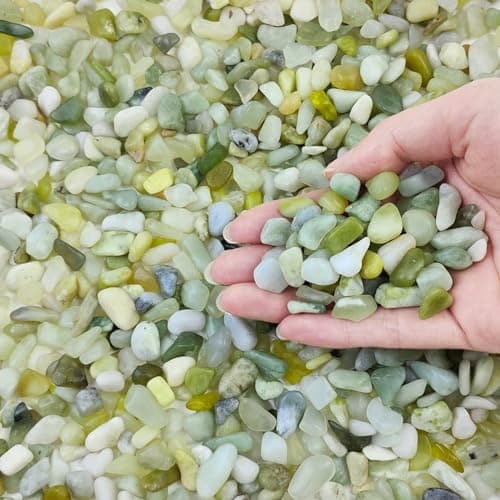
3. Filling a pebble tray properly
FANTIAN Polished Pebbles for Plants, 3/8 in, 2 lb
Publishes the pebble size, which is the only specification a pebble tray depends on. Too fine and it packs, too coarse and it wobbles.
#ad · Price as of October 18, 2026. How we are funded
- What the listing publishes
- Published 3/8 in pebble size; 2 lb bag; polished
- Against a 10-inch pot
- No weight rating is published for this product, so there is nothing to check. That counts against it here rather than being treated as neutral.
3/8 inch is the right size band. Finer gravel packs down and stops water moving through it; larger stones leave a pot rocking on three contact points.
Two pounds fills one small tray. A 12-inch saucer wants noticeably more than one bag.
Polished stone also works as a top dressing, which suppresses fungus gnats by making the mix surface unattractive to them.
What is good
- Publishes the pebble size, which decides whether the tray works
- Doubles as a top dressing against fungus gnats
- Washable and reusable indefinitely
What is not
- Two pounds is one small tray
- Polished stone is more expensive than plain gravel
- Needs rinsing before first use
Skip it if you are filling several large trays. Buy plain aquarium gravel by weight, because polished stone is priced for looks.
Questions people actually ask
Do pebble trays actually increase humidity?
Should the pot sit in the water on a pebble tray?
How often should I refill a pebble tray?
Is misting better than a pebble tray?
Sources
- Clemson HGIC: Indoor Plants — watering
- Michigan State University Extension: Smart Gardening — growing houseplants indoors
- University of Georgia Extension B1318: Growing Indoor Plants with Success
Product specifications are quoted from each seller's own listing and are the seller's claim, not a measurement of ours.