Grow Lights
Apartment Plants for Beginners
Seven plants that tolerate an apartment, sorted by the light they need rather than by how forgiving they are supposed to be.
By Scooter M., enthusiast · Published · Last updated
The short answer
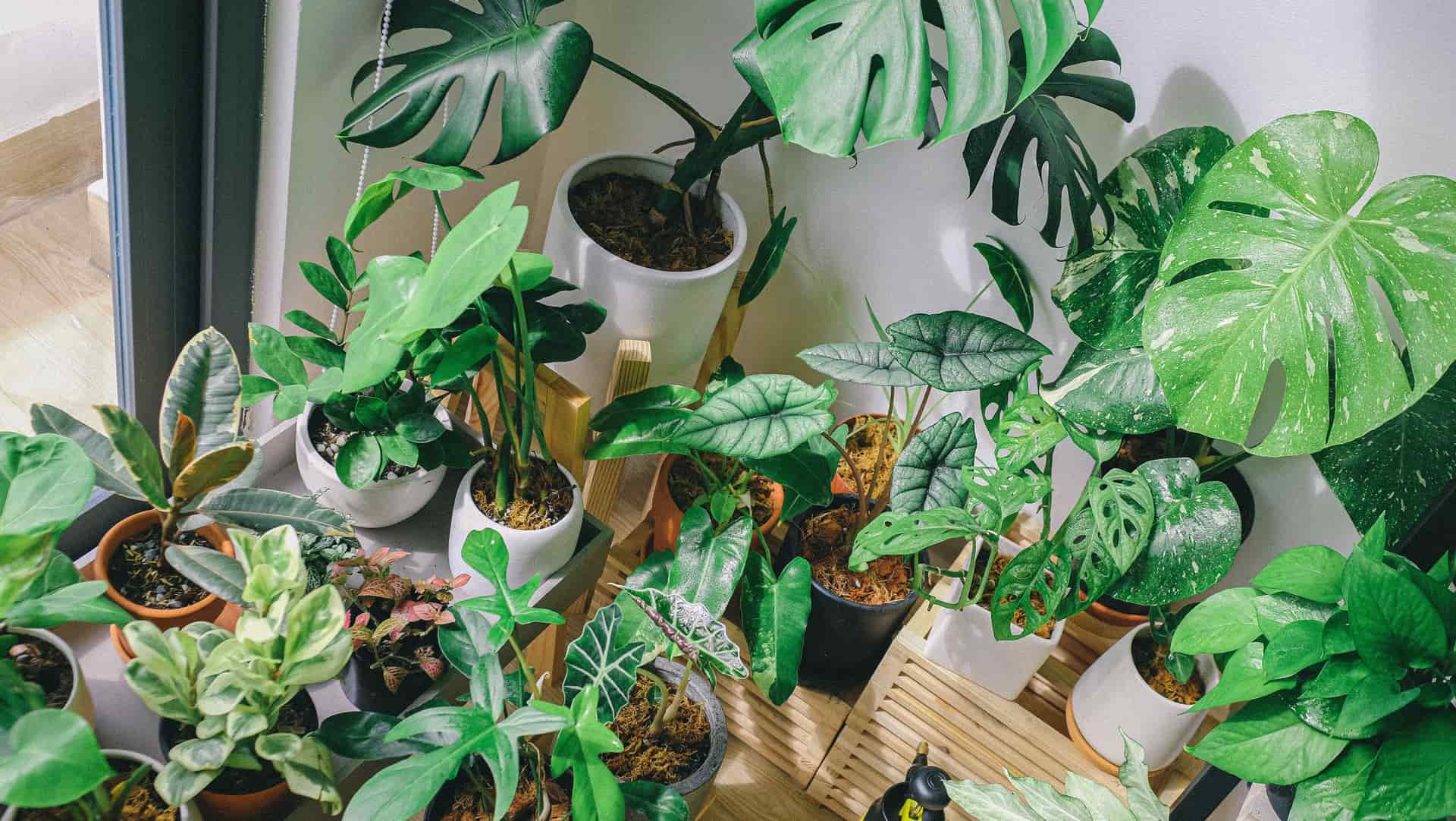
Start with pothos, a snake plant or a ZZ plant — all three tolerate medium light and irregular watering, which is what a first year in an apartment actually delivers. Match the plant to the light the position gets rather than to how tough the plant is reputed to be, because light is the variable a beginner cannot compensate for.
Disclosure Pot & Prop earns a commission when you buy through the Amazon links on this page, at no extra cost to you. It does not change which products get recommended or what we say about them, and we have not been given any of them. How this site is funded.
Beginner plant lists usually sort by toughness, which is the wrong axis. A snake plant is famously indestructible and it will still decline in a genuinely dark corner, and a fern that dies in three weeks would have been fine in a bathroom with a window. Light is the variable, and it is the one a beginner cannot compensate for by trying harder. So this list is sorted by the light each plant needs, and the first task is knowing what your positions actually get.
Extension guidance divides indoor positions into direct sun, bright indirect, medium and low. The useful surprise for most people is that a position they thought was bright is medium — a human eye adapts, a plant does not. The light audit is in the organization guide.
The seven, by light
| Plant | Light | Water | Why it suits a beginner |
|---|---|---|---|
| Pothos | Medium to bright indirect | When the top inch is dry | Wilts visibly before it suffers, and recovers |
| Snake plant | Medium, tolerates low | Rarely — every few weeks | Rot from overwatering is the only real risk |
| ZZ plant | Medium, tolerates low | Rarely | Stores water in its rhizome; forgives neglect |
| Spider plant | Bright indirect | Regularly | Grows fast, so feedback is quick |
| Philodendron | Medium to bright indirect | When the top inch is dry | As forgiving as pothos, different leaf |
| Peace lily | Medium | Regularly | Collapses dramatically when thirsty, then recovers |
| Herbs | As much as you can give | Often | Rewarding and genuinely harder than the rest |
The three purchases that matter more than the plant
- A pot with a drainage hole and a saucer. More first plants die of no drainage than of anything else. Here is why.
- Somewhere with light to put it. A stand near a window, a shelf, or — for a genuinely dim apartment — a clip light. Position is not a detail; it is the main decision.
- Nothing else. Not fertilizer, not a moisture meter, not a humidifier. Buy those when a specific plant gives you a specific reason.
The three mistakes everyone makes first
- Watering on a schedule. Plants use water at a rate that depends on light, temperature and season, none of which is weekly. Check the top inch of mix with a finger and water when it is dry.
- Buying a plant for a position it cannot live in. A fiddle leaf fig in a north-facing corner will decline slowly for a year. That is a purchase mistake, not a care failure.
- Repotting immediately. A new plant is fine in the pot it came in and has just been through a move. Give it a month before changing anything.
When to buy a light
When you have run out of positions that work and want more plants anyway. That is the honest trigger. A grow light is not a beginner purchase and it is not a rescue for a plant in the wrong place — it is what you buy when the apartment itself is the limit, and at that point a lit shelf creates positions rather than competing for them.
Every pick, in full
We have not handled any of these. What follows is what each listing publishes, what that means once you put a watered pot on it, and who should buy something else.
1. The default shelf pot
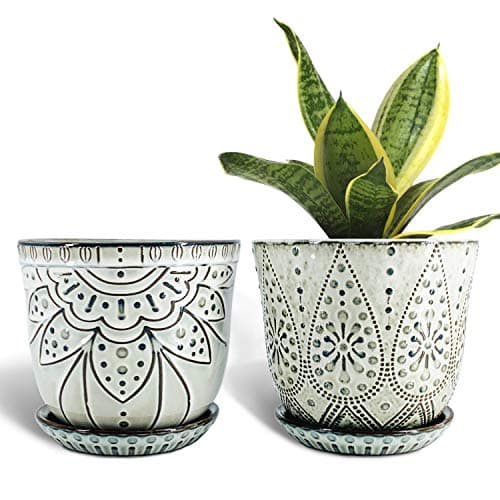
Gepege 6 in Ceramic Plant Pots with Drainage and Saucers
The size most houseplants are sold in and the size most shelves are built for, with the hole that the decorative version of the same pot leaves out.
#ad · Price as of October 18, 2026. How we are funded
- What the listing publishes
- 6 in ceramic with drainage hole and saucer
- Against a 10-inch pot
- No weight rating is published for this product, so there is nothing to check. That counts against it here rather than being treated as neutral.
A 6-inch pot of saturated mix computes to about 3.2 lb. Any stand on this site holds it, which is why 6 inches is where you can buy on looks rather than on arithmetic.
It is also the size where the no-drainage-hole trap is most common, because 6-inch pots are sold as decor as often as they are sold as pots.
Nursery plants usually arrive in a plastic 6-inch. Dropping that pot straight into a ceramic cachepot is a legitimate alternative to repotting, as long as you lift it to water.
What is good
- The correct default size for most houseplants
- Hole and saucer included
- Light enough for any shelf here
What is not
- Outgrown within a year by anything vigorous
- Glazed ceramic holds moisture longer than plastic
- One pot per order at this price point
Skip it if your plant came in a 6-inch nursery pot and is root-bound. You need the next size up, not the same size in ceramic.
2. One plant that needs more light than its corner gives
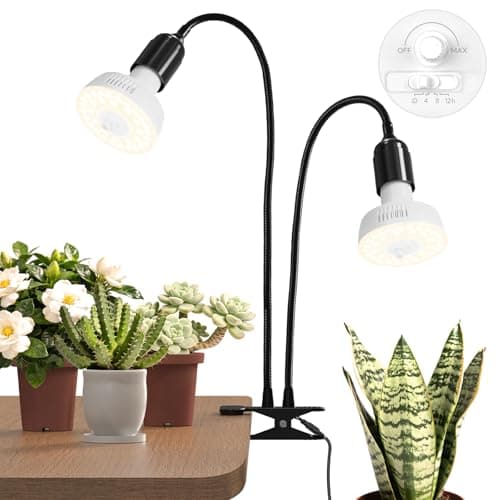
Barrina Clip On Grow Light, 22 W, 4000 K
Publishes both its wattage and its color temperature, and clips to a shelf edge. The smallest useful intervention in this entire section.
#ad · Price as of October 18, 2026. How we are funded
- What the listing publishes
- Published 22 W (2 by 11 W) at 4000 K; clip mount
- Against a 10-inch pot
- No weight rating is published for this product, so there is nothing to check. That counts against it here rather than being treated as neutral.
22 W on one plant is a genuinely useful amount of light. The same 22 W spread across a six-tier shelf would be nothing, which is why per-plant clip lights outperform their wattage.
4000 K is warmer than the 5000 K bars and noticeably less clinical in a living room, at a small cost in usable output for the plant.
A clip needs something to clip to, with a lip. Shelf edges work; a windowsill usually does not.
What is good
- Publishes watts and color temperature
- 22 W concentrated on one plant does real work
- No mounting, no fixing, and it moves with the plant
What is not
- Needs a shelf edge or similar to clip to
- Lights one plant, not a collection
- Two heads means two points of aim to get right
Skip it if you have a whole shelf to light. Clip lights do not scale, and a linkable bar set is the right tool at that point.
3. The most plants per square foot of floor
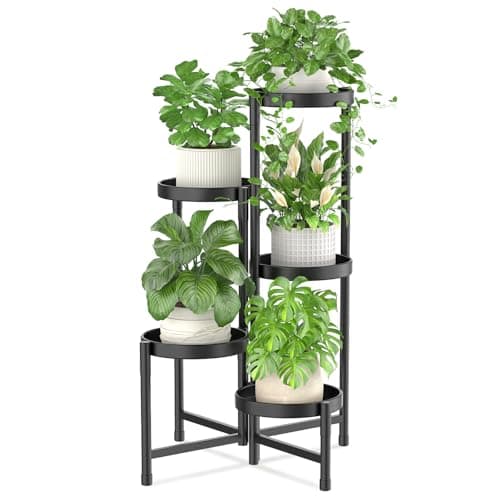
iDavosic.ly 5 Tier Metal Corner Plant Stand, folding
A staircase of five small shelves that turns one corner into five plant positions, which is the highest floor efficiency in this roundup.
- What the listing publishes
- 5 staggered tiers on a folding corner frame; no published weight rating
- Against a 10-inch pot
- No weight rating is published for this product, so there is nothing to check. That counts against it here rather than being treated as neutral.
Five positions on roughly a 17 by 17 inch footprint is about 2 square feet of floor for five plants, a little over two plants per square foot, and the best ratio of anything here.
The tiers are sized for 6 to 8 inch pots, not 10 inch ones. An 8-inch pot of saturated mix computes to about 7.5 lb, five of them to roughly 38 lb spread across the frame, which is a different question from 38 lb on one shelf.
The listing publishes no weight rating at all. That is common in this category and it is why this pick sits behind sized-and-rated products in the hanging and caddy roundups, where the numbers exist.
What is good
- Five plant positions on about two square feet of floor
- Folds apartment, which matters if you move every twelve months
- Staggered tiers keep the back plants visible instead of shadowed
What is not
- No published weight rating anywhere on the listing
- Tier depth suits 6 to 8 inch pots, not a 10 inch monstera
- A tall narrow frame in a corner is easy to catch with a vacuum
Skip it if your plants are already in 10 inch pots or bigger. This is a small-pot stand, and putting a 25 lb pot on the top tier of an unrated frame is exactly the guess this site exists to avoid.
Questions people actually ask
What is the easiest houseplant for a beginner?
What plants survive in a dark apartment?
How often should I water a houseplant?
Should I repot a plant as soon as I buy it?
Sources
- University of Illinois Extension: Houseplants — lighting
- Clemson HGIC: Indoor Plants — watering
- Michigan State University Extension: Smart Gardening — growing houseplants indoors
Product specifications are quoted from each seller's own listing and are the seller's claim, not a measurement of ours.