Grow Lights
How Far Should a Grow Light Be From a Plant?
Start with the manufacturer's figure. Then understand why it matters so much: double the distance and you have a quarter of the light.
By Scooter M., enthusiast · Published · Last updated
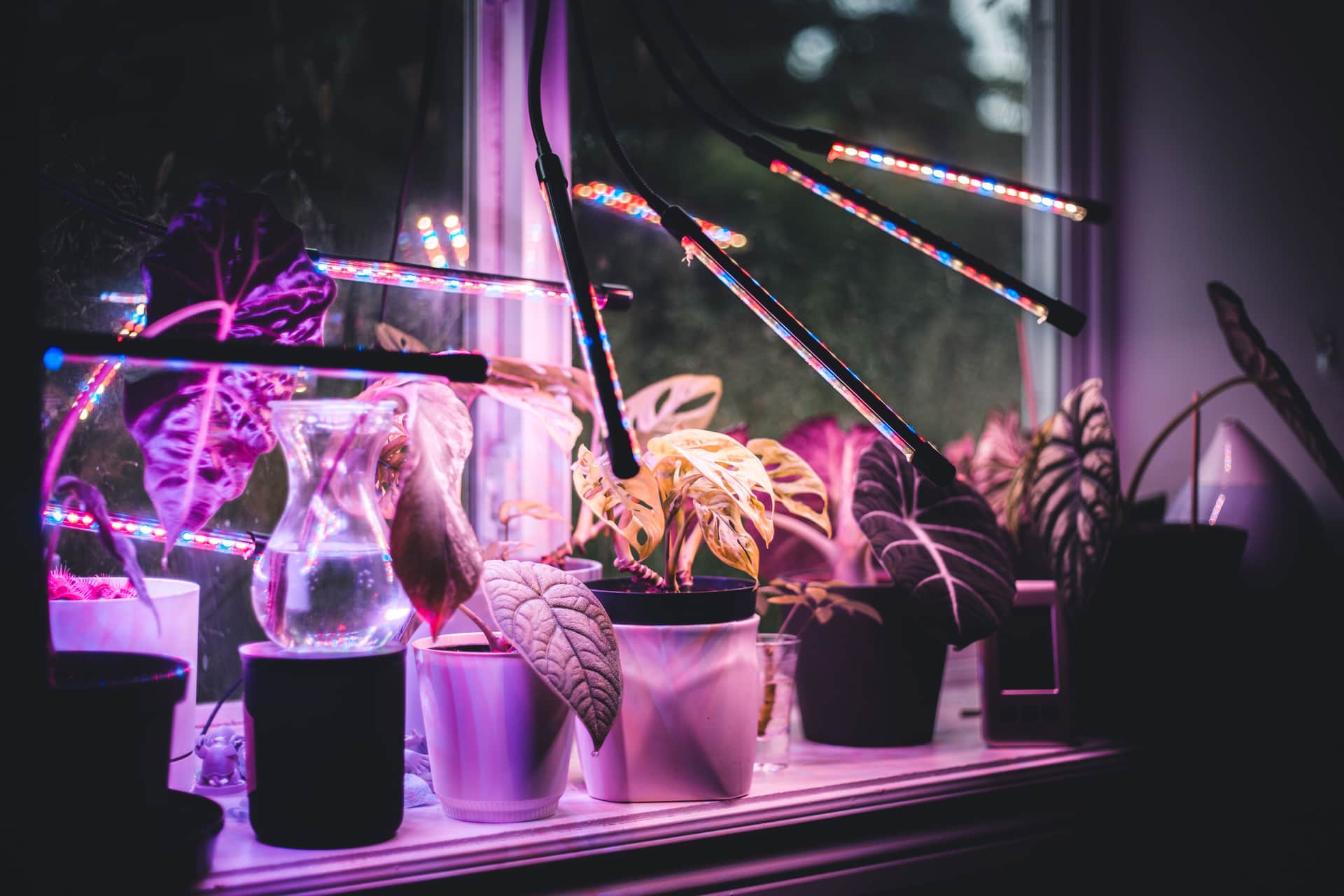
The short answer
Use the hanging height the manufacturer publishes for that specific fixture — it is the only figure tied to its actual output. The reason to take it seriously is that light intensity falls with the square of distance: a fixture at 24 inches delivers roughly a quarter of what it delivers at 12, so an extra foot of clearance costs more than any realistic wattage upgrade buys.
Disclosure Pot & Prop earns a commission when you buy through the Amazon links on this page, at no extra cost to you. It does not change which products get recommended or what we say about them, and we have not been given any of them. How this site is funded.
There is no universal number of inches, and any page that gives you one is guessing on your behalf. Fixtures differ enormously in output, and output is the thing almost none of them publish — wattage is electricity going in, not light coming out. What every reputable manufacturer does publish is a recommended hanging height for their own fixture, and that figure is tied to the output they measured. Use it.
What this page can add is the reason the figure matters so much, which is a piece of physics rather than a product claim, and which applies to every fixture ever made.
The inverse-square rule
Light from a source spreads out as it travels, covering an area that grows with the square of the distance. Twice as far, four times the area, a quarter of the intensity on any given leaf. This is why the last few inches between a bar and a plant are worth more than a large increase in wattage, and it is the single most useful thing to understand about grow lights.
relative intensity = (reference distance / actual distance)^2
at 18 in instead of 12: (12/18)^2 = 0.44 — 44 percent of the light
A linear bar close to a plant behaves a little better than this — its light is spread along a line rather than radiating from a point — but the direction and the magnitude of the effect are the same.
What each extra inch costs
| Distance | Relative intensity | What it means in practice |
|---|---|---|
| 6 in | 400% | Very bright; check the fixture allows it and watch for leaf scorch |
| 9 in | 178% | Close, and usually the sweet spot for seedlings |
| 12 in | 100% | The reference — a common manufacturer recommendation |
| 18 in | 44% | Less than half; acceptable for low-light foliage plants |
| 24 in | 25% | A quarter; the light is now supplementary at best |
| 36 in | 11% | Effectively decorative |
How to tell you have it wrong
- Too far: the plant stretches toward the light, new growth is pale and the spaces between leaves get longer. This is the common failure and it is slow enough that people miss it for months.
- Too close: bleached or crisp patches on the uppermost leaves, worst directly beneath the fixture. Less common with LED bars than with older technology, but real.
- About right: compact new growth of a normal color, with leaf spacing similar to the older growth on the plant.
Why this favors per-tier fixtures
It is the reason a lit shelf with a bar under every tier beats a single brighter fixture over a tall rack, and by a much wider margin than the specifications suggest. A lamp at the top of a five-tier stand might be 12 inches above the first shelf and 40 above the fourth — which is 9 percent of the intensity, or effectively nothing. Adjustable tiers matter for the same reason: a plant that grows six inches has just halved the light reaching its top leaves unless you move something.
Every pick, in full
We have not handled any of these. What follows is what each listing publishes, what that means once you put a watered pot on it, and who should buy something else.
1. Adding light to a shelf you already own
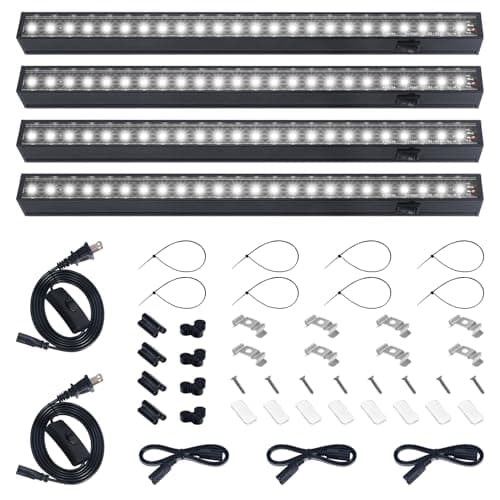
Barrina T5 Grow Light Bars, 1 ft, 5000 K full spectrum, 4 pack
The retrofit answer: four short linkable bars that stick to the underside of shelving you already have, which is cheaper and more flexible than buying a lit stand.
- What the listing publishes
- Published 20 W total across four linkable 1 ft bars (4 by 5 W) with 96 LEDs; 5000 K described as full spectrum; black aluminum casing; magnetic bar, clips and cable ties supplied; on/off switch on each bar
- Against a 10-inch pot
- No weight rating is published for this product, so there is nothing to check. That counts against it here rather than being treated as neutral.
5000 K is published, and that matters. Color temperature is the specification that decides whether a grow light is livable in a room, and 5000 K is daylight-neutral rather than the pink-purple of a red-blue fixture.
Linkable means one outlet runs the set. Four separate lights on four plugs is how a plant shelf ends up with a power strip on the floor.
Magnetic mounting works on a steel shelf and not on a wooden one, where the supplied clips or tape become the mounting method.
What is good
- Publishes color temperature, which most of this category does not
- Linkable, so one outlet runs the whole set
- Turns any shelf you already own into a lit one
What is not
- One-foot bars need several to cover a shelf
- The magnetic mount only helps on steel
- 20 W across four feet is about 5 W per foot, so it supplements daylight rather than replacing it
- Names PPFD in the listing and publishes no figure for it
Skip it if you want one purchase that solves lighting. A lit stand arrives assembled and this is a retrofit project.
2. Naming the diode instead of the marketing
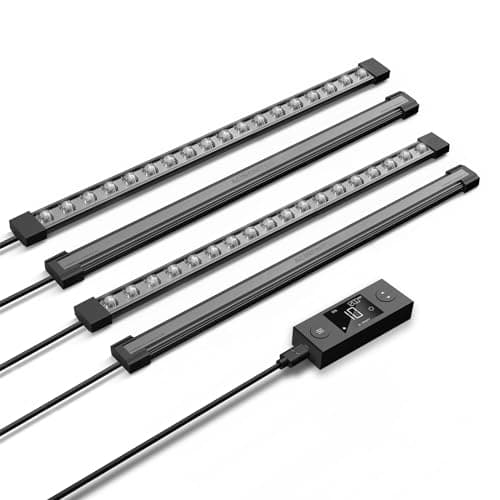
AC Infinity IONBEAM S16 Full Spectrum LED Grow Light Bar, 16 in
The only light here that publishes which diode it uses, which is the difference between a specification and an adjective.
#ad · Price as of October 18, 2026. How we are funded
- What the listing publishes
- 16 in bar; published Samsung LM301H EVO diodes; digital dimming and timer controller
- Against a 10-inch pot
- No weight rating is published for this product, so there is nothing to check. That counts against it here rather than being treated as neutral.
LM301H EVO is a named, documented, third-party-testable component. Full spectrum is not. A listing that tells you the diode is a listing whose claims you can check, which is the standard this whole site is arguing for.
Digital dimming and a timer built into the controller removes the separate mechanical timer that every other light here needs.
It is a bar, not a stand. You are buying light and mounting it to something you already have.
What is good
- Publishes the actual diode, so the output claim is checkable
- Dimming and timer built into the controller
- 16 in covers a shelf properly rather than needing four short bars
What is not
- Costs several times what the generic bars here do
- No stand, so you supply the shelving
- Overspecified for a single pothos
Skip it if you are lighting one plant on a windowsill. A clip light does that for a fraction of the money, and nobody needs a documented diode for a pothos.
3. One plant that needs more light than its corner gives
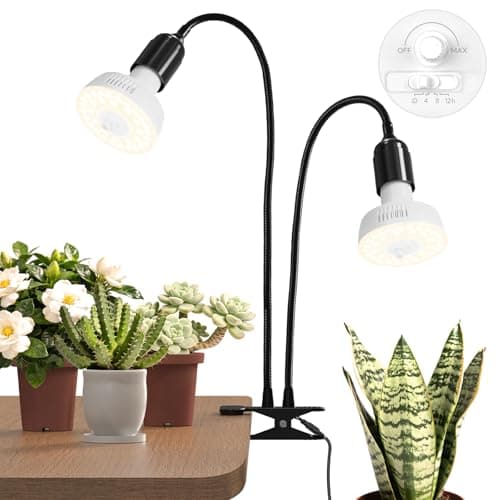
Barrina Clip On Grow Light, 22 W, 4000 K
Publishes both its wattage and its color temperature, and clips to a shelf edge. The smallest useful intervention in this entire section.
#ad · Price as of October 18, 2026. How we are funded
- What the listing publishes
- Published 22 W (2 by 11 W) at 4000 K; clip mount
- Against a 10-inch pot
- No weight rating is published for this product, so there is nothing to check. That counts against it here rather than being treated as neutral.
22 W on one plant is a genuinely useful amount of light. The same 22 W spread across a six-tier shelf would be nothing, which is why per-plant clip lights outperform their wattage.
4000 K is warmer than the 5000 K bars and noticeably less clinical in a living room, at a small cost in usable output for the plant.
A clip needs something to clip to, with a lip. Shelf edges work; a windowsill usually does not.
What is good
- Publishes watts and color temperature
- 22 W concentrated on one plant does real work
- No mounting, no fixing, and it moves with the plant
What is not
- Needs a shelf edge or similar to clip to
- Lights one plant, not a collection
- Two heads means two points of aim to get right
Skip it if you have a whole shelf to light. Clip lights do not scale, and a linkable bar set is the right tool at that point.
Questions people actually ask
How far should an LED grow light be from plants?
Can a grow light be too close to a plant?
Does doubling the distance really halve the light?
How many hours should a grow light run?
Sources
- University of Illinois Extension: Houseplants — lighting
- Michigan State University Extension: Smart Gardening — growing houseplants indoors
- University of Georgia Extension B1318: Growing Indoor Plants with Success
Product specifications are quoted from each seller's own listing and are the seller's claim, not a measurement of ours.