Grow Lights
The Best Grow Lights for Succulents and Cacti
Succulents want more light than any window in an apartment gives. The fix is a light close enough to matter, on a timer, over pots that drain.
By Scooter M., enthusiast · Published
The short answer
Put succulents under a light that publishes its output, mounted as close as the listing allows — a few inches for bars and clip lights — for 12 to 14 hours a day on a timer. A 22 W clip light on one plant, or a four-pack of 1-foot T5 bars over a shelf of small pots, is the practical range. A screw-in bulb in a lamp is not enough for these plants unless it is very close, and no light fixes a succulent in a pot that does not drain.
Disclosure Pot & Prop earns a commission when you buy through the Amazon links on this page, at no extra cost to you. It does not change which products get recommended or what we say about them, and we have not been given any of them. How this site is funded.
Succulents and cacti are sold as the easy plants, and indoors they are the ones that fail most reliably, for one reason: they want more light than almost any apartment gives. A succulent on a north-facing sill stretches — the stem lengthens, the leaves space out, the compact rosette turns into a pale tower leaning at the glass — and it does not go back. That stretching is the plant's light meter, and it is the reason these plants are the strongest case for a grow light in this whole section.
The brief follows from that. The light has to be intense at the plant, which means close; it has to run long, which means a timer; and it has to be white, because the plants live where people do. Everything here is ranked on published output and on how close it can mount, and the page ends where it has to — with the pot, because a well-lit succulent in a sealed pot rots as surely as a dark one stretches.
Why these plants need the most light on the site
Most succulents and cacti evolved in open, bright places, and extension guidance on houseplants consistently lists them among the highest-light plants people keep indoors. A window that keeps a pothos content delivers a fraction of what they want. The symptoms are specific: etiolation, the stretching described above; fading of the reds and purples that many succulents show in strong light; and, in cacti, thin new growth narrower than the old. None of those are watering problems, and watering more makes all of them worse.
The fix is intensity at the leaf, and intensity is a function of distance far more than of wattage. Light falls with the square of distance from the fixture, so a bar 4 inches above a rosette delivers roughly nine times what the same bar delivers at a foot. For a plant that wants a lot, the answer is not a bigger fixture across the room; it is a modest fixture very close. The distance guide works through it, and every pick below is chosen partly on how close it can go.
intensity at d2 = intensity at d1 x (d1 / d2)^2
A bulb publishing about 98 micromoles per square meter per second at 1 foot delivers roughly four times that — about 390 — at 6 inches, and about a ninth of it — about 11 — at 3 feet. For a succulent, 6 inches is a light; 3 feet is a nightlight.
The 1-foot figure is the SANSI listing's own; the rest follows from the inverse-square relationship. LEDs run cool enough that a few inches is safe for foliage.
White light, long days, and a timer
White full-spectrum light is the right choice, for the same reason it is on every page of this hub: it contains the wavelengths the plant uses and it renders the room normally. Red-blue fixtures do target chlorophyll's absorption peaks, but they turn a windowsill purple, and the comparison page sets out why nearly every apartment ends up on white. Color temperature matters less than intensity; 4000 K looks warmer in a living room, 5000 K looks like daylight, and both grow a succulent.
Duration is the other half. These plants want long days — 12 to 14 hours under the light is the range this site uses for shelves, and succulents sit at the top of it — and the only way to deliver that every day is a timer. Three of the picks have one built in; for the rest, a plug-in timer is the first accessory, and a shelf of succulents on a timer will outgrow the same shelf under a stronger light that runs when someone remembers.
One plant or a shelf
The purchase splits on count. For one or two plants — a large echeveria, a columnar cactus on a desk — a 22 W clip light with both heads aimed at the pot puts more light on one plant than anything else at its price, and it moves with the plant. For a shelf of small pots, which is how most people keep succulents, linkable bars under the shelf above are cheaper per plant and light the whole row evenly. The clip against shelf comparison is the general version of that decision; for succulents it comes down to whether the pots are in a row.
Quick picks
Ranked, with the published figure each pick turns on. Tap a row for the full reasoning further down this page.
| # | Product | Best for | Price |
|---|---|---|---|
| 1 | 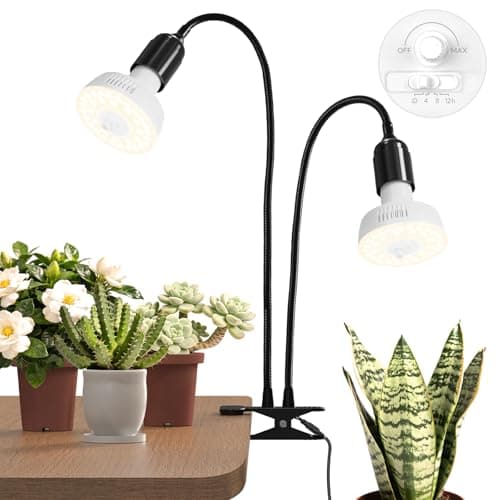 Barrina Clip On Grow Light, 22 W, 4000 KPublishes both its wattage and its color temperature, and clips to a shelf edge. The smallest useful intervention in this entire section. | One plant that needs more light than its corner gives | $27.99 at Amazon $32.99 · 15% off |
| 2 | 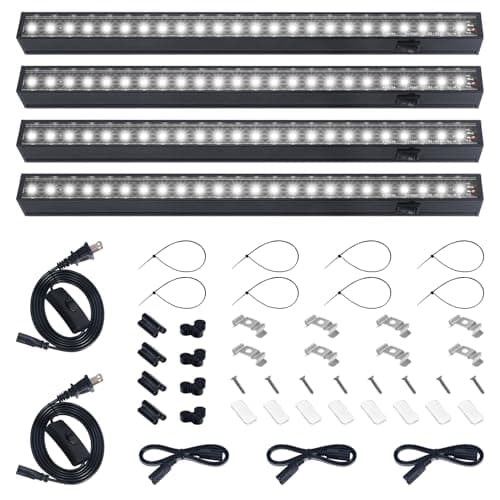 Barrina T5 Grow Light Bars, 1 ft, 5000 K full spectrum, 4 packThe retrofit answer: four short linkable bars that stick to the underside of shelving you already have, which is cheaper and more flexible than buying a lit stand. | Adding light to a shelf you already own | $30.59 at Amazon $36.99 · 17% off |
| 3 | 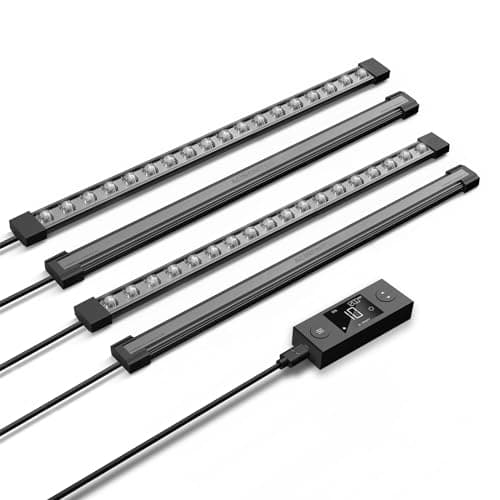 AC Infinity IONBEAM S16 Full Spectrum LED Grow Light Bar, 16 inThe only light here that publishes which diode it uses, which is the difference between a specification and an adjective. | Naming the diode instead of the marketing | |
| 4 | 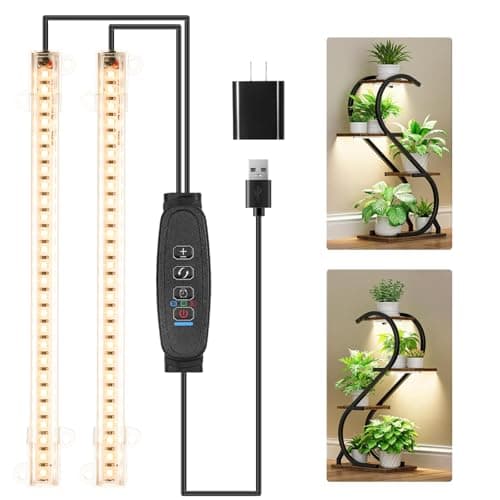 RWNTAO 8.6 in Mini LED Grow Light Strips with timer, 2 heads, 52 LEDsA timer, dimming and four mounting options for the price of a bulb, on a strip small enough to hide under a shelf. The listing publishes no wattage, and that is the trade. | One shelf of succulents on a timer for very little | |
| 5 | 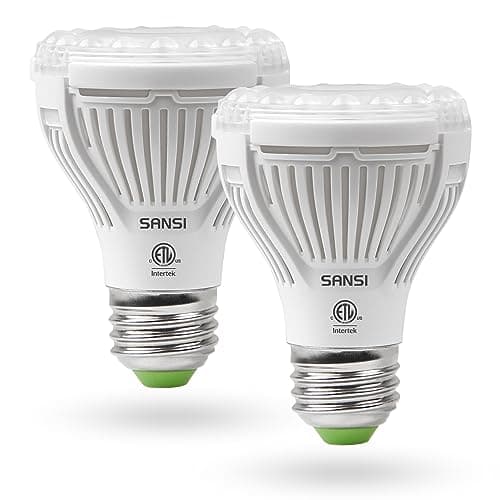 SANSI LED Grow Light Bulb, 10 W, E26, 4000 K, 2 packThe rare cheap bulb that publishes a PPF figure instead of a lumen figure, which is the number that tells you what a plant actually receives. | A grow light that screws into a lamp you already own | $9.95 at Amazon $12.95 · 23% off |
| 6 | 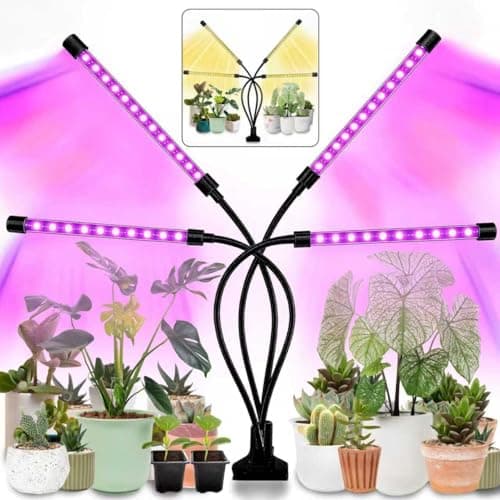 LEOTER Clip Grow Light, 80 LEDs, full spectrum plus red and blue, timerSwitchable between white and red-blue, which makes it the one light here that lets you see for yourself why almost every apartment ends up leaving it on white. | Comparing red-blue against white light honestly |
Links to Amazon are affiliate links. Prices and availability are Amazon's and change without notice.
How we ranked these for succulents
Intensity at close range first, which means published wattage for a fixture that can mount within inches; then disclosure; then how the approach scales. The clip light leads because 22 W on one plant at a few inches is the most light per plant on this page, and it publishes both its wattage and its color temperature. The T5 bars are second for a shelf: 5000 K, linkable, and mountable a few inches above a row of small pots. The IONBEAM is the disclosure pick — it names its diode — for someone who wants one very good bar over a display. The mini strip is ranked for its timer and dimmer and marked down for publishing no output. The SANSI bulb is here as the one screw-in option with a PPFD, with the caveat that a lamp has to hold it very close. The LEOTER clip is last for its switch rather than its output.
| Your plants | Light | Mount |
|---|---|---|
| One large succulent or cactus on a desk | 22 W clip light | Clip to the desk shelf; both heads on the pot, a few inches away |
| A row of small pots on a bookshelf | 1-foot T5 bars, four-pack | Under the shelf above, as close as the listing allows |
| A display shelf you want lit well | 16 in IONBEAM bar | Under the shelf above; use its dimmer to start gently |
| A few small pots, no timer plug | Mini strip with timer | Magnets or tape under a short shelf; set 12 hours |
| One small succulent in a gooseneck lamp | 10 W bulb | Within 6 inches, and expect it to be marginal |
Acclimatize, then leave them alone
A stretched succulent moved under a close bright light can scorch — pale or brown patches on the leaves facing the fixture — because it grew its recent leaves for shade. Start with the fixture a little higher or dimmed, lower it over a week or two, and then leave it. The stretched growth will not shrink back; new growth comes in compact, and the leggy section can be cut and rooted, which is where the propagation pages take over.
The pot, which the light does not fix
A succulent under a good light in a pot with no drainage still rots, and it rots faster, because it is growing. These plants want a gritty mix, a pot with a hole, and to dry out completely between waterings; under a light that is doing its job, that drying happens sooner, not later. The succulent planter page is the other half of this purchase, and terracotta — which dries fastest — is the material that page favors for exactly this reason.
What we deliberately do not recommend
Any fixture more than a foot from the plant. Bulbs in shaded table lamps. Purple panels sold on an equivalent wattage with no figure of their own. Watering a stretched plant more, which is the instinct and the mistake. And lighting a succulent in a sealed pot, which grows a bigger plant to rot.
Every pick, in full
We have not handled any of these. What follows is what each listing publishes, what that means once you put a watered pot on it, and who should buy something else.
1. One plant that needs more light than its corner gives
Barrina Clip On Grow Light, 22 W, 4000 K
Publishes both its wattage and its color temperature, and clips to a shelf edge. The smallest useful intervention in this entire section.
- What the listing publishes
- Published 22 W (2 by 11 W) at 4000 K; clip mount
- Against a 10-inch pot
- No weight rating is published for this product, so there is nothing to check. That counts against it here rather than being treated as neutral.
22 W on one plant is a genuinely useful amount of light. The same 22 W spread across a six-tier shelf would be nothing, which is why per-plant clip lights outperform their wattage.
4000 K is warmer than the 5000 K bars and noticeably less clinical in a living room, at a small cost in usable output for the plant.
A clip needs something to clip to, with a lip. Shelf edges work; a windowsill usually does not.
What is good
- Publishes watts and color temperature
- 22 W concentrated on one plant does real work
- No mounting, no fixing, and it moves with the plant
What is not
- Needs a shelf edge or similar to clip to
- Lights one plant, not a collection
- Two heads means two points of aim to get right
Skip it if you have a whole shelf to light. Clip lights do not scale, and a linkable bar set is the right tool at that point.
2. Adding light to a shelf you already own
Barrina T5 Grow Light Bars, 1 ft, 5000 K full spectrum, 4 pack
The retrofit answer: four short linkable bars that stick to the underside of shelving you already have, which is cheaper and more flexible than buying a lit stand.
- What the listing publishes
- Published 20 W total across four linkable 1 ft bars (4 by 5 W) with 96 LEDs; 5000 K described as full spectrum; black aluminum casing; magnetic bar, clips and cable ties supplied; on/off switch on each bar
- Against a 10-inch pot
- No weight rating is published for this product, so there is nothing to check. That counts against it here rather than being treated as neutral.
5000 K is published, and that matters. Color temperature is the specification that decides whether a grow light is livable in a room, and 5000 K is daylight-neutral rather than the pink-purple of a red-blue fixture.
Linkable means one outlet runs the set. Four separate lights on four plugs is how a plant shelf ends up with a power strip on the floor.
Magnetic mounting works on a steel shelf and not on a wooden one, where the supplied clips or tape become the mounting method.
What is good
- Publishes color temperature, which most of this category does not
- Linkable, so one outlet runs the whole set
- Turns any shelf you already own into a lit one
What is not
- One-foot bars need several to cover a shelf
- The magnetic mount only helps on steel
- 20 W across four feet is about 5 W per foot, so it supplements daylight rather than replacing it
- Names PPFD in the listing and publishes no figure for it
Skip it if you want one purchase that solves lighting. A lit stand arrives assembled and this is a retrofit project.
3. Naming the diode instead of the marketing
AC Infinity IONBEAM S16 Full Spectrum LED Grow Light Bar, 16 in
The only light here that publishes which diode it uses, which is the difference between a specification and an adjective.
#ad · Price as of October 25, 2026. How we are funded
- What the listing publishes
- 16 in bar; published Samsung LM301H EVO diodes; digital dimming and timer controller
- Against a 10-inch pot
- No weight rating is published for this product, so there is nothing to check. That counts against it here rather than being treated as neutral.
LM301H EVO is a named, documented, third-party-testable component. Full spectrum is not. A listing that tells you the diode is a listing whose claims you can check, which is the standard this whole site is arguing for.
Digital dimming and a timer built into the controller removes the separate mechanical timer that every other light here needs.
It is a bar, not a stand. You are buying light and mounting it to something you already have.
What is good
- Publishes the actual diode, so the output claim is checkable
- Dimming and timer built into the controller
- 16 in covers a shelf properly rather than needing four short bars
What is not
- Costs several times what the generic bars here do
- No stand, so you supply the shelving
- Overspecified for a single pothos
Skip it if you are lighting one plant on a windowsill. A clip light does that for a fraction of the money, and nobody needs a documented diode for a pothos.
4. One shelf of succulents on a timer for very little
RWNTAO 8.6 in Mini LED Grow Light Strips with timer, 2 heads, 52 LEDs
A timer, dimming and four mounting options for the price of a bulb, on a strip small enough to hide under a shelf. The listing publishes no wattage, and that is the trade.
#ad · Price as of October 25, 2026. How we are funded
- What the listing publishes
- Published two 8.6 in bars, 52 LEDs total; 3/9/12 h cycle timer; 10 dimming levels; three switch modes; aluminum body; screws, ties, adhesive tape and magnets included; 71 in cord
- Against a 10-inch pot
- No weight rating is published for this product, so there is nothing to check. That counts against it here rather than being treated as neutral.
The timer is why this exists. Succulents on a shelf need the same 12 hours every day, and a light with a memory timer does that without a smart plug or a person remembering. At this price the timer alone would be worth it.
What the listing does not say is how many watts the strip draws or what it delivers at any distance. It states LED count and color temperature and stops. That makes it impossible to compare against the bulbs above on output, and the honest position is that it lights a short shelf of small plants and nothing larger.
Four mounting options — magnets, tape, ties and screws — mean it goes under a metal shelf, a wood shelf or a plastic one, and comes off a rental shelf without a mark. The 71 in cord is long enough to reach a socket from a shelf top.
What is good
- Cycle timer with memory, on a light that costs about what a bulb costs
- Magnets and tape included, so it mounts with no drilling
- Ten dimming levels, which matters for seedlings that scorch
What is not
- No published wattage or light output of any kind
- 8.6 in bars light one short shelf, not a plant collection
- The listing's own bullets disagree on color temperature (3000 K in the title, 3500 K in the text)
Skip it if you want to know what the light delivers before you buy it. The Barrina bars publish 5000 K and the SANSI bulb publishes PPF; this strip publishes an LED count.
5. A grow light that screws into a lamp you already own
SANSI LED Grow Light Bulb, 10 W, E26, 4000 K, 2 pack
The rare cheap bulb that publishes a PPF figure instead of a lumen figure, which is the number that tells you what a plant actually receives.
- What the listing publishes
- Published 10 W, E26 base, 4000 K; PPF 16.8 umol/s and PPFD 97.91 umol/m2/s at 1 ft, per the listing; ceramic heat sink; stated 25,000 hour life; ETL listed; 2 pack
- Against a 10-inch pot
- No weight rating is published for this product, so there is nothing to check. That counts against it here rather than being treated as neutral.
Almost every screw-in grow bulb is sold on lumens, which measure how bright light looks to a person and say nothing useful about a plant. This listing publishes PPF — the photon flux plants respond to — and a PPFD at one foot. Those are the figures to compare, and most competitors do not print them.
Ten watts is small. The published 97.91 umol/m2/s at one foot is a useful amount for a single low-light plant on a desk and not enough for a sun-loving one, and the honest use of this bulb is in a desk lamp aimed at one pothos or one fern.
4000 K is the same warm-white as the Barrina clip light, so it does not turn a living room purple or clinical. It reads as an ordinary lamp bulb, which is most of why people buy it.
What is good
- Publishes PPF and PPFD, not just lumens
- Fits any E26 lamp you already own — no fixture, no mounting
- 4000 K looks like a normal bulb in a normal room
What is not
- 10 W lights one plant at one foot, not a shelf
- Output falls off sharply beyond a foot, and the listing only publishes the 1 ft figure
- Needs a lamp that can aim downward — a table lamp with a shade wastes most of it
Skip it if you have more than a couple of plants to light. Two bulbs in two lamps is the ceiling of this approach, and a linkable bar set costs about the same.
6. Comparing red-blue against white light honestly
LEOTER Clip Grow Light, 80 LEDs, full spectrum plus red and blue, timer
Switchable between white and red-blue, which makes it the one light here that lets you see for yourself why almost every apartment ends up leaving it on white.
#ad · Price as of October 25, 2026. How we are funded
- What the listing publishes
- 80 LEDs, published full spectrum plus red and blue modes, 3/9/12 h timer, 10 dimming levels
- Against a 10-inch pot
- No weight rating is published for this product, so there is nothing to check. That counts against it here rather than being treated as neutral.
Red and blue diodes target the wavelengths chlorophyll absorbs most, so per watt they are more efficient for the plant. That is a real advantage and it is why commercial growers use them.
They also turn a room magenta. In a studio where you sleep six feet from the shelf, that efficiency argument loses to the fact that you live there.
The timer is the underrated feature. Plants respond to day length, and a light left on continuously is worse for many of them than a shorter, timed cycle.
What is good
- Switch between modes and judge the color trade for yourself
- A built-in timer runs a real day-length cycle
- Ten dimming levels for distance tuning
What is not
- Red-blue mode is genuinely unpleasant in a living space
- Total wattage is not published, only the LED count
- Gooseneck arms sag under their own weight over time
Skip it if the shelf is in a bedroom or living room. You will run it on white permanently, and a white-only light publishes better numbers for the same money.
Questions people actually ask
Do succulents need a grow light indoors?
How close should a grow light be to succulents?
How many hours of grow light do succulents need?
Is a white or purple grow light better for succulents?
Will a grow light fix a stretched succulent?
Can I use a regular lamp for succulents?
Sources
- University of Illinois Extension: Houseplants — lighting
- Michigan State University Extension: Smart Gardening — growing houseplants indoors
- Clemson HGIC: Indoor Plants — cleaning, fertilizing, containers and light requirements
Product specifications are quoted from each seller's own listing and are the seller's claim, not a measurement of ours.