Propagation
The Best Propagation Stations
Ranked by what you can actually fit in them and how much desk they cost. Vessel width matters more than looks, and it is the spec nobody prints.
By Scooter M., enthusiast · Published · Last updated
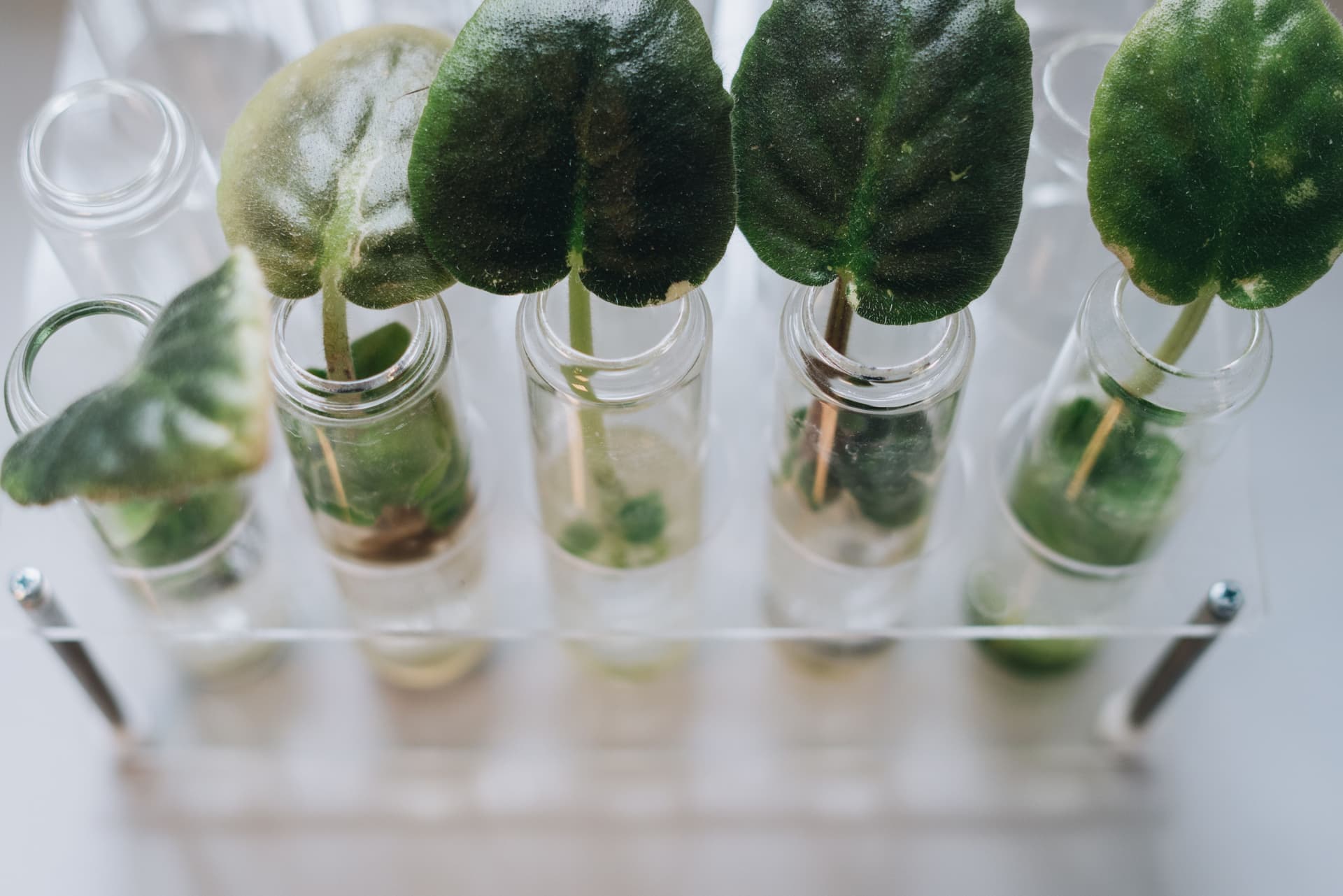
The short answer
Buy wide-mouth jars if you have a monstera, a philodendron or anything with a thick node, and test tubes if you are rooting pothos, tradescantia and other thin stems. Five vessels is the right number to start with — it fits a third of a square foot, and it is as many cuttings as most people can find homes for once they root.
Disclosure Pot & Prop earns a commission when you buy through the Amazon links on this page, at no extra cost to you. It does not change which products get recommended or what we say about them, and we have not been given any of them. How this site is funded.
The specification that decides whether a propagation station works for you is the width of the opening, and it appears on almost no listing. A 15 mm test tube takes a pothos cutting comfortably and will not take a monstera node with an aerial root on it — the node simply does not fit, and forcing it snaps the root you were trying to keep. Buying the wrong one is the most common mistake in this category and it is entirely avoidable by looking at your own plants first.
Everything here sits on a surface, so nothing needs a fixing and everything can move to follow the light. That is the practical argument for starting on a desk rather than a wall, laid out properly in wall against desktop. The hub covers the category, and how we pick covers the method.
Quick picks
Ranked, with the published figure each pick turns on. Tap a row for the full reasoning further down this page.
| # | Product | Best for | Price |
|---|---|---|---|
| 1 | 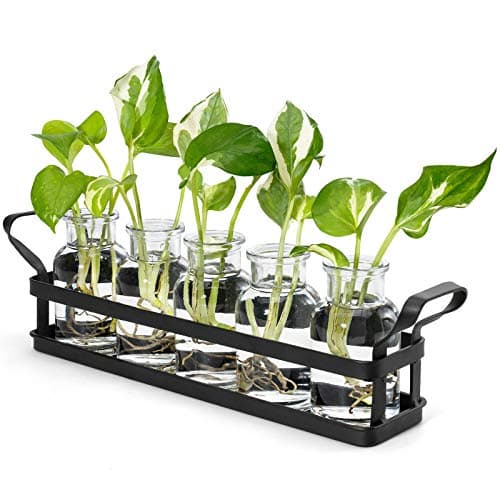 Mkono 5 Jar Desktop Propagation Station with StandWide-mouth jars rather than narrow test tubes, which is the difference between changing the water in ten seconds and fishing a cutting out with tweezers. | Cuttings you want to actually watch root | |
| 2 | 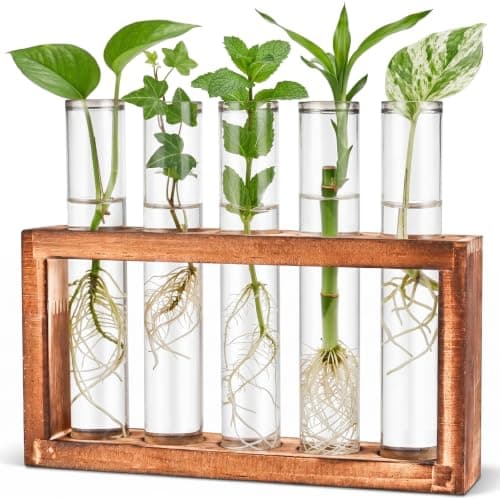 Tigvio 5 Test Tube Desktop Propagation Station, wooden standThe narrow-tube format: less water, less evaporation, more cuttings per inch of desk, and a real limit on how thick a cutting it takes. | Thin cuttings, minimum water, minimum space | |
| 3 | 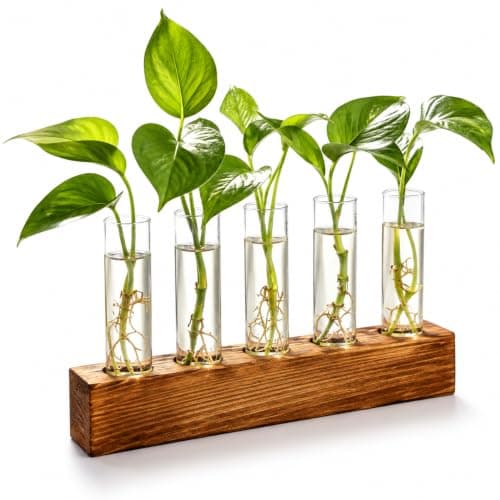 Renmxj Propagation Station with Wooden StandThe entry point: enough positions to be useful, cheap enough that a failed first attempt costs nothing. | A first station that is also a gift | |
| 4 | 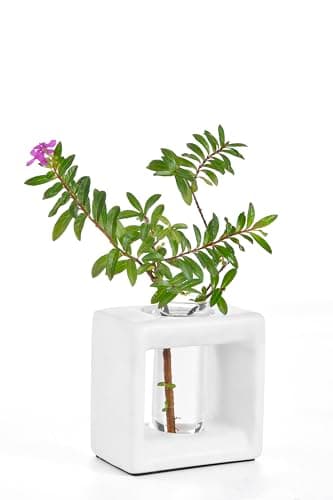 ORGJ Ceramic Propagation Station with Glass TubesCeramic base, glass tubes. The opaque body hides the water line and shows the roots, which is exactly the wrong way round for propagation and exactly right for a living room. | A station that reads as an object, not equipment | |
| 5 | 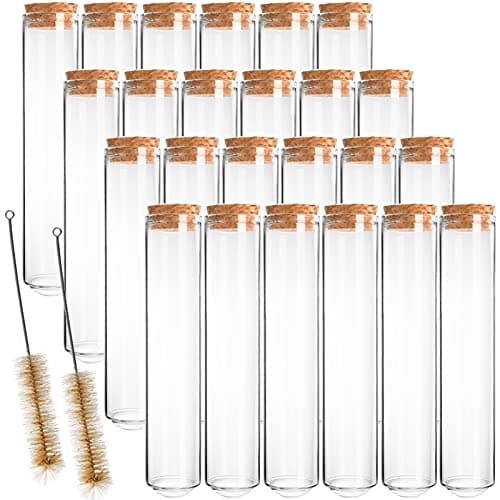 Bekith 80 ml Glass Test Tubes with Cork Stoppers, 24 packThe widest bore on this site at 25 mm, which is the one that takes a thick philodendron node, and the lowest cost per cutting position by a distance. | Volume propagation on a bench |
Links to Amazon are affiliate links. Prices and availability are Amazon's and change without notice.
What we looked at, in order
- Vessel opening width. Wide-mouth jars take thick nodes and aerial roots; test tubes take thin stems only. This decides suitability before anything else does.
- Footprint and cuttings per square foot. The reason to propagate in a small apartment is density, so a station that wastes desk is failing at its main job.
- Can you clean it? Every vessel goes cloudy. Removable vessels with an opening wide enough for a bottle brush get cleaned; sealed ones get abandoned.
- Does it look like an object or like equipment? In an apartment there is no back room, so the station lives in the room with you. This is a legitimate criterion here in a way it is not for a plant caddy.
Cuttings per square foot, computed
Computed from each listing's published dimensions and vessel count — the same calculation this site applies to plant stands, so the two are directly comparable. It is worth noticing how far above the stands these figures sit.
| Product | Footprint | Floor used | Positions | Plants / sq ft |
|---|---|---|---|---|
| Tigvio 5 Test Tube Desktop Propagation Station, wooden stand | 10 x 3 in | 0.21 sq ft | 5 | 24 |
| Mkono 5 Jar Desktop Propagation Station with Stand | 12 x 4 in | 0.33 sq ft | 5 | 15 |
What to do when they root
Water roots are not soil roots. A cutting that has grown two inches of white root in a jar has grown roots adapted to water, and moving it into mix is a transition it has to survive rather than a formality. Pot at two to three inches of root rather than waiting for a jar full of them, keep the mix a little damper than usual for the first couple of weeks while it adapts, and expect some wilting. Small pots with drainage are the destination, and the nursery pot size chart covers what size to start in.
Every pick, in full
We have not handled any of these. What follows is what each listing publishes, what that means once you put a watered pot on it, and who should buy something else.
1. Cuttings you want to actually watch root
Mkono 5 Jar Desktop Propagation Station with Stand
Wide-mouth jars rather than narrow test tubes, which is the difference between changing the water in ten seconds and fishing a cutting out with tweezers.
#ad · Price as of October 18, 2026. How we are funded
- What the listing publishes
- Five wide-mouth glass jars in a stand; wide openings for water changes
- Against a 10-inch pot
- No weight rating is published for this product, so there is nothing to check. That counts against it here rather than being treated as neutral.
Neck diameter is the specification nobody compares and everybody feels. A narrow tube means you cannot get a finger in to clean the algae, and algae is what ends most propagation stations.
Five jars on roughly a 12 by 4 inch footprint is a third of a square foot for five cuttings, the densest thing on the site by a wide margin, because water weighs less than mix.
Wide jars also take a thicker cutting. A monstera node with an aerial root does not fit a 15 mm test tube.
What is good
- Wide mouths make water changes and cleaning trivial
- Fits thick cuttings and aerial roots
- Five positions in a third of a square foot
What is not
- Wider jars mean more water and more evaporation surface
- Jars lift out, which is convenient and also means they get knocked out
- Glass on a desk with a cat is a decision
Skip it if you are rooting thin herb cuttings in bulk. Narrow tubes hold more cuttings per inch and use a fraction of the water.
2. Thin cuttings, minimum water, minimum space
Tigvio 5 Test Tube Desktop Propagation Station, wooden stand
The narrow-tube format: less water, less evaporation, more cuttings per inch of desk, and a real limit on how thick a cutting it takes.
#ad · Price as of October 18, 2026. How we are funded
- What the listing publishes
- Five glass test tubes in a wooden rack
- Against a 10-inch pot
- No weight rating is published for this product, so there is nothing to check. That counts against it here rather than being treated as neutral.
A test tube holds a fraction of what a jar does, which means the water goes stale faster and needs changing more often, not less. Small volume is not less maintenance.
Five tubes on about 10 by 3 inches is a fifth of a square foot. Nothing else on this site puts five living things in that.
Tubes suit pothos, tradescantia, philodendron and herb cuttings. They do not suit monstera, and forcing a thick node into one snaps the aerial root.
What is good
- The smallest footprint of any propagation format here
- A wooden rack is stable and does not slide
- Cheap enough to buy two
What is not
- Small water volume goes stale quickly
- Too narrow for thick cuttings
- A tube rack tips if a cutting grows tall and leans
Skip it if you are propagating monstera. The node and its aerial root will not fit, and a wide jar is the right tool.
3. A first station that is also a gift
Renmxj Propagation Station with Wooden Stand
The entry point: enough positions to be useful, cheap enough that a failed first attempt costs nothing.
#ad · Price as of October 18, 2026. How we are funded
- What the listing publishes
- Glass vessels in a wooden stand, desktop format
- Against a 10-inch pot
- No weight rating is published for this product, so there is nothing to check. That counts against it here rather than being treated as neutral.
Most propagation stations are bought before the first cutting, not after. That argues for starting cheap and buying the format that suits your plants once you know which cuttings you actually take.
The position count is not clearly published on the listing, which is a real gap when the whole decision is how many cuttings it holds.
Wooden stands are the stable format. Wire and acrylic stands slide on a desk; wood does not.
What is good
- Cheap enough to learn on
- A wooden stand does not slide
- Glass vessels lift out for cleaning
What is not
- Position count is not clearly published
- Vessel dimensions are not published either, so cutting thickness is a guess
- Generic build
Skip it if you already know what you propagate. Buy the format that fits it, because this one publishes too little to plan around.
4. A station that reads as an object, not equipment
ORGJ Ceramic Propagation Station with Glass Tubes
Ceramic base, glass tubes. The opaque body hides the water line and shows the roots, which is exactly the wrong way round for propagation and exactly right for a living room.
#ad · Price as of October 18, 2026. How we are funded
- What the listing publishes
- Ceramic body holding removable glass propagation tubes
- Against a 10-inch pot
- No weight rating is published for this product, so there is nothing to check. That counts against it here rather than being treated as neutral.
An opaque base means you cannot see the water level in the part that holds it. That is a genuine functional cost, not a style quibble, because a dry tube kills a cutting in a day.
The glass tubes are removable, so the roots stay visible and cleaning is still possible. That is what separates this from a solid ceramic vase.
Ceramic is heavier and far harder to knock over than a glass rack, which is the real argument for it in a room with pets.
What is good
- Heavy enough that a cat does not move it
- Removable glass tubes keep roots visible and cleanable
- Looks like an object rather than laboratory equipment
What is not
- The opaque base hides the water level where it matters
- Fewer positions than a tube rack of the same footprint
- Costs more per cutting than any glass rack here
Skip it if you are propagating seriously. You want to see water levels at a glance, and a glass rack does that where ceramic does not.
5. Volume propagation on a bench
Bekith 80 ml Glass Test Tubes with Cork Stoppers, 24 pack
The widest bore on this site at 25 mm, which is the one that takes a thick philodendron node, and the lowest cost per cutting position by a distance.
#ad · Price as of October 18, 2026. How we are funded
- What the listing publishes
- Published 24 tubes, 80 ml, 25 by 200 mm borosilicate glass; cork stoppers and two 8.5 in brushes; no rack included
- Against a 10-inch pot
- No weight rating is published for this product, so there is nothing to check. That counts against it here rather than being treated as neutral.
25 mm outside diameter takes cuttings that a 15 mm tube will not, including most philodendron nodes. 80 ml also means a fill lasts far longer between changes.
Twenty-four positions for the price of a single small station is the cheapest way to scale propagation, provided you are willing to stand them in something. A drilled plank does it.
It is laboratory equipment and it looks it. That is a feature on a workbench and a problem in a living room.
What is good
- A 25 mm tube takes thicker cuttings than standard propagation tubes
- 80 ml holds water long enough to halve the maintenance
- Two cleaning brushes included, and an 8.5 in brush reaches the bottom of a 200 mm tube
What is not
- Looks like laboratory equipment because it is
- No rack at all — you are drilling a board or buying a stand separately
- 24 tubes is more than most people will ever fill
Skip it if you want something that stands up on its own. These are tubes in a box, and a wooden five-tube station is the finished object.
Questions people actually ask
What is the best propagation station for monstera?
Do I need a propagation station, or will a jam jar do?
Where should I put a propagation station?
How many cuttings can go in one vessel?
Sources
- University of Illinois Extension: Houseplants — propagation
- Clemson HGIC: Indoor Plants — watering
- Michigan State University Extension: Smart Gardening — growing houseplants indoors
Product specifications are quoted from each seller's own listing and are the seller's claim, not a measurement of ours.