Propagation
The Best Propagation Stations with Grow Lights
Propagation advice always ends with "put it somewhere bright". This is the product for apartments where every bright spot is already taken.
By Scooter M., enthusiast · Published
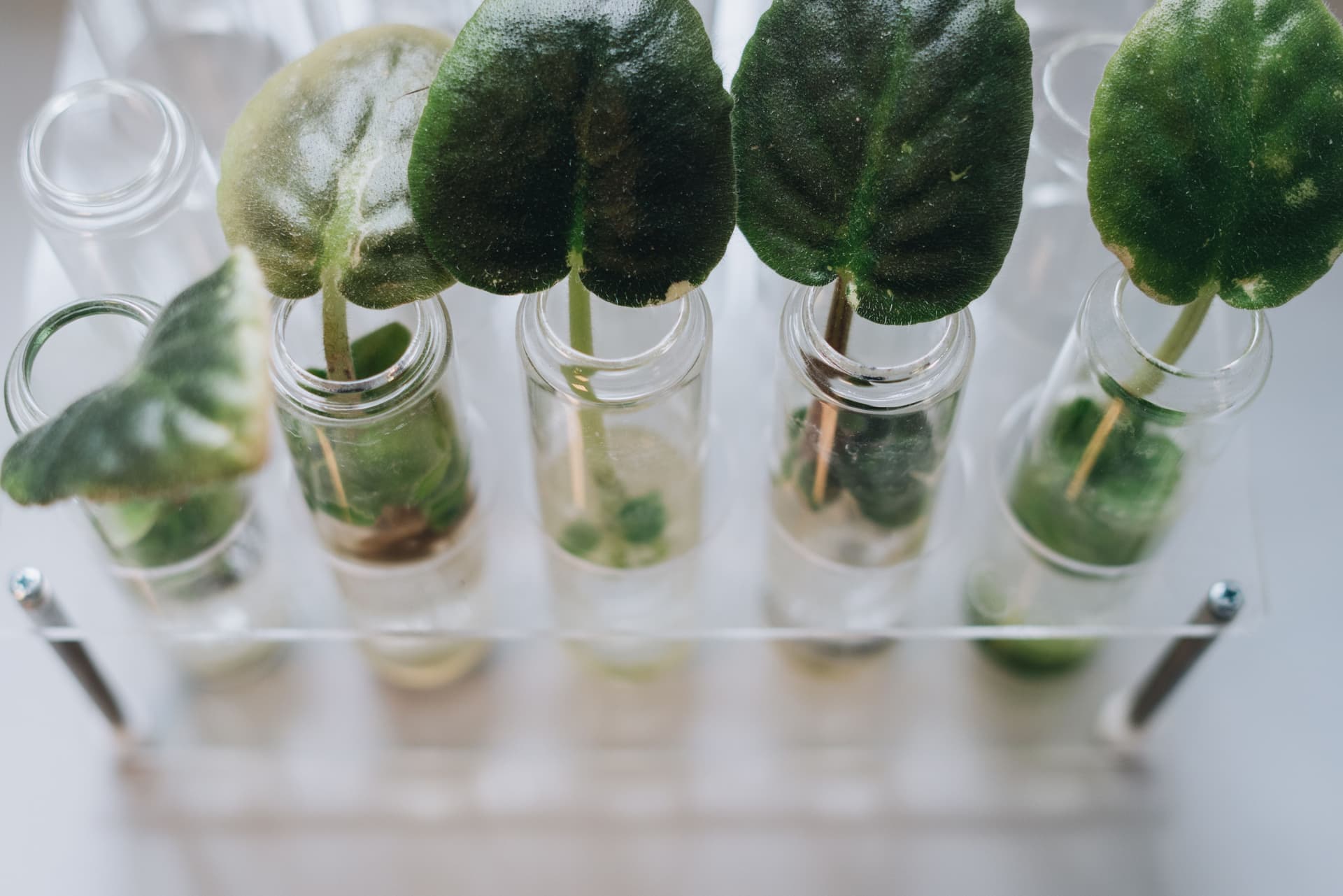
The short answer
Buy a lit station if your apartment has no spare bright indirect position, which is the normal state once a collection has filled the good window. Choose by vessel width first — test tubes take pothos and tradescantia, and will not take a monstera node with an aerial root attached — and by whether the spot you want has an outlet.
Disclosure Pot & Prop earns a commission when you buy through the Amazon links on this page, at no extra cost to you. It does not change which products get recommended or what we say about them, and we have not been given any of them. How this site is funded.
Every propagation guide on this site and everywhere else ends at the same instruction: put the station somewhere with bright indirect light. That is correct, and in a small apartment it is also the hardest part, because bright indirect positions are finite and the plants you already own are standing in them.
A lit propagation station is the only product in this category that solves that. It does not compete for a window position — it makes one, on a desk or a shelf in a room that has no useful daylight at all. That is the same argument lit shelving makes for mature plants, applied to the one activity in an apartment that produces plants for free.
What these lights are, and what they are not
Be clear about the category before spending money on it. The lights on these stations are warm white LED strips, and the listings describe them as such rather than making horticultural spectrum claims. That is the honest framing and it is also sufficient: a cutting is not growing a crop, it is building roots, and it needs far less light than a mature plant does.
What they are not is a grow light. None of these publishes a wattage, a spectrum or a PAR figure, and none of them would replace a proper fixture over a shelf of houseplants. If you want to light plants rather than cuttings, the grow light roundup is the right page and these are the wrong products.
Vessel width decides suitability before anything else
This is the specification that makes or breaks the purchase, and it is the one buried furthest down every listing. A standard 15 mm test tube takes a pothos or tradescantia cutting comfortably. It will not take a monstera node with a stubby aerial root attached — the node does not fit, and forcing it snaps the root you were trying to keep.
| Cutting | Vessel needed | Why |
|---|---|---|
| Pothos, tradescantia, philodendron stems | Test tube | Thin stems; tubes hold them upright |
| Monstera node with aerial root | Wide-mouth vessel | The node plus root is far wider than a tube |
| Snake plant leaf sections | Wide, shallow water | Leaf sections need width, not depth |
| Several cuttings at once | A multi-tube rack | Separation contains a rot before it spreads |
| One specimen on display | A single wide vessel | It is an object, not a production line |
Only one station on this page publishes a vessel diameter at all, which is why it is here despite holding a single cutting rather than five. The vessel question is covered further in glass against ceramic.
Quick picks
Ranked, with the published figure each pick turns on. Tap a row for the full reasoning further down this page.
| # | Product | Best for | Price |
|---|---|---|---|
| 1 | 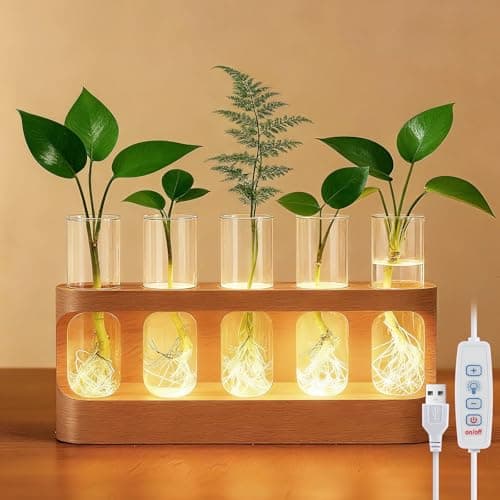 Tigvio Propagation Station with 9-Level Dimmable LED, 5 test tubesFive tubes and a dimmable light on one footprint, which solves the problem that most propagation advice quietly assumes away: somewhere bright to put it. | A propagation station in a room with no usable window | |
| 2 | 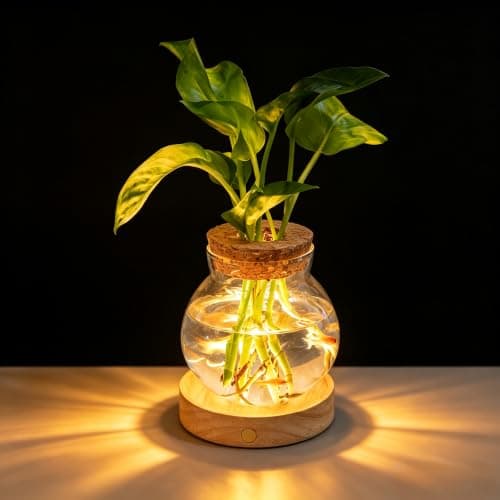 Everkeen Propagation Station with Stepless Dimming LED, wide glass vesselThe one lit station on this page with a vessel wide enough to publish a diameter, which is the specification that decides whether a monstera node fits. | Thicker cuttings that a test tube will not take | $15.19 at Amazon $15.99 · 5% off |
| 3 | 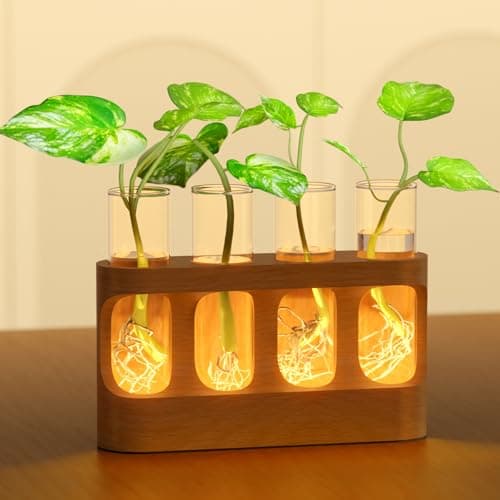 Giunn Propagation Station with 9-Speed Adjustable LED, 4 test tubesFour tubes rather than five, which is the right number if you have actually counted how many rooted cuttings you have somewhere to put. | The same idea, one tube smaller and simpler | |
| 4 | 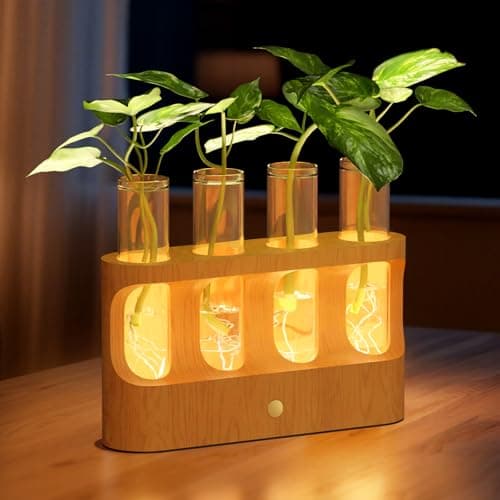 Lightalent Rechargeable Propagation Station with LED, beech wood, 4 vesselsThe only lit station here with no cable, which is what makes a lit station possible on a shelf in the middle of a wall. | A shelf nowhere near an outlet |
Links to Amazon are affiliate links. Prices and availability are Amazon's and change without notice.
Corded or rechargeable
This is the second real decision and it is decided by your room rather than by the product. A corded station has to live within reach of an outlet, and in a small apartment the shelves near outlets are usually the ones already in use. A rechargeable one goes anywhere — and becomes a light that is off, because recharging is a chore that gets forgotten.
Neither of the rechargeable listings publishes a runtime, which is the figure that would settle the question. That is a genuine gap on the specification that matters most for that design, and it is worth weighing against the convenience.
Where to put it, even with a light on it
A lit station removes the light constraint and leaves the other three: warmth, water changes and knocks. Room temperature is fine and directly above a radiator is not. Cloudy water is algae and needs changing about weekly, which happens reliably only if the station is somewhere you walk past. And glass tubes on a desk edge meet an elbow eventually.
The light does change one thing worth knowing: algae grows faster with more light, so a lit station in a bright room greens up sooner than an unlit one in a dim corner. Dimming it down when you are not looking at it helps as much as it saves electricity. The siting guide covers the rest.
What we deliberately do not recommend
Buying a lit station when you have a bright windowsill free — the light is the whole premium and you would be paying for a problem you do not have. We also do not recommend these as grow lights for potted plants, because none of them publishes the figures that would let you judge that and the strips are not built for it. And we do not recommend a station whose vessels do not lift out, lit or otherwise: every propagation vessel goes cloudy, and the ones you cannot get a brush into get abandoned.
Every pick, in full
We have not handled any of these. What follows is what each listing publishes, what that means once you put a watered pot on it, and who should buy something else.
1. A propagation station in a room with no usable window
Tigvio Propagation Station with 9-Level Dimmable LED, 5 test tubes
Five tubes and a dimmable light on one footprint, which solves the problem that most propagation advice quietly assumes away: somewhere bright to put it.
#ad · Price as of October 21, 2026. How we are funded
- What the listing publishes
- Published 9 brightness levels; warm white LED strip; pine stand; borosilicate glass tubes; 5 tubes
- Against a 10-inch pot
- No weight rating is published for this product, so there is nothing to check. That counts against it here rather than being treated as neutral.
Cuttings root faster in bright indirect light, and an apartment with one usable window has a limited number of those positions — usually already occupied by plants. A lit station makes a position instead of competing for one.
Nine brightness levels is more useful than it sounds, because this object lives on a desk or a shelf in a room you sit in. A propagation light you turn down is a propagation light you leave on.
The listing describes a warm white LED strip rather than a horticultural spectrum claim, which is the honest framing: it is enough light for a cutting to root, not a grow light for a mature plant.
What is good
- Solves the siting problem for a dim apartment
- Nine published brightness levels
- Borosilicate tubes and a non-slip base
What is not
- Test tubes are too narrow for a monstera node with an aerial root
- No published spectrum figure, only 'warm white'
- A corded light on a desk is another cable
Skip it if your cuttings are thick-stemmed. Tube stations take pothos and tradescantia; they do not take a monstera node.
2. Thicker cuttings that a test tube will not take
Everkeen Propagation Station with Stepless Dimming LED, wide glass vessel
The one lit station on this page with a vessel wide enough to publish a diameter, which is the specification that decides whether a monstera node fits.
- What the listing publishes
- Published 3.58 in wooden base; glass vessel with a published maximum body diameter of 3.94 in and 3.74 in height; stepless LED dimming
- Against a 10-inch pot
- No weight rating is published for this product, so there is nothing to check. That counts against it here rather than being treated as neutral.
Almost every lit propagation station is built around 15 mm test tubes, and a monstera node with an aerial root attached simply does not go into one. A published 3.94 inch maximum body diameter is a different class of vessel and it is the reason to consider this one.
Stepless dimming rather than fixed steps is a small thing that matters on a desk: you can take the light down to almost nothing in the evening instead of choosing between two settings you do not want.
It is a single vessel rather than a rack, so it is a display object for one good cutting rather than a production station.
What is good
- A published vessel diameter, and a wide one
- Takes thick nodes that tube stations cannot
- Stepless dimming
What is not
- One vessel, not a rack
- Wide glass takes more water and goes cloudy faster in light
- The listing's own manual is flagged as sometimes incorrect
Skip it if you want to root five cuttings at once. This is a one-cutting object.
3. The same idea, one tube smaller and simpler
Giunn Propagation Station with 9-Speed Adjustable LED, 4 test tubes
Four tubes rather than five, which is the right number if you have actually counted how many rooted cuttings you have somewhere to put.
#ad · Price as of October 21, 2026. How we are funded
- What the listing publishes
- Published 9 brightness levels; warm white LED strip; wooden stand; 4 glass test tubes
- Against a 10-inch pot
- No weight rating is published for this product, so there is nothing to check. That counts against it here rather than being treated as neutral.
The gap between how many cuttings people start and how many they find pots for is the real limit on propagation in a small apartment. Four vessels is a more honest starting capacity than the larger racks, and it takes less desk.
Functionally this is the same design as the five-tube stations: warm white strip, nine published brightness levels, wooden base, glass tubes that lift out for cleaning.
As with every lit station here, the light is an ambient LED strip and the listing makes no spectrum claim. That is appropriate for rooting cuttings and not a substitute for a grow light.
What is good
- Four vessels is a realistic first capacity
- Nine published brightness levels
- Tubes lift out, so they can actually be cleaned
What is not
- Narrow tubes only
- No published spectrum or wattage
- Fewer positions than the five-tube versions at a similar size
Skip it if you already propagate at volume. Four tubes will be full within a month and you will be buying again.
4. A shelf nowhere near an outlet
Lightalent Rechargeable Propagation Station with LED, beech wood, 4 vessels
The only lit station here with no cable, which is what makes a lit station possible on a shelf in the middle of a wall.
#ad · Price as of October 21, 2026. How we are funded
- What the listing publishes
- Published built-in rechargeable battery; solid beech wood stand; borosilicate glass; 4 vessels
- Against a 10-inch pot
- No weight rating is published for this product, so there is nothing to check. That counts against it here rather than being treated as neutral.
Every other lit propagation station has to live within reach of an outlet, and in a small apartment the shelves near outlets are usually the ones already in use. A battery removes that constraint entirely.
The trade is the one every rechargeable product makes: a light you have to remember to charge tends to become a light that is off. If your shelf is near an outlet, a corded station is the more reliable purchase.
The listing publishes the battery as 'large-capacity' without stating a runtime, so there is no figure here to check. That is a genuine gap on the specification that matters most for this product.
What is good
- No cable, so it can go anywhere
- Solid beech and borosilicate glass rather than pine and soda-lime
- Four vessels that lift out for cleaning
What is not
- No published battery runtime, which is the key figure
- Recharging is a chore that gets forgotten
- Narrow vessels
Skip it if there is an outlet within reach. A corded station is one less thing to maintain.
Questions people actually ask
Do propagation stations need a grow light?
Are the lights on propagation stations real grow lights?
Will a propagation station with a light grow algae faster?
Can I propagate a monstera in a lit test tube station?
How long should the light be on?
Sources
- University of Illinois Extension: Houseplants — propagation
- University of Illinois Extension: Houseplants — lighting
- Clemson HGIC: Indoor Plants — watering
Product specifications are quoted from each seller's own listing and are the seller's claim, not a measurement of ours.