Propagation
Where to Put a Propagation Station
Bright indirect light, out of the sun, somewhere warm — and somewhere you actually walk past, which matters more than any of the others.
By Scooter M., enthusiast · Published · Last updated
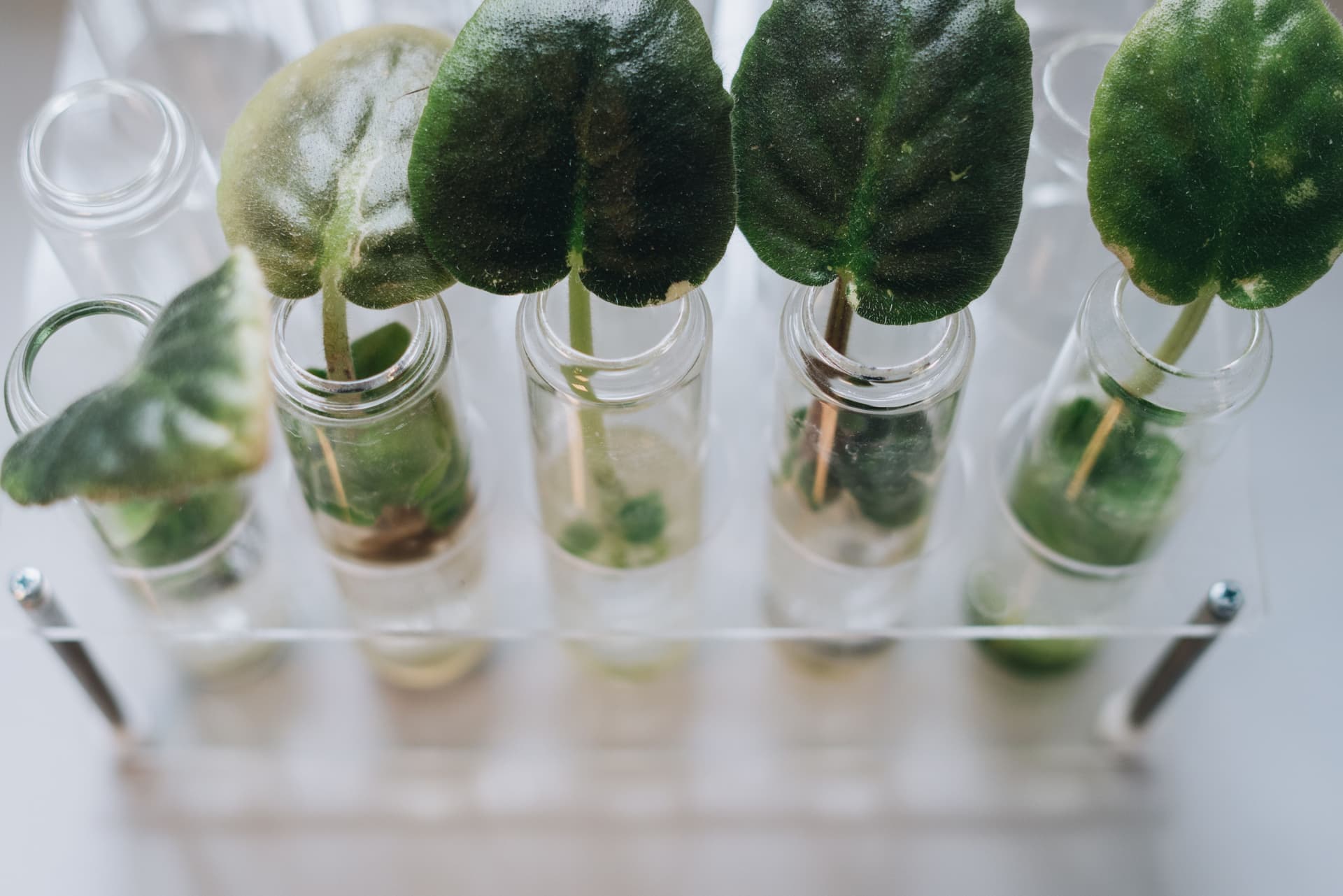
The short answer
Bright indirect light, out of direct sun, at normal room temperature, and somewhere on your daily path. A kitchen windowsill near the sink is the best spot in most apartments — good light, warm, and the water actually gets changed because you are standing there anyway.
Disclosure Pot & Prop earns a commission when you buy through the Amazon links on this page, at no extra cost to you. It does not change which products get recommended or what we say about them, and we have not been given any of them. How this site is funded.
Cuttings are less demanding than plants, so the siting question has fewer constraints than it first appears — and one of the real constraints has nothing to do with horticulture. The best spot for a propagation station is a decent one you walk past every day, not a perfect one you have to remember to visit. Water changes are the maintenance task that keeps a station working, and stations in spare rooms do not get them.
Light: bright, indirect, and not the windowsill in summer
A cutting has no roots, so it cannot replace water it loses through its leaves. Direct sun asks it to do exactly that while also heating the water it is standing in, which accelerates algae. Bright indirect light — near a window, out of the beam — gives it enough energy to build roots without the stress. In a north-facing apartment, any window position will do; in a south-facing one, a few feet back from the glass is better than the sill.
If the only spot with room is genuinely dim, a small clip light solves it cheaply. Cuttings do not need much, and this is one of the few cases where a single clip-on fixture is exactly the right tool rather than a false economy.
Temperature: ordinary room warmth is what you want
Rooting is faster warm than cold, and the range an apartment sits at is fine. What to avoid is the extremes an apartment also has: directly above a radiator, where the water evaporates fast and the cutting cooks, and on a cold windowsill in winter, where a single-glazed pane can be many degrees below room temperature at night. Both are common spots and both slow things down considerably.
The rooms, ranked
| Room | Why | Watch out for |
|---|---|---|
| Kitchen, near the sink | Warm, usually bright, water is right there | Direct sun on a south-facing sill |
| Bathroom with a window | Humid and warm, which cuttings like | Often too dim — check before committing |
| Living room shelf near a window | Good light, and you see it daily | Radiators directly below |
| Bedroom windowsill | Fine light, stable temperature | Cold glass in winter |
| Home office desk | You are sat next to it for hours | Screens are not light; check the window |
| Spare room or hallway | Out of the way | Out of mind — the water never gets changed |
The factor nobody lists
Whether you walk past it. A propagation station is a weekly maintenance task disguised as an ornament, and the failure mode is not that cuttings die dramatically — it is that the water goes cloudy, then green, then nobody wants to deal with it, and eventually the whole thing gets tipped out. A station on the kitchen counter gets its water changed because you are standing at the sink anyway. The same station in a spare room does not. Choose the merely good spot on your daily path over the excellent spot that is not.
Every pick, in full
We have not handled any of these. What follows is what each listing publishes, what that means once you put a watered pot on it, and who should buy something else.
1. Cuttings that live on a shelf, not a rack
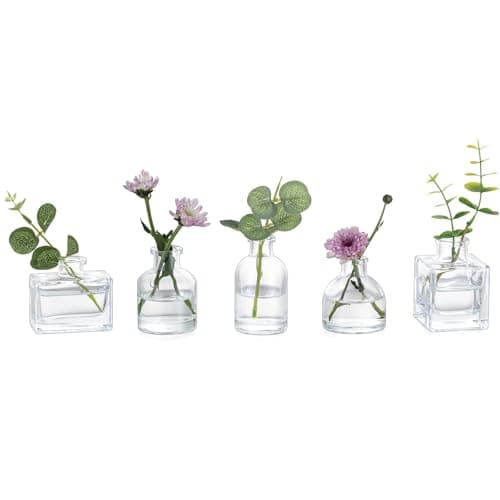
Glasseam Mini Glass Propagation Vases, set of 5
No rack at all: five loose vessels that go wherever there is light, which is the most flexible and least tidy way to propagate.
#ad · Price as of October 18, 2026. How we are funded
- What the listing publishes
- Five assorted small clear glass vases, no stand
- Against a 10-inch pot
- No weight rating is published for this product, so there is nothing to check. That counts against it here rather than being treated as neutral.
A rack forces every cutting into the same light. Loose vases let the pothos sit in a dim corner and the herb cutting take the sill, which is how they actually root fastest.
Assorted shapes means assorted neck widths, which by accident covers both thick and thin cuttings.
Loose glass on a shelf is the format most likely to get knocked off. A rack at least keeps them upright together.
What is good
- Each cutting goes where its light is
- Assorted necks fit assorted cuttings
- The cheapest way into propagation
What is not
- No stand, so they go over easily
- Looks like clutter rather than a display
- Small volumes need frequent water changes
Skip it if you want the station to be a feature. This is five jars on a shelf and it looks like it.
2. One plant that needs more light than its corner gives
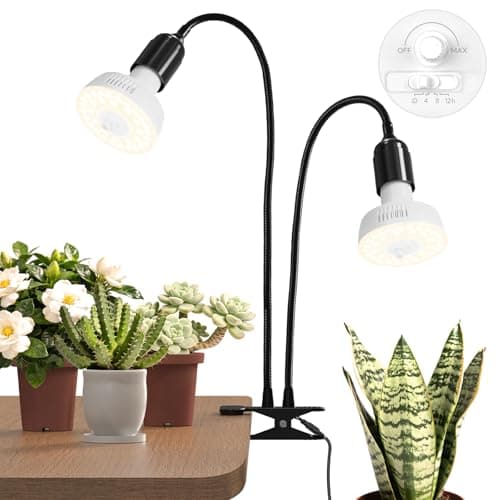
Barrina Clip On Grow Light, 22 W, 4000 K
Publishes both its wattage and its color temperature, and clips to a shelf edge. The smallest useful intervention in this entire section.
#ad · Price as of October 18, 2026. How we are funded
- What the listing publishes
- Published 22 W (2 by 11 W) at 4000 K; clip mount
- Against a 10-inch pot
- No weight rating is published for this product, so there is nothing to check. That counts against it here rather than being treated as neutral.
22 W on one plant is a genuinely useful amount of light. The same 22 W spread across a six-tier shelf would be nothing, which is why per-plant clip lights outperform their wattage.
4000 K is warmer than the 5000 K bars and noticeably less clinical in a living room, at a small cost in usable output for the plant.
A clip needs something to clip to, with a lip. Shelf edges work; a windowsill usually does not.
What is good
- Publishes watts and color temperature
- 22 W concentrated on one plant does real work
- No mounting, no fixing, and it moves with the plant
What is not
- Needs a shelf edge or similar to clip to
- Lights one plant, not a collection
- Two heads means two points of aim to get right
Skip it if you have a whole shelf to light. Clip lights do not scale, and a linkable bar set is the right tool at that point.
Questions people actually ask
Do cuttings need sunlight to root?
Can I propagate plants in a bathroom?
Is a north-facing window enough for propagation?
Should a propagation station be near a radiator?
Sources
- University of Illinois Extension: Houseplants — propagation
- University of Illinois Extension: Houseplants — lighting
- Michigan State University Extension: Smart Gardening — growing houseplants indoors
Product specifications are quoted from each seller's own listing and are the seller's claim, not a measurement of ours.