Propagation
The Best Pruning Shears for Houseplants
Every listing publishes overall length, which tells you about the handles. The number that decides what the tool can do is the blade.
By Scooter M., enthusiast · Published
The short answer
Compare blade length, not overall length — overall length describes the handles. A 40 mm blade takes a normal houseplant stem; a 4-inch fine-tipped snip reaches between crowded stems where a six-inch tool cannot. For propagation specifically, buy two pairs rather than one good pair, because the thing that actually matters is having a clean blade for the cutting, and a tool you have to stop and wipe is a tool you will not wipe. Nothing in this category publishes a steel grade, so once you are past the geometry you are comparing adjectives.
Disclosure Pot & Prop earns a commission when you buy through the Amazon links on this page, at no extra cost to you. It does not change which products get recommended or what we say about them, and we have not been given any of them. How this site is funded.
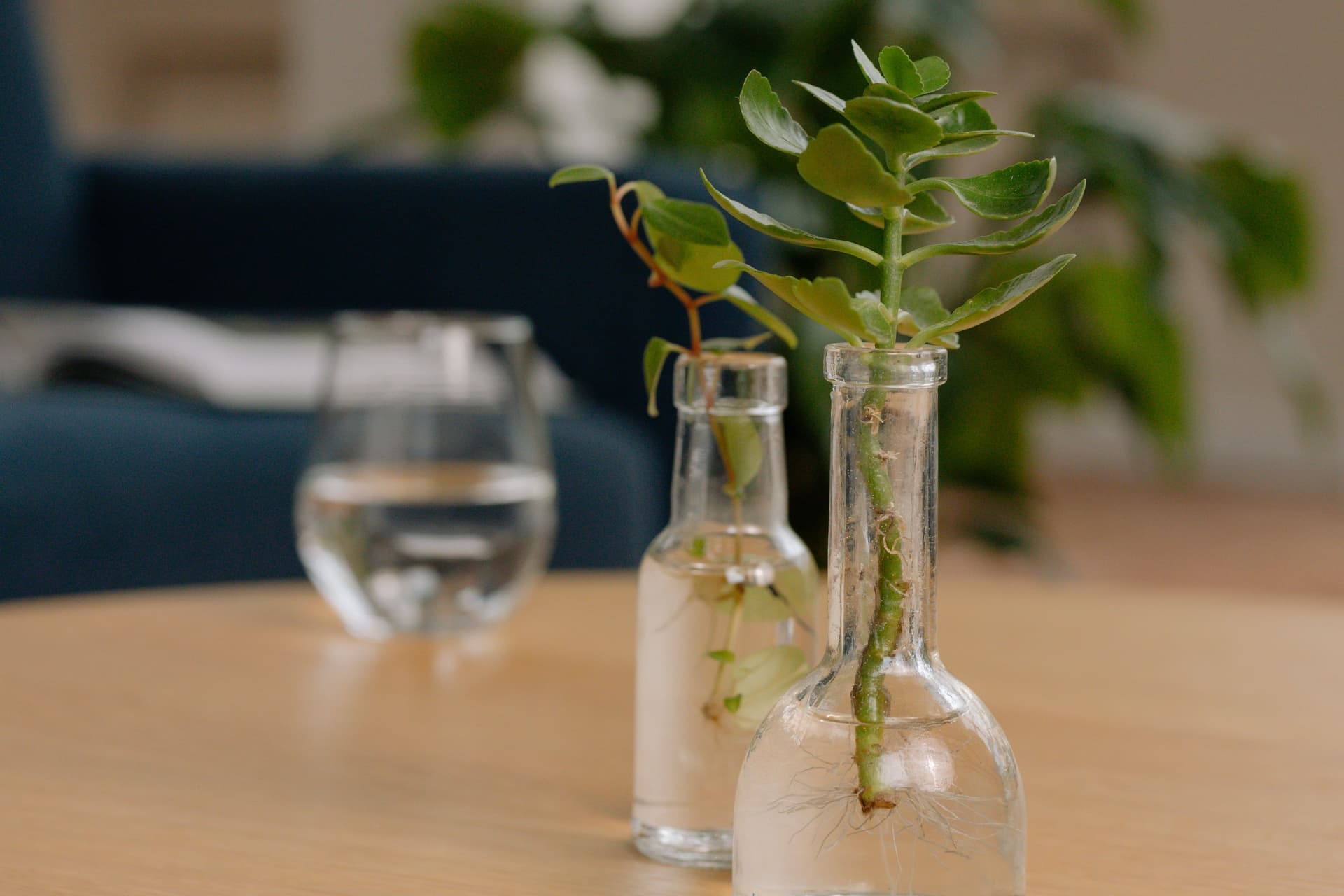
This site has written a lot about what happens after a cutting is taken. Rooting hormone, propagation stations, what to root it in — all of it assumes somebody has already made a clean cut at a node with something sharp.
Most people make that cut with kitchen scissors, and kitchen scissors crush. This is the page that should have existed before any of the others.
Blade length, not overall length
Almost every listing in this category leads with overall length — 6 inches, 6.5 inches — and overall length is mostly handles. The figure that decides what the tool can actually do is the blade: the largest stem it takes in a pass, and how far into a plant you can reach before the handles collide with foliage.
| Tool | Published blade | Reaches | Best at |
|---|---|---|---|
| 6 in shaping shears | Not published separately | Open growth | Broad leaves, shaping |
| 6 in bonsai snip | 40 mm straight | Moderately dense growth | General cutting, deadheading |
| 4.1 in mini snip | 4.1 in fine micro tip | Crowded stems | Propagation cuts, small plants |
The practical rule: a longer blade is a bigger bite and a clumsier reach. If your plants are a monstera and a fiddle leaf fig, the bigger tool is right. If they are succulents, herbs, a pilea and a tray of cuttings, the fine tip wins every time and the six-inch tool will sit in a drawer.
What nobody publishes
Steel. Not one listing in this category states a grade, an alloy or a hardness. You get "stainless steel", "fully hardened", "precision-ground" and "forged" — which are, in fairness, four different and meaningful claims about process, but none of them is a number.
- Forged means the blade was shaped under force rather than stamped from sheet. Forged blades hold their alignment at the pivot; pressed ones flex and eventually cut on one side only.
- Fully hardened is a heat-treatment claim, and heat treatment is most of what decides how long an edge lasts.
- Precision-ground describes the edge geometry rather than the steel under it.
- Micro-tip is about shape, not material — a fine point for reaching between stems.
- No grade, no hardness, no figure. Where the vocabulary runs out, so does the comparison.
Why the cut matters more on a cutting
On an established plant, a bad cut is cosmetic — a crushed stem browns back an inch and the plant carries on. On a cutting you are trying to root, the cut surface is the whole interface: it is where water is taken up, where rooting hormone is applied, and where rot starts if the tissue was mashed rather than severed.
That is why the propagation guidance on this site keeps saying clean blade, clean cut. A sharp fine tip severs; a blunt or misaligned pair crushes on the way through and leaves damaged tissue sitting in water for two weeks.
Keeping them working
- Wipe the blade between plants, particularly if anything has looked unwell. Rubbing alcohol on a cloth takes three seconds and there is no reason to skip it when the tool is in your hand.
- Dry them after use. Stainless resists rust; it does not ignore it, and sap plus moisture at the pivot is where these seize.
- Clean sap off with alcohol, not by scraping. Dried sap on a blade is what makes a sharp tool feel blunt.
- Do not cut woody stems with fine tips. Forcing a micro-tip snip through a thickened stem springs the tip out of alignment, and a sprung tip never comes back.
- Cut just above a node on the parent plant and just below one on the cutting — the reason the fine tip matters is that a node is a small target on a small plant.
- Keep one pair where the plants are. A tool two rooms away is a tool you will reach past a yellowing leaf to avoid fetching.
Quick picks
Ranked, with the published figure each pick turns on. Tap a row for the full reasoning further down this page.
| # | Product | Best for | Price |
|---|---|---|---|
| 1 | 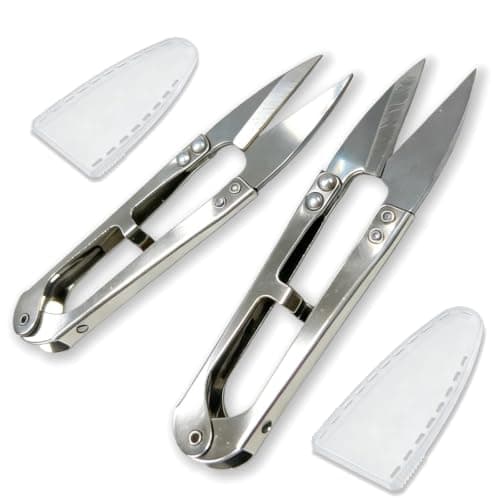 surgewin Mini Bonsai Snips, 4.1 in blades, 2 packTwo identical fine-tipped snips with covers — which solves the real hygiene problem, because now one pair can stay clean for cuttings. | Propagation cuts and crowded small plants, with a spare so one stays clean | |
| 2 | 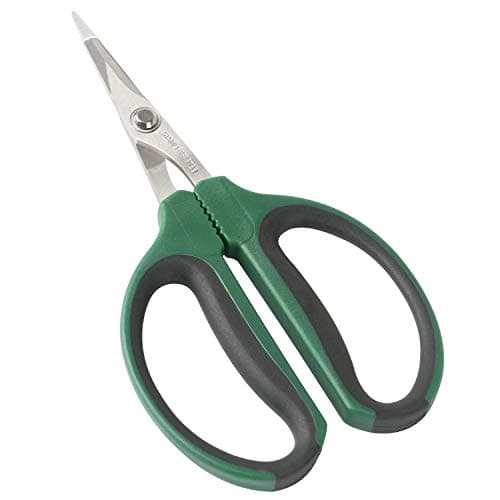 CastleGreens Bonsai Pruning Shears, 6 in, 40 mm straight bladePublishes an actual blade length, which almost nothing in this category does, and costs about as much as a bag of potting mix. | The general-purpose cut, at a price that makes a second pair reasonable | |
| 3 | 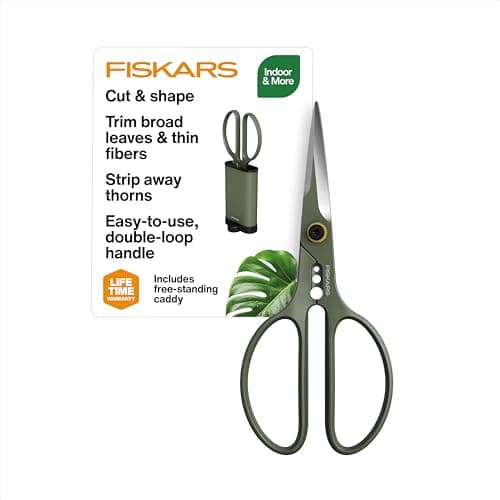 Fiskars Plant Shaping Shears, 6 in, with standForged rather than pressed, ambidextrous, and it comes with somewhere to live — which is the difference between a tool you use and a tool in a drawer. | Shaping a houseplant you look at every day, kept somewhere you will find it |
Links to Amazon are affiliate links. Prices and availability are Amazon's and change without notice.
How we ranked these
On blade geometry against the job, then on what the listing publishes, then on the practical question of whether you will actually have the tool to hand. The mini two-pack leads because it is the right shape for the work this hub is about — fine tips that reach a node without damaging the stem either side — and because two pairs is what makes a clean propagation blade a habit rather than a resolution. The 40 mm bonsai snip is second as the general-purpose tool and is the only one publishing an actual blade length; at its price a second pair is also reasonable. The shaping shears are third and are the best-made object here by some distance — forged, ambidextrous, with a stand that means it lives beside the plants — held off the top because six inches of tool cannot reach into the crowded small growth that most propagation involves.
| Your plants | Buy | Why |
|---|---|---|
| Taking cuttings regularly | Mini snips, 2 pack | Fine tip at a node, and a clean spare |
| A mixed collection, general tidying | 40 mm bonsai snip | Publishes its blade; takes a normal stem |
| Large-leaved plants you shape | 6 in shaping shears | Forged, ambidextrous, lives on the shelf |
| Succulents and bonsai | Mini snips | Short blades reach between crowded growth |
| Anything woody | None of these | These are soft-growth tools; woody stems spring fine tips |
What we deliberately do not recommend
Kitchen scissors, which crush rather than sever and leave a cutting starting from damaged tissue. Comparing tools on overall length, which is mostly handles. Forcing a fine-tipped snip through a woody stem. Skipping the wipe-down between plants because the alcohol is in another room — buy a second pair instead. Buying on "premium stainless steel" when nothing in the category publishes a grade. And storing sprung snips without their covers, which is how a fine tip finds something to catch on.
Every pick, in full
We have not handled any of these. What follows is what each listing publishes, what that means once you put a watered pot on it, and who should buy something else.
1. Propagation cuts and crowded small plants, with a spare so one stays clean
surgewin Mini Bonsai Snips, 4.1 in blades, 2 pack
Two identical fine-tipped snips with covers — which solves the real hygiene problem, because now one pair can stay clean for cuttings.
#ad · Price as of September 27, 2026. How we are funded
- What the listing publishes
- Published 4.1 in stainless blades tapering to a fine micro tip; spring action that returns the blades after each cut; 2 identical snips with protective blade covers; stated for bonsai, succulents, herbs, ferns and taking propagation cuttings
- Against a 10-inch pot
- No weight rating is published for this product, so there is nothing to check. That counts against it here rather than being treated as neutral.
A fine micro tip is what lets you cut a node without damaging the stem either side of it, and taking a clean cutting is the one job on this site where the cut quality genuinely changes the outcome. The rooting hormone page is built around sterilizing the blade before that cut; owning two pairs is how that stops being a chore.
Spring action returns the blades after every cut, which matters over a long session and is mildly annoying in a drawer — a sprung tool wants to sit open. Both pairs ship with covers, which is the answer to that.
Four point one inches of blade is short. That is the point: short blades reach between crowded stems where a six-inch tool cannot, and they are the wrong tool for anything thicker than a soft stem.
What is good
- Two pairs, so one can stay clean for propagation cuts
- Blade covers included, which sprung snips genuinely need
- Fine micro tip reaches into crowded growth
What is not
- Short blades cannot take anything woody
- Spring action means they will not sit closed without the cover
- No steel grade published, and no hardness claim either
Skip it if you are cutting thick or woody stems. These are soft-growth snips and forcing them on a woody stem is how a fine tip gets sprung.
2. The general-purpose cut, at a price that makes a second pair reasonable
CastleGreens Bonsai Pruning Shears, 6 in, 40 mm straight blade
Publishes an actual blade length, which almost nothing in this category does, and costs about as much as a bag of potting mix.
#ad · Price as of September 27, 2026. How we are funded
- What the listing publishes
- Published 6 in overall with a stated 40 mm straight blade; fully hardened stainless steel, stated to hold an edge longer; micro-tip snip with anti-slip softgrip handles; stated for fine cutting, deadheading and houseplant maintenance
- Against a 10-inch pot
- No weight rating is published for this product, so there is nothing to check. That counts against it here rather than being treated as neutral.
Forty millimeters of blade is the useful number and it is the one you should be comparing. Overall length tells you about the handles; blade length tells you the largest stem you can take in one pass and how far into a plant you can reach before the handles hit foliage.
"Fully hardened" is a heat-treatment claim rather than a steel grade, and it is the most this category offers. Nobody here publishes a hardness figure or an alloy, so you are comparing adjectives once you move past the geometry.
At this price a second pair is a reasonable purchase, and a second pair is genuinely useful — one kept clean for propagation cuts and one for general deadheading means you are not wiping a blade down every time you move between plants.
What is good
- Publishes a 40 mm blade length, which most listings omit
- Hardened stainless with a micro-tip for reaching into growth
- Cheap enough that owning two is sensible
What is not
- No steel grade or hardness figure published
- Softgrip handles are a coating and coatings peel eventually
- No blade cover, so it needs a drawer or a pot to live in
Skip it if you only ever prune one large plant. A shaping tool with a stand will get used more often than a better blade you have to go and find.
3. Shaping a houseplant you look at every day, kept somewhere you will find it
Fiskars Plant Shaping Shears, 6 in, with stand
Forged rather than pressed, ambidextrous, and it comes with somewhere to live — which is the difference between a tool you use and a tool in a drawer.
#ad · Price as of September 27, 2026. How we are funded
- What the listing publishes
- Published 6 in forged stainless steel with precision-ground blades; ambidextrous handle loops; integrated stem and thorn stripper notch; free-standing storage caddy with a repositionable foot; stated for broad flat leaves and thin hard fibers
- Against a 10-inch pot
- No weight rating is published for this product, so there is nothing to check. That counts against it here rather than being treated as neutral.
Forged stainless is a construction claim rather than a finish one. Pressed-steel scissors flex at the pivot under load and go out of alignment; forged blades hold their register, which on a plant is the difference between a clean cut and a crushed stem that browns at the end.
The stand sounds like packaging and is not. Pruning happens when you notice a yellowing leaf while walking past, and a tool on the shelf beside the plants gets used ten times as often as the identical tool in a kitchen drawer two rooms away.
Ambidextrous loops are worth naming because most garden scissors are quietly right-handed — the blade offset and the handle shape both assume it. Large symmetrical loops remove that.
What is good
- Forged construction rather than pressed steel
- Ambidextrous handles, which most of this category is not
- A stand, so it lives with the plants instead of in a drawer
What is not
- Most expensive tool here by a wide margin
- Six inches is too big to reach into a dense small plant
- Publishes no steel grade or hardness, like everything in this category
Skip it if your plants are succulents, bonsai or anything you prune between crowded stems. This is a shaping tool for broad leaves and it cannot get into tight growth.
Questions people actually ask
What kind of scissors should I use for houseplants?
Does it matter what I cut a plant cutting with?
Should I sterilize pruning shears between plants?
Bypass or anvil pruners for indoor plants?
What blade length do I need?
What steel are plant snips made from?
Sources
- University of Illinois Extension: Houseplants — propagation
- Michigan State University Extension: Smart Gardening — growing houseplants indoors
- Clemson HGIC: Indoor Plants — cleaning, fertilizing, containers and light requirements
Product specifications are quoted from each seller's own listing and are the seller's claim, not a measurement of ours.