Planters
The Best Indoor Plant Trellises and Supports
Every listing publishes the height. The number that decides whether it stays upright is how much of it goes into the pot, and most of them leave that out.
By Scooter M., enthusiast · Published

The short answer
Check the soil insertion depth before the height, because height without insertion is a lever arm with no anchor. Then check that your pot is deep enough for it — a houseplant pot is roughly as deep as it is wide, so a trellis stating 8.6 inches of insertion needs a 10-inch pot or larger and simply will not anchor in a 6-inch one. And make sure you are buying the right category at all: a trellis is something you tie stems to, while a moss pole is something an aroid's aerial roots attach to, and only the second one changes how the plant grows.
Disclosure Pot & Prop earns a commission when you buy through the Amazon links on this page, at no extra cost to you. It does not change which products get recommended or what we say about them, and we have not been given any of them. How this site is funded.
A trellis is a rigid frame you push into a pot and tie a plant to. That is the entire product, which is why the category competes on shape — honeycombs, hearts, arches, fans — rather than on anything you could check.
There is a specification, though. It is just not the one on the front of the listing.
Insertion depth, not height
Every trellis publishes its height because height is what sells: a taller trellis looks like more product. What decides whether it stays vertical under a mature vine is the part you cannot see — how much of it is buried, holding against everything above it.
| Trellis | Total height | Stated insertion | Exposed above soil |
|---|---|---|---|
| 46 in, 6 mm tube | 46 in | 8.6 in | About 37 in |
| 30 in, 2 pack | 30 in | Not published | Unknown |
| 17.5 in, 2 pack | 17.5 in | 4 in | About 13.5 in |
The small trellis has the better ratio — about 13.5 inches of leverage against 4 buried, where the tall one runs 37 against 8.6. That is not a criticism of the tall trellis, which is built for a floor planter, but it is the reason a short trellis feels solid and a tall one in a small pot wobbles.
A trellis is not a moss pole
This is the most consequential thing on the page and the two products look interchangeable on a shelf. They are not.
| Trellis | Moss pole | |
|---|---|---|
| How the plant is held | You tie stems to it | Aerial roots grip and attach |
| What it does to the plant | Shapes it; growth unchanged | Aroids mature — leaves get larger |
| Maintenance | Keep tying as it grows | Keep it damp so roots attach |
| Right for | Pothos, ivy, hoya, any viner you want tidy | Monstera, philodendron, anthurium |
| Wrong for | An aroid you want to mature | A plant with no aerial roots |
If your plant is a monstera or a climbing philodendron and you want the big, fenestrated leaves it is capable of, a trellis is the wrong purchase — the moss pole page is the right one, and one of its poles appears at the bottom of this page for exactly that reason. If your plant is a pothos escaping across a shelf and you want it going up instead, a trellis is precisely right and a moss pole is more work than the plant will repay.
The other thing a trellis needs
Ties. A vine does not grip metal — it has to be attached, repeatedly, as it grows. This is the part people discover after the trellis arrives, and it is why one listing here shipping fifty tie straps is worth more than it sounds.
- Soft ties, loosely. A tie that cuts into a stem does more damage than the flopping it prevented. Loose loops, re-done as the stem thickens.
- Tie the stem, not the leaf stalk. Petioles snap; stems bend.
- Expect to keep doing it. A trellis is not a one-time installation, it is two weeksly two-minute job for as long as the plant is growing.
- Insert the trellis before the plant needs it. Pushing metal into an established root ball cuts roots. The right moment is at a repot, which is a page of its own.
- Width matters as much as height. A 4-inch-wide trellis forces a single column; a 10-inch one lets a plant fan out, which is usually the look people actually want.
Weight, and why this page has no load table
Most pages on this site check a product against the weight of a watered pot. This one cannot, and it is worth saying why: the load on a trellis is not the pot's weight, it is the plant's, and this site has no sourced way to compute what a mature pothos weighs. Nothing here publishes a load rating either.
What the pot weight does tell you is stability at the base. A 10-inch pot holds about 14.7 lb of watered mix, which is a substantial counterweight for a trellis leaning under a vine; a 6-inch pot holds about 3 lb, which is not. The weight model is here. Small pot, tall trellis, heavy plant: that is the combination that ends up on the floor.
Quick picks
Ranked, with the published figure each pick turns on. Tap a row for the full reasoning further down this page.
| # | Product | Best for | Price |
|---|---|---|---|
| 1 | 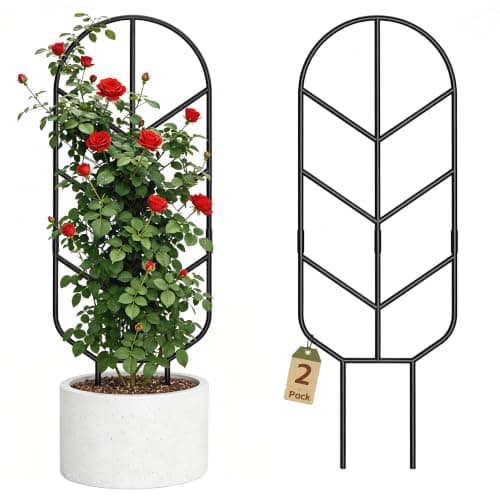 saffruff Metal Plant Trellis, 30 in, 2 packThe sensible middle height in this set, and the one whose proportions suit an ordinary houseplant pot rather than a floor planter. | Two medium plants, at a height most houseplant pots can actually anchor | |
| 2 | 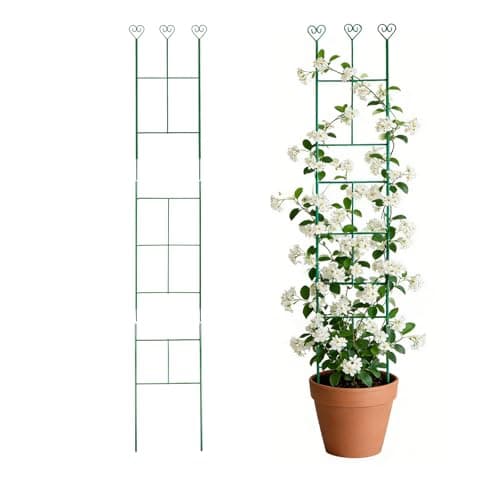 Hensal Metal Plant Trellis, 46 in, 6 mm frameThe only trellis here that publishes how much of itself goes into the pot, which is the figure that decides whether it stays upright. | A large floor plant in a deep pot that has outgrown every shorter support | |
| 3 | 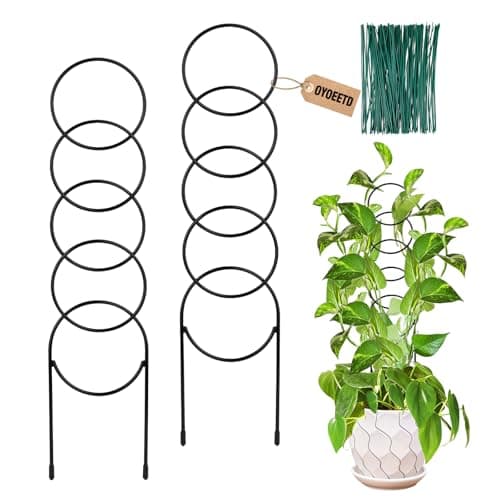 OYOEETD Small Plant Trellis, 17.5 in, 2 pack with tiesPublishes its insertion depth, ships the ties you were going to have to buy anyway, and is honest about being a small-plant product. | Tabletop pots, and the fact that a trellis is useless without something to tie with | |
| 4 | 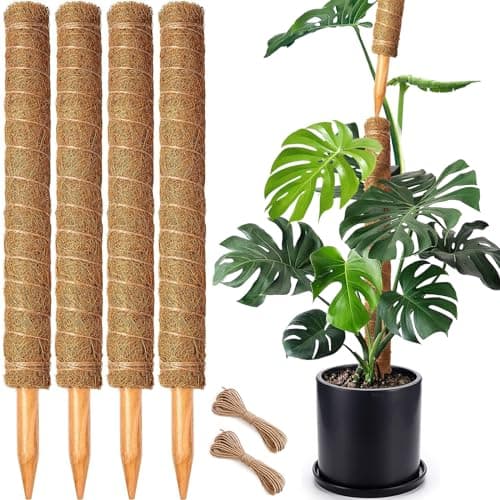 CHIAFFI Stackable Coir Moss Poles, 22 in each, 4 packStacking is the answer to the one failure every moss pole shares, which is being outgrown — and this set publishes both the section length and the assembled height, so you can see what the joints cost. | The pole you do not have to replace next year |
Links to Amazon are affiliate links. Prices and availability are Amazon's and change without notice.
How we ranked these
On whether the insertion depth is published, then on the ratio of buried to exposed, then on width, then on whether ties are included. The 30-inch two-pack leads on fit rather than on disclosure: it is the height ordinary houseplant pots can actually anchor, it is the widest here at 10.6 inches so a plant can fan across it rather than being forced into a column, and two per pack covers two plants. The 46-inch trellis is second and is the best-specified product in the set — a published insertion depth and a stated 6 mm tube gauge — held off the top because those same figures show it needs a 10-inch pot or larger, which most readers do not have. The 17.5-inch pair is third: the best buried-to-exposed ratio here, fifty ties in the box, and honest about being a small-plant product. The coir moss pole is last and is not a trellis at all — it is here because if your plant is an aroid with aerial roots, everything above it is the wrong purchase.
| Your plant | Buy | Why |
|---|---|---|
| Pothos or ivy in a 6-8 in pot | 30 in trellis, 2 pack | Height a normal pot can anchor; wide enough to fan |
| A large vine in a 10-12 in planter | 46 in trellis | Publishes 8.6 in insertion, and the pot is deep enough |
| A small plant on a table | 17.5 in pair with ties | Best ratio here, and the ties are included |
| Monstera or philodendron | A moss pole | Aerial roots attach; leaves mature. A trellis will not do that |
| A plant already flopping | Any trellis plus soft ties | Support first, tidy second |
| You have no ties | The pack that includes them | A trellis without ties does nothing |
What we deliberately do not recommend
Buying on height without checking insertion depth. Putting a 46-inch trellis in a 6-inch pot, where it cannot be buried to its stated depth. Using a trellis on a monstera and expecting the leaves to mature, which is what a moss pole does and a trellis does not. Tying tightly, or tying petioles instead of stems. Pushing a trellis into an established root ball mid-season rather than waiting for a repot. And buying a trellis without ties on the assumption that the plant will grip it, because it will not.
Every pick, in full
We have not handled any of these. What follows is what each listing publishes, what that means once you put a watered pot on it, and who should buy something else.
1. Two medium plants, at a height most houseplant pots can actually anchor
saffruff Metal Plant Trellis, 30 in, 2 pack
The sensible middle height in this set, and the one whose proportions suit an ordinary houseplant pot rather than a floor planter.
#ad · Price as of September 27, 2026. How we are funded
- What the listing publishes
- Published 30 in height and 10.6 in width, 2 per pack; stated durable metal with a smooth matte finish, stated not to bend or rust; stated for monstera, philodendron, pothos and mandevilla; inserted directly into soil; no insertion depth published
- Against a 10-inch pot
- No weight rating is published for this product, so there is nothing to check. That counts against it here rather than being treated as neutral.
Thirty inches is the height that matches the pots most houseplants are actually in. The taller trellis here needs a large pot to anchor properly; this one has less leverage above the soil to begin with, so a shallower insertion is less punishing.
Ten point six inches wide is unusually generous for a 30-inch trellis, and width is what a climbing plant actually spreads across. A narrow trellis forces vines into a single column; a wide one lets a monstera or philodendron fan out, which is the look people are buying.
No insertion depth is published, which is the standing gap in this category. Two per pack is the compensation — you can put one in each of two plants, or use both in a single large pot for a broader, more stable structure.
What is good
- Two trellises per pack, so a pair of plants is one purchase
- Widest published width here at 10.6 in, which suits fanning vines
- A height ordinary houseplant pots can anchor without a deep planter
What is not
- No insertion depth published, so anchoring is unknown before it arrives
- Rust resistance is stated without naming a coating or a finish
- Still a tie-on support — it does nothing for aerial roots
Skip it if the plant is an aroid you want to mature rather than just tidy. A trellis shapes a plant; a moss pole is what changes it.
2. A large floor plant in a deep pot that has outgrown every shorter support
Hensal Metal Plant Trellis, 46 in, 6 mm frame
The only trellis here that publishes how much of itself goes into the pot, which is the figure that decides whether it stays upright.
#ad · Price as of September 27, 2026. How we are funded
- What the listing publishes
- Published 46 in total height with a stated 8.6 in (22 cm) soil insertion; 6 mm powder-coated rust-resistant tube; published 7.9 in width; assembles from 3 sections without tools; stated for ivy, pothos, monstera, hoya and flowering vines
- Against a 10-inch pot
- No weight rating is published for this product, so there is nothing to check. That counts against it here rather than being treated as neutral.
Eight point six inches of insertion is the most useful number in this category and almost nobody prints it. Height without insertion depth is a lever arm with no anchor stated — and 46 inches of trellis with 8.6 inches buried leaves about 37 inches of leverage above the soil line, which is a lot of trellis working against a pot.
That same figure is also a constraint on which pot you can use it in. A houseplant pot is roughly as deep as it is wide, so 8.6 inches of insertion needs something in the 10-inch class or bigger. In a 6-inch pot this trellis physically cannot be buried to its stated depth, and a partly-inserted stake is the one that leans.
Six millimeter powder-coated tube is a stated gauge rather than "sturdy metal", which is the same kind of honesty the insertion figure represents. Three sections mean it ships small and can be assembled to less than full height if you want a shorter, more stable version.
What is good
- Publishes its soil insertion depth, nearly alone in this category
- States an actual 6 mm tube gauge rather than an adjective
- Sectional, so it can be built shorter for more stability
What is not
- Needs a pot deep enough for 8.6 in of insertion — roughly 10 in or larger
- About 37 in of leverage above the soil once fully assembled
- The heart-shaped top is a decorative choice you cannot opt out of
Skip it if your plant is in a 6 or 8-inch pot. The stated insertion will not fit, and a partly-buried trellis leans under the first heavy vine.
3. Tabletop pots, and the fact that a trellis is useless without something to tie with
OYOEETD Small Plant Trellis, 17.5 in, 2 pack with ties
Publishes its insertion depth, ships the ties you were going to have to buy anyway, and is honest about being a small-plant product.
#ad · Price as of September 27, 2026. How we are funded
- What the listing publishes
- Published 17.5 in by 4 in grid with a stated 4 in soil insertion; 2 trellises per pack plus 50 green tie straps; stated to support branches and prevent breakage; no tools required
- Against a 10-inch pot
- No weight rating is published for this product, so there is nothing to check. That counts against it here rather than being treated as neutral.
Four inches of insertion into a 17.5-inch trellis is a better ratio than the tall option here — about 13.5 inches of leverage against 4 buried, where the 46-inch trellis runs 37 against 8.6. Shorter trellises are more stable for the same reason short table legs are, and this one publishes both halves so you can see it.
Fifty tie straps in the box is the detail that matters most in daily use. A trellis does nothing on its own: a vine does not grip metal, it has to be tied to it, repeatedly, as it grows. Buying a trellis without ties is buying half a system.
Four inches wide is narrow. This is a support for a single stem or a small cluster rather than a structure for a plant to spread across, and the listing does not pretend otherwise.
What is good
- Publishes soil insertion depth, and the ratio is the best here
- Includes 50 ties, without which a trellis does nothing
- Two per pack at the lowest price in this set
What is not
- Only 4 in wide, so a plant cannot fan across it
- 17.5 in is outgrown quickly by a vigorous pothos or philodendron
- Thin grid sections look slight next to a mature plant
Skip it if the plant is already taller than about a foot. You will be buying the taller one within a season, and moving a plant onto a new support disturbs everything you just tied.
4. The pole you do not have to replace next year
CHIAFFI Stackable Coir Moss Poles, 22 in each, 4 pack
Stacking is the answer to the one failure every moss pole shares, which is being outgrown — and this set publishes both the section length and the assembled height, so you can see what the joints cost.
#ad · Price as of September 27, 2026. How we are funded
- What the listing publishes
- Published four 22 in coir poles stated to stack to 70 in; two 6.6 ft lengths of jute rope included; solid wood stakes that transfer from one section to the next; 1.48 lb for the set
- Against a 10-inch pot
- No weight rating is published for this product, so there is nothing to check. That counts against it here rather than being treated as neutral.
The commonest complaint about moss poles is not that they fail but that the plant passes them, and replacing a pole in a full pot means pushing a new stake through roots that have already gripped the old one. A sectional pole avoids that: you add height at the top rather than starting again at the bottom.
The published figures let you check the overlap, which most stackable listings hide. Four 22-inch sections is 88 inches of pole, and the listing states 70 inches assembled — so roughly 18 inches disappears into the three joints, about 6 inches each. That is the real number to plan around, not the 88.
Jute rope is included, which matters more than it sounds. Tying a thickening stem to a pole with wire or a cable tie is how petioles get cut, and soft rope in a loose figure-eight is the fix.
What is good
- Publishes both section length and assembled height, so the joint loss is checkable
- Add height without disturbing a rooted pole
- Jute rope included rather than sold separately
What is not
- About 18 in of the 88 in you buy is consumed by the joints
- A stacked pole has joints, and joints are where a tall pole flexes
- Coir sheds a little every time a section is handled
Skip it if your plant is already tall and you want one rigid piece. A single 50-inch pole has no joints to flex, and it is on this page for exactly that buyer.
Questions people actually ask
What should I look for in an indoor plant trellis?
Is a trellis or a moss pole better for a monstera?
How deep should a plant trellis go into the pot?
Will a trellis damage my plant's roots?
Do I need plant ties with a trellis?
Will a tall trellis tip my plant over?
Sources
- Cornell University, Greenhouse Management: bulk density of greenhouse media components
- Biology Insights: how much a cubic foot of potting soil weighs, dry and saturated
- Clemson HGIC: Indoor Plants — cleaning, fertilizing, containers and light requirements
- Michigan State University Extension: Smart Gardening — growing houseplants indoors
Product specifications are quoted from each seller's own listing and are the seller's claim, not a measurement of ours.