Planters
The Best Repotting Mats and Soil Scoops
The mat has to hold the old pot, the new pot, the root ball and several quarts of loose mix. Here is how many quarts, by pot size.
By Scooter M., enthusiast · Published
The short answer
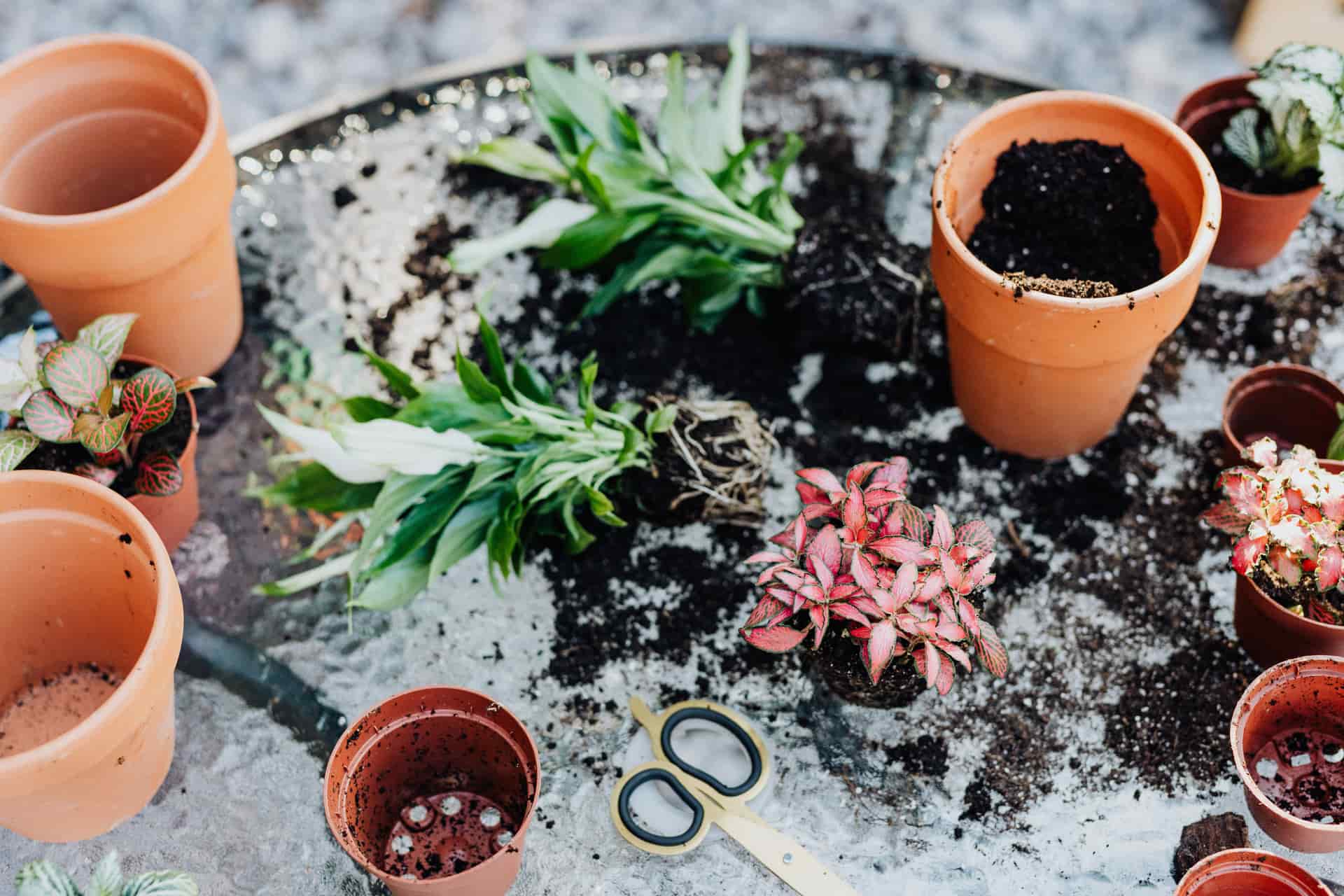
Size the mat to the mix, not to the plant. Filling a 6-inch pot takes about 1.5 dry quarts of potting mix, an 8-inch about 3.5, a 10-inch about 7 and a 12-inch about 12 - and all of that has to be somewhere while you work, along with the old pot, the new pot and the root ball. As a rule of thumb the mat's shorter side wants to be about three times the pot diameter, so 27 inches covers pots up to about 8 in, and a 39-inch square covers a 12-inch floor plant. For the scoop, buy depth for big pots and a small set for succulents.
Disclosure Pot & Prop earns a commission when you buy through the Amazon links on this page, at no extra cost to you. It does not change which products get recommended or what we say about them, and we have not been given any of them. How this site is funded.
A repotting mat is a waterproof sheet with corners that snap up into a shallow tray. There is nothing to it, which makes it an odd thing to write a page about — until you notice that everyone buys the wrong size, and that the reason is a number nobody in the category publishes.
The mat is not sized by the plant. It is sized by the pile of loose potting mix that has to sit somewhere while you work. And this site can tell you exactly how big that pile is, because it already computes pot volumes for the weight pages.
How much mix a repot actually takes
pot volume in cubic inches / 67.2 = dry quarts
4 in pot: 0.4 qt. 6 in: 1.5 qt. 8 in: 3.5 qt. 10 in: 6.9 qt. 12 in: 11.9 qt.
Pot volume from the same model the weight pages use. A dry quart is 67.2 cubic inches, which is how potting mix is sold. These are full-fill figures — a repot into the same pot with the root ball going back in uses less, but you want the mix open on the mat either way.
Those numbers reframe the purchase immediately. Repotting a 12-inch floor plant means having roughly twelve dry quarts of mix loose in front of you — most of a standard cubic-foot bag, which is about 25.7 dry quarts. Nobody manages that on a 27-inch mat, and nobody needs a 39-inch one for a succulent that takes less than half a quart.
| Pot | Mix to fill it | Mat's shorter side | Which mat here |
|---|---|---|---|
| 4 in | About 0.4 dry qt | 12 in and up | 27 in square, easily |
| 6 in | About 1.5 dry qt | 18 in and up | 27 in square |
| 8 in | About 3.5 dry qt | 24 in and up | 27 in square, at its limit |
| 10 in | About 6.9 dry qt | 30 in and up | 43 by 29 in, or the 39 in square |
| 12 in | About 11.9 dry qt | 36 in and up | 39 in square |
Do you actually need one?
Honestly, no. One of the listings on this page says so itself, describing the product as an alternative to newspaper and a cardboard box. Both of those work. So does a bath, a balcony, a patch of garden, or simply doing it outside.
What a mat gives you is the case where none of those apply: an apartment with no outdoor space, in February, with a plant that needs repotting now. The walls are the actual feature — a flat sheet lets mix slide off the edge, and a tray does not. The secondary feature is that you pour the leftover mix back into the bag through the folded corner instead of sweeping it up.
- Worth it if: you repot indoors, on a floor or counter you care about, more than a couple of times a year.
- Worth it if: you work with mixes that are loose and bouncy — perlite-heavy mixes and bark travel a long way when spilled.
- Not worth it if: you have a garden, a balcony or a utility sink and repot in spring.
- Not worth it if: all your plants are in 4-inch pots. A tray from the kitchen holds that much mix.
What separates one mat from another
Very little, and the listings know it, which is why they compete on the word "thickened" rather than on a figure. Not one mat here publishes a thickness in millimetres or a fabric weight. What you can compare is the material description, the corner hardware and the dimensions.
| Feature | Why it matters | What to look for |
|---|---|---|
| Material | Decides how it survives folding | Coated Oxford cloth over plain PE sheet |
| Corner fastening | Turns a sheet into a tray | Metal buckles over plastic snaps |
| Dimensions | The only specification that is a number | Shorter side against 3x your pot |
| Coating sides | A one-sided mat wets the table | Waterproof stated on both faces |
Folding is the failure mode worth thinking about. These live folded in a cabinet for months at a time, and a plain polyethylene sheet eventually splits along the crease lines where a coated woven fabric does not. Only one mat here publishes a woven material, and that is why it is ranked where it is despite not being the largest.
The scoop, and whether a yogurt pot would do
A yogurt pot would do. So would your hands, which is what most people use. The argument for a real scoop is volume per pass and control at the rim, and the quarts table is what makes that argument concrete: filling a 10-inch pot is about seven dry quarts, and the difference between a deep scoop and a cupped hand is roughly a dozen passes.
The specification that matters and is almost never published is the steel gauge. Pressed-steel scoops flex at the neck under a full load of damp mix, and they eventually fold there. Exactly one product on this page publishes a thickness. The alternative construction — a single piece of steel with no handle joint at all — has nothing to fail, and that is the small set here.
- Deep and wide for filling pots above about 8 inches, where volume per pass is the whole point.
- Small and narrow for succulents, bonsai and seed cells, where the large scoop buries the plant.
- A published steel gauge, or no joint at all. Those are the two ways a scoop survives; everything else is finish.
- A wooden handle needs to dry. Comfortable in the hand, less happy left wet in a bucket.
Quick picks
Ranked, with the published figure each pick turns on. Tap a row for the full reasoning further down this page.
| # | Product | Best for | Price |
|---|---|---|---|
| 1 | 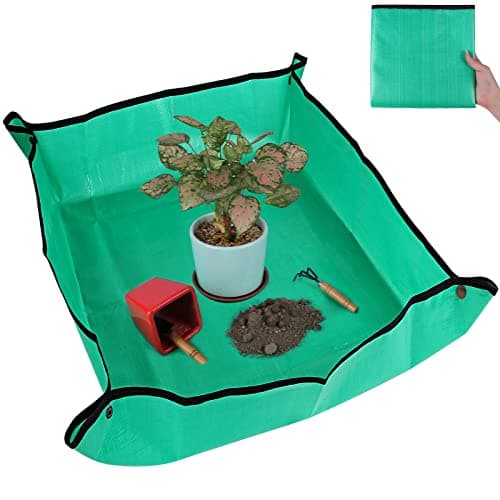 Azureblue Repotting Mat, 39.4 by 39.4 in, snap cornersThe size that actually fits the job people buy a mat for, which is repotting something too big to take to a sink. | Repotting a floor plant on the living room floor | |
| 2 | 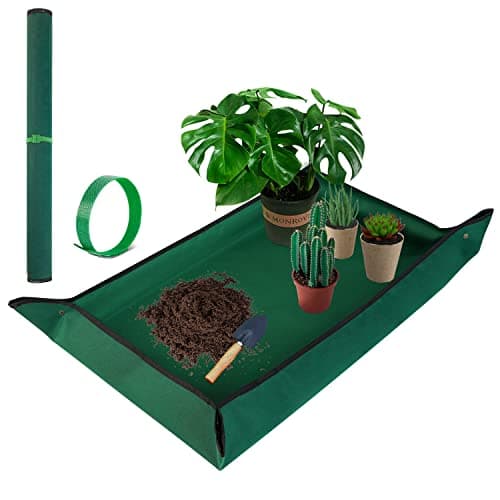 HNXTYAOB Repotting Mat, 43 by 29 in, Oxford clothThe only mat here that publishes its material properly and the only one whose proportions match a work surface rather than a floor. | A kitchen counter, where the depth is fixed and the width is not | |
| 3 | 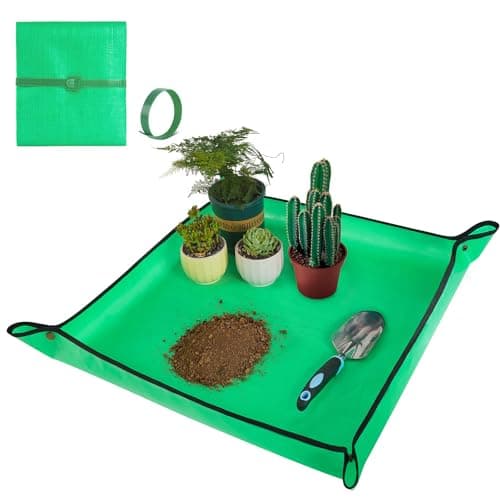 HNXTYAOB Repotting Mat, 27 by 27 in, snap cornersHonest about its own limits in the listing text, which is rare enough to be a reason to trust it for what it does cover. | Succulents and small pots, on a table you do not want to cover | |
| 4 | 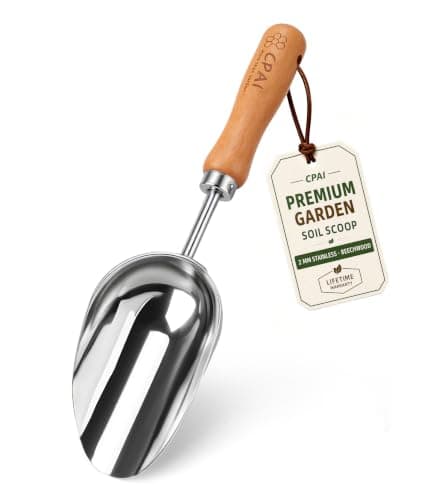 CPAI Potting Scoop, 2 mm stainless steel, 13.8 inPublishes a steel thickness, which nothing else in this category does, and 2 mm is the difference between a scoop and a bent scoop. | Filling a pot without a funnel of mix down the side of it | $14.99 at Amazon $24.99 · 40% off |
| 5 | 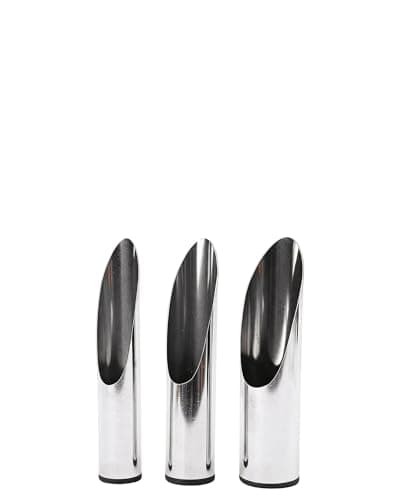 JODUY Soil Scoops, stainless steel, 3 sizesSeamless one-piece steel with no joint to fail, in the sizes that actually suit small pots — where the big scoop is the wrong tool entirely. | Succulents, bonsai and anything you plant with your fingers otherwise | $12.69 at Amazon $13.39 · 5% off |
Links to Amazon are affiliate links. Prices and availability are Amazon's and change without notice.
How we ranked these
Mats on usable area against the quarts table, then on material, then on corner hardware. The 39-inch square leads because it is the only mat here that covers a 12-inch floor plant, which is the repot people actually dread and the one a mat is genuinely bought for. The 43 by 29 inch Oxford cloth mat is second and is the better product on material — a coated woven fabric rather than a sheet, with metal buckles — held off the top by a 29-inch depth that is tight for the largest pots. The 27-inch square is third and is honest in its own listing about what it does not cover, which is anything above about 8 inches. The deep 2 mm scoop is fourth as the only tool in the category that publishes a steel thickness, and the three-piece set is fifth because a seamless one-piece scoop has no joint to fail and because small pots need small tools.
| Your plants | Mat | Scoop |
|---|---|---|
| Succulents and 4 in pots | 27 in square | Three-piece set |
| A shelf of 6 in houseplants | 27 in square | Three-piece set |
| Mixed collection up to 8 in | 43 by 29 in | Either |
| A 10 in plant or two | 43 by 29 in | Deep 2 mm scoop |
| A 12 in floor plant | 39 in square | Deep 2 mm scoop |
| Bonsai and seed cells | 27 in square | Three-piece set |
Repotting without making it worse
- Go up one pot size, not three. A root ball surrounded by a large volume of unoccupied wet mix is the classic way to rot a plant that was fine. The nursery pot size chart has the sizes.
- Dampen the mix before you start. Dry mix is dusty, bounces off the mat and is hard to wet evenly once it is in the pot.
- Check the new pot has a drainage hole before the plant goes in it. The argument for that is here, and it is much easier to check now than later.
- Tease the roots loose if they are circling, rather than dropping the block in as it came out.
- Fill around, not on top. Keep the plant at the depth it was growing; burying the stem deeper is a separate problem you do not want.
- Firm gently and water through, then let it drain fully before the pot goes back on furniture.
- Pour the leftovers back into the bag through one unsnapped corner. This is the part of the mat you will end up appreciating most.
What we deliberately do not recommend
Buying a mat sized to the plant rather than to the mix, which is how a 27-inch mat ends up under a 12-inch repot. Paying extra for "thickened" when no listing in the category publishes a thickness. A one-sided waterproof mat for use on furniture. Repotting several sizes up at once. Using a full-sized scoop on seedlings, where it buries more than it places. And buying either of these before checking whether you have a bath, a balcony or a garden — the honest answer is that plenty of people do not need a mat at all, and one of these listings says so.
Every pick, in full
We have not handled any of these. What follows is what each listing publishes, what that means once you put a watered pot on it, and who should buy something else.
1. Repotting a floor plant on the living room floor
Azureblue Repotting Mat, 39.4 by 39.4 in, snap corners
The size that actually fits the job people buy a mat for, which is repotting something too big to take to a sink.
#ad · Price as of September 21, 2026. How we are funded
- What the listing publishes
- Published 39.4 by 39.4 in flat; thick PE fabric stated waterproof and stain resistant; corners snap together to raise a side wall and make a tray; folds for storage and doubles as a storage or waste container
- Against a 10-inch pot
- No weight rating is published for this product, so there is nothing to check. That counts against it here rather than being treated as neutral.
Square and large is the right shape. A repot needs the plant out of its old pot, the new pot standing ready, and several quarts of loose mix somewhere — a 10-inch plant alone needs close to seven dry quarts of mix to fill around it. That is more spread than most mats allow for.
Snapping the corners turns a flat sheet into a shallow tray, which is what stops mix sliding off the edge as you work. It is the difference between a mat and a tarpaulin, and every mat worth buying has it.
Because it folds into a walled box, the same product is the thing you pour the leftover mix back into. That is a small convenience that turns out to matter, since the alternative is a bag on the floor.
What is good
- Big enough for a floor plant and its mix at once
- Snap corners raise a real wall rather than a suggestion
- Folds into a container for the leftover mix
What is not
- Almost 40 in square needs floor space to use and is awkward on a counter
- PE fabric creases at the fold lines and keeps the creases
- No published thickness figure, only the word thick
Skip it if you repot on a kitchen counter. This is a floor-sized object and it will hang off the edges of most work surfaces.
2. A kitchen counter, where the depth is fixed and the width is not
HNXTYAOB Repotting Mat, 43 by 29 in, Oxford cloth
The only mat here that publishes its material properly and the only one whose proportions match a work surface rather than a floor.
#ad · Price as of September 21, 2026. How we are funded
- What the listing publishes
- Published 43 by 29 in; thickened Oxford cloth with a waterproof coating on both faces; copper-buckled corners that snap up into a tray; listing states it holds 7 to 8 small or medium pots with soil and tools at once
- Against a 10-inch pot
- No weight rating is published for this product, so there is nothing to check. That counts against it here rather than being treated as neutral.
Coated Oxford cloth is a genuine specification where "thick PE fabric" is a description. It is a woven fabric rather than a sheet, it is coated on both faces, and it is the material outdoor gear uses for the same reason — it takes repeated folding without splitting along the crease.
Twenty-nine inches deep is the interesting number. Most kitchen counters are around 25 inches deep, so this sits on one with a little overhang rather than falling off it, and the 43-inch width gives you the working room the depth cannot.
The listing publishes a capacity claim, 7 to 8 small or medium pots with soil and tools, which is unusually concrete for this category. It is a claim rather than a measurement, but it is at least the right kind of statement.
What is good
- Oxford cloth with coating on both faces, the best-specified material here
- Counter-shaped rather than floor-shaped
- Copper-buckled corners rather than plastic snaps
What is not
- Twenty-nine inches is tight for a 12 in pot and its root ball
- The listing directs you to a video for assembly, which is not a good sign
- Published weight of 1 lb makes it light enough to shift as you work
Skip it if you are repotting a large floor plant. The square 39 in mat gives you meaningfully more room in the direction you actually run out of it.
3. Succulents and small pots, on a table you do not want to cover
HNXTYAOB Repotting Mat, 27 by 27 in, snap corners
Honest about its own limits in the listing text, which is rare enough to be a reason to trust it for what it does cover.
#ad · Price as of September 21, 2026. How we are funded
- What the listing publishes
- Published 27 by 27 in; thickened PE fabric stated waterproof on both sides with a smooth wipe-clean surface; four snap corners; listing states it suits small pots and succulents and directs larger plants to the bigger sizes
- Against a 10-inch pot
- No weight rating is published for this product, so there is nothing to check. That counts against it here rather than being treated as neutral.
The listing tells you to buy a larger size for medium and large pots. A product that talks you out of the wrong purchase is a product whose other claims are worth more, and this one does it in the first bullet.
Twenty-seven inches square is the right amount of mat for 4 to 6-inch pots, where the mix volume is small — a 6-inch pot takes about 1.5 dry quarts to fill — and you want the mat to disappear into a drawer afterward.
Waterproof on both faces matters more on a small mat than a large one, because a small mat gets used on furniture rather than on a floor.
What is good
- Small enough to use on a table and store easily
- Listing states its own size limit rather than overselling
- Waterproof both sides, which is the case that matters on furniture
What is not
- Too small for anything above about an 8 in pot
- PE fabric rather than coated woven cloth
- Published thickness is stated as thickened and never as a figure
Skip it if you own a floor plant. You will use it twice and then buy the large one, which is what the listing itself says.
4. Filling a pot without a funnel of mix down the side of it
CPAI Potting Scoop, 2 mm stainless steel, 13.8 in
Publishes a steel thickness, which nothing else in this category does, and 2 mm is the difference between a scoop and a bent scoop.
- What the listing publishes
- Published 2 mm stainless steel scoop, 13.8 in long by 4.1 in wide by 3 in deep; deep curved bowl; extended steel shank with a reinforced handle joint; contoured beechwood handle with a leather hanging loop
- Against a 10-inch pot
- No weight rating is published for this product, so there is nothing to check. That counts against it here rather than being treated as neutral.
A stated gauge is a real specification. Thin pressed-steel scoops flex at the neck under a full load of damp mix and eventually fold there; 2 mm with an extended shank into the handle is a structural answer to the exact place these fail.
Depth is what the tool is actually for. A deep curved bowl carries mix rather than shedding it, so filling a 10-inch pot — about seven dry quarts — is a handful of passes instead of twenty, and far less of it ends up on the mat.
Wood and steel is a decision with a downside: the handle should not be left soaking or stored wet, where an all-steel scoop would not care. The leather loop is there to hang it, which is also how it stays dry.
What is good
- Publishes 2 mm steel thickness, alone in this category
- Deep bowl moves real volume per pass
- Reinforced shank at the point these normally fail
What is not
- Wooden handle needs to dry rather than sit wet
- Nearly 14 in long, so it is a drawer problem
- Too big for seedlings and small succulent pots
Skip it if you work mostly in 4-inch pots. This moves more mix than those hold, and a small set of scoops is the better tool at that scale.
5. Succulents, bonsai and anything you plant with your fingers otherwise
JODUY Soil Scoops, stainless steel, 3 sizes
Seamless one-piece steel with no joint to fail, in the sizes that actually suit small pots — where the big scoop is the wrong tool entirely.
- What the listing publishes
- Published three polished stainless steel scoops in small, medium and large; one-piece seamless construction with no handle joint; largest stated 6.9 in long by 1.7 in wide; rounded smooth edges stated to reduce contact with roots
- Against a 10-inch pot
- No weight rating is published for this product, so there is nothing to check. That counts against it here rather than being treated as neutral.
One piece of steel with no handle joint is the most durable construction possible for a small tool, because the joint is what fails on every scoop that has one. It is also colder and less comfortable in the hand than wood, which is the trade.
Three sizes is the point. Potting a 4-inch succulent with a full-sized scoop means mix everywhere, and potting a 10-inch monstera with a small one means a lot of passes. Having both is genuinely better than owning the average of them.
At 6.9 inches for the largest, this is a precision set rather than a volume tool. For filling a big pot it will be slow, and the listing does not pretend otherwise.
What is good
- Seamless one-piece steel with no joint to break
- Three sizes cover small pots properly
- Rinses clean and can be left wet without consequence
What is not
- Largest at 6.9 in is slow for filling a large pot
- All-steel handles are cold and less comfortable than wood
- No published steel thickness for any of the three
Skip it if your plants are mostly floor-sized. Three small scoops will not fill a 12-inch pot in reasonable time and the deep single scoop will.
Questions people actually ask
What size repotting mat do I need?
How much potting soil do I need to repot a plant?
Are repotting mats worth it?
What is a soil scoop for?
What should I look for in a soil scoop?
What is a repotting mat made of?
Sources
- Cornell University, Greenhouse Management: bulk density of greenhouse media components
- Biology Insights: how much a cubic foot of potting soil weighs, dry and saturated
- Clemson HGIC: Indoor Plants — cleaning, fertilizing, containers and light requirements
- Michigan State University Extension: Smart Gardening — growing houseplants indoors
Product specifications are quoted from each seller's own listing and are the seller's claim, not a measurement of ours.