Planters
The Best Cachepots and Plant Pot Covers
The one product on this site that is supposed to have no drainage hole — because the plant is not planted in it.
By Scooter M., enthusiast · Published
The short answer
A cachepot is a decorative outer pot with no drainage hole. The plant stays in a plastic nursery pot that does have holes, and that pot sits inside the cover. It is the correct way to use a beautiful pot that would otherwise kill the plant — but the failure mode is invisible standing water in the bottom, so either lift the inner pot out to water it over a sink, or raise it on pot feet and check the bottom. Size the cover to the nursery pot you already own, not to the plant.
Disclosure Pot & Prop earns a commission when you buy through the Amazon links on this page, at no extra cost to you. It does not change which products get recommended or what we say about them, and we have not been given any of them. How this site is funded.
This site has been recommending cachepots for months without ever selling one. It appears on the drainage guide, on the monstera page, on the pothos page, on the aloe page: if the pot you love has no hole, keep the plant in a holed nursery pot and drop it inside. That advice is correct and it is also incomplete, because nobody explains the part where it goes wrong.
So this is the page for the cover itself. Every other planter roundup here ranks on drainage, and this is the one product class where the absence of a hole is the function rather than the defect. The plant is not planted in a cachepot. It is parked in one.
How the double-pot method actually works
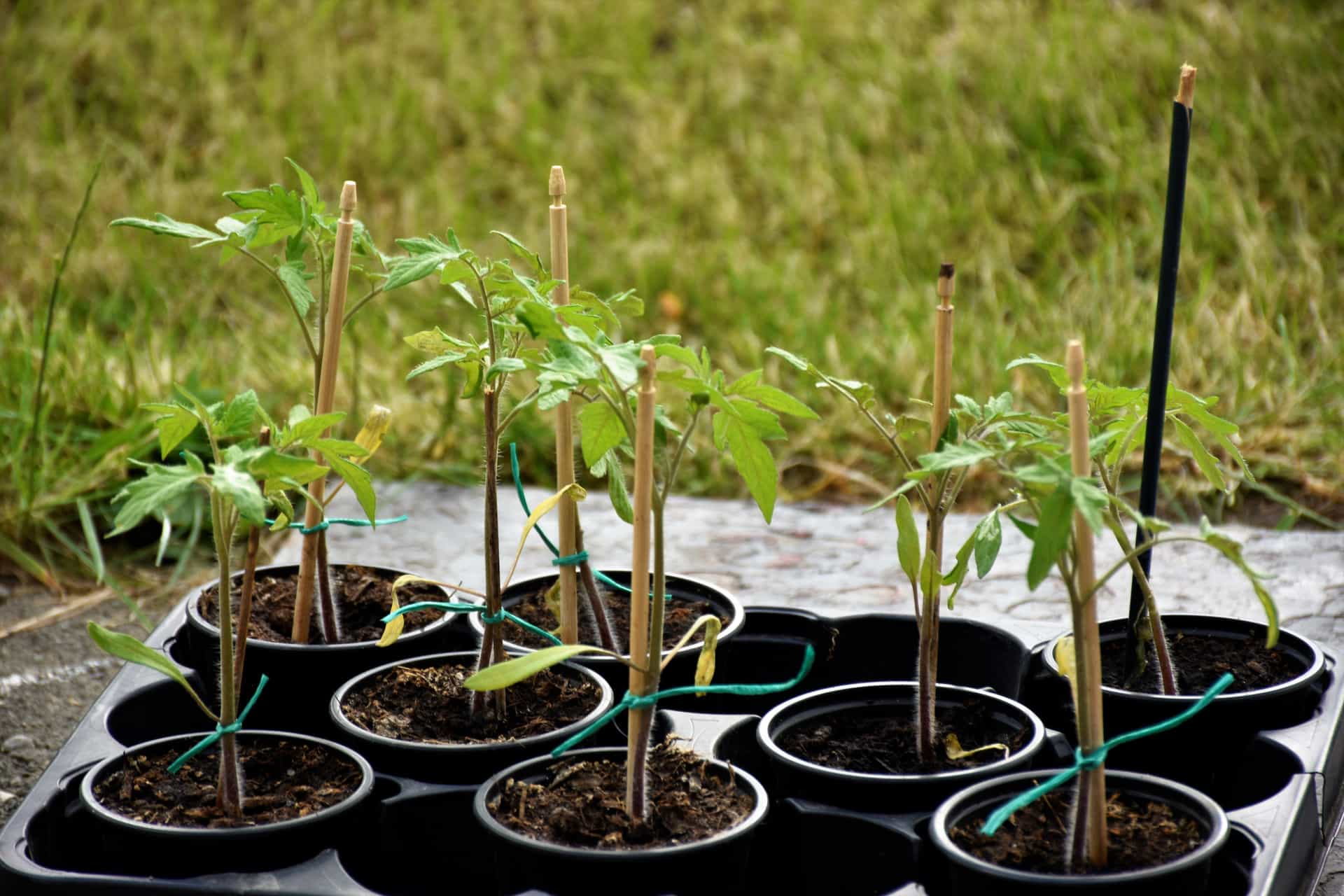
- The plant stays in a nursery pot with holes — usually the plastic pot it came in, or a cheap replacement one size up when it outgrows that.
- The nursery pot sits inside the decorative cover, which has no hole and never needs one.
- You water the inner pot, ideally lifted out and taken to a sink, and let it drain completely before it goes back.
- Nothing is left standing in the bottom of the cover. This is the step everyone skips and the only one that matters.
- You size the cover to the nursery pot, allowing a little clearance — not to the plant, which is bigger than its pot.
Done that way it is strictly better than planting into a sealed pot, and it has an advantage even over a pot with a hole and a saucer: you can swap the plant out entirely in ten seconds, and a plant that outgrows the cover does not need repotting to move.
The failure mode: water you cannot see
A saucer tells you it is full. A cachepot does not. Water that runs out of the nursery pot collects in an opaque container behind a wall of ceramic or wicker, where it sits against the base of the inner pot and the bottom inch of medium wicks it straight back up. The plant is then permanently wet at the roots in a setup you believed was safe — which is exactly the condition every extension source on containers warns about.
How much water are we talking about? It is computable. A 6-inch pot takes roughly 870 ml going from dry to saturated and an 8-inch about 2 liters, from the densities published on how we pick. Even a modest fraction of that running through is a substantial puddle in a container with nowhere for it to go.
| Method | How it works | Honest downside |
|---|---|---|
| Lift and drain | Take the inner pot to a sink, water, let it stop dripping, return it | You have to actually do it every time |
| Raise the inner pot | Pot feet or a layer of pebbles hold the base above any runoff | Runoff still collects; you must still empty it periodically |
| Pour carefully and hope | Add only what the medium will hold | Guesswork, and the whole reason plants die in cachepots |
Sizing: measure the pot, not the plant
The single most common cachepot mistake is buying for the size of the foliage. A monstera that reads as a big plant may be in a 6-inch nursery pot; a squat aloe that looks small may be in a 10-inch one. Measure the pot the plant is actually in, across the rim, and buy a cover an inch or so larger so it drops in and lifts out without a fight.
Depth matters almost as much and is published far less often. A cover shallower than the nursery pot leaves a plastic rim showing, which defeats the point; one much deeper swallows the plant and makes lifting it out awkward. Where a listing publishes interior depth, use it. Where it does not — which is most of them — assume the cover and the nursery pot are about the same height.
Quick picks
Ranked, with the published figure each pick turns on. Tap a row for the full reasoning further down this page.
| # | Product | Best for | Price |
|---|---|---|---|
| 1 | 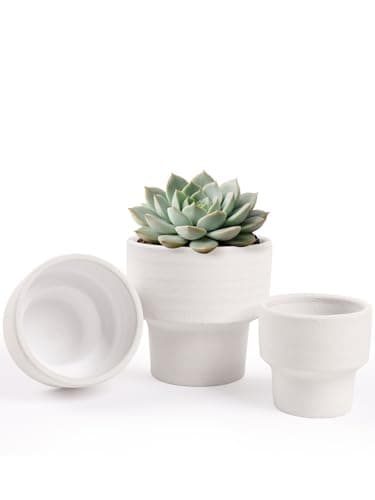 INGOFIN Ceramic Cachepot Set of 3, 4, 5 and 6 in, no drainage holeThree sizes that map onto the nursery pots houseplants are actually sold in, from a listing that calls itself a cachepot instead of pretending the missing hole is an oversight. | Covering the three nursery pot sizes you already own | $19.99 at Amazon $21.99 · 9% off |
| 2 | 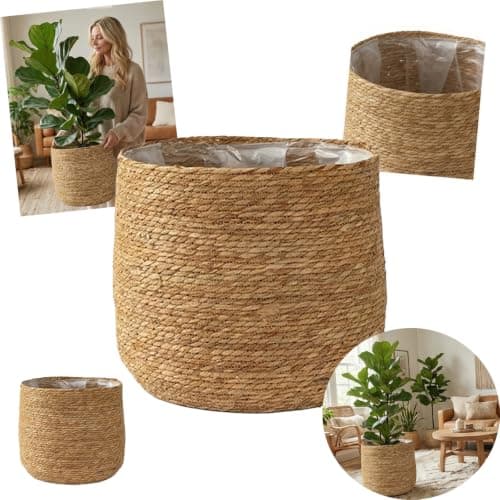 Woven Seagrass Planter Basket, 11.8 in, with plastic linerThe liner is the entire product. A woven basket without one wicks water into the weave and onto the floor; this one publishes that it arrives with a seamless liner fitted. | A floor plant, where a ceramic cover would be too heavy to move | |
| 3 | 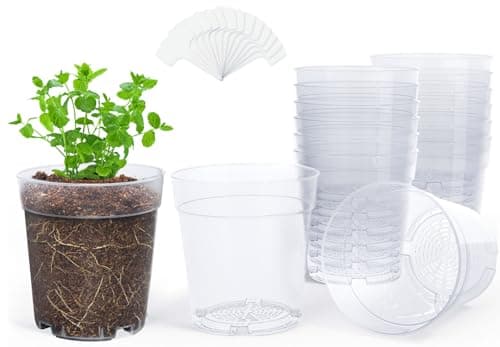 homenote 6.7 in Clear Plastic Nursery Pots with Drainage, 15 packClear walls, which turn the one variable you cannot otherwise check, what the roots are doing, into something you can just look at. | Watching roots instead of guessing | |
| 4 | 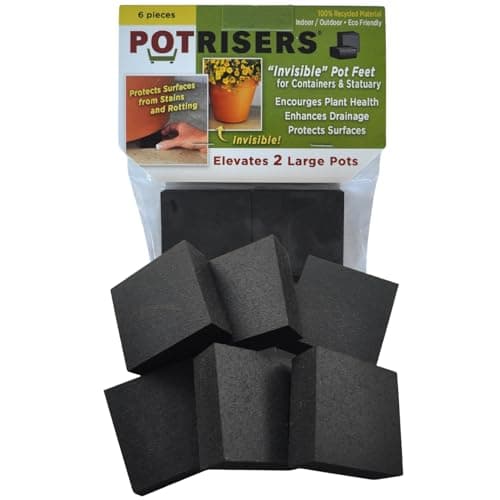 POTRISERS Invisible Pot Feet and Plant Risers, 2 in wide, 6 packThree quarters of an inch of lift, which is not a plant stand at all and solves a problem no plant stand solves: the pot base sitting in its own drainage. | Airflow under a pot with no height cost | |
| 5 | 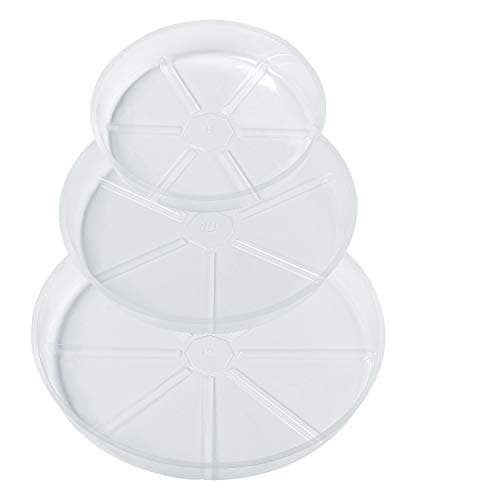 Idyllize Clear Plant Saucers, 6, 8 and 10 in, 15 packFifteen saucers in the three sizes that cover almost every pot in a normal apartment, which is a cheaper fix for a floor than a new pot is. | Fixing the pots you already own | $16.99 at Amazon $17.99 · 6% off |
Links to Amazon are affiliate links. Prices and availability are Amazon's and change without notice.
How we ranked these
On whether the listing tells you what nursery pot it takes, then on how it handles runoff, then on whether it reads as furniture. The INGOFIN set leads because it covers the three sizes houseplants are actually sold in and because the listing calls itself a cover rather than a planter, which in this category is a mark of honesty. The seagrass basket is the floor-plant answer and the only one here whose liner is published as fitted and seamless — an unlined basket is a water problem, not a product. The clear nursery pots, pot feet and saucers follow because a cachepot is half a system, and those are the other half: the holed pot that goes inside, the feet that hold it out of the runoff, and the saucer for the day you decide to stop using the cover.
| Your plant | Cover | Why |
|---|---|---|
| Shelf plants in 4 to 6 in nursery pots | Ceramic set of 3 | Matches the sizes plants are sold in |
| A floor plant in a 10 to 12 in grower pot | Lined seagrass basket | Light enough to move; liner keeps the floor dry |
| A plant you water in place | Any cover, plus pot feet | Keeps the base out of the runoff |
| A plant you will repot soon | Cover plus a clear nursery pot | See the roots, and swap without buying again |
| You have decided to stop using covers | Saucers | A hole and a saucer is always the safer setup |
What we deliberately do not recommend
Planting directly into a cachepot, which is the mistake the whole product class exists to prevent — the drainage guide sets out what happens. Gravel in the bottom of a sealed cover as a substitute for drainage; it raises the wet zone rather than removing it. Unlined woven baskets, which wick water into the weave and then onto the floor. Buying the cover to fit the plant rather than the pot. And leaving a cachepot unemptied for months on the assumption that because you cannot see water, there is none.
Every pick, in full
We have not handled any of these. What follows is what each listing publishes, what that means once you put a watered pot on it, and who should buy something else.
1. Covering the three nursery pot sizes you already own
INGOFIN Ceramic Cachepot Set of 3, 4, 5 and 6 in, no drainage hole
Three sizes that map onto the nursery pots houseplants are actually sold in, from a listing that calls itself a cachepot instead of pretending the missing hole is an oversight.
- What the listing publishes
- Published set of three at 4, 5 and 6 in; ceramic, deliberately made without drainage holes and described by the listing as a decorative indoor planter cover; listing recommends a pad underneath on furniture
- Against a 10-inch pot
- No weight rating is published for this product, so there is nothing to check. That counts against it here rather than being treated as neutral.
Almost every pot sold without a drainage hole is sold as a planter, which is how people end up planting directly into them and losing the plant. This listing does the honest thing and calls it a cover — and then tells you to put a pad under it, which is the detail that admits water gets out of these eventually.
The sizing is the real value. Houseplants arrive in 4, 5 and 6-inch nursery pots, and a set covering exactly those three means the cover fits the pot the plant came in rather than requiring a repot you did not want to do.
Ceramic with no hole holds every drop of runoff invisibly. That is the whole risk of this product class, and it is managed by lifting the inner pot out to water or by raising it on feet — not by pouring carefully.
What is good
- Three sizes matching the common nursery pot sizes
- Listing is explicit that it is a cover, not a planter
- Ceramic, so it looks like furniture rather than packaging
What is not
- No drainage by design — standing water is invisible until you look
- No published interior depth, so tall nursery pots may sit proud
- The listing itself warns to protect furniture underneath
Skip it if you want to plant directly into it. Everything on this site says that ends in root rot, and the pots with holes are one click away.
2. A floor plant, where a ceramic cover would be too heavy to move
Woven Seagrass Planter Basket, 11.8 in, with plastic liner
The liner is the entire product. A woven basket without one wicks water into the weave and onto the floor; this one publishes that it arrives with a seamless liner fitted.
#ad · Price as of September 21, 2026. How we are funded
- What the listing publishes
- Published 11.8 by 11.8 in (30 by 30 cm), stated to fit standard 10 to 12 in nursery pots; seagrass and jute weave with a pre-fitted seamless plastic inner liner; stated lightweight
- Against a 10-inch pot
- No weight rating is published for this product, so there is nothing to check. That counts against it here rather than being treated as neutral.
Baskets are the standard answer for floor plants because a 12-inch ceramic cover is a two-hand object and a basket is not. The catch has always been that seagrass is absorbent, so the water that runs out of the nursery pot ends up in the weave and then on the floorboards.
A fitted plastic liner solves that, and this listing states it comes pre-fitted and seamless rather than as a loose bag you are expected to source. It is the difference between a planter cover and a laundry basket with a plant in it.
Sizing is published and generous: 11.8 inches square, stated to take 10 to 12-inch nursery pots. That is genuine floor-plant territory — a fiddle leaf fig or a large monstera in its grower pot.
What is good
- Publishes its dimensions and the nursery pot range it takes
- Plastic liner fitted, stated seamless
- Light enough to move a floor plant without emptying it
What is not
- The liner holds runoff with no way to see the level
- Seagrass frays at the rim with repeated dragging
- Natural fiber in a damp corner is not a permanent material
Skip it if the plant sits on carpet you cannot lift it off. A basket you cannot tip out is the worst place for invisible standing water.
3. Watching roots instead of guessing
homenote 6.7 in Clear Plastic Nursery Pots with Drainage, 15 pack
Clear walls, which turn the one variable you cannot otherwise check, what the roots are doing, into something you can just look at.
#ad · Price as of September 21, 2026. How we are funded
- What the listing publishes
- 6.7 in clear plastic with drainage holes, 15 per pack
- Against a 10-inch pot
- No weight rating is published for this product, so there is nothing to check. That counts against it here rather than being treated as neutral.
The reason to use a clear nursery pot inside an opaque cachepot is diagnostic: you can see root growth, you can see when water has actually reached the bottom, and you can see rot before the leaves tell you.
Fifteen pots is a whole shelf and a propagation run's worth of potting-up, at a per-pot price no ceramic reaches.
They are not attractive. They are meant to sit inside something else, which is also the arrangement that keeps a decorative pot with no drainage hole from killing a plant.
What is good
- Root visibility that no other pot format gives you
- Fifteen pots at nursery pricing
- The correct inner pot for a decorative cachepot with no hole
What is not
- Ugly on their own
- Algae grows on the inside of a clear pot in a bright window
- Thin plastic flexes when you lift a wet one
Skip it if you want the pot to be the visible object. These are working pots and they look it.
4. Airflow under a pot with no height cost
POTRISERS Invisible Pot Feet and Plant Risers, 2 in wide, 6 pack
Three quarters of an inch of lift, which is not a plant stand at all and solves a problem no plant stand solves: the pot base sitting in its own drainage.
#ad · Price as of September 21, 2026. How we are funded
- What the listing publishes
- 2 in wide by 3/4 in tall feet; lifts the pot base clear of its saucer
- Against a 10-inch pot
- No weight rating is published for this product, so there is nothing to check. That counts against it here rather than being treated as neutral.
A pot standing apartment in a saucer wicks the water it just drained straight back up. Feet break that contact, which is the difference between drainage that works and a saucer that is a reservoir.
It also protects the floor. Terracotta sitting wet on wood for a year leaves a ring that does not come out, and a few cents of plastic prevents it.
Six feet is two or three pots. Buy per pot, not per apartment.
What is good
- Fixes the wicking problem that drainage holes alone do not
- Keeps wet pot bases off wood floors
- Costs and weighs almost nothing
What is not
- Six feet only covers two or three pots
- Raises the pot enough to matter under a tight sill
- Not a substitute for a saucer
Skip it if your pots are already in cachepots with a gap at the bottom. You have the airflow, and feet just make the pot taller.
5. Fixing the pots you already own
Idyllize Clear Plant Saucers, 6, 8 and 10 in, 15 pack
Fifteen saucers in the three sizes that cover almost every pot in a normal apartment, which is a cheaper fix for a floor than a new pot is.
- What the listing publishes
- Published five each of 6, 8 and 10 in; clear plastic, stated lightweight and durable
- Against a 10-inch pot
- No weight rating is published for this product, so there is nothing to check. That counts against it here rather than being treated as neutral.
The commonest reason a plant lives in a pot with no drainage is that the owner has no saucer for it. Fifteen saucers removes that reason for a whole collection at once.
Clear saucers show standing water, which is the thing you actually need to see. An opaque saucer with two inches of water in it looks exactly like an empty one.
A saucer is only half the answer. A pot sitting flat in its own drainage wicks it back up, so pair these with pot feet.
What is good
- Covers three common pot sizes in one order
- Clear, so standing water is visible
- Cheaper than replacing a single pot
What is not
- Thin plastic cracks if a heavy pot is dragged across it
- Clear plastic clouds over a couple of years
- Does not solve wicking on its own
Skip it if all your pots are already in cachepots. A cachepot is a saucer with sides, and stacking a saucer inside it just hides the water.
Questions people actually ask
What is a cachepot?
Do cachepots need drainage holes?
How do you water a plant in a cachepot?
What size cachepot do I need?
Can you put a plant directly in a cachepot?
Are woven baskets safe for plants?
Sources
- Cornell University, Greenhouse Management: bulk density of greenhouse media components
- Biology Insights: how much a cubic foot of potting soil weighs, dry and saturated
- Clemson HGIC: Indoor Plants — cleaning, fertilizing, containers and light requirements
- Clemson HGIC: Indoor Plants — watering
- Michigan State University Extension: Smart Gardening — growing houseplants indoors
Product specifications are quoted from each seller's own listing and are the seller's claim, not a measurement of ours.