Planters
The Best Plant Saucers and Pot Feet
The least interesting purchase on this site and the one most likely to protect a deposit. A hole in the pot only helps if what comes out of it lands somewhere.
By Scooter M., enthusiast · Published
The short answer
Buy saucers in a graduated set rather than one at a time, sized to the pot base rather than the rim, and add pot feet so the base sits clear of whatever the saucer is holding. Together they cost very little and they are the difference between a drainage hole that protects the plant and one that redirects the problem onto a floor you do not own.
Disclosure Pot & Prop earns a commission when you buy through the Amazon links on this page, at no extra cost to you. It does not change which products get recommended or what we say about them, and we have not been given any of them. How this site is funded.
Every other page on this site argues for pots with drainage holes. This one deals with the consequence, which is that a drainage hole moves water out of the pot and does nothing at all about where it goes next. In a house that is a mark on a floor you own. In a rented apartment it is a deduction, and it is the most avoidable one there is.
There is a second, less obvious reason this category matters. Clemson's extension guidance on indoor containers is blunt about it: pots should not sit in direct contact with carpet, flooring or furniture. A pot standing in its own runoff for two days is close to a pot with no drainage at all — the bottom inch of mix stays saturated, roots there suffocate, and you get the exact problem the drainage hole was supposed to prevent.
Saucers, and the sizing mistake everyone makes
Saucers are sold by diameter and pots are shopped by rim diameter, and those are not the same number. A standard tapered pot has a base around three quarters of its rim — so an 8-inch pot sits on a base of about 6 inches, and an 8-inch saucer is not snug, it is generous. That is the direction you want to be wrong in, because a saucer narrower than the base does nothing at all.
| Pot rim diameter | Approximate base | Saucer to buy |
|---|---|---|
| 6 in | About 4.5 in | 6 in |
| 8 in | About 6 in | 8 in |
| 10 in | About 7.5 in | 10 in |
| 12 in | About 9 in | 12 in |
| 14 in | About 10.5 in | 14 in or a built-in tray |
The practical answer is to buy a graduated set rather than individual saucers, because most apartments contain three or four pot sizes and buying one at a time guarantees the day you need a size you do not have. It is also why the pots this site recommends most often are the ones that ship with matched saucers — the drainage roundup covers those.
Pot feet, which are the half nobody buys
A saucer catches the water. Pot feet lift the pot base off the saucer so the pot is not standing in it. Without them, a wide shallow saucer and a flat-bottomed pot make a seal, the runoff has nowhere to evaporate from, and the mix wicks it straight back up — which is how a pot with perfect drainage still ends up with a permanently wet bottom inch.
- They cost almost nothing and they are the cheapest single improvement you can make to a collection you already own.
- They add airflow under the base, which matters on wood and on anything that can trap moisture against a surface.
- They spread the load slightly, which helps on vinyl and laminate where a narrow pot rim can leave a permanent ring.
- They are invisible if you buy the low ones, which is the whole design brief for this product.
Quick picks
Ranked, with the published figure each pick turns on. Tap a row for the full reasoning further down this page.
| # | Product | Best for | Price |
|---|---|---|---|
| 1 | 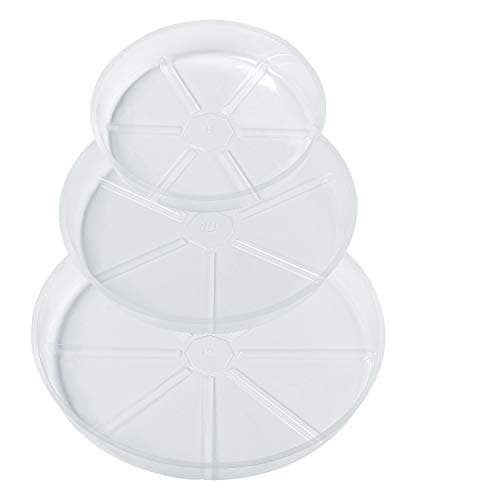 Idyllize Clear Plant Saucers, 6, 8 and 10 in, 15 packFifteen saucers in the three sizes that cover almost every pot in a normal apartment, which is a cheaper fix for a floor than a new pot is. | Fixing the pots you already own | $15.99 at Amazon $17.99 · 11% off |
| 2 | 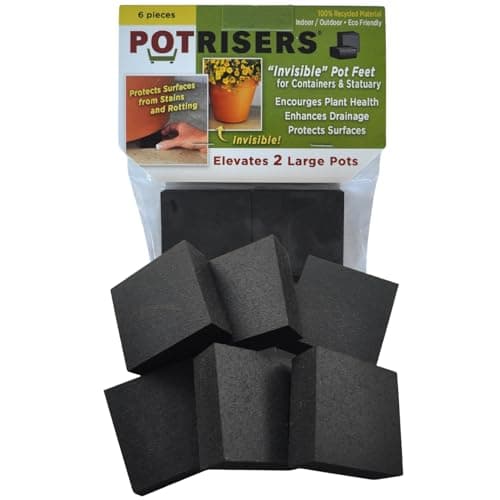 POTRISERS Invisible Pot Feet and Plant Risers, 2 in wide, 6 packThree quarters of an inch of lift, which is not a plant stand at all and solves a problem no plant stand solves: the pot base sitting in its own drainage. | Airflow under a pot with no height cost | |
| 3 | 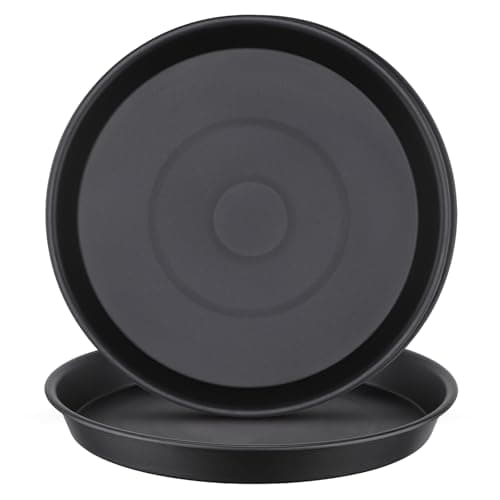 GREANER 12 in Plant Saucer and Pebble Tray, 2 packA 12-inch saucer with enough depth to double as a pebble tray, which is the size that is expensive to buy separately. | A big pot that needs a saucer and some humidity | |
| 4 | 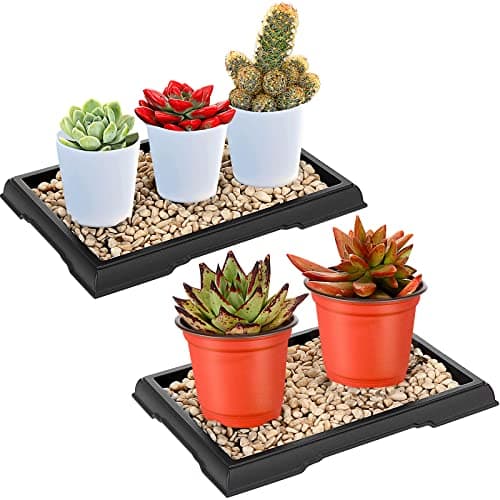 Pinkunn Bonsai Humidity Tray, 7.8 by 5.5 in, 2 packA shallow rectangular tray sized to sit under a single pot, which is the only shape a pebble tray actually works in. | Raising humidity around one small plant | |
| 5 | 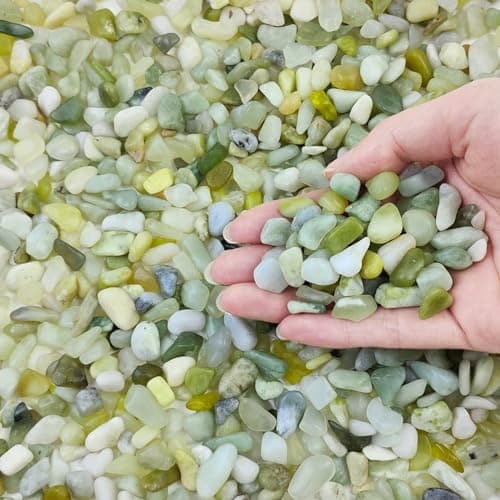 FANTIAN Polished Pebbles for Plants, 3/8 in, 2 lbPublishes the pebble size, which is the only specification a pebble tray depends on. Too fine and it packs, too coarse and it wobbles. | Filling a pebble tray properly |
Links to Amazon are affiliate links. Prices and availability are Amazon's and change without notice.
Humidity trays are a different product with the same shape
A pebble tray looks like a deep saucer and does a different job: it raises humidity in the air immediately around one plant by evaporating from a wide water surface. The mechanism is real and modest, and the failure mode is specific — if the pot base sits in the water rather than on the pebbles, you have built a reservoir instead of a humidity tray and the plant will rot.
That is worth stating plainly because the two products are shelved together and look identical. A deep saucer plus pebbles is a perfectly good humidity tray; a humidity tray without pebbles is just a saucer that holds too much water. The full guide is here.
What we deliberately do not recommend
Gravel in the bottom of a pot, which is the most persistent myth in container gardening and makes things slightly worse rather than better — water does not move readily from fine mix into coarse gravel, so the mix above stays wetter and you have given up soil volume to achieve it. We also do not recommend cork or felt pads under a plant pot, which look tidy and absorb exactly the water you were trying to keep off the floor. And we do not recommend leaving a saucer full: emptying it is the point of having one.
Every pick, in full
We have not handled any of these. What follows is what each listing publishes, what that means once you put a watered pot on it, and who should buy something else.
1. Fixing the pots you already own
Idyllize Clear Plant Saucers, 6, 8 and 10 in, 15 pack
Fifteen saucers in the three sizes that cover almost every pot in a normal apartment, which is a cheaper fix for a floor than a new pot is.
- What the listing publishes
- Published five each of 6, 8 and 10 in; clear plastic, stated lightweight and durable
- Against a 10-inch pot
- No weight rating is published for this product, so there is nothing to check. That counts against it here rather than being treated as neutral.
The commonest reason a plant lives in a pot with no drainage is that the owner has no saucer for it. Fifteen saucers removes that reason for a whole collection at once.
Clear saucers show standing water, which is the thing you actually need to see. An opaque saucer with two inches of water in it looks exactly like an empty one.
A saucer is only half the answer. A pot sitting flat in its own drainage wicks it back up, so pair these with pot feet.
What is good
- Covers three common pot sizes in one order
- Clear, so standing water is visible
- Cheaper than replacing a single pot
What is not
- Thin plastic cracks if a heavy pot is dragged across it
- Clear plastic clouds over a couple of years
- Does not solve wicking on its own
Skip it if all your pots are already in cachepots. A cachepot is a saucer with sides, and stacking a saucer inside it just hides the water.
2. Airflow under a pot with no height cost
POTRISERS Invisible Pot Feet and Plant Risers, 2 in wide, 6 pack
Three quarters of an inch of lift, which is not a plant stand at all and solves a problem no plant stand solves: the pot base sitting in its own drainage.
#ad · Price as of October 21, 2026. How we are funded
- What the listing publishes
- 2 in wide by 3/4 in tall feet; lifts the pot base clear of its saucer
- Against a 10-inch pot
- No weight rating is published for this product, so there is nothing to check. That counts against it here rather than being treated as neutral.
A pot standing apartment in a saucer wicks the water it just drained straight back up. Feet break that contact, which is the difference between drainage that works and a saucer that is a reservoir.
It also protects the floor. Terracotta sitting wet on wood for a year leaves a ring that does not come out, and a few cents of plastic prevents it.
Six feet is two or three pots. Buy per pot, not per apartment.
What is good
- Fixes the wicking problem that drainage holes alone do not
- Keeps wet pot bases off wood floors
- Costs and weighs almost nothing
What is not
- Six feet only covers two or three pots
- Raises the pot enough to matter under a tight sill
- Not a substitute for a saucer
Skip it if your pots are already in cachepots with a gap at the bottom. You have the airflow, and feet just make the pot taller.
3. A big pot that needs a saucer and some humidity
GREANER 12 in Plant Saucer and Pebble Tray, 2 pack
A 12-inch saucer with enough depth to double as a pebble tray, which is the size that is expensive to buy separately.
#ad · Price as of October 21, 2026. How we are funded
- What the listing publishes
- 12 in saucers, deep enough to hold pebbles and water under a large pot
- Against a 10-inch pot
- No weight rating is published for this product, so there is nothing to check. That counts against it here rather than being treated as neutral.
12 inches is the saucer size that matches the floor pots people actually own, and buying one alone usually costs more than a two-pack does here.
Deep enough for pebbles means the pot sits above the water rather than in it, so it works as a humidity tray as well as a drip catcher.
Black hides the mineral scale that clouds a clear saucer, at the cost of not being able to see the water level.
What is good
- The awkward large saucer size, in a two-pack
- Deep enough to work as a pebble tray
- Hides hard-water scale
What is not
- Opaque, so you cannot see standing water
- 12 in only
- Plastic flexes when carried full
Skip it if you need to see the water. A clear saucer shows a flooded tray at a glance and a black one does not.
4. Raising humidity around one small plant
Pinkunn Bonsai Humidity Tray, 7.8 by 5.5 in, 2 pack
A shallow rectangular tray sized to sit under a single pot, which is the only shape a pebble tray actually works in.
#ad · Price as of October 21, 2026. How we are funded
- What the listing publishes
- 7.8 by 5.5 in rectangular plastic trays, designed to hold pebbles and water
- Against a 10-inch pot
- No weight rating is published for this product, so there is nothing to check. That counts against it here rather than being treated as neutral.
A pebble tray raises local humidity by evaporation, and evaporation is proportional to surface area. A deep round saucer has almost no exposed water; a wide shallow rectangle has a lot.
The pot must sit on the pebbles, above the water line. A pot standing in the water is being bottom-watered permanently, which is a different and usually worse intervention.
The effect is local and modest. It is measurable a few inches from the tray and gone across the room, so it belongs under the one plant that needs it.
What is good
- A wide shallow shape maximizes evaporating surface
- Rectangular fits a sill better than a round saucer
- Two trays, so two plants
What is not
- The humidity effect is local and modest
- Standing water needs refreshing or it grows things
- Pebbles are not included
Skip it if you want to humidify a room. A pebble tray does not do that at any size, and this is a per-plant measure.
5. Filling a pebble tray properly
FANTIAN Polished Pebbles for Plants, 3/8 in, 2 lb
Publishes the pebble size, which is the only specification a pebble tray depends on. Too fine and it packs, too coarse and it wobbles.
#ad · Price as of October 21, 2026. How we are funded
- What the listing publishes
- Published 3/8 in pebble size; 2 lb bag; polished
- Against a 10-inch pot
- No weight rating is published for this product, so there is nothing to check. That counts against it here rather than being treated as neutral.
3/8 inch is the right size band. Finer gravel packs down and stops water moving through it; larger stones leave a pot rocking on three contact points.
Two pounds fills one small tray. A 12-inch saucer wants noticeably more than one bag.
Polished stone also works as a top dressing, which suppresses fungus gnats by making the mix surface unattractive to them.
What is good
- Publishes the pebble size, which decides whether the tray works
- Doubles as a top dressing against fungus gnats
- Washable and reusable indefinitely
What is not
- Two pounds is one small tray
- Polished stone is more expensive than plain gravel
- Needs rinsing before first use
Skip it if you are filling several large trays. Buy plain aquarium gravel by weight, because polished stone is priced for looks.
Questions people actually ask
What size saucer do I need for my pot?
Do I need pot feet if I already have a saucer?
Can I use a saucer as a pebble tray?
How often should I empty a plant saucer?
Will a plant pot damage a wooden floor?
Sources
- Clemson HGIC: Indoor Plants — cleaning, fertilizing, containers and light requirements
- Clemson HGIC: Indoor Plants — watering
- University of Georgia Extension B1318: Growing Indoor Plants with Success
- Cornell University, Greenhouse Management: bulk density of greenhouse media components
- Biology Insights: how much a cubic foot of potting soil weighs, dry and saturated
Product specifications are quoted from each seller's own listing and are the seller's claim, not a measurement of ours.