Planters
The Best Large Indoor Planters
Past about 12 inches a pot stops being decor and becomes furniture you cannot move. That single fact decides everything on this page.
By Scooter M., enthusiast · Published
The short answer
For most apartments the practical ceiling is a 12-inch pot, which holds about 25.5 lb of watered mix and is still a two-hand lift. Above that, buy plastic rather than ceramic and put it on a rated caddy before you fill it — a 14-inch pot is about 40.5 lb of mix and a 20-inch pot is well over 100 lb, and neither is something you will move twice.
Disclosure Pot & Prop earns a commission when you buy through the Amazon links on this page, at no extra cost to you. It does not change which products get recommended or what we say about them, and we have not been given any of them. How this site is funded.
Large planters are sold on appearance, and appearance is the least consequential thing about them. What actually determines whether a big pot works in an apartment is a number no listing prints: what the finished assembly weighs. A 10-inch pot is a plant. A 14-inch pot is a piece of furniture. A 20-inch pot is a decision you make once and then live with, because it is not going to be moved again without help.
So this page starts from the weight and works backward to the product. Everything else — glaze, finish, whether it has a built-in tray — is a tiebreak between pots that have already passed the test of being liftable, drainable and stable at the size you actually need.
What a large pot weighs, computed
Potting mix only, saturated, at the planning density this site uses everywhere. The pot itself sits on top of these figures, and at these sizes that is no longer a rounding error: a 14-inch glazed ceramic pot is several pounds empty, and terracotta is similar.
| Pot size | Mix volume | Dry | Watered | Rating needed |
|---|---|---|---|---|
| 10 in | 0.268 cu ft | 5.9 lb | 14.7 lb | 23 lb |
| 12 in | 0.463 cu ft | 10.2 lb | 25.5 lb | 39 lb |
| 14 in | 0.735 cu ft | 16.2 lb | 40.5 lb | 61 lb |
| 16 in | 1.098 cu ft | 24.2 lb | 60.4 lb | 91 lb |
Read that table next to the way people actually shop, which is to buy the biggest pot the plant might eventually want. Going from 12 inches to 14 does not add a sixth to the weight; it adds nearly sixty percent, because volume scales with the cube of the diameter. The full arithmetic is here.
The four things that decide a large planter
- Material, which at this size is really weight. Below about 8 inches the pot's own weight barely matters. At 14 inches it is the difference between a pot you can shift on your own and one you cannot. This is the size range where plastic stops being the cheap option and becomes the correct one, which is exactly why garden centers grow in it. The material comparison is here.
- Drainage, and where the water goes. A large pot produces a large volume of runoff, and a saucer that is an inch too small at 6 inches is a nuisance while the same mistake at 14 inches is a ruined floor. Buy the pot and the saucer together, or buy a pot with a built-in tray.
- Base diameter, not just rim diameter. A big plant is top heavy, and the base is what stops it going over. Listings usually publish the rim; the good ones publish the base too, and that is the number that tells you whether it will tip and whether it fits a caddy.
- Whether you can move it after it is full. The honest planning question. If the answer is no, then the pot has to be right the first time and it belongs on wheels — because you will still need to clean behind it.
Quick picks
Ranked, with the published figure each pick turns on. Tap a row for the full reasoning further down this page.
| # | Product | Best for | Price |
|---|---|---|---|
| 1 | 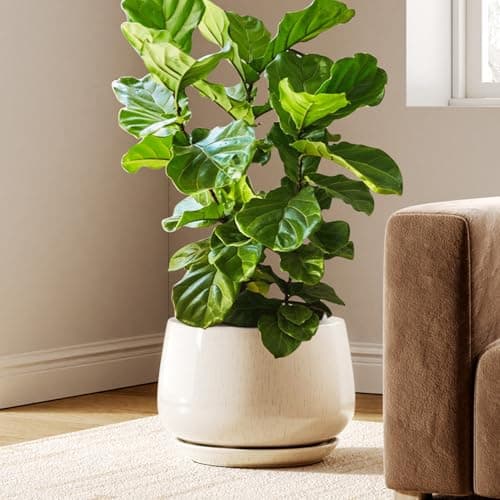 LE TAUCI 12 in Ceramic Planter with Drainage and SaucerA 12-inch glazed pot with a hole and a saucer, which is the size where the weight conversation starts and most people have not had it. | A floor plant in something that is not plastic | $84.99 at Amazon $89.99 · 6% off |
| 2 | 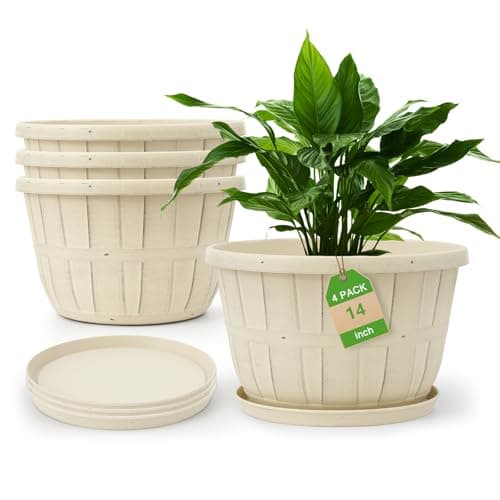 Quarut 14 in Plastic Planter with drainage and saucer, 5 gallon, 4 packThe only sensible way to put four floor plants in matching large pots without adding sixty pounds of pot to sixty pounds of soil. | Four large pots for the weight of one ceramic one | $39.99 at Amazon $43.69 · 8% off |
| 3 | 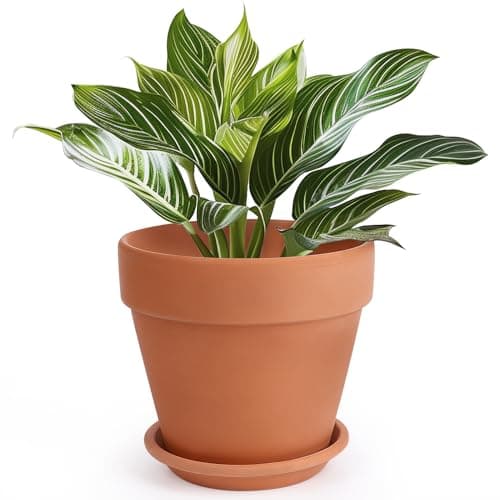 INGOFIN 10 in Terracotta Pot with SaucerTerracotta at the size where overwatering does the most damage, because a 10-inch pot of wet mix takes a long time to dry from the top alone. | A large plant that keeps rotting in plastic | |
| 4 | 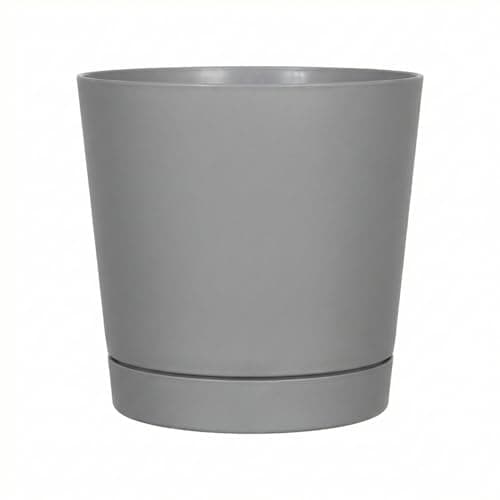 Root & Vessel 14 in Full Depth Cylinder Pot with built-in trayA full-depth cylinder rather than the usual tapered pot, which is the right shape for a plant with a deep root system and the wrong one for a shallow-rooted plant. | A deep root run for a tall floor plant | $28.99 at Amazon $31.99 · 9% off |
| 5 | 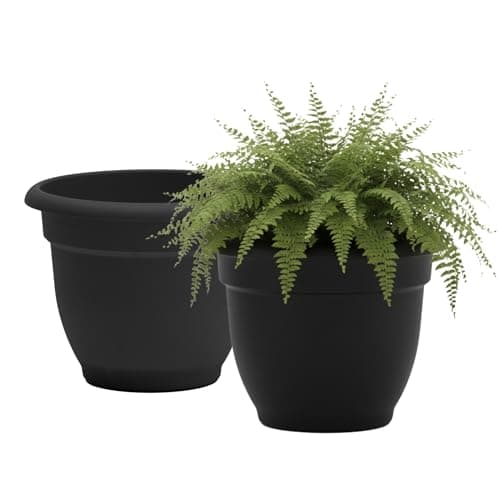 Bloem Ariana Self Watering Planter, 20 in, 2 packFloor-plant scale, which is where the weight arithmetic on this site stops being academic. This is the pot that needs a caddy underneath from day one. | A statement floor plant | $74.99 at Amazon $84.99 · 12% off |
| 6 | 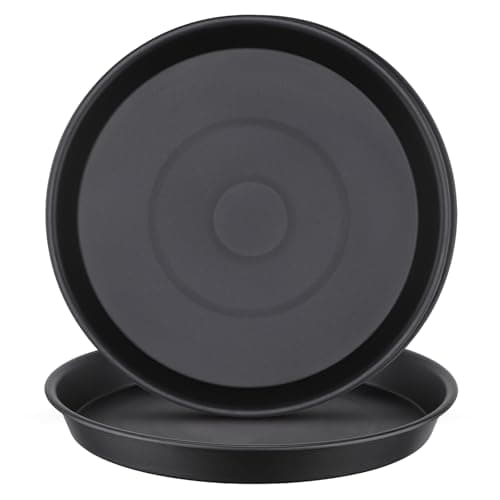 GREANER 12 in Plant Saucer and Pebble Tray, 2 packA 12-inch saucer with enough depth to double as a pebble tray, which is the size that is expensive to buy separately. | A big pot that needs a saucer and some humidity |
Links to Amazon are affiliate links. Prices and availability are Amazon's and change without notice.
Put it on wheels before you fill it
This is the recommendation people ignore and then regret, and it costs very little. A 14-inch pot of watered mix is about 40.5 lb before the pot and the plant; a 16-inch is 60 lb. That is a two-person lift and a once-a-year event, which in practice means the floor under it never gets cleaned and the plant never gets turned toward the light.
A rated caddy turns all of that into a push. It is also the one part of this category where real published numbers exist — the caddies on this site publish 264, 320, 440 and 500 lb capacities, which is a striking contrast with the pots, stands and shelves that publish nothing at all. The rated caddies are here, and the ordering matters: caddy first, then pot, then soil, then plant.
Which size for which plant
| Plant situation | Pot diameter | What that weighs watered |
|---|---|---|
| A plant outgrowing a 10 in pot | 12 in | About 25.5 lb of mix |
| A mature monstera or rubber plant | 14 in | About 40.5 lb of mix |
| A large fiddle leaf fig or bird of paradise | 16 in | About 60 lb of mix |
| A statement specimen you will not move | 18 to 20 in | Well over 90 lb of mix |
| Anything you want to keep liftable | 12 in and under | Under 26 lb of mix |
Sizing up is a one-step decision at this end of the range as much as at the small end. A plant moved from a 10-inch pot into a 16-inch one is surrounded by a wide ring of mix that no root will reach for a year or more, and that ring stays wet. The pot size chart covers the rule.
What we deliberately do not recommend
Large ceramic or concrete planters for anything above a windowsill in a rented apartment. They are heavy empty, brutal full, and a chipped one is a deposit conversation. We also do not recommend the very large self-watering planters for drought-tolerant plants — the reservoir is the point of the product and it is the wrong mechanism for a snake plant or a cactus, as the self-watering comparison works through. And we do not recommend buying a large pot before you have measured the floor position, because a 16-inch pot with a saucer is closer to 18 inches of floor and that is a different piece of furniture than the one you pictured.
Every pick, in full
We have not handled any of these. What follows is what each listing publishes, what that means once you put a watered pot on it, and who should buy something else.
1. A floor plant in something that is not plastic
LE TAUCI 12 in Ceramic Planter with Drainage and Saucer
A 12-inch glazed pot with a hole and a saucer, which is the size where the weight conversation starts and most people have not had it.
- What the listing publishes
- 12 in ceramic, drainage hole and saucer included
- Against a 10-inch pot
- No weight rating is published for this product, so there is nothing to check. That counts against it here rather than being treated as neutral.
12 inches of saturated mix computes to about 25.5 lb before the pot itself, and a glazed ceramic pot this size is not light empty. This is a floor pot, not a shelf pot, and putting it on an unrated tiered stand is the mistake this site is built around.
It is also the size at which you stop moving the plant. A rated caddy underneath is the difference between cleaning behind it twice a year and never.
The saucer is included, which at 12 inches is worth real money. Large saucers are priced oddly high when bought alone.
What is good
- Drainage hole and saucer at a size where both are usually extra
- Glazed, so it does not sweat onto the floor
- Heavy enough not to be knocked over
What is not
- About 25.5 lb of saturated mix before the pot's own weight, so floor only
- Ceramic at this size is genuinely fragile in a move
- Slow-drying for plants that want to dry out
Skip it if you were planning to put it on a tiered stand. None of the tiered stands here publish a weight rating, and this is the pot that finds out.
2. Four large pots for the weight of one ceramic one
Quarut 14 in Plastic Planter with drainage and saucer, 5 gallon, 4 pack
The only sensible way to put four floor plants in matching large pots without adding sixty pounds of pot to sixty pounds of soil.
- What the listing publishes
- Published 14 in top diameter, 10.2 in base, 5 gallon capacity; four drainage holes; saucers included; recyclable polypropylene; 4 pack
- Against a 10-inch pot
- No weight rating is published for this product, so there is nothing to check. That counts against it here rather than being treated as neutral.
At 14 inches the mix alone computes to about 40.5 lb saturated. A ceramic pot that size adds real weight on top of that; polypropylene adds almost nothing, which is the entire argument for plastic at large sizes and the reason it is what garden centers grow in.
Publishing the base diameter as well as the top is genuinely useful for a large pot, because 10.2 inches of base is what determines whether it tips when the plant grows tall and whether it fits the caddy you already own.
Four drainage holes and included saucers means the system is complete in one purchase. At this size a mismatched saucer is not a small annoyance — it is a wet floor.
What is good
- Published top and base diameter, and capacity in gallons
- Four drainage holes and matched saucers included
- Negligible pot weight at a size where that matters most
What is not
- It reads as plastic, which at 14 inches is hard to hide
- A wide base needs floor space a decorative pot might not
- Whiskey-barrel styling is not neutral
Skip it if the pot is the thing you want to look at. At this size a decorative pot with a plastic nursery pot inside it is the better answer.
3. A large plant that keeps rotting in plastic
INGOFIN 10 in Terracotta Pot with Saucer
Terracotta at the size where overwatering does the most damage, because a 10-inch pot of wet mix takes a long time to dry from the top alone.
#ad · Price as of October 20, 2026. How we are funded
- What the listing publishes
- 10 in unglazed clay with drainage hole and saucer
- Against a 10-inch pot
- No weight rating is published for this product, so there is nothing to check. That counts against it here rather than being treated as neutral.
A 10-inch pot of saturated mix computes to about 14.7 lb, and unglazed clay adds several pounds of its own. This is a floor or a low sturdy shelf, not a tiered frame.
The larger the pot, the longer the middle of it stays wet, and the more the porous wall earns its keep. The material advantage that is marginal at 4 inches is substantial at 10.
Clay at this size is fragile in exactly one way that matters: the rim chips if it is set down hard on tile.
What is good
- The porous wall matters most at large pot sizes
- Saucer included at a size where they are expensive alone
- Heavy enough to anchor a top-heavy plant
What is not
- Heavy before the mix goes in
- Chips on tile
- Needs watering noticeably more often than a glazed pot the same size
Skip it if the pot is going on a shelf. At roughly 15 lb of saturated mix plus several pounds of clay, this belongs on the floor unless the shelf publishes a number.
4. A deep root run for a tall floor plant
Root & Vessel 14 in Full Depth Cylinder Pot with built-in tray
A full-depth cylinder rather than the usual tapered pot, which is the right shape for a plant with a deep root system and the wrong one for a shallow-rooted plant.
- What the listing publishes
- Published 14 in; full-depth cylinder profile; built-in tray; lightweight plastic with a glossy finish; stated made in the USA
- Against a 10-inch pot
- No weight rating is published for this product, so there is nothing to check. That counts against it here rather than being treated as neutral.
Most decorative pots are tapered, which means a 14-inch pot holds noticeably less soil than its diameter suggests. A full-depth cylinder holds more — around a third more than this site's standard tapered model predicts, so expect it to be heavier than the 40.5 lb figure for a tapered 14-inch pot.
That extra depth is a real advantage for a tall plant that needs a deep root run and anchorage, and a real disadvantage for anything shallow-rooted, where the extra volume is mix no root reaches.
The built-in tray removes the mismatched-saucer problem at a size where saucers are hard to find and expensive.
What is good
- Built-in tray, so nothing to match separately
- Full depth suits deep-rooted floor plants
- Light for its size
What is not
- Deeper means heavier when watered than a tapered pot the same width
- Wrong shape for snake plants, succulents and other shallow-rooted plants
- Glossy plastic finish
Skip it if the plant is shallow-rooted. Depth it will not use is mix that stays wet.
5. A statement floor plant
Bloem Ariana Self Watering Planter, 20 in, 2 pack
Floor-plant scale, which is where the weight arithmetic on this site stops being academic. This is the pot that needs a caddy underneath from day one.
- What the listing publishes
- Published 20 in; built-in self-watering grid rather than a stated reservoir volume; UV-resistant BPA-free plastic; sold as a 2 pack
- Against a 10-inch pot
- No weight rating is published for this product, so there is nothing to check. That counts against it here rather than being treated as neutral.
A 20-inch pot of saturated mix computes to roughly 118 lb before the reservoir is filled or the plant is counted. Nobody moves that to vacuum behind it.
That number is the single best argument for the rated caddies in the plant stands section. A 440 lb caddy under a 118 lb pot is not overkill, it is the only way the pot ever moves again.
At this size a reservoir genuinely earns its place, because hand-watering a 20-inch pot means carrying several liters at a time.
What is good
- Floor-plant size with a reservoir built in
- Reduces how often you carry water across a room
- Stable by sheer mass
What is not
- Roughly 118 lb of saturated mix before water or plant
- Reservoir volume is not published — the listing states a self-watering grid and no capacity
- Needs a rated caddy to ever be moved again, and it is a 2 pack, so budget for two
Skip it if you rent and move often. A 20-inch planted pot is a two-person object and it does not go down stairs easily.
6. A big pot that needs a saucer and some humidity
GREANER 12 in Plant Saucer and Pebble Tray, 2 pack
A 12-inch saucer with enough depth to double as a pebble tray, which is the size that is expensive to buy separately.
#ad · Price as of October 20, 2026. How we are funded
- What the listing publishes
- 12 in saucers, deep enough to hold pebbles and water under a large pot
- Against a 10-inch pot
- No weight rating is published for this product, so there is nothing to check. That counts against it here rather than being treated as neutral.
12 inches is the saucer size that matches the floor pots people actually own, and buying one alone usually costs more than a two-pack does here.
Deep enough for pebbles means the pot sits above the water rather than in it, so it works as a humidity tray as well as a drip catcher.
Black hides the mineral scale that clouds a clear saucer, at the cost of not being able to see the water level.
What is good
- The awkward large saucer size, in a two-pack
- Deep enough to work as a pebble tray
- Hides hard-water scale
What is not
- Opaque, so you cannot see standing water
- 12 in only
- Plastic flexes when carried full
Skip it if you need to see the water. A clear saucer shows a flooded tray at a glance and a black one does not.
Questions people actually ask
What size pot counts as a large indoor planter?
How heavy is a 14 inch planter when full?
Should a large indoor planter be plastic or ceramic?
Do large planters need a saucer?
Can I put a large planter on a plant stand?
Sources
- Cornell University, Greenhouse Management: bulk density of greenhouse media components
- Biology Insights: how much a cubic foot of potting soil weighs, dry and saturated
- Clemson HGIC: Indoor Plants — cleaning, fertilizing, containers and light requirements
- Clemson HGIC: Indoor Plants — watering
Product specifications are quoted from each seller's own listing and are the seller's claim, not a measurement of ours.