Planters
Terracotta, Ceramic or Plastic?
The material is not a finish decision. It sets how fast the mix dries and how much the finished plant weighs, and both of those change what else you can buy.
By Scooter M., enthusiast · Published · Last updated
The short answer
Terracotta for anything that rots easily and for anyone who waters too often — it dries fastest because water leaves through the pot wall. Glazed ceramic for plants that want steady moisture and for pots that are on display. Plastic when weight matters: on an unrated shelf, on a hook, or anywhere high, plastic is the only one of the three that lets you ignore the pot in the load calculation.
Disclosure Pot & Prop earns a commission when you buy through the Amazon links on this page, at no extra cost to you. It does not change which products get recommended or what we say about them, and we have not been given any of them. How this site is funded.
Pick up an empty 10-inch terracotta pot and an empty 10-inch plastic one and the difference is obvious. What is less obvious is that the difference persists after both are planted, and that it compounds with the weight of the mix — which, saturated at a 10-inch size, computes to about 14.7 lb on its own. On the floor none of that matters. On a shelf with no published rating, or hanging from an adhesive hook, the pot material is a load-bearing decision.
The other axis is drying rate, and here terracotta is genuinely different rather than just differently styled. Unglazed clay is porous, so moisture moves out through the wall as well as the surface. That is why the same mix in the same room dries faster in clay, and why terracotta is the standard recommendation for succulents and the standard complaint from anyone growing ferns.
The three materials, side by side
| Unglazed terracotta | Glazed ceramic | Plastic | |
|---|---|---|---|
| Drying rate | Fastest — porous wall | Slow | Slow |
| Empty pot weight | Heavy | Heaviest | Negligible |
| Best for | Succulents, cacti, snake plants, overwaterers | Even moisture, display pots | Shelves, hooks, anywhere high |
| Weak point | Chips; leaves mineral marks | Chips and cracks; heavy | Looks like what it is |
| Frost | Cracks if left outside wet | Often cracks | Survives |
| Cost per pot | Low | Highest | Lowest |
Why terracotta dries faster, and when that is wrong
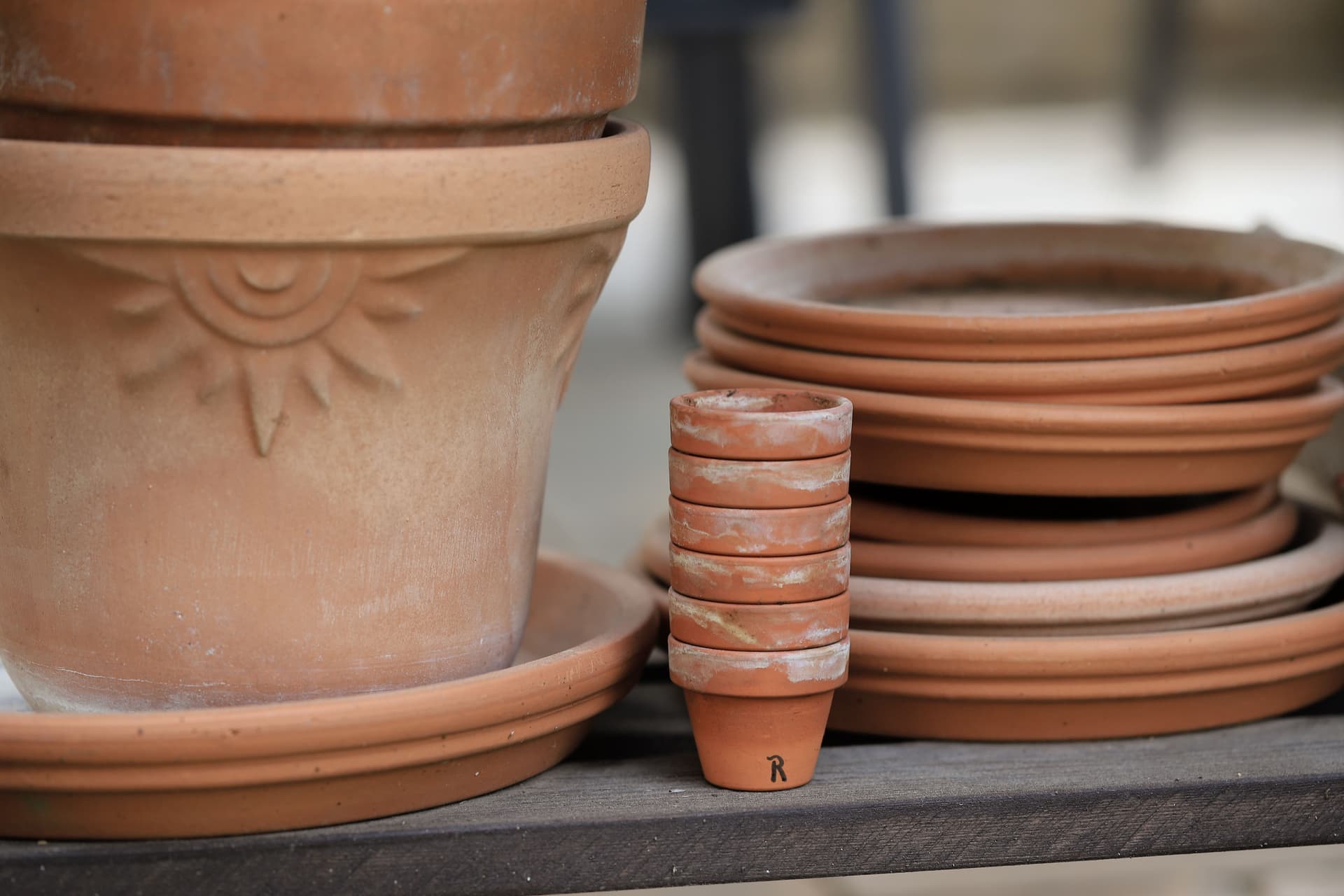
Unglazed clay is a fired but unsealed ceramic, which leaves it porous. Water in the mix wicks into the pot wall and evaporates from the outside as well as the top, so the whole volume loses moisture faster than the same mix in a sealed container. The white crust that appears on old terracotta is the mineral residue that journey leaves behind, and it is evidence the mechanism is working.
For a snake plant or a jade, that is the single most useful property a pot can have — enough so that snake plants get their own list, because sizing matters as much as material for a plant that rots before it wilts. For a fern, a calathea or a nerve plant the same porosity means watering twice as often, and in a heated apartment in winter it can mean watering every couple of days — which is exactly the treadmill that a self-watering pot exists to end. Match the material to the plant's tolerance for drying out, not to the room's color scheme.
Where weight decides it
A planted pot on a stand or a shelf is a load, and the pot's own weight is part of it. Mix alone, saturated, computes as below; a ceramic pot of the same diameter can add several pounds on top, and a terracotta one nearly as much. Plastic adds close to nothing, which is why every hanging pick on this site and every recommendation for an unrated shelf points at plastic or at a plastic nursery pot inside a decorative sleeve.
| Pot size | Mix volume | Dry | Watered | Rating needed |
|---|---|---|---|---|
| 6 in | 0.058 cu ft | 1.3 lb | 3.2 lb | 5 lb |
| 8 in | 0.137 cu ft | 3 lb | 7.5 lb | 12 lb |
| 10 in | 0.268 cu ft | 5.9 lb | 14.7 lb | 23 lb |
| 12 in | 0.463 cu ft | 10.2 lb | 25.5 lb | 39 lb |
| 14 in | 0.735 cu ft | 16.2 lb | 40.5 lb | 61 lb |
Every pick, in full
We have not handled any of these. What follows is what each listing publishes, what that means once you put a watered pot on it, and who should buy something else.
1. Plants that must dry out between waterings
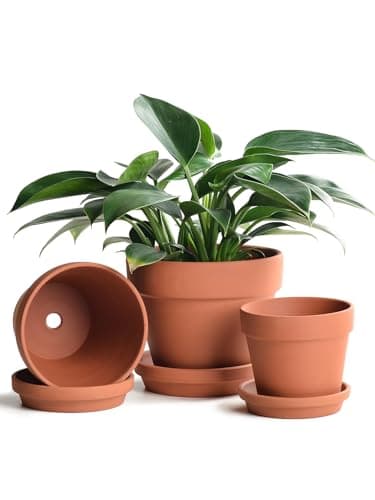
INGOFIN Terracotta Pots with Saucers, 5, 6 and 7 in
Porous clay, the only pot material that actively removes water from the mix, and the reason succulents live longer in terracotta than in anything else.
#ad · Price as of October 18, 2026. How we are funded
- What the listing publishes
- 5, 6 and 7 in unglazed clay, drainage hole and saucer per pot
- Against a 10-inch pot
- No weight rating is published for this product, so there is nothing to check. That counts against it here rather than being treated as neutral.
Unglazed terracotta breathes through the wall, so the mix dries from the sides as well as the top. For a plant that rots when wet that is a feature you cannot get from a plastic pot with a bigger hole.
It also means the pot itself is damp. Terracotta sitting directly on wood leaves a ring, which is what the pot feet elsewhere in this section exist for.
Clay adds real weight for its size. On a shelf with no published rating, a set of three terracotta pots is meaningfully heavier than the same set in plastic.
What is good
- Dries the mix from the sides, not just the top
- Three sizes for potting up
- A heavy base resists being knocked over
What is not
- Damp clay marks wood floors and shelves
- Heavier than plastic at the same size
- Dries so fast that thirsty plants need watering twice as often
Skip it if you travel or forget to water. Terracotta is the least forgiving material for an under-waterer, and glazed ceramic is the fix.
2. Three sizes that actually drain
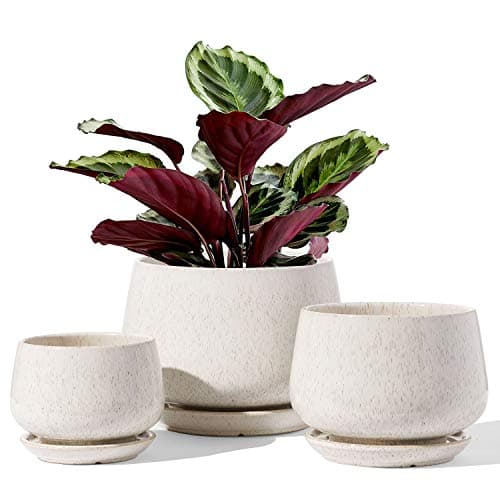
LE TAUCI Ceramic Plant Pots with Drainage and Saucer, set of 3
Three graduated sizes with a real hole and a matched saucer in each, which is a lower bar than it sounds and one most decorative ceramic fails.
- What the listing publishes
- 4.1, 5.1 and 6.5 in; drainage hole and a matched saucer on every pot
- Against a 10-inch pot
- No weight rating is published for this product, so there is nothing to check. That counts against it here rather than being treated as neutral.
Saturated mix in these three sizes computes to about 0.9, 1.8 and 3.7 lb, light enough that any shelf holds them and the interesting question is drainage rather than load.
A matched saucer is not decoration. Buying a saucer separately means guessing a diameter, and a saucer an inch too small overflows onto whatever is underneath.
Graduated sets are how you pot up a plant without a second order. A rooted cutting goes in the 4-inch, moves to the 5-inch in a season and the 6.5-inch after that.
What is good
- Every pot has a hole and a matching saucer
- Three sizes cover a potting-up sequence
- Glazed inside, so they do not wick like bare terracotta
What is not
- Nothing here fits a plant bigger than a small pothos
- Ceramic chips if it goes over
- Glazed pots dry slower than terracotta, which suits some plants and kills others
Skip it if you overwater. A glazed, non-porous pot is the least forgiving container for that habit, and terracotta is the fix.
3. Four matching pots on a shelf that is not rated
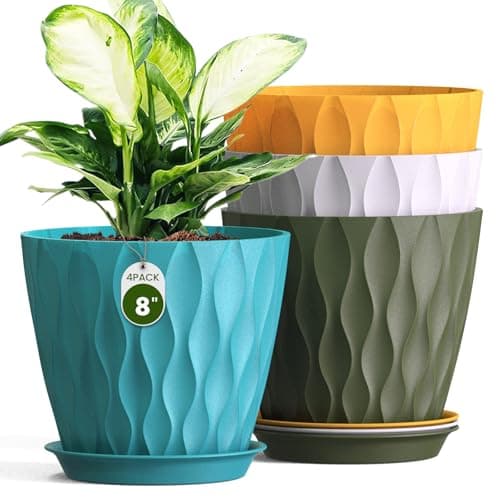
Areutxbis 8 in Plastic Planters with Drainage and Saucers, 4 pack
Plastic at 8 inches, which is the size where the material choice stops being cosmetic and starts being a load decision.
#ad · Price as of October 18, 2026. How we are funded
- What the listing publishes
- 8 in plastic, drainage holes and saucers, four per pack
- Against a 10-inch pot
- No weight rating is published for this product, so there is nothing to check. That counts against it here rather than being treated as neutral.
An 8-inch pot of saturated mix computes to about 7.5 lb. In plastic the pot adds ounces; in glazed ceramic it can add several pounds, and on an unrated tiered stand with four of them that difference is the whole safety margin.
Four matching pots is also how a shelf stops looking like a collection of separate shopping trips.
Plastic dries slower at the walls than terracotta and faster than glaze, which puts it in the middle of the moisture range and makes it the safest default if you are not sure.
What is good
- Adds almost nothing to the computed load
- Four matching pots and saucers
- Middle of the road for drying speed
What is not
- Light enough to be knocked over by a cat
- Plastic goes brittle in a sunny window over years
- Looks like what it is
Skip it if the pots are going somewhere visible and the look matters more than the load. A ceramic set is the answer, and 8 inches is still light enough to get away with it.
Questions people actually ask
Does terracotta really dry out faster?
Are plastic pots bad for plants?
Why does my terracotta pot have a white crust?
Which material is best for a hanging plant?
Sources
- Cornell University, Greenhouse Management: bulk density of greenhouse media components
- Biology Insights: how much a cubic foot of potting soil weighs, dry and saturated
- Clemson HGIC: Indoor Plants — cleaning, fertilizing, containers and light requirements
- University of Georgia Extension B1318: Growing Indoor Plants with Success
Product specifications are quoted from each seller's own listing and are the seller's claim, not a measurement of ours.