Planters
The Best Self-Watering Planters
A self-watering pot solves exactly one problem — being away — and creates a different one for any plant that needs to dry out. Both facts are on this page.
By Scooter M., enthusiast · Published · Last updated
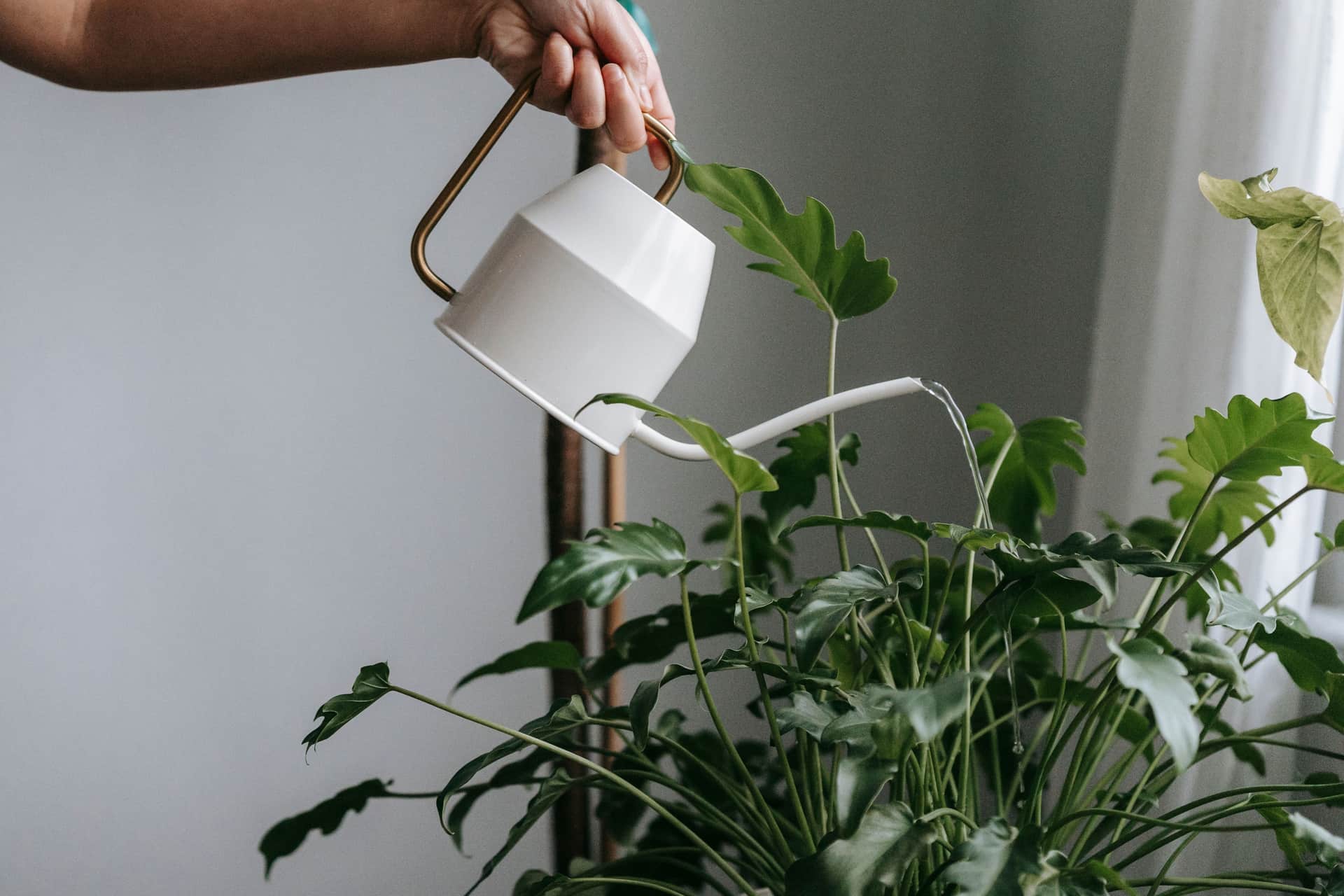
The short answer
Buy a self-watering pot if you are away regularly and keep thirsty plants — pothos, peace lilies, ferns, most herbs. Buy the one with a visible water level indicator, because a reservoir you cannot see is one you will either let run dry or top up when it is already full. Do not put succulents, cacti or snake plants in one.
Disclosure Pot & Prop earns a commission when you buy through the Amazon links on this page, at no extra cost to you. It does not change which products get recommended or what we say about them, and we have not been given any of them. How this site is funded.
A self-watering planter is a pot with a reservoir underneath and a wick or a soil column that draws water up as the mix dries. The plant takes what it needs when it needs it, which is genuinely better than a fortnightly deluge, and it is the only mechanism on this site that keeps a plant alive while you are somewhere else. That is a real problem worth solving and it is why this page exists.
It is also a mechanism that keeps the lower half of the mix permanently damp by design. For a pothos that is close to ideal. For a snake plant it is the exact condition that rots it. There is no version of a self-watering pot that is right for every plant, and any page that recommends them without saying so is not paying attention. The head-to-head with an ordinary drainage pot works through which plants fall on which side, and the hub covers the material question underneath both.
Quick picks
Ranked, with the published figure each pick turns on. Tap a row for the full reasoning further down this page.
| # | Product | Best for | Price |
|---|---|---|---|
| 1 | 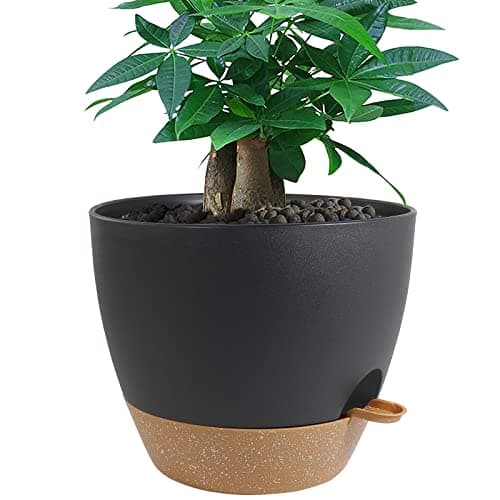 UOUZ 12 in Self Watering Pot, 60 oz reservoirThe only pot here that publishes its reservoir volume, which is the number that decides how long the plant survives without you. | Two weeks away from home | |
| 2 | 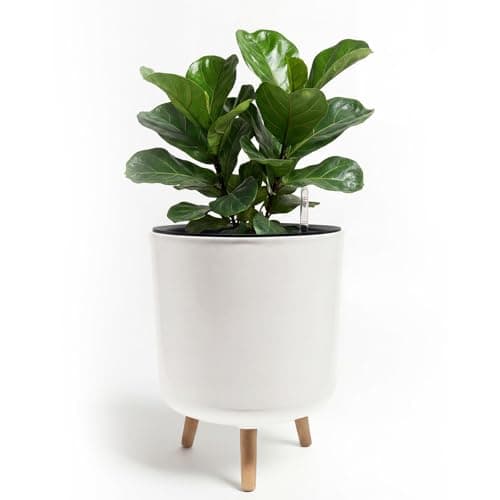 Bamworld 12 in Self Watering Pot with Water Level Indicator and StandA float gauge, which converts a self-watering pot from a thing you hope is working into a thing you can check in one glance. | Knowing when the reservoir is empty | $69.99 at Amazon $79.99 · 13% off |
| 3 | 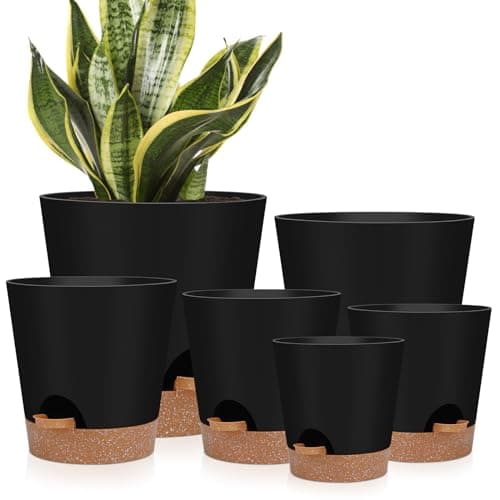 YNNICO Self Watering Planters with Drainage and Saucers, 6 potsSelf-watering pots that also have drainage holes, which sounds contradictory and is the detail that makes them survivable for a normal waterer. | A whole shelf on the same watering system | |
| 4 | 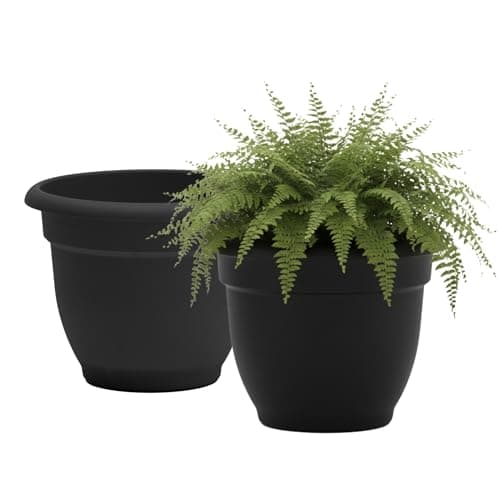 Bloem Ariana Self Watering Planter, 20 in, 2 packFloor-plant scale, which is where the weight arithmetic on this site stops being academic. This is the pot that needs a caddy underneath from day one. | A statement floor plant | |
| 5 | 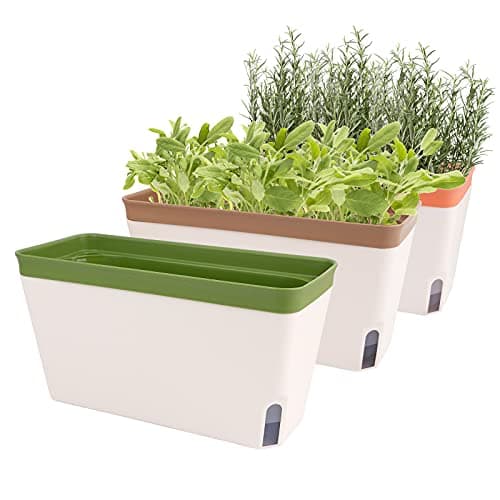 OurWarm Windowsill Herb Planter Box, self watering, 10.5 in, set of 3Rectangular rather than round, which is the shape a windowsill actually is, with a water level window so a herb that hates drying out does not. | Herbs on a kitchen sill |
Links to Amazon are affiliate links. Prices and availability are Amazon's and change without notice.
What we looked at, in order
- Is the reservoir size published? Most listings will not say. A published figure in ounces is the difference between planning a trip and hoping.
- Can you see the level? A window or a float indicator turns the reservoir from a guess into a glance. This is the single most useful feature in the category.
- Does it still drain? The better designs keep an overflow or a drainage route so a heavy top-water does not flood the reservoir. A sealed pot with a wick is a no-hole pot with extra steps.
- Does the size match a plant that actually wants this? A 20-inch self-watering floor planter is for a thirsty statement plant. A 5-inch one is for herbs. Neither is for a cactus.
How long a reservoir actually lasts
Nobody can give you a number that holds, and anyone who does is guessing on your behalf. Draw-down depends on the plant, the pot size, the light, the temperature and the humidity, and those vary more between two apartments than between two pots. What you can do is measure it once: fill the reservoir, mark the date, and see how long it takes to empty in your room, in the season you are in. After one cycle you know your own number, and it is worth more than any published estimate.
Weight, because these are heavier than they look
A self-watering planter carries its mix plus a full reservoir, so it sits at the top of the weight range for its diameter rather than the middle. A 12-inch pot already computes to about 25.5 lb of saturated mix; add a 60 oz reservoir and roughly four more pounds of water. That is the figure to check against a stand or a shelf, not the empty pot weight in the listing.
| Pot size | Mix volume | Dry | Watered | Rating needed |
|---|---|---|---|---|
| 6 in | 0.058 cu ft | 1.3 lb | 3.2 lb | 5 lb |
| 8 in | 0.137 cu ft | 3 lb | 7.5 lb | 12 lb |
| 10 in | 0.268 cu ft | 5.9 lb | 14.7 lb | 23 lb |
| 12 in | 0.463 cu ft | 10.2 lb | 25.5 lb | 39 lb |
Every pick, in full
We have not handled any of these. What follows is what each listing publishes, what that means once you put a watered pot on it, and who should buy something else.
1. Two weeks away from home
UOUZ 12 in Self Watering Pot, 60 oz reservoir
The only pot here that publishes its reservoir volume, which is the number that decides how long the plant survives without you.
#ad · Price as of October 18, 2026. How we are funded
- What the listing publishes
- 12 in; published 60 oz removable reservoir; multi-mesh drainage
- Against a 10-inch pot
- No weight rating is published for this product, so there is nothing to check. That counts against it here rather than being treated as neutral.
60 fluid ounces is about 3.9 lb of water, and it sits under the mix rather than in it. That is added weight the moment you fill it: a full 12-inch self-watering pot computes to roughly 29 lb against 25.5 lb for the same pot without a reservoir.
Reservoir volume is the specification that matters and almost nobody prints. Without it, self-watering is a shape rather than a duration.
A removable reservoir is what makes it cleanable. Fixed-reservoir pots grow things in the bottom that you cannot reach.
What is good
- Publishes the reservoir volume, which most competitors do not
- Removable reservoir can actually be cleaned
- Wicking beats a schedule for anyone who travels
What is not
- Adds about 4 lb of water weight to an already 25 lb pot
- Self-watering suits thirsty plants and drowns succulents
- Plastic at 12 inches flexes when carried full
Skip it if you are growing cacti, succulents or a snake plant. A permanently damp root zone is the specific way those plants die.
2. Knowing when the reservoir is empty
Bamworld 12 in Self Watering Pot with Water Level Indicator and Stand
A float gauge, which converts a self-watering pot from a thing you hope is working into a thing you can check in one glance.
- What the listing publishes
- 12 in with a water level indicator; supplied on a wooden stand
- Against a 10-inch pot
- No weight rating is published for this product, so there is nothing to check. That counts against it here rather than being treated as neutral.
The failure mode of a self-watering pot is silent: the reservoir empties, the wick dries out, and the plant is a week into drought before it shows. An indicator removes exactly that failure.
It ships on a stand, which puts the pot's roughly 25 lb of saturated mix plus its water on four small feet. That is a floor arrangement.
The reservoir volume is not published here, so how long a fill lasts is not something this listing lets you calculate.
What is good
- A level indicator removes the silent-failure mode
- Stand included
- 12 in fits most floor plants
What is not
- Reservoir volume is not published, so autonomy cannot be calculated
- Stand feet concentrate a heavy pot on four points
- Indicators stick if the reservoir gets grubby
Skip it if you want to know how many days a fill lasts. That needs a published reservoir volume, and this listing does not give one.
3. A whole shelf on the same watering system
YNNICO Self Watering Planters with Drainage and Saucers, 6 pots
Self-watering pots that also have drainage holes, which sounds contradictory and is the detail that makes them survivable for a normal waterer.
#ad · Price as of October 18, 2026. How we are funded
- What the listing publishes
- Six pots from 5 to 8 in, each with drainage holes and a saucer
- Against a 10-inch pot
- No weight rating is published for this product, so there is nothing to check. That counts against it here rather than being treated as neutral.
Most self-watering pots have no drainage hole, so an overfill has nowhere to go and the roots sit in it. Holes plus a reservoir means the system tolerates being watered from the top by mistake.
Six pots from 5 to 8 inches computes to between 1.8 and 7.5 lb of saturated mix each. Even fully loaded that is a shelf-safe set.
Matching a whole shelf to one watering method is worth more than it sounds. Mixed systems are how half a shelf gets overwatered.
What is good
- Drainage holes and reservoirs together
- Six graduated sizes
- Light enough for any stand here
What is not
- Small reservoirs mean days, not weeks
- Plastic
- Six near-identical pots is a commitment to one look
Skip it if you wanted a fortnight of autonomy. Small reservoirs in 5 to 8 inch pots buy days, and the 12-inch with a published 60 oz reservoir is the pot for a vacation.
4. A statement floor plant
Bloem Ariana Self Watering Planter, 20 in, 2 pack
Floor-plant scale, which is where the weight arithmetic on this site stops being academic. This is the pot that needs a caddy underneath from day one.
#ad · Price as of October 18, 2026. How we are funded
- What the listing publishes
- Published 20 in; built-in self-watering grid rather than a stated reservoir volume; UV-resistant BPA-free plastic; sold as a 2 pack
- Against a 10-inch pot
- No weight rating is published for this product, so there is nothing to check. That counts against it here rather than being treated as neutral.
A 20-inch pot of saturated mix computes to roughly 118 lb before the reservoir is filled or the plant is counted. Nobody moves that to vacuum behind it.
That number is the single best argument for the rated caddies in the plant stands section. A 440 lb caddy under a 118 lb pot is not overkill, it is the only way the pot ever moves again.
At this size a reservoir genuinely earns its place, because hand-watering a 20-inch pot means carrying several liters at a time.
What is good
- Floor-plant size with a reservoir built in
- Reduces how often you carry water across a room
- Stable by sheer mass
What is not
- Roughly 118 lb of saturated mix before water or plant
- Reservoir volume is not published — the listing states a self-watering grid and no capacity
- Needs a rated caddy to ever be moved again, and it is a 2 pack, so budget for two
Skip it if you rent and move often. A 20-inch planted pot is a two-person object and it does not go down stairs easily.
5. Herbs on a kitchen sill
OurWarm Windowsill Herb Planter Box, self watering, 10.5 in, set of 3
Rectangular rather than round, which is the shape a windowsill actually is, with a water level window so a herb that hates drying out does not.
#ad · Price as of October 18, 2026. How we are funded
- What the listing publishes
- 10.5 in boxes with a visual water level window; three per set
- Against a 10-inch pot
- No weight rating is published for this product, so there is nothing to check. That counts against it here rather than being treated as neutral.
Round pots waste a sill. A 10.5-inch box uses the full depth of a standard sill and leaves room for the next box, which is why three of them fit where two round 8-inch pots would.
Herbs are the plants least tolerant of a dry week. Basil in particular collapses and does not come back, so a level window is more useful here than on a pothos.
Box planters spread their weight along the sill rather than onto a point, which matters on the thin sills common in older rentals.
What is good
- A rectangular shape uses the whole sill
- The level window suits plants that will not tolerate drying
- Spreads load along the sill
What is not
- Reservoir volume is not published
- A sill-only shape is useless anywhere else
- Herbs in a shared box compete once they establish
Skip it if your sill is under four inches deep. These are 10.5 inches long but still need real depth, and a hanging window shelf is the better answer.
Questions people actually ask
Do self-watering pots overwater plants?
How often do I fill the reservoir?
Can I make a normal pot self-watering?
Do self-watering planters still need drainage?
Sources
- Cornell University, Greenhouse Management: bulk density of greenhouse media components
- Biology Insights: how much a cubic foot of potting soil weighs, dry and saturated
- Clemson HGIC: Indoor Plants — watering
- Michigan State University Extension: Smart Gardening — growing houseplants indoors
Product specifications are quoted from each seller's own listing and are the seller's claim, not a measurement of ours.