Planters
Self-Watering Pot or Plain Drainage Hole?
One keeps the lower mix damp on purpose. The other lets it dry out on purpose. Your plant has an opinion about which of those is correct.
By Scooter M., enthusiast · Published · Last updated
The short answer
Drainage hole for anything that likes to dry out — succulents, cacti, snake plants, ZZ plants — and for anyone still learning a plant's rhythm. Self-watering for consistently thirsty plants you leave alone for a week or more: pothos, peace lily, ferns, most herbs. If you keep both kinds of plant, you need both kinds of pot; there is no single correct answer here.
Disclosure Pot & Prop earns a commission when you buy through the Amazon links on this page, at no extra cost to you. It does not change which products get recommended or what we say about them, and we have not been given any of them. How this site is funded.
This is presented everywhere as an upgrade question, as though a reservoir is simply a better pot for people who can afford one. It is not. The two designs do opposite things to the same variable — how long the mix stays wet — and which one is right depends entirely on the plant standing in it. Getting this wrong is the most expensive cheap mistake in the category, because a rotted snake plant does not come back.
Both sides connect to the rest of the site the same way: whatever you choose, the pot has to drain somewhere and it has to stand on something that can hold it. See the planters hub for the material question and the pot weight guide for the load.
The two mechanisms, plainly
| Drainage hole | Self-watering reservoir | |
|---|---|---|
| Where water leaves | Out of the bottom, into a saucer | Into the plant, or evaporates |
| State of the lower mix | Drains and then dries | Kept damp by design |
| What you do | Water when the top inch is dry | Top up a reservoir |
| Failure mode | You forget and it wilts | It never dries and roots rot |
| Recovery from failure | Usually complete | Usually not |
| Away for two weeks | A problem | The whole reason to buy one |
Which plants go on which side
| Plant | Better in | Why |
|---|---|---|
| Pothos, philodendron | Either, reservoir helps | Thirsty and forgiving; benefits from consistency |
| Peace lily | Reservoir | Wilts dramatically when dry; hates the swing |
| Ferns, calathea | Reservoir | Want evenly moist mix and never really dry out |
| Most herbs | Reservoir | High water use, short life, harvested constantly |
| Monstera | Drainage hole | Wants a proper dry-down between waterings |
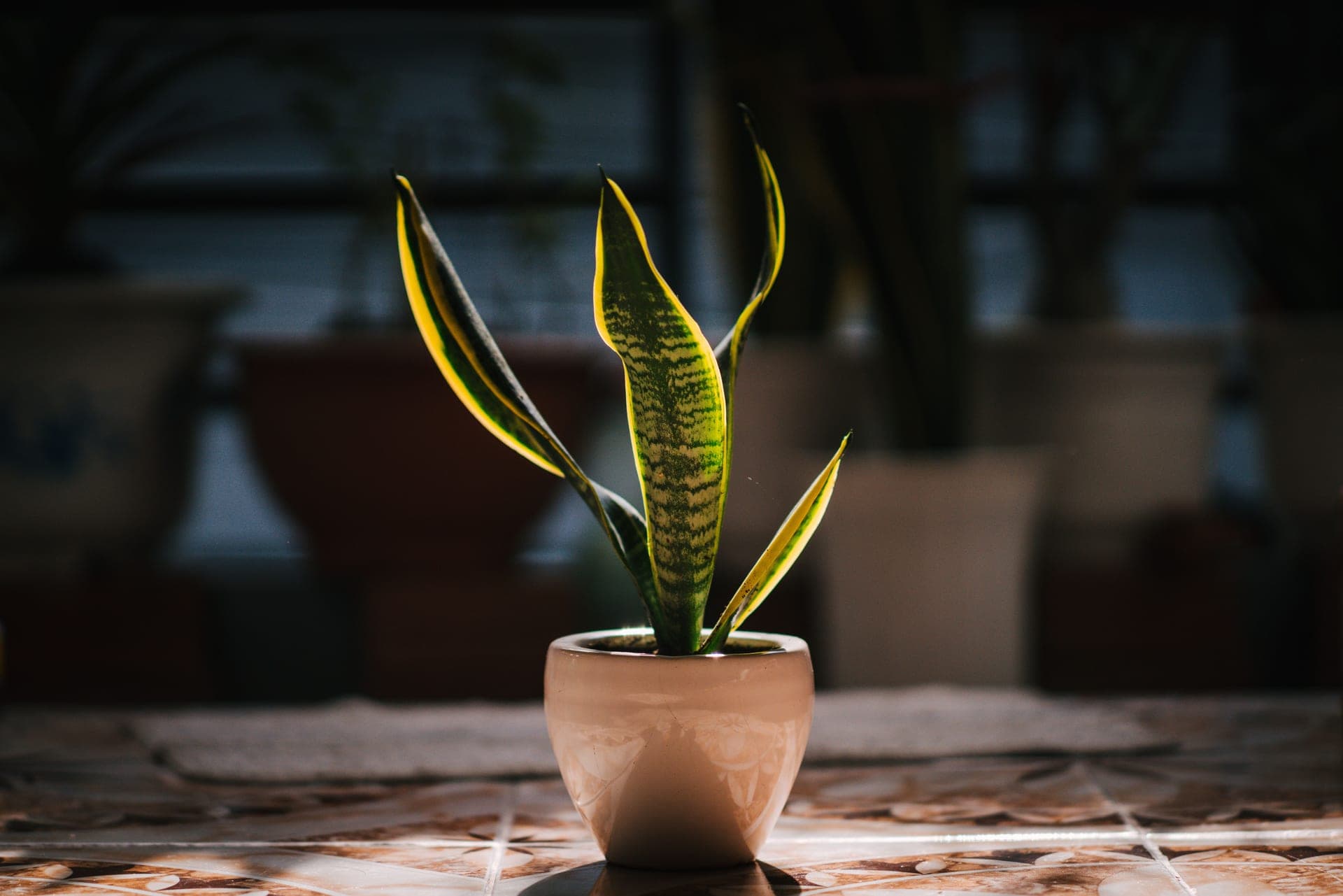
| Snake plant, ZZ | Drainage hole, ideally terracotta | Rot is the main way these die |
| Succulents, cacti | Drainage hole, terracotta | A damp lower zone is fatal, not suboptimal |
| A plant you just bought | Drainage hole | You do not know its rhythm yet; keep the feedback loop |
The argument for the plain pot, which usually wins
A drainage pot gives you feedback. You lift it, feel the weight, put a finger in the mix, and every watering teaches you something about how this plant behaves in this room. That loop is how people get good at houseplants, and a reservoir pot deliberately removes it. For a first plant, or a plant you have not kept before, the plain pot is not the budget option — it is the one that tells you what is going on.
It also fails gently. A drainage pot that gets forgotten produces a wilted plant, which is alarming and almost always recoverable. A reservoir pot that gets over-managed produces root rot, which is invisible until it is not and is usually terminal. Given equal odds of user error, the design that fails visibly and recoverably is the safer purchase.
The argument for the reservoir, which is narrow and real
You travel. That is the case, and it is a good one. Nothing else on this site keeps a plant alive for two weeks unattended, and a peace lily that collapses every time you go away is not a plant you get to keep long. The other genuine case is a plant whose care instructions say “never let it dry out” — ferns, calatheas, some marantas — because a human hand simply cannot keep mix evenly moist as well as a reservoir can.
Every pick, in full
We have not handled any of these. What follows is what each listing publishes, what that means once you put a watered pot on it, and who should buy something else.
1. Two weeks away from home
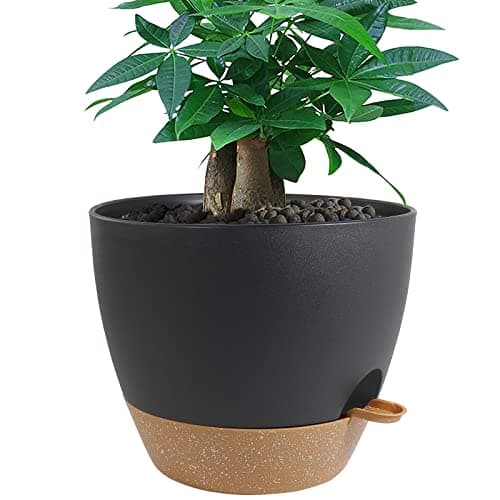
UOUZ 12 in Self Watering Pot, 60 oz reservoir
The only pot here that publishes its reservoir volume, which is the number that decides how long the plant survives without you.
#ad · Price as of October 18, 2026. How we are funded
- What the listing publishes
- 12 in; published 60 oz removable reservoir; multi-mesh drainage
- Against a 10-inch pot
- No weight rating is published for this product, so there is nothing to check. That counts against it here rather than being treated as neutral.
60 fluid ounces is about 3.9 lb of water, and it sits under the mix rather than in it. That is added weight the moment you fill it: a full 12-inch self-watering pot computes to roughly 29 lb against 25.5 lb for the same pot without a reservoir.
Reservoir volume is the specification that matters and almost nobody prints. Without it, self-watering is a shape rather than a duration.
A removable reservoir is what makes it cleanable. Fixed-reservoir pots grow things in the bottom that you cannot reach.
What is good
- Publishes the reservoir volume, which most competitors do not
- Removable reservoir can actually be cleaned
- Wicking beats a schedule for anyone who travels
What is not
- Adds about 4 lb of water weight to an already 25 lb pot
- Self-watering suits thirsty plants and drowns succulents
- Plastic at 12 inches flexes when carried full
Skip it if you are growing cacti, succulents or a snake plant. A permanently damp root zone is the specific way those plants die.
2. A large plant that keeps rotting in plastic
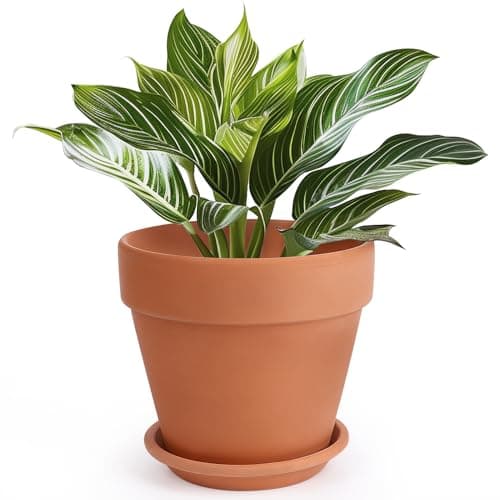
INGOFIN 10 in Terracotta Pot with Saucer
Terracotta at the size where overwatering does the most damage, because a 10-inch pot of wet mix takes a long time to dry from the top alone.
#ad · Price as of October 18, 2026. How we are funded
- What the listing publishes
- 10 in unglazed clay with drainage hole and saucer
- Against a 10-inch pot
- No weight rating is published for this product, so there is nothing to check. That counts against it here rather than being treated as neutral.
A 10-inch pot of saturated mix computes to about 14.7 lb, and unglazed clay adds several pounds of its own. This is a floor or a low sturdy shelf, not a tiered frame.
The larger the pot, the longer the middle of it stays wet, and the more the porous wall earns its keep. The material advantage that is marginal at 4 inches is substantial at 10.
Clay at this size is fragile in exactly one way that matters: the rim chips if it is set down hard on tile.
What is good
- The porous wall matters most at large pot sizes
- Saucer included at a size where they are expensive alone
- Heavy enough to anchor a top-heavy plant
What is not
- Heavy before the mix goes in
- Chips on tile
- Needs watering noticeably more often than a glazed pot the same size
Skip it if the pot is going on a shelf. At roughly 15 lb of saturated mix plus several pounds of clay, this belongs on the floor unless the shelf publishes a number.
3. Three sizes that actually drain
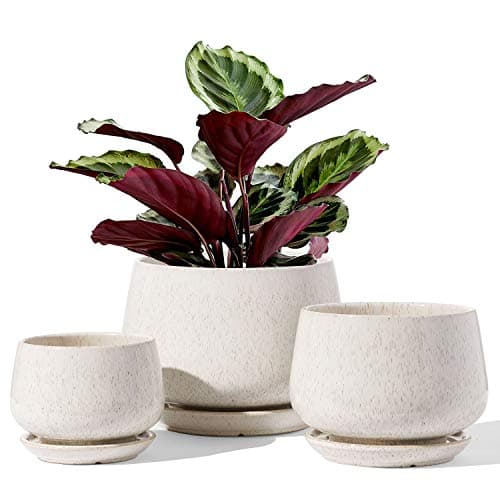
LE TAUCI Ceramic Plant Pots with Drainage and Saucer, set of 3
Three graduated sizes with a real hole and a matched saucer in each, which is a lower bar than it sounds and one most decorative ceramic fails.
- What the listing publishes
- 4.1, 5.1 and 6.5 in; drainage hole and a matched saucer on every pot
- Against a 10-inch pot
- No weight rating is published for this product, so there is nothing to check. That counts against it here rather than being treated as neutral.
Saturated mix in these three sizes computes to about 0.9, 1.8 and 3.7 lb, light enough that any shelf holds them and the interesting question is drainage rather than load.
A matched saucer is not decoration. Buying a saucer separately means guessing a diameter, and a saucer an inch too small overflows onto whatever is underneath.
Graduated sets are how you pot up a plant without a second order. A rooted cutting goes in the 4-inch, moves to the 5-inch in a season and the 6.5-inch after that.
What is good
- Every pot has a hole and a matching saucer
- Three sizes cover a potting-up sequence
- Glazed inside, so they do not wick like bare terracotta
What is not
- Nothing here fits a plant bigger than a small pothos
- Ceramic chips if it goes over
- Glazed pots dry slower than terracotta, which suits some plants and kills others
Skip it if you overwater. A glazed, non-porous pot is the least forgiving container for that habit, and terracotta is the fix.
Questions people actually ask
Is a self-watering pot better for beginners?
Can I use a self-watering pot for succulents if I let it run dry?
What happens if I top-water a self-watering pot?
Do I still need a saucer with a self-watering planter?
Sources
- Clemson HGIC: Indoor Plants — watering
- Clemson HGIC: Indoor Plants — cleaning, fertilizing, containers and light requirements
- Michigan State University Extension: Smart Gardening — growing houseplants indoors
Product specifications are quoted from each seller's own listing and are the seller's claim, not a measurement of ours.