Planters
The Best Soil Amendments for Houseplants
One of these is bought for air and one for water. Adding the wrong one to a pot that stays wet is the most common way people make it worse.
By Scooter M., enthusiast · Published
The short answer
Work out which problem you have first, because these fix opposite ones. If pots stay wet for a week and you keep losing plants to rot, you want perlite or coir chips, which add air. If pots dry out in two days and you are watering constantly, you want coco coir, which holds water. As a starting ratio, one part amendment to four parts mix — and a standard cubic-foot bag of potting mix is about 25.7 dry quarts, so it takes roughly 6 quarts of perlite. None of these bags publishes air-filled porosity, which is the property you are actually buying.
Disclosure Pot & Prop earns a commission when you buy through the Amazon links on this page, at no extra cost to you. It does not change which products get recommended or what we say about them, and we have not been given any of them. How this site is funded.
A bag of potting mix is a compromise. It has to survive a pallet, a warehouse and six months on a shelf, it has to work for a tomato and a fern, and it has to cost very little. What it does not have to do is suit the specific pot on your windowsill.
Amendments are how you close that gap, and the category is genuinely confusing because the products sit side by side, cost about the same, are all beige or white, and do opposite things to a pot.
Air or water: pick the problem first
| Amendment | Primary effect | Use it when | Wrong when |
|---|---|---|---|
| Coarse perlite | Adds air space | Pots stay wet for days | Pots already dry too fast |
| Coco coir (fiber) | Holds water | Pots dry out in a day or two | Pots stay wet |
| Coco coir chips | Chunk plus water | Aroids, orchids, chunky roots | Amending an ordinary mix |
| LECA pebbles | Adds air, holds none | Maximum drainage, reusable | You want water held |
That table is the page. Before buying anything, answer one question honestly: when you water a pot thoroughly, how long is it until the mix is dry again? If the answer is a week, you have an air problem. If it is two days, you have a water problem. Buying the wrong bag for a wet pot is the single most common mistake here and it converts a slow problem into a faster one.
The specification nobody prints
If you are buying perlite for aeration, the number you want is air-filled porosity — how much of the medium remains as air once it has finished draining. Not one listing in this category publishes it.
What they all publish instead is water retention, cheerfully, including the perlite. The bag here states that its perlite holds up to four times its weight in moisture, which is perfectly true — perlite has surface pores — and is the opposite of the reason anyone buys it. The real contribution is the air-filled space between coarse particles, which every listing describes with adjectives and none with a figure.
So the practical substitute is grade. Coarse perlite holds its structure and keeps channels open; fine perlite packs into the spaces it was supposed to create. Where a listing states a grade, use it. Where it does not, assume the finer one.
How much you actually need
bag volume in dry quarts / 4 = amendment needed at a 1:4 ratio
A standard cubic-foot bag is 1,728 cubic inches, or about 25.7 dry quarts. At one part amendment to four parts mix, that needs about 6.4 quarts of perlite. The 6-quart pouch here is one bag's worth.
A dry quart is 67.2 cubic inches, the unit media is sold in. One-to-four is a common starting ratio, not a rule — chunk-loving plants take far more and a fern takes less.
Compressed coir needs the same treatment in reverse, because it is sold by weight and used by volume. The bricks here publish their yield — 5 lb expanding to about 36 quarts, or roughly 7.2 quarts per pound. At about 1.49 dry quarts to fill a 6-inch pot, that is around 24 pots from one pack. The chip brick publishes an expansion ratio but not a starting volume, so the same sum cannot be done for it.
| Product | Published quantity | What that covers |
|---|---|---|
| Coarse perlite | 6 dry quarts | One cubic-foot bag of mix at 1:4 |
| Coco coir bricks | 5 lb, yields 36 quarts | About 24 six-inch pots of medium |
| Coco coir chips | 1.1 lb, expands 5-7x | Not computable — no volume published |
| LECA pebbles | 2 lb | About one medium pot, as a full medium |
Coir fiber against coir chips
Both come from a coconut husk and they are not the same product. Fiber is fine and behaves much like peat: it holds a great deal of water and packs down over time. Chips are pieces, so they create air gaps between themselves while still holding water inside each piece.
That is why chips turn up in aroid and orchid mixes and fiber turns up in seed starting. If you are building a chunky mix for a monstera or a philodendron, chips are the right coir; if you are trying to stop a pot drying out by Tuesday, fiber is.
Where this sits against the site's other media pages
Three pages on this site now cover what goes in a pot and they are not interchangeable. Orchid mix is a complete medium for one kind of plant. LECA is a replacement medium that removes soil entirely and commits you to feeding. This page is the middle case: you have a bag of ordinary mix and you want to change its behavior rather than replace it.
LECA appears at the bottom of this page in its amendment role rather than its semi-hydro one. A handful of clay pebbles stirred into a mix adds air and holds essentially nothing, which makes it the most aggressive drainage amendment here — and unlike perlite it does not break down or float.
Quick picks
Ranked, with the published figure each pick turns on. Tap a row for the full reasoning further down this page.
| # | Product | Best for | Price |
|---|---|---|---|
| 1 | 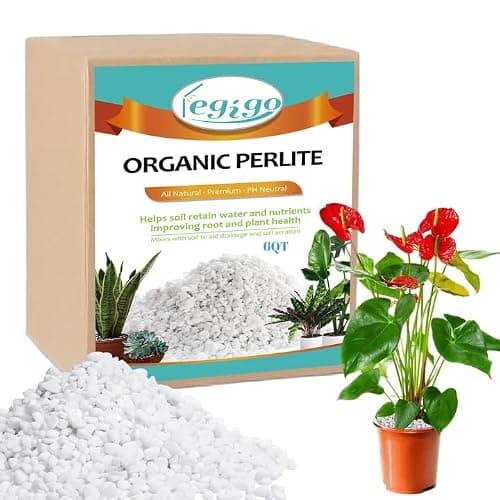 Legigo Coarse Perlite, 6 quartsThe amendment you add for air, in the size that happens to match a standard bag of potting mix almost exactly. | Opening up a bagged potting mix that holds water longer than you want | |
| 2 | 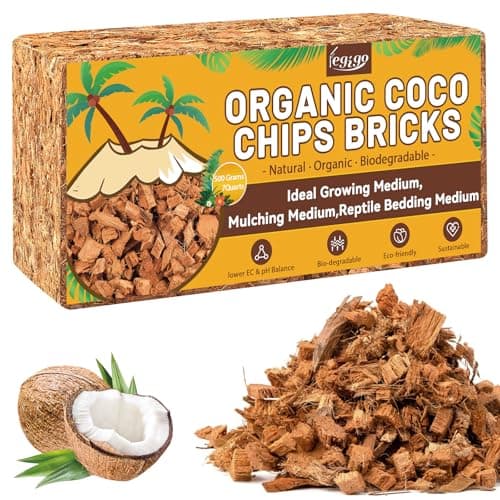 Legigo Coco Coir Chips, 1.1 lb brickThe chunky one, and the only amendment here that adds structure and moisture at the same time — which is exactly what chunky-rooted plants want. | Chunk and moisture together, for aroids and orchids rather than for a standard mix | $7.99 at Amazon $8.99 · 11% off |
| 3 | 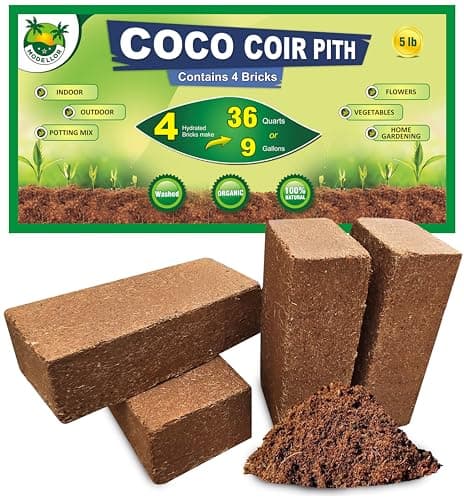 MODELLOR Coco Coir Bricks, 4 pack, 5 lb yielding 36 quartsPublishes an expansion yield in quarts, which turns a compressed brick from a guess into a computable quantity of medium. | Replacing peat in a mix, or bulking out medium cheaply by volume | |
| 4 | 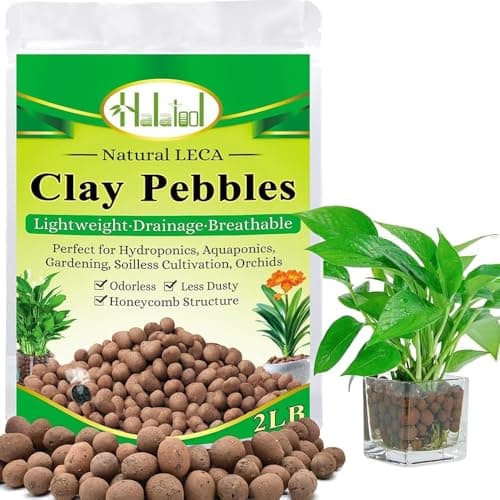 Halatool LECA Clay Pebbles, 2 lb, 4 to 16 mmThe right amount to find out whether you want to do this at all, and the right amount for propagation, which is where leca is least controversial. | Rooting cuttings, or trying semi-hydro on exactly one plant |
Links to Amazon are affiliate links. Prices and availability are Amazon's and change without notice.
How we ranked these
On which problem each one solves, then on what the listing publishes, then on whether the quantity maps onto something real. Coarse perlite leads because the wet pot is the common problem, because the listing states a coarse grade rather than leaving it open, and because six quarts amends exactly one standard bag of mix. Coir chips are second and are the most interesting product here — chunk and moisture at once, which is what aroids and orchids want — held off the top because the listing publishes an expansion ratio without a volume, so you cannot work out what you are getting. The coir bricks are third and publish the best figures in the set, including a proper 36-quart yield, but they solve the less common problem: most houseplant owners are keeping pots too wet rather than too dry. The clay pebbles are last and are here in their amendment role: the most complete drainage fix available, permanent, reusable and the only one that does not decompose.
What we deliberately do not recommend
Adding coco coir to a pot that already stays wet, which is the commonest way this category makes things worse. Buying perlite of unstated grade and hoping it is coarse. Putting a layer of any of these in the bottom of a pot as drainage — that raises the wet zone rather than removing it, which is the argument on the drainage guide and applies to perlite exactly as it applies to gravel. Amending a mix without knowing how long your pots currently take to dry. And reading a water retention figure on a perlite bag as though it were the reason to buy perlite.
Every pick, in full
We have not handled any of these. What follows is what each listing publishes, what that means once you put a watered pot on it, and who should buy something else.
1. Opening up a bagged potting mix that holds water longer than you want
Legigo Coarse Perlite, 6 quarts
The amendment you add for air, in the size that happens to match a standard bag of potting mix almost exactly.
#ad · Price as of September 27, 2026. How we are funded
- What the listing publishes
- Published 6 quarts of coarse, evenly sized horticultural perlite; stated pH neutral expanded volcanic glass; stated to hold up to 4 times its weight in moisture; heavy-duty resealable pouch; stated for potting mixes, succulent top dressing and indoor plants
- Against a 10-inch pot
- No weight rating is published for this product, so there is nothing to check. That counts against it here rather than being treated as neutral.
Six quarts is a better-chosen quantity than it looks. A standard cubic-foot bag of potting mix is about 25.7 dry quarts, and the common one-part-perlite-to-four-parts-mix ratio needs roughly 6.4 quarts for that bag. One pouch amends one bag, which is a tidier answer than this category usually gives.
Coarse is the grade you want and the listing says so. Fine perlite packs into the spaces it was supposed to open up; coarse particles hold their structure and keep air channels through the mix. Where a listing does not state a grade, assume it is the finer one.
Note the honesty problem in the listing's own claim: it states the perlite holds up to four times its weight in moisture. That is true — perlite has surface pores — and it is also the opposite of the reason people buy it. What perlite really contributes is air-filled space between particles, and no listing in this category publishes that figure.
What is good
- States a coarse grade rather than leaving it unspecified
- Six quarts amends one standard cubic-foot bag of mix at 1:4
- Resealable pouch, which matters for something used a scoop at a time
What is not
- Publishes water retention but not air-filled porosity, the property you want
- Perlite dust is unpleasant; the bag benefits from a splash of water first
- Light enough that it floats to the surface of a pot over time
Skip it if your problem is that pots dry out too fast. Perlite accelerates that, and the coco products here are the amendment for the opposite problem.
2. Chunk and moisture together, for aroids and orchids rather than for a standard mix
Legigo Coco Coir Chips, 1.1 lb brick
The chunky one, and the only amendment here that adds structure and moisture at the same time — which is exactly what chunky-rooted plants want.
- What the listing publishes
- Published 1.1 lb compressed brick of coconut husk chips, stated to expand 5 to 7 times its original size on soaking; stated to absorb 4 to 6 times its weight in water and release it slowly; stated low EC and high cation exchange capacity, screened, desalted and rinsed; stated for soil amendment, orchid and hydroponic substrate
- Against a 10-inch pot
- No weight rating is published for this product, so there is nothing to check. That counts against it here rather than being treated as neutral.
Chips are a different product from coir fiber even though both come from a coconut. Fiber is fine and behaves like peat; chips are pieces, and pieces create air gaps while still holding water inside themselves. That combination is why they turn up in aroid and orchid mixes rather than in general potting soil.
The 5 to 7 times expansion is published but the starting volume is not, so unlike the coir bricks here you cannot compute how much medium you end up with. That is a real gap on a compressed product sold by weight.
High cation exchange capacity is a genuine, specific claim — it means the material holds onto nutrient ions rather than letting them flush straight through, which matters if you are feeding a plant in a chunky mix. It is also unverifiable from the listing, since no figure is given.
What is good
- Adds structure and water retention at once, unlike perlite or fiber
- States desalting and rinsing, plus a low EC
- Chunk size suits aroids and orchids, where fine media suffocate roots
What is not
- Publishes an expansion ratio but not a starting or finished volume
- The CEC claim is stated without a number to check
- Breaks down faster than bark or perlite, so it is a recurring purchase
Skip it if you want to amend an ordinary potting mix. Chips are chunky enough to change the character of the medium; perlite opens it up without redesigning it.
3. Replacing peat in a mix, or bulking out medium cheaply by volume
MODELLOR Coco Coir Bricks, 4 pack, 5 lb yielding 36 quarts
Publishes an expansion yield in quarts, which turns a compressed brick from a guess into a computable quantity of medium.
#ad · Price as of September 27, 2026. How we are funded
- What the listing publishes
- Published 4 compressed bricks totaling 5 lb, stated to expand into up to 9 gallons (36 quarts) of medium; stated triple-washed, low-EC and pH-balanced; stated for seed starting, potting mixes, containers and hydroponics
- Against a 10-inch pot
- No weight rating is published for this product, so there is nothing to check. That counts against it here rather than being treated as neutral.
Thirty-six quarts from five pounds is the figure that makes this buyable. Compressed coir is sold by weight and used by volume, and without a published yield you have no idea whether a brick fills a pot or a wheelbarrow. This one tells you: about 7.2 dry quarts per pound, or roughly 24 six-inch pots' worth from the pack.
Triple-washed and low-EC are the claims that matter on coir specifically. Coconut husk carries salts from its processing, and unwashed coir can deliver them straight to the roots. A listing volunteering that it has been washed and stating a low electrical conductivity is addressing the one real risk of the material.
It is a water-holding amendment, not an aerating one. That is the opposite of perlite, and it is why buying either without knowing which problem you have is how people make a wet pot wetter.
What is good
- Publishes its expansion yield in quarts, alone in this set
- States triple-washed and low-EC, which addresses coir's real risk
- pH-balanced stated, so it is not shifting the mix under the plant
What is not
- Holds water — the wrong amendment if pots already stay wet
- Compressed bricks need soaking and a large container before use
- Nine gallons is far more medium than one houseplant will ever need
Skip it if your pots already take a week to dry out. This is a water-retention product and it will lengthen that, not shorten it.
4. Rooting cuttings, or trying semi-hydro on exactly one plant
Halatool LECA Clay Pebbles, 2 lb, 4 to 16 mm
The right amount to find out whether you want to do this at all, and the right amount for propagation, which is where leca is least controversial.
#ad · Price as of September 27, 2026. How we are funded
- What the listing publishes
- Published 2 lb of expanded clay at 4 to 16 mm; stated inert, pH-neutral, porous and lightweight; listing states it is baked at high temperature with less chalking in water and is reusable after cleaning
- Against a 10-inch pot
- No weight rating is published for this product, so there is nothing to check. That counts against it here rather than being treated as neutral.
Propagation is leca's strongest case. A cutting sitting in pebbles with its base just in water gets air around the new roots in a way a glass of water does not, and roots formed that way transition to a pot far better than water roots do.
Two pounds is roughly one medium pot's worth, or a propagation tray's worth several times over. For finding out whether the whole approach suits you, that is exactly the right quantity to risk.
"Less chalking in water" is the listing's way of addressing the dust problem. Treat it the way you would any comparative claim with nothing to compare against: rinse the pebbles thoroughly before the first use, which every listing here also tells you to do.
What is good
- Small enough to try the method without committing
- Reusable after cleaning, so the cost is once rather than ongoing
- Ideal quantity for rooting cuttings, leca's least disputed use
What is not
- Publishes a 4 to 16 mm range and no distribution within it
- Barely fills one medium pot, so it is not a conversion quantity
- Listing suggests use as a pot drainage layer, which this site argues against
Skip it if you have already decided to move a collection across. You will be reordering immediately, and the bulk bag exists for that.
Questions people actually ask
Should I add perlite or coco coir to my potting mix?
How much perlite should I add to potting soil?
What is the difference between coco coir and coco chips?
Does perlite improve drainage?
How much medium does a coco coir brick make?
Is coco coir safe for houseplants?
What is the best amendment for aroids like monstera?
Sources
- Cornell University, Greenhouse Management: bulk density of greenhouse media components
- Biology Insights: how much a cubic foot of potting soil weighs, dry and saturated
- Cornell University, Greenhouse Management: bulk density of greenhouse media components
- Clemson HGIC: Indoor Plants — cleaning, fertilizing, containers and light requirements
- Michigan State University Extension: Smart Gardening — growing houseplants indoors
Product specifications are quoted from each seller's own listing and are the seller's claim, not a measurement of ours.