Planters
The Best Orchid Potting Mix and Bark
An orchid is not a houseplant with fussy taste. It is an epiphyte, and the medium is the entire argument. Here is how to buy the right one, and enough of it.
By Scooter M., enthusiast · Published
The short answer
Buy a coarse bark blend, not potting soil — orchids are epiphytes whose roots evolved on tree bark in moving air, and Clemson's own guidance is that they need a loose, well-drained medium rather than soil. Choose between bark and moss on how you water: bark for generous waterers, moss for people whose plants go dry. Buy roughly 1.5 dry quarts per 6-inch pot, which makes an 8-quart bag about five repottings. And read the cubic inches rather than the word quart, because one bag in this roundup labeled 4 quarts is 231 cubic inches, which is 4 liquid quarts and about 3.4 dry ones.
Disclosure Pot & Prop earns a commission when you buy through the Amazon links on this page, at no extra cost to you. It does not change which products get recommended or what we say about them, and we have not been given any of them. How this site is funded.
More orchids are killed by what they are potted in than by anything else that happens to them. Not light, not water, not neglect — medium. Somebody repots a supermarket phalaenopsis into houseplant compost because that is what you do with a plant, and several months later the roots are brown and hollow and nobody can say quite when it happened.
The reason is that an orchid is not a houseplant with particular taste. It is a different kind of plant altogether, and once you know which kind, the whole category stops being mysterious and becomes a straightforward buying decision with about three variables in it.
Why bark and not soil
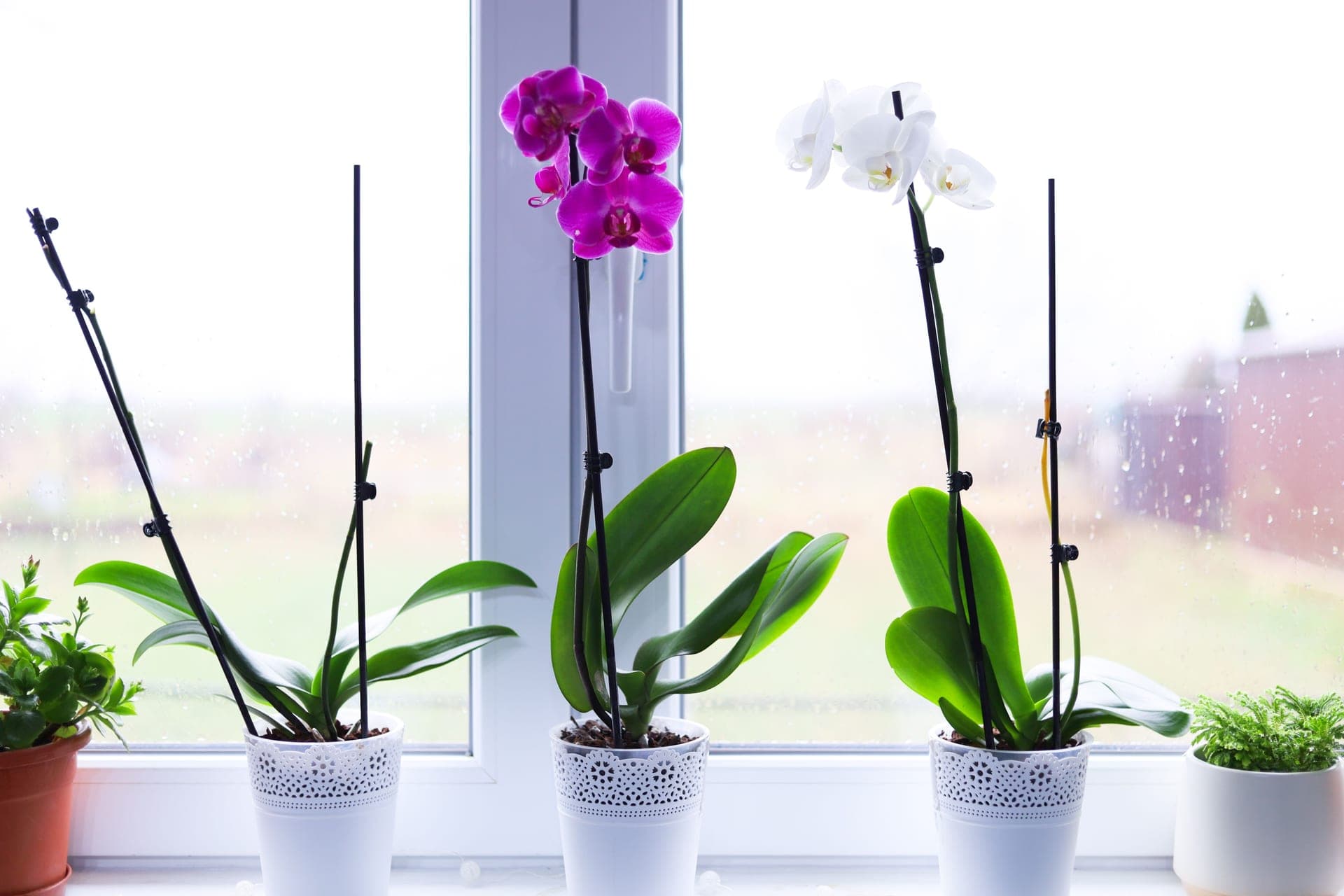
The orchids sold as houseplants — phalaenopsis, cattleya, dendrobium, oncidium — are epiphytes. In the wild they grow on trees rather than in the ground, their roots clinging to bark in open air, wetted by rain and dried by wind within hours. Those roots are built to have air around them continuously, not between waterings.
Clemson's orchid guidance is direct about the consequence: these plants need a loose, freely draining medium rather than soil. Potting mix does the exact opposite — it holds water in the pore space those roots need for oxygen, and it stays that way for days. The plant does not drown quickly; it suffocates slowly, which is why nobody connects the repotting to the death.
How much you actually need
This is the question everyone has at the shelf and almost nobody answers. It is arithmetic, and this site already does the first half of it for pots.
pot volume in cubic inches / 67.2 = dry quarts
4 in pot: 0.44 qt. 5 in: 0.86 qt. 6 in: 1.49 qt. 7 in: 2.36 qt. 8 in: 3.53 qt.
A dry quart is 67.2 cubic inches, which is the unit potting media is conventionally sold in. These are full-fill figures and therefore an upper bound — the root ball occupies part of the pot, so a real repot uses less.
Now the useful part. One of the products below publishes its own answer to the same question: Miracle-Gro states that each 8-quart bag fills five 6-inch containers. Run the arithmetic above and 8 quarts divided by 1.49 gives 5.4 pots. A manufacturer's figure and this site's model arriving at the same number by different routes is about as much confirmation as an estimate of this kind ever gets.
| Bag | Volume | 6 in pots filled |
|---|---|---|
| Sphagnum moss | 190 cu in | About 1.9 |
| White fir bark, 1/4 in | 231 cu in (4 liquid qt) | About 2.3 |
| Orchid bark | 4 dry qt (269 cu in) | About 2.7 |
| Phalaenopsis mix | 8 dry qt (538 cu in) | About 5.4 |
| Coarse blend, 2 pack | 16 dry qt (1,075 cu in) | About 10.8 |
The quart trap
You will have noticed the second row. Potting media is sold by volume, and in the United States there are two quarts: the dry quart at 67.2 cubic inches and the liquid quart at 57.75. Media conventionally uses the dry one, which is about 16 percent larger.
One listing here offers "8 Dry Quarts (8.8L) and 4 Dry Quarts (4.4L)" — and that checks out, because 4 dry quarts is 268.8 cubic inches, which is 4.4 liters. Another says "4 Quarts" in its title and 231 cubic inches in its pack attributes. Two hundred and thirty-one cubic inches is exactly 4 liquid quarts, and about 3.4 dry ones. Same number on the front of the bag, roughly 14 percent less bark inside it.
Bark or moss? It depends on you, not the orchid
This is the decision that matters most and the one framed backwards almost everywhere. Bark and sphagnum moss both grow orchids perfectly well. They hold water completely differently, and the right one is the one that matches how you actually behave rather than how you intend to.
| Coarse bark | Sphagnum moss | |
|---|---|---|
| Water held | Little; drains within minutes | A great deal; stays damp for days |
| Air around roots | Excellent, the whole point | Good when loose, poor when packed |
| Suits the grower who | Waters often and generously | Forgets, or lives somewhere dry |
| Fails when | The home is dry and you travel | You water on a bark schedule |
| Breaks down in | One to two years | Sooner, and it compacts as it goes |
| Beginner risk | Underwatering, which is recoverable | Overwatering, which often is not |
Read the last row twice. An orchid that dried out too often looks bad and usually recovers. An orchid whose roots rotted in wet moss is generally finished by the time the leaves tell you. If you are choosing blind, bark is the safer error.
And if you switch between them, switch your watering the same day. A plant moved from bark into moss and watered on its old schedule is being watered several times too often, and that single mismatch accounts for a good share of orchids lost after an otherwise competent repot.
Grade: the specification nearly nobody prints
Bark comes in grades — roughly fine, medium and coarse — and the grade decides what it is fit for. Fine particles pack closer, hold more water and suit small pots and finer-rooted plants. Coarse nuggets leave big air gaps, drain hardest and suit large cattleyas in large pots. Get it wrong and a perfectly good bag of bark is the wrong product.
Exactly one listing in this roundup publishes a figure: 1/4 inch, a fine-to-medium grade. The others say "specifically sized and graded" or simply "coarse", which are adjectives. If your orchid is in a 4 or 5-inch pot you want the finer end; at 7 or 8 inches you want the coarse one, and you will mostly be buying it on the word.
Everything here is a consumable
Bark is organic matter and it decomposes. As it does, the particles get smaller, the air gaps close, and the medium starts behaving like the soil you were careful not to use. This is the actual reason orchids need repotting — not because the plant outgrew the pot, which it mostly has not, but because the medium quietly stopped being what you bought.
One listing here publishes the interval on itself: repot at least every 12 to 18 months. That is a product telling you to replace it more often than you would have, which is unusual and correct. Moss goes sooner. When you can crush a piece of bark between finger and thumb, it is done.
Quick picks
Ranked, with the published figure each pick turns on. Tap a row for the full reasoning further down this page.
| # | Product | Best for | Price |
|---|---|---|---|
| 1 | 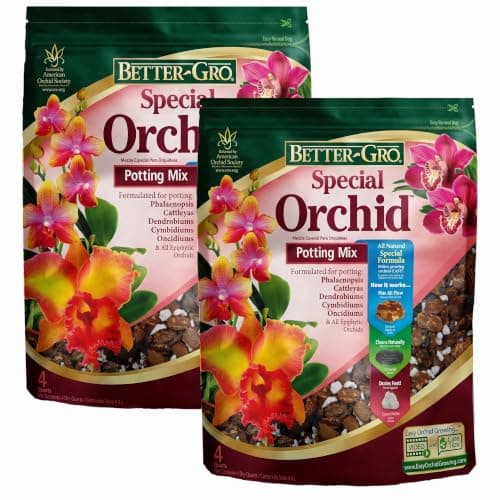 Better-Gro Special Orchid Mix, bark, charcoal and sponge rockThe single most important thing in this list, because the commonest way to kill an orchid is to leave it in something that behaves like soil. | The purchase that matters more than the pot | |
| 2 | 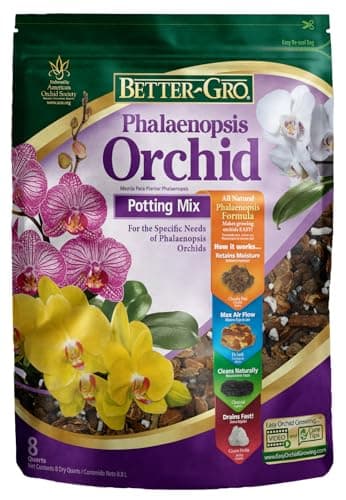 Better-Gro Phalaenopsis Potting Mix, 8 quartsThe only mix here blended for one genus, and that genus is the one almost everybody owns. The peat in it is a deliberate choice, not a corner cut. | The moth orchid from the supermarket, which is most orchids in most homes | |
| 3 | 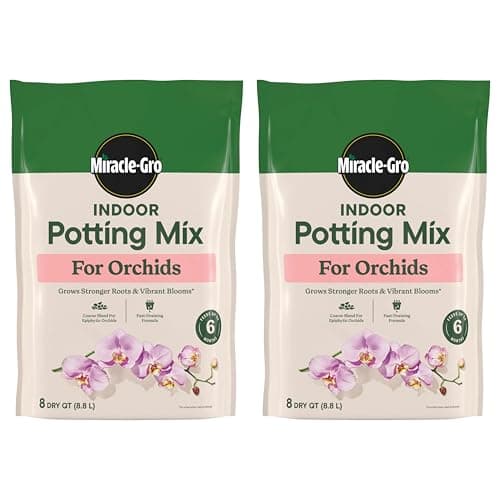 Miracle-Gro Orchid Potting Mix, coarse blend, 8 quarts, 2 packThe only listing in this category that converts its own volume into pots filled — and the figure it gives matches this site's arithmetic almost exactly. | Repotting several orchids at once, from a listing that says how far it goes | |
| 4 | 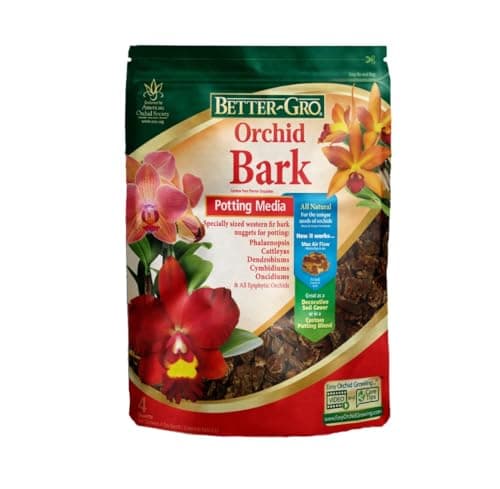 Better-Gro Orchid Bark, western fir, 4 dry quartsPublishes its volume in dry quarts and states the liters to prove it, which sounds like a small thing until you see what the rest of this category does with the word quart. | Topping up a pot, or blending a mix you control yourself | |
| 5 | 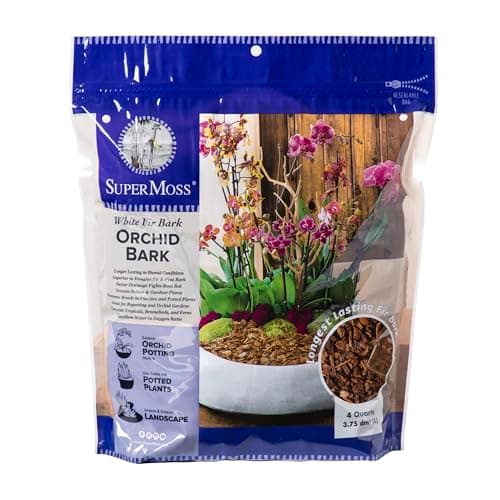 SuperMoss Orchid Potting Bark, white fir, 1/4 in gradeThe only listing here that publishes a particle grade, which is the specification that decides whether the bark fits your pot — undercut by a bag volume that does not mean what the title implies. | Smaller orchids and anyone who wants to know the particle size before buying | |
| 6 | 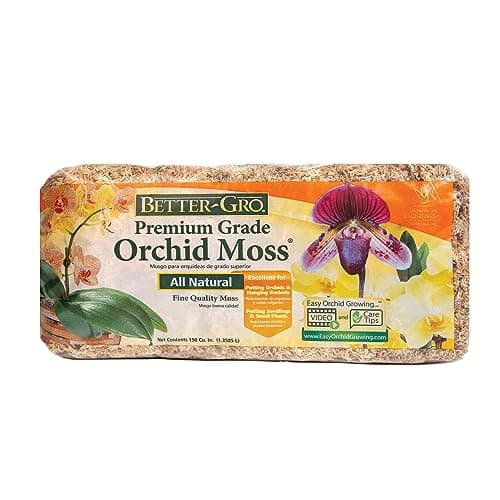 Better-Gro Premium Grade Sphagnum Moss, 190 cubic inchesThe medium that fixes the opposite problem from bark, and the one most likely to kill an orchid if you buy it without changing how you water. | Orchids in a dry home, and the grower who forgets to water |
Links to Amazon are affiliate links. Prices and availability are Amazon's and change without notice.
How we ranked these
On what the listing publishes first, then on how much medium you get for it, then on how forgiving the blend is for a home grower. The Better-Gro Special Orchid Mix leads because it names its actual components — fir bark, hardwood charcoal, sponge rock, coarse perlite — instead of describing itself as premium, and because a charcoal-and-bark blend with no peat is the safest default across the epiphytic genera. The Phalaenopsis mix is second and is the better buy for the specific plant most people own, with the honest caveat that its chunk peat holds water longer than bark alone. The Miracle-Gro two-pack is third for publishing its own yield, which nothing else in this category does, and is marked down only because sixteen quarts is absurd for one orchid. The straight orchid bark is fourth: a component rather than a finished mix, and the one listing that states dry quarts and proves it in liters. The white fir bark is fifth on the strength of publishing a real 1/4 inch grade, held there by a bag volume that does not mean what the title implies. The sphagnum moss is last, not because it is worse but because it is the one that punishes a buyer who does not change anything else.
| You | Buy | Why |
|---|---|---|
| Own one supermarket phalaenopsis | Phalaenopsis mix, 8 qt | Blended for that plant; about five repots |
| Own several orchids of different kinds | Special orchid mix | No peat, names its components, suits most epiphytes |
| Repotting a shelf of orchids | Coarse blend, 2 pack | Roughly eleven 6-inch pots, and it publishes its yield |
| Topping up a settled pot | Orchid bark, 4 dry qt | Resealable, a component rather than a mix |
| Small pots, or fine-rooted plants | White fir bark, 1/4 in | The only published particle grade here |
| Dry home, or you forget to water | Sphagnum moss | Holds water for days, but change your schedule |
| You already overwater | Any coarse bark | Bark forgives the way you water; moss does not |
Repotting without undoing the point
- Soak the medium first. Dry bark is water-repellent on first contact and will shed the first few waterings rather than absorb them. An hour in water and a good drain fixes it.
- Take the old medium off the roots. Not some of it. Broken-down bark left against live roots is the thing you are repotting to get rid of.
- Cut away roots that are brown, hollow or soft. Healthy orchid roots are firm and plump; dead ones are papery and collapse under a fingernail.
- Go back into the same size pot, or barely larger. Orchids resent a big pot more than most houseplants, because unoccupied bark just breaks down. The pot page has the sizing.
- Work the medium in around the roots, tapping the pot rather than pressing down. Packing it kills the air gaps that were the entire reason for the purchase.
- Wait a few days before watering heavily, and expect cut roots to want that time to seal.
- Note the date. The next repot is in 12 to 18 months and you will not remember otherwise.
What we deliberately do not recommend
Standard potting mix or houseplant compost for an epiphytic orchid, which is the single most common way these plants are lost. Reusing old bark, which has already broken down into the problem. Leaving an orchid in the moss plug it came in for years because it is still alive — still alive is not the same as still working. Packing medium down hard around the roots. Buying by the word "quart" without reading the cubic inches. Switching from bark to moss while keeping your watering the same. And buying sixteen quarts for one plant, however good the value looks per quart, because bark does not improve in the bag.
Every pick, in full
We have not handled any of these. What follows is what each listing publishes, what that means once you put a watered pot on it, and who should buy something else.
1. The purchase that matters more than the pot
Better-Gro Special Orchid Mix, bark, charcoal and sponge rock
The single most important thing in this list, because the commonest way to kill an orchid is to leave it in something that behaves like soil.
#ad · Price as of September 23, 2026. How we are funded
- What the listing publishes
- Published blend of western fir bark, hardwood charcoal and sponge rock with coarse perlite; stated for epiphytic orchids including Phalaenopsis, Cattleya, Dendrobium, Paphiopedilum and Oncidium
- Against a 10-inch pot
- No weight rating is published for this product, so there is nothing to check. That counts against it here rather than being treated as neutral.
Epiphytic orchids grow on trees. Their roots evolved clinging to bark in moving air, not buried in soil, and standard potting mix suffocates them — it holds water in the spaces those roots need for oxygen. A coarse bark blend recreates the airy, fast-draining conditions the plant is built for.
The listing publishes the actual components rather than describing the mix as premium and stopping there: fir bark for structure, charcoal to keep the mix sweet, sponge rock and coarse perlite for air and a little water retention. Being able to see what is in the bag is unusual in this category.
This is also the consumable in an orchid setup. Bark decomposes over one to two years into fine particles that hold water and exclude air, and repotting into fresh medium on that cycle is the maintenance an orchid actually needs.
What is good
- Publishes its actual components, not just a grade
- Named for the epiphytic genera it suits
- The correct answer to the commonest orchid mistake
What is not
- A consumable — you will buy it again in a year or two
- Coarse bark is the wrong medium for terrestrial orchids such as some Paphiopedilum hybrids grown finer
- Bag sizes in this category are small for the price
Skip it if your orchid is a terrestrial type grown in a finer medium. Check what the plant actually is before repotting it into coarse bark.
2. The moth orchid from the supermarket, which is most orchids in most homes
Better-Gro Phalaenopsis Potting Mix, 8 quarts
The only mix here blended for one genus, and that genus is the one almost everybody owns. The peat in it is a deliberate choice, not a corner cut.
#ad · Price as of September 23, 2026. How we are funded
- What the listing publishes
- Published 8 quarts; stated blend of Canadian chunk peat with western fir bark, hardwood charcoal and coarse perlite; listing states it is formulated for Phalaenopsis specifically and that it should be used to repot at least every 12 to 18 months
- Against a 10-inch pot
- No weight rating is published for this product, so there is nothing to check. That counts against it here rather than being treated as neutral.
Phalaenopsis want more moisture than a cattleya or a dendrobium does, and this mix is built around that: chunk peat holds water, fir bark and coarse perlite keep air moving through it. That is a different brief from a straight bark blend and the listing is upfront that it is aiming at one plant.
The peat is also the reason to think before buying. It holds water for longer than bark alone, so in a plastic pot in a cool room with a heavy-handed waterer, this is the mix in this set most likely to stay wet. Matched to someone who waters cautiously, it is the best of them.
The 12 to 18 month repotting interval is published on the listing itself, which is unusually honest for a product that makes more money the longer you leave it in the pot. Bark and peat both break down; that interval is the real maintenance cycle of an orchid.
What is good
- Blended for Phalaenopsis rather than for orchids in general
- Publishes its full component list, not just a grade
- States its own repotting interval on the listing
What is not
- Peat holds water longer than straight bark, so it punishes overwatering
- Wrong mix for cattleyas, dendrobiums and other drier-growing genera
- The listing describes added fertilizer without publishing an analysis
Skip it if you water generously or your orchid sits in a cool room. A straight bark blend dries faster and is far more forgiving of the way you already water.
3. Repotting several orchids at once, from a listing that says how far it goes
Miracle-Gro Orchid Potting Mix, coarse blend, 8 quarts, 2 pack
The only listing in this category that converts its own volume into pots filled — and the figure it gives matches this site's arithmetic almost exactly.
#ad · Price as of September 23, 2026. How we are funded
- What the listing publishes
- Published two 8-quart bags of a coarse blend; stated for indoor epiphytic orchids including Phalaenopsis, Cattleya, Epidendrum and Dendrobium; listing states each 8-quart bag fills five 6-inch containers
- Against a 10-inch pot
- No weight rating is published for this product, so there is nothing to check. That counts against it here rather than being treated as neutral.
"Each 8-qt bag fills five 6-inch containers" is the single most useful sentence anywhere in this category, because it is the question every buyer actually has. This site computes a 6-inch pot at about 1.5 dry quarts, which puts an 8-quart bag at 5.4 pots. The manufacturer says five. Two independent routes to the same number is about as much confirmation as this sort of estimate ever gets.
Coarse is the right default for epiphytes and the listing names the genera it suits rather than saying "orchids". Coarse blends drain fast and re-wet easily, which is what roots evolved on bark in moving air are built for.
Two bags is more medium than one orchid will ever need, which makes this the wrong purchase for a single plant and the obviously right one for a shelf of them or for a household that repots on a cycle.
What is good
- Publishes how many pots a bag fills, alone in this category
- Coarse blend, which is the correct default for epiphytic orchids
- Two 8-quart bags, so a batch of repotting is one purchase
What is not
- Sixteen quarts is far too much medium for one orchid
- Publishes no particle grade, only the word coarse
- Component list is less specific than the smaller brands here
Skip it if you own one orchid. You would be buying roughly eleven repottings of a 6-inch pot and bark does not improve in the bag.
4. Topping up a pot, or blending a mix you control yourself
Better-Gro Orchid Bark, western fir, 4 dry quarts
Publishes its volume in dry quarts and states the liters to prove it, which sounds like a small thing until you see what the rest of this category does with the word quart.
#ad · Price as of September 23, 2026. How we are funded
- What the listing publishes
- Published 4 dry quarts (stated as 4.4 L) with an 8 dry quart (8.8 L) option; grower's grade western fir bark, stated specifically sized and graded; resealable bag; listing states it suits orchids, bromeliads, ferns and tropicals and works as a base for a custom mix
- Against a 10-inch pot
- No weight rating is published for this product, so there is nothing to check. That counts against it here rather than being treated as neutral.
"4 Dry Quarts (4.4L)" is a statement you can check, and it checks out — 4 dry quarts is 268.8 cubic inches, which is 4.4 liters. Elsewhere in this set a bag labeled 4 quarts turns out to be 231 cubic inches, or 4 LIQUID quarts, which is about 14 percent less bark. Stating the unit and then proving it in liters is the behavior you want from a supplier of something sold by volume.
Straight bark rather than a blend is the flexible purchase. It tops up a pot that has settled, it stretches a bag of mix that has run short, and it is the base if you want to build your own blend with perlite or charcoal in whatever proportion your home actually needs.
Grower's grade and "specifically sized and graded" are claims without a number attached. The bark is graded; the listing does not tell you to what, which is the same gap almost every product in this category has.
What is good
- States dry quarts and confirms them in liters
- Resealable bag, which matters for something used a handful at a time
- Straight bark, so you control the blend
What is not
- Says it is graded without publishing the grade
- Bark alone holds less water than most home growers expect
- Four quarts is under three 6-inch pots, so it is a top-up size
Skip it if you want to open a bag and repot. This is a component, not a finished mix, and a ready blend saves you a decision you may not want to make.
5. Smaller orchids and anyone who wants to know the particle size before buying
SuperMoss Orchid Potting Bark, white fir, 1/4 in grade
The only listing here that publishes a particle grade, which is the specification that decides whether the bark fits your pot — undercut by a bag volume that does not mean what the title implies.
#ad · Price as of September 23, 2026. How we are funded
- What the listing publishes
- Published 1/4 in particle grade, 100% natural white fir bark, stated not heat treated or baked; listed as 4 quarts in the title with 231 cubic inches in the pack attributes; listing states the bark's pH suits orchids and gives roots simultaneous access to water and oxygen
- Against a 10-inch pot
- No weight rating is published for this product, so there is nothing to check. That counts against it here rather than being treated as neutral.
A quarter inch is a fine-to-medium grade. That is the right size for small pots, for young plants and for orchids with finer roots, and it holds more water than a coarse nugget because small particles pack more closely. Coarse grades suit big cattleyas and large pots. Nobody else in this set will tell you which they are selling.
Then the volume. The title says 4 quarts; the pack attributes say 231 cubic inches. A dry quart is 67.2 cubic inches, so 231 is about 3.4 dry quarts — but it is exactly 4 liquid quarts. Potting media is conventionally sold in dry quarts, and another listing in this set states dry quarts and proves it in liters. Read the cubic inches, not the title.
Not heat treated is a real distinction. Baked bark is drier and more water-repellent on first use; untreated bark wets more readily but is likelier to arrive with fungus gnats or fungal spores in it. Soak it before use either way.
What is good
- Publishes an actual particle grade, alone in this set
- Single-species white fir rather than an unspecified bark
- States that it is not heat treated, which changes how it wets
What is not
- "4 Quarts" in the title is 231 cu in, which is 4 liquid quarts not 4 dry ones
- Costs noticeably more per cubic inch than the grower-grade bark here
- A 1/4 in grade is too fine for large cattleyas in big pots
Skip it if you are repotting a large orchid into a 7 or 8-inch pot. At that size you want a coarse grade, and this one is deliberately not.
6. Orchids in a dry home, and the grower who forgets to water
Better-Gro Premium Grade Sphagnum Moss, 190 cubic inches
The medium that fixes the opposite problem from bark, and the one most likely to kill an orchid if you buy it without changing how you water.
#ad · Price as of September 23, 2026. How we are funded
- What the listing publishes
- Published 190 cubic inches; stated 100% natural, chemical-free, sustainably harvested sphagnum moss with stated superior water retention; listing names orchids, ferns, hanging basket liners, seedlings and terrarium use
- Against a 10-inch pot
- No weight rating is published for this product, so there is nothing to check. That counts against it here rather than being treated as neutral.
Moss holds far more water than bark, for far longer. In a dry apartment, on a sunny sill, or in the hands of someone who waters every other week rather than every few days, that is genuinely the right medium and bark is genuinely the wrong one.
It is also the fastest way to rot an orchid if nothing else changes. A plant moved from bark to moss and watered on the same schedule is being watered several times too often. The medium is a decision about your habits, not an upgrade.
Publishing the volume in cubic inches rather than in quarts is, in this category, a kindness — 190 cubic inches is 190 cubic inches, and there is no dry-versus-liquid ambiguity to untangle. It is a small bag: roughly two 6-inch pots' worth.
What is good
- Holds water far longer than bark, which suits dry homes
- States volume in cubic inches, with no quart ambiguity
- Also does the jobs bark cannot: basket liners, mounts, seedlings
What is not
- Rots roots quickly if you keep watering on a bark schedule
- Breaks down faster than bark, so the repot comes sooner
- Compacts when packed tightly, which removes the air roots need
Skip it if you water generously or already lose plants to overwatering. Moss will make that worse, and a coarse bark blend will make it better.
Questions people actually ask
What is the best potting mix for orchids?
Can I use regular potting soil for an orchid?
How much orchid mix do I need to repot?
Is orchid bark or sphagnum moss better?
How often should orchid bark be replaced?
What size orchid bark should I buy, fine or coarse?
Why does a 4-quart bag of bark say 231 cubic inches?
Sources
- Clemson HGIC: Orchids — types, potting media, watering and repotting
- Cornell University, Greenhouse Management: bulk density of greenhouse media components
- Michigan State University Extension: Smart Gardening — growing houseplants indoors
- Clemson HGIC: Indoor Plants — cleaning, fertilizing, containers and light requirements
Product specifications are quoted from each seller's own listing and are the seller's claim, not a measurement of ours.