Planters
The Best Planters for Orchids
An orchid is not a houseplant in a small pot. It is a plant that grows on trees, and the pot has to admit that.
By Scooter M., enthusiast · Published
The short answer
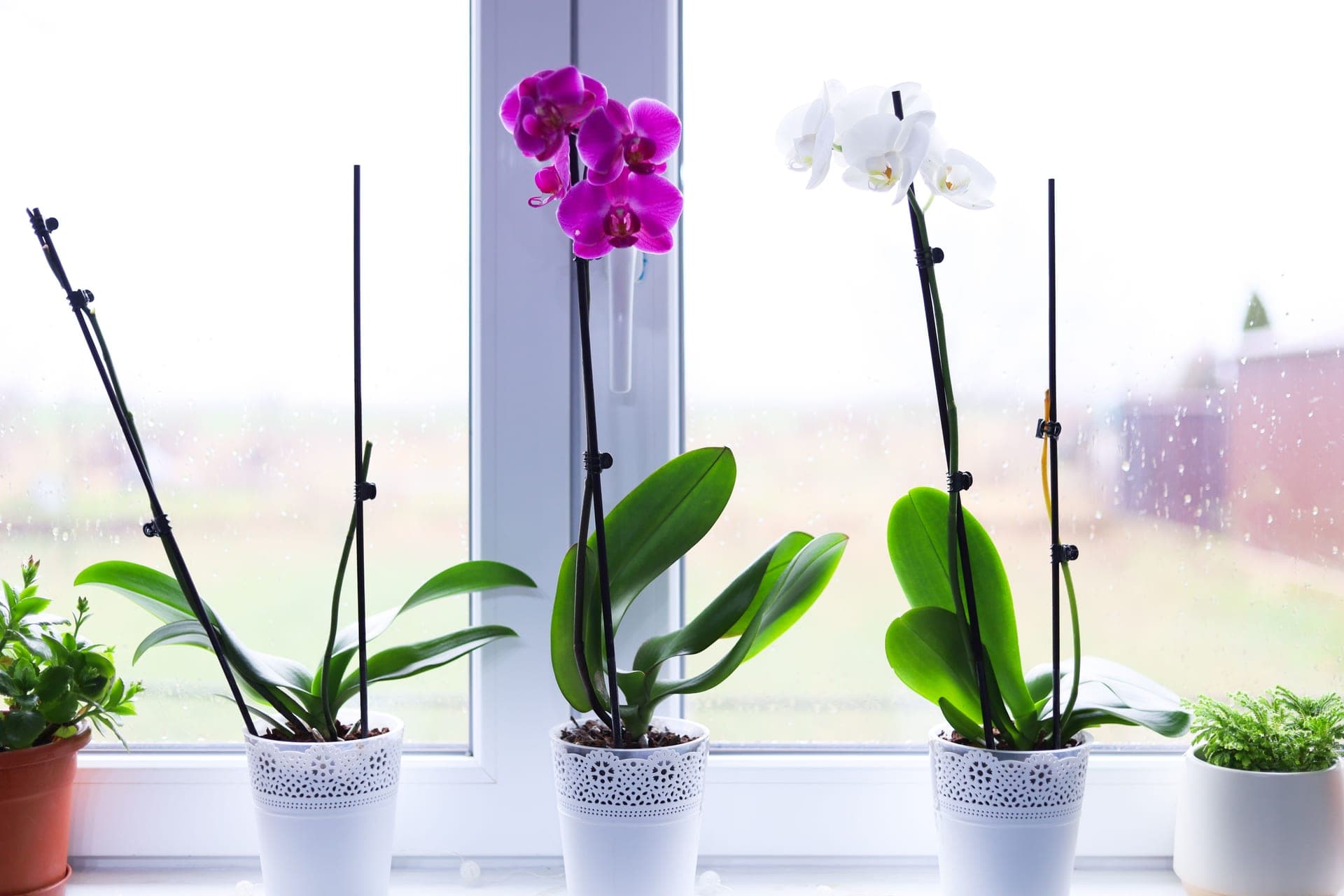
Buy a clear slotted plastic pot with holes in the sides as well as the bottom, in the smallest size the roots fit, and pot into coarse bark rather than potting mix. Clear matters for a practical reason: orchid roots are silvery-white when dry and green when wet, which is the most reliable watering signal in houseplant keeping and is invisible through ceramic.
Disclosure Pot & Prop earns a commission when you buy through the Amazon links on this page, at no extra cost to you. It does not change which products get recommended or what we say about them, and we have not been given any of them. How this site is funded.
Almost everything this site says about pots assumes a plant whose roots grow in soil. An orchid is the exception, and it is a big enough exception that the standard advice actively harms it. The orchids sold in supermarkets and garden centers are epiphytes: in the wild they grow clinging to the bark of trees, with their roots in moving air, catching water as it runs past. They are not in the ground and they were never adapted to being in it.
That single fact drives every recommendation on this page. The medium is bark, not potting mix — which bark, and how much of it, has a page of its own. The pot has holes in its sides, not just its base. And the best pots are transparent, because orchid roots are photosynthetic and their color tells you when to water in a way no other houseplant offers. Clemson's extension guidance on orchids covers the potting media and repotting cycle in more detail, and it is linked at the bottom of this page.
Why an orchid pot has holes in the side
Every other pot on this site has one job to do with water: let the excess leave. An orchid pot has two, because the roots need oxygen continuously rather than between waterings. Coarse bark provides the air spaces and the slots in the pot wall keep air moving through them, so the medium dries evenly all the way through instead of staying wet in the middle where you cannot see it.
This is the specification that separates a real orchid pot from an ordinary pot with an orchid on the packaging, and it is easy to check before buying: look for holes distributed around the sides, not only a drainage hole at the bottom. A pot with base drainage alone is a normal pot, and in bark it will hold a damp core.
The four things that decide an orchid pot
- Side ventilation, not just base drainage. The first filter, and the one that removes most of what is sold as an orchid pot.
- Transparency, if you are still learning the plant. Phalaenopsis roots are green when wet and silvery-white when dry. That is a direct, unambiguous read on whether the plant needs water, and it is the reason experienced growers keep orchids in clear plastic even when the plastic sits inside something prettier.
- A snug size. Orchids want their roots close together and they resent a large pot far more than most houseplants, because unrooted bark simply breaks down without anything using it. Step up one size, and only when the roots have genuinely filled the pot.
- Somewhere for the runoff to go. A slotted pot drains fast and completely by design, which means it produces runoff every time. A matched saucer, or a decorative outer pot you lift it out of, is part of the system rather than an accessory.
Quick picks
Ranked, with the published figure each pick turns on. Tap a row for the full reasoning further down this page.
| # | Product | Best for | Price |
|---|---|---|---|
| 1 | 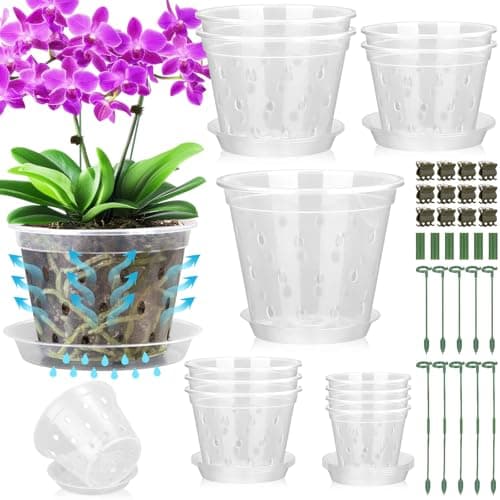 Tetutor Clear Slotted Orchid Pots, 3 to 7 in, 12 pack with stakes and clipsFive sizes in one box, which matches how orchids are actually repotted — a step at a time, every year or two, as the bark breaks down. | Covering every repot for years in one purchase | $17.99 at Amazon $18.99 · 5% off |
| 2 | 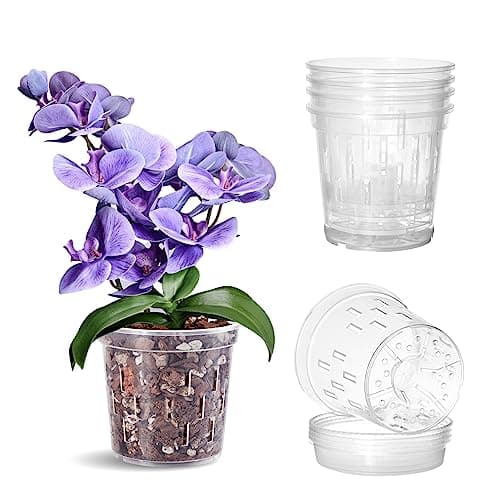 TRUEDAYS Clear Slotted Orchid Pots with Saucers, 5 in, 4 packFive inches is the size most supermarket orchids want next, and this is the version that arrives with saucers rather than assuming you own some. | The standard size, with somewhere for the water to go | |
| 3 | 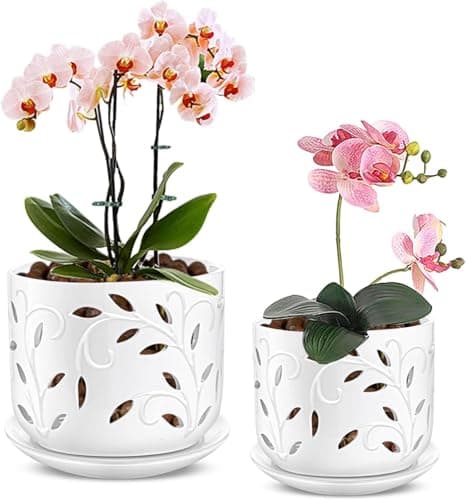 EFISPSS Ceramic Orchid Pots with drainage holes and tray, 5 and 6 inA ceramic orchid pot with real cutouts in the wall, which is the rare version of this product that is ventilated rather than merely orchid-shaped. | A pot you display that still lets the roots breathe | |
| 4 | 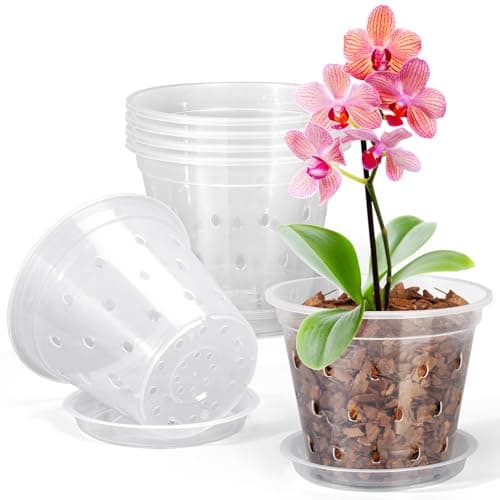 FUIJOL Clear Slotted Orchid Pots with Saucers, 5 in top diameter, 6 packThe same idea as the four pack with two more pots, and it publishes the top diameter rather than leaving you to infer it from a photograph. | A shelf of orchids on one system | |
| 5 | 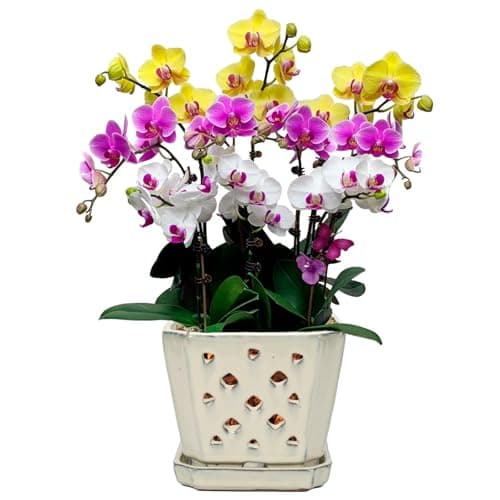 W&W Glazed Ceramic Orchid Pot with holes and saucer, 7 inThe size a mature multi-stem orchid actually needs, in a material that will not be blown over by its own flower spike. | A large, established orchid on display | |
| 6 | 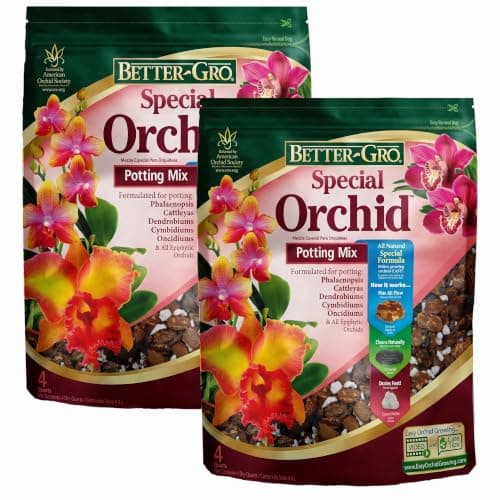 Better-Gro Special Orchid Mix, bark, charcoal and sponge rockThe single most important thing in this list, because the commonest way to kill an orchid is to leave it in something that behaves like soil. | The purchase that matters more than the pot |
Links to Amazon are affiliate links. Prices and availability are Amazon's and change without notice.
Why this page has no weight table
Every other roundup on this site checks a product against what a watered pot of that size actually weighs, using a saturated potting-mix density of 55 lb per cubic foot. That model does not describe an orchid, and reusing it here would be the kind of borrowed number this site exists to avoid.
Coarse bark is mostly air. It holds far less water than peat-based mix and it weighs considerably less both dry and wet — and we do not have a sourced density figure for orchid bark, so we are not going to publish one. What can be said honestly is that the potting-mix figure is a firm upper bound, and even that upper bound is trivial at orchid sizes.
saturated potting mix in a 5-inch pot = volume x 55 lb/ft^3
0.034 ft^3 x 55 = 1.8 lb — and bark weighs meaningfully less than that
Under two pounds even when calculated with a denser medium than an orchid ever sits in. Weight is simply not a constraint for this plant, which is why the shelf, hook and stand arithmetic that governs the rest of the site does not appear on this page.
The practical consequence is liberating: an orchid can go anywhere. It is light enough for the smallest window shelf, the flimsiest wall bracket and the least convincing tension pole tray. The constraint is light and airflow, not load.
The pot the orchid arrived in is usually the problem
A supermarket orchid typically comes in a thin clear grow pot dropped inside a decorative sleeve with no drainage hole. The grow pot is doing its job. The sleeve is where the plant dies, because water collects invisibly in the bottom of it and the roots sit in that reservoir until they rot.
You do not need to throw the sleeve away. Keep the orchid in a slotted grow pot, water it over a sink, let it drain completely, and only then set it back inside the decorative pot. That is exactly the cachepot method this site recommends for every no-drainage pot, and it matters more for an orchid than for anything else, because an orchid gives you almost no warning before the roots are gone. The full argument is here.
Sizing, and when to repot
Orchids are repotted on a different trigger from every other plant on this site. A pothos gets repotted when it outgrows its pot; an orchid gets repotted because the bark has broken down. Over one to two years coarse bark decomposes into fine particles that hold water and exclude air, and at that point the medium is working against the plant even though the pot still fits.
| Situation | Pot size | Why |
|---|---|---|
| A supermarket phalaenopsis, just bought | Leave it | It is usually correctly potted; repot when the bark breaks down |
| Roots filling the pot, bark gone fine and dark | One size up, or the same size with fresh bark | The medium is the trigger, not the pot |
| A young plant or a keiki | 3 to 4 in | Snug is what these roots want |
| An established single-stem plant | 5 in | The most common working size |
| A mature multi-stem plant, years old | 6 to 7 in | Only once the roots have genuinely filled a 5 in |
| Any orchid, if in doubt | The size it is in | Over-potting is worse here than almost anywhere |
That is the opposite of the rule for most houseplants, where the pot size follows the plant. The general pot size chart is here — treat orchids as the documented exception to it.
What we deliberately do not recommend
Standard potting mix, categorically. It is the commonest orchid mistake and the most fatal: it holds water in exactly the spaces the roots need for air. We also do not recommend decorative orchid pots with base drainage only and no side venting, which are the majority of what is sold under the name — they are ordinary pots and the bark inside them holds a wet core. And we do not recommend glass vessels or closed containers of any kind, which combine no drainage with no airflow and are the most reliable way to kill an orchid that arrived as a gift.
One more, specific to this site's usual advice: do not put an orchid in unglazed terracotta expecting the material argument that works for snake plants to apply. Clay wicks moisture out through the wall, which suits a plant in soil that rots easily — but orchid roots grip porous clay hard enough that repotting tears them, and the drying benefit is already handled by the bark and the slots.
One good thing if you have a cat
The ASPCA lists Phalaenopsis — the moth orchid, which is nearly everything sold in supermarkets — as non-toxic to cats. That is unusual company for an attractive apartment plant, given that pothos, philodendron, monstera and snake plants are all on the other side of that list. Check the specific species against the ASPCA database rather than assuming it covers every orchid, and the wider picture is here.
Every pick, in full
We have not handled any of these. What follows is what each listing publishes, what that means once you put a watered pot on it, and who should buy something else.
1. Covering every repot for years in one purchase
Tetutor Clear Slotted Orchid Pots, 3 to 7 in, 12 pack with stakes and clips
Five sizes in one box, which matches how orchids are actually repotted — a step at a time, every year or two, as the bark breaks down.
- What the listing publishes
- Published 5 sizes — 3, 4, 5, 6 and 7 in — 12 pots total; holes on the bottom and the sides; clear PP; stakes, connectors and orchid clips included
- Against a 10-inch pot
- No weight rating is published for this product, so there is nothing to check. That counts against it here rather than being treated as neutral.
An orchid does not get repotted because it outgrew the pot. It gets repotted because the bark has decomposed into something that holds water and excludes air, and that happens on roughly a one to two year cycle regardless of how big the plant is. A set spanning 3 to 7 inches means the right pot is already in the cupboard when that day arrives.
The holes are on the sides as well as the bottom, which is the specification that separates a real orchid pot from a plastic pot with a photograph of an orchid on the listing. Side venting is what gives the roots air along the whole depth of the pot rather than only at the base.
The included stakes and clips are not filler. A phalaenopsis in spike is top heavy and a flower stem left unsupported bends toward the light and stays bent.
What is good
- Five published sizes, so the next repot is already covered
- Holes on the sides and the bottom, not just the bottom
- Clear, so root color is readable as a watering cue
What is not
- Twelve pots is more than most people need at once
- No saucers included — runoff is your problem
- Thin clear plastic is not something you display on its own
Skip it if you own one orchid and want one pot. A four or six pack in a single size is the cheaper answer.
2. The standard size, with somewhere for the water to go
TRUEDAYS Clear Slotted Orchid Pots with Saucers, 5 in, 4 pack
Five inches is the size most supermarket orchids want next, and this is the version that arrives with saucers rather than assuming you own some.
#ad · Price as of October 21, 2026. How we are funded
- What the listing publishes
- Published 5 in; clear PP with holes for airflow and drainage; four pots with four matching saucers
- Against a 10-inch pot
- No weight rating is published for this product, so there is nothing to check. That counts against it here rather than being treated as neutral.
A slotted orchid pot drains fast and completely — that is the entire design intent — which means it produces runoff every single time you water it. A clear pot with no saucer on a wooden shelf is a problem you have moved rather than solved.
Clear walls do real work here beyond looking tidy. Phalaenopsis roots are photosynthetic, and their color is the most reliable watering signal in houseplant keeping: silvery-white means dry, green means wet. You cannot read that through ceramic.
Four pots is a realistic quantity. Most people with orchids have two or three, and the spare covers the one you are given at Christmas.
What is good
- Matched saucers included, sized to the pot
- 5 in is the size most orchids step up into
- Clear walls make root color readable
What is not
- One size only — no growth path in the box
- Plastic, and it looks like plastic
- No stakes or clips included
Skip it if you want the pot to be part of the display. Use this as the inner pot and drop it into something you like looking at.
3. A pot you display that still lets the roots breathe
EFISPSS Ceramic Orchid Pots with drainage holes and tray, 5 and 6 in
A ceramic orchid pot with real cutouts in the wall, which is the rare version of this product that is ventilated rather than merely orchid-shaped.
#ad · Price as of October 21, 2026. How we are funded
- What the listing publishes
- Published 5 in and 6 in; drainage holes plus leaf-shaped cutouts in the wall for ventilation; tray included; white glazed ceramic
- Against a 10-inch pot
- No weight rating is published for this product, so there is nothing to check. That counts against it here rather than being treated as neutral.
Most decorative ceramic orchid pots are ordinary pots with an orchid on the box. This one publishes cutouts in the wall as well as drainage holes, which is the functional feature — the medium is coarse bark and it needs air moving through it, not just a hole at the bottom.
The trade against a clear plastic pot is real and worth naming: you cannot see the roots. You lose the silvery-versus-green watering cue that makes orchids unusually easy to read, and you are back to judging by weight and by feel.
Two sizes in the set covers a plant and its eventual step up, and glazed ceramic gives the pot enough mass that a top-heavy orchid in spike does not tip.
What is good
- Ventilation cutouts in the wall, not just base drainage
- Two published sizes, with a tray
- Heavy enough that a flowering orchid will not tip
What is not
- Opaque, so you lose the root-color watering cue
- Ceramic cutouts collect dust and mineral deposits
- Heavier and more fragile than plastic
Skip it if you are still learning when to water an orchid. Grow in a clear pot first, then move it into something like this once you have the rhythm.
4. A shelf of orchids on one system
FUIJOL Clear Slotted Orchid Pots with Saucers, 5 in top diameter, 6 pack
The same idea as the four pack with two more pots, and it publishes the top diameter rather than leaving you to infer it from a photograph.
#ad · Price as of October 21, 2026. How we are funded
- What the listing publishes
- Published 5 in top diameter; drainage and ventilation holes distributed on the sides and the bottom; six pots with six saucers
- Against a 10-inch pot
- No weight rating is published for this product, so there is nothing to check. That counts against it here rather than being treated as neutral.
Publishing 5 inches as a top diameter is a small thing that matters, because orchid pots are sold by a nominal size that does not always match the rim. If you are matching a new pot to an existing one, a stated top diameter is the number you need.
Holes distributed around the sides as well as the base is the same correct arrangement as the other slotted pots here. It is what makes the medium dry evenly instead of staying wet in the middle.
Six matching pots and six matching saucers is the quantity that makes a windowsill of orchids look deliberate rather than accumulated.
What is good
- Published top diameter, not just a nominal size
- Six pots and six saucers, all matching
- Side and bottom venting
What is not
- Single size, like the four pack
- Six is more than most collections need
- Clear plastic yellows over years in strong light
Skip it if you have one or two orchids. The smaller pack is the same pot for less money.
5. A large, established orchid on display
W&W Glazed Ceramic Orchid Pot with holes and saucer, 7 in
The size a mature multi-stem orchid actually needs, in a material that will not be blown over by its own flower spike.
#ad · Price as of October 21, 2026. How we are funded
- What the listing publishes
- Published 7 in; glazed ceramic with drainage holes; saucer included
- Against a 10-inch pot
- No weight rating is published for this product, so there is nothing to check. That counts against it here rather than being treated as neutral.
Seven inches is a large orchid pot, and it is genuinely needed by a plant that has been growing for years and has filled a 5 or 6 inch pot with root. Buying it before the plant needs it is the standard over-potting mistake, and in bark it is worse than usual because unrooted medium breaks down without anything using it.
Glazed ceramic with drainage holes and a matched saucer is the right combination for a display pot. The glaze means the pot itself holds no water, so the drying rate is set by the bark and the holes rather than by the pot wall.
Like every opaque pot, it costs you the ability to read root color. For a mature plant whose rhythm you already know, that is a smaller loss than it is for a new one.
What is good
- A genuine 7 in size for a mature plant
- Drainage holes and a matched saucer
- Mass and a wide base for a top-heavy plant in spike
What is not
- Opaque — no root-color reading
- The listing publishes no cutouts, only base drainage
- Too large for a supermarket orchid
Skip it if your orchid is in a 4 or 5 inch pot. Going to 7 inches in one step surrounds the roots with bark they will not reach before it breaks down.
6. The purchase that matters more than the pot
Better-Gro Special Orchid Mix, bark, charcoal and sponge rock
The single most important thing in this list, because the commonest way to kill an orchid is to leave it in something that behaves like soil.
#ad · Price as of October 21, 2026. How we are funded
- What the listing publishes
- Published blend of western fir bark, hardwood charcoal and sponge rock with coarse perlite; stated for epiphytic orchids including Phalaenopsis, Cattleya, Dendrobium, Paphiopedilum and Oncidium
- Against a 10-inch pot
- No weight rating is published for this product, so there is nothing to check. That counts against it here rather than being treated as neutral.
Epiphytic orchids grow on trees. Their roots evolved clinging to bark in moving air, not buried in soil, and standard potting mix suffocates them — it holds water in the spaces those roots need for oxygen. A coarse bark blend recreates the airy, fast-draining conditions the plant is built for.
The listing publishes the actual components rather than describing the mix as premium and stopping there: fir bark for structure, charcoal to keep the mix sweet, sponge rock and coarse perlite for air and a little water retention. Being able to see what is in the bag is unusual in this category.
This is also the consumable in an orchid setup. Bark decomposes over one to two years into fine particles that hold water and exclude air, and repotting into fresh medium on that cycle is the maintenance an orchid actually needs.
What is good
- Publishes its actual components, not just a grade
- Named for the epiphytic genera it suits
- The correct answer to the commonest orchid mistake
What is not
- A consumable — you will buy it again in a year or two
- Coarse bark is the wrong medium for terrestrial orchids such as some Paphiopedilum hybrids grown finer
- Bag sizes in this category are small for the price
Skip it if your orchid is a terrestrial type grown in a finer medium. Check what the plant actually is before repotting it into coarse bark.
Questions people actually ask
What kind of pot is best for an orchid?
Do orchid pots need holes on the sides?
Can I plant an orchid in normal potting soil?
When should I repot an orchid?
Why are orchid pots clear?
Can I keep the pot my orchid came in?
What size pot does a phalaenopsis orchid need?
Sources
- Clemson HGIC: Orchids — types, potting media, watering and repotting
- Clemson HGIC: Indoor Plants — cleaning, fertilizing, containers and light requirements
- Clemson HGIC: Indoor Plants — watering
- University of Georgia Extension B1318: Growing Indoor Plants with Success
- ASPCA: toxic and non-toxic plants list
Product specifications are quoted from each seller's own listing and are the seller's claim, not a measurement of ours.