Hanging
The Best Window Plant Shelves
A windowsill is the best light in the apartment and usually four inches deep. These are the ways to make it deeper without a fixing.
By Scooter M., enthusiast · Published · Last updated

The short answer
A suction shelf adds about six inches of depth to a window for small pots — 4 and 5 inch, nothing heavier. If you want to put real plants in the window, use a spring tension rod across the reveal and hang them instead, because a tension rod between two solid surfaces carries far more than a suction cup on glass ever will.
Disclosure Pot & Prop earns a commission when you buy through the Amazon links on this page, at no extra cost to you. It does not change which products get recommended or what we say about them, and we have not been given any of them. How this site is funded.
The window is where the light is, and in most apartments the window is also the narrowest usable surface in the building. A typical sill runs four to six inches deep, which fits a 4-inch pot and a saucer and very little else. Everything on this page is an attempt to solve that, and the two approaches — stick something to the glass, or press something across the reveal — have completely different load characteristics.
Be clear-eyed about suction. It is a genuine mechanism and it works, and it is also the least predictable mounting method on this site, because its grip varies with temperature and with how clean the glass is — and a window is the one surface in the apartment that swings 20 degrees between night and afternoon. Small pots only, and check it weekly. The numbers behind that caution are in the pot weight guide.
Quick picks
Ranked, with the published figure each pick turns on. Tap a row for the full reasoning further down this page.
| # | Product | Best for | Price |
|---|---|---|---|
| 1 | 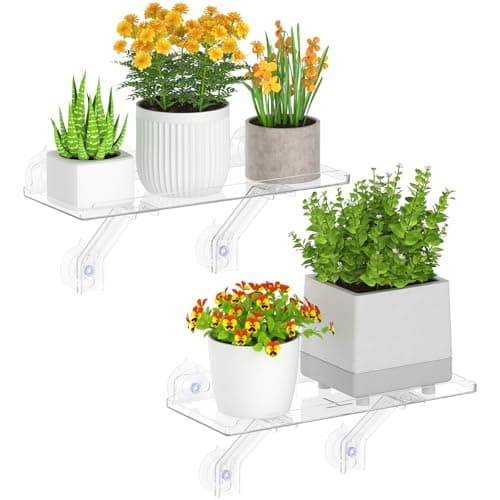 Lifewit Window Plant Shelves with Suction Cups, 15 in, 2 packSix inches deep, which is the number that decides whether a suction shelf is useful. Most are four, and four inches will not take a pot and its saucer. | Doubling a shallow windowsill | $23.99 at Amazon $26.99 · 11% off |
| 2 | 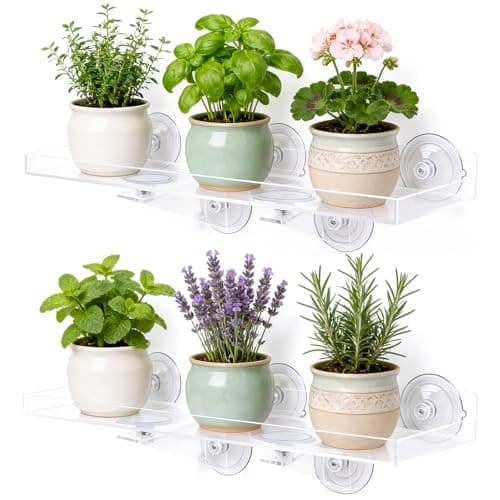 Window Plant Shelves with Support Brackets, 15.7 by 5.9 in, 2 packSupport brackets under the shelf, which change the failure mode from the whole shelf peeling off to the shelf flexing. On glass that is a meaningful difference. | A suction shelf you trust slightly more | |
| 3 | 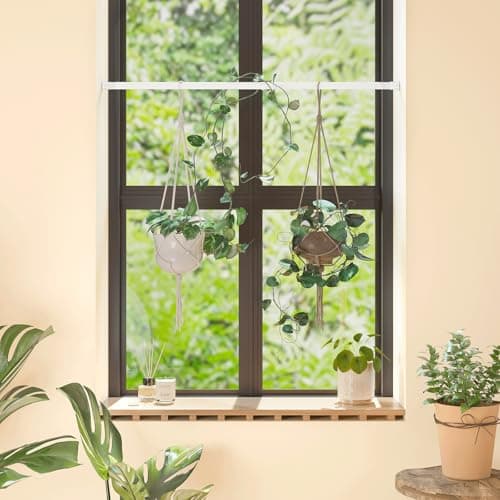 Bamworld Window Plant Hanger, spring tension rods 27 to 51 inA tension rod across the window reveal, which puts hanging plants in the best light in the apartment without a single hole or adhesive pad. | Hanging plants in a window with zero fixings | $11.99 at Amazon $12.99 · 8% off |
| 4 | 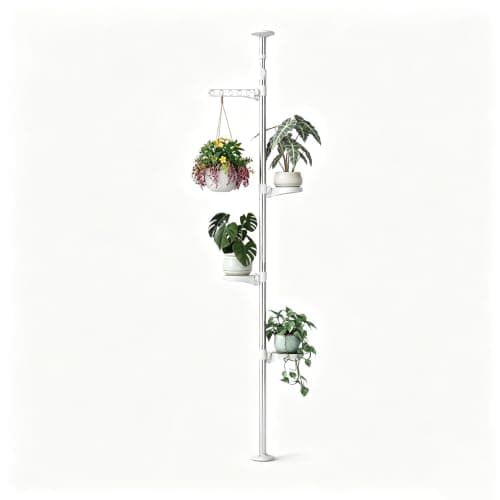 BAOYOUNI Tension Rod Plant Stand, 3 trays and 1 armTrays and a hanging arm on the same pole, which lets one fixing-free installation carry both potted and hanging plants. | A window that has to stay usable | $40.80 at Amazon $42.95 · 5% off |
Links to Amazon are affiliate links. Prices and availability are Amazon's and change without notice.
What a window shelf can actually hold
The published suction shelves here are around 15 inches long and 6 inches deep, and they are sold for three small pots. That is the right use. Computed pot weights say why: three 4-inch pots come to a little under 3 lb of watered mix between them, which is a reasonable ask of suction. Three 6-inch pots are nearly 10 lb, which is not.
| Pot size | Mix volume | Dry | Watered | Rating needed |
|---|---|---|---|---|
| 4 in | 0.017 cu ft | 0.4 lb | 0.9 lb | 2 lb |
| 5 in | 0.034 cu ft | 0.7 lb | 1.8 lb | 3 lb |
| 6 in | 0.058 cu ft | 1.3 lb | 3.2 lb | 5 lb |
Why a tension rod beats a suction cup
A spring tension rod across a window reveal transfers its load into two opposing walls through compression, which is the same mechanism holding up a shower curtain full of water. A suction cup transfers its load into a film of air pressure against glass, which is a genuinely clever mechanism and a fundamentally weaker one. If your window has a reveal — a recess with two facing surfaces — the rod is the better engineering answer and it is also completely reversible.
The trade is what you get. A rod hangs plants, so pots dangle in front of the glass and the sill stays clear. A shelf gives you a flat surface, which is what you want for seedlings, succulents and anything that has to sit level. Many apartments end up with both: a rod high in the reveal for trailing plants and a shelf at sill level for the small pots.
What we looked at, in order
- Published dimensions. Depth is the number that matters, because the whole purpose is adding depth to a sill that has none.
- Mounting mechanism, and its honest limit. Suction on glass, compression across a reveal, or a bracket. Each is stated rather than blurred into 'easy installation'.
- Does it block the window? A shelf that fills the lower third of the glass is subtracting light from the plants already inside. The best designs are narrow and sit low.
- Can the window still open? Frequently overlooked, and discovered on the first warm day.
Every pick, in full
We have not handled any of these. What follows is what each listing publishes, what that means once you put a watered pot on it, and who should buy something else.
1. Doubling a shallow windowsill
Lifewit Window Plant Shelves with Suction Cups, 15 in, 2 pack
Six inches deep, which is the number that decides whether a suction shelf is useful. Most are four, and four inches will not take a pot and its saucer.
- What the listing publishes
- 15 in long by 6 in deep acrylic shelf on suction cups; no drilling
- Against a 10-inch pot
- No weight rating is published for this product, so there is nothing to check. That counts against it here rather than being treated as neutral.
A 6-inch depth takes a 5-inch pot with a saucer under it. A 4-inch shelf takes a 4-inch pot with nothing under it, which is why so many suction shelves end up holding trinkets.
Three small pots on 15 by 6 inches is about 4.8 plants per square foot of glass, and glass area is free because it costs no floor at all.
No load rating is published, which for suction is right: capacity depends on the glass being clean, the temperature being stable, and the cups being reseated periodically. Treat every suction shelf as needing a monthly press.
What is good
- 6 in deep, enough for a pot and its saucer
- Adds plant positions in the best light for zero floor
- Comes down leaving nothing behind
What is not
- No published weight rating, and suction is temperature-sensitive
- Needs reseating every few weeks
- Anything above a 5-inch pot is asking too much
Skip it if your window is textured, frosted or has a film on it. Suction needs smooth clean glass and none of those provide it.
2. A suction shelf you trust slightly more
Window Plant Shelves with Support Brackets, 15.7 by 5.9 in, 2 pack
Support brackets under the shelf, which change the failure mode from the whole shelf peeling off to the shelf flexing. On glass that is a meaningful difference.
#ad · Price as of October 18, 2026. How we are funded
- What the listing publishes
- 15.7 by 5.9 in acrylic with support brackets under the shelf, suction mounted
- Against a 10-inch pot
- No weight rating is published for this product, so there is nothing to check. That counts against it here rather than being treated as neutral.
A bare suction shelf loads its cups in a peeling direction at the front edge, which is the weakest way to load suction. A bracket back to the glass turns part of that into compression.
It still does not publish a weight rating, and it should not be trusted with more than the small pots any suction shelf is for.
Nearly the same footprint as the other suction shelf here, so the arithmetic is the same: about three small pots for no floor.
What is good
- Brackets change how the load reaches the glass
- The same useful six-inch depth
- Two shelves per pack, so a window can be stacked
What is not
- No published weight rating
- Brackets take up part of the glass
- Suction still needs monthly attention
Skip it if you would rather not think about it monthly. A floor stand needs no maintenance and a suction shelf does.
3. Hanging plants in a window with zero fixings
Bamworld Window Plant Hanger, spring tension rods 27 to 51 in
A tension rod across the window reveal, which puts hanging plants in the best light in the apartment without a single hole or adhesive pad.
- What the listing publishes
- Spring tension rods spanning 27 to 51 in; no drilling; anti-slip pads at both ends
- Against a 10-inch pot
- No weight rating is published for this product, so there is nothing to check. That counts against it here rather than being treated as neutral.
This is the most genuinely renter-safe hanging solution on the site. Nothing is stuck to anything, nothing is screwed into anything, and it comes down in ten seconds when you move.
Tension rods hold by friction against two surfaces, and their capacity depends entirely on the span and the surface. That is why no honest tension product publishes a weight rating, and this one does not either.
Keep pots small. Tension failures are progressive: the rod slips a fraction, the friction drops, and it slips again. A 6-inch pot at 3.2 lb of saturated mix is the sensible ceiling here.
What is good
- No fixings of any kind, the cleanest renter solution here
- Puts plants in the window, which is where the light is
- 27 to 51 inches covers almost every apartment window
What is not
- No published weight rating, and tension capacity depends on your surfaces
- Slips progressively rather than failing at once
- Blocks the window it hangs in
Skip it if you want to hang a 10-inch pot. Tension is the wrong mechanism for that load, and a rated 30 lb adhesive ceiling hook is the pick.
4. A window that has to stay usable
BAOYOUNI Tension Rod Plant Stand, 3 trays and 1 arm
Trays and a hanging arm on the same pole, which lets one fixing-free installation carry both potted and hanging plants.
- What the listing publishes
- Tension pole with three trays and a hanging arm, sill-width
- Against a 10-inch pot
- No weight rating is published for this product, so there is nothing to check. That counts against it here rather than being treated as neutral.
The hanging arm is the part that matters. Most tension products give you shelves; an arm means a trailing plant can hang free instead of draping over a tray edge.
Four positions on about half a square foot is roughly 7 plants per square foot, nearly as dense as the six-tier pole in a shorter, less imposing form.
As with every tension product here, no weight rating is published and none should be trusted if it were. Small pots only.
What is good
- Trays and a hanging arm in one fixing-free unit
- Sill-width, so the window still opens
- Roughly 7 plants per square foot
What is not
- No published weight rating
- Small trays take 4 to 6 inch pots only
- Tension poles need a firm floor and ceiling
Skip it if you want a full plant wall. This is a single narrow column, and the six-tier pole is the bigger version of the same idea.
Questions people actually ask
Do suction cup plant shelves actually hold?
How can I add plants to a window without drilling?
Will a window shelf block light for the plants inside?
Can I use a tension rod in a window without a recess?
Sources
- Cornell University, Greenhouse Management: bulk density of greenhouse media components
- Biology Insights: how much a cubic foot of potting soil weighs, dry and saturated
- University of Illinois Extension: Houseplants — lighting
- Clemson HGIC: Indoor Plants — cleaning, fertilizing, containers and light requirements
Product specifications are quoted from each seller's own listing and are the seller's claim, not a measurement of ours.