Grow Lights
Apartment Plants and Cats
The ASPCA maintains the list that matters. This is how to read it, and how to keep the plants that did not make it out of reach.
By Scooter M., enthusiast · Published · Last updated
The short answer
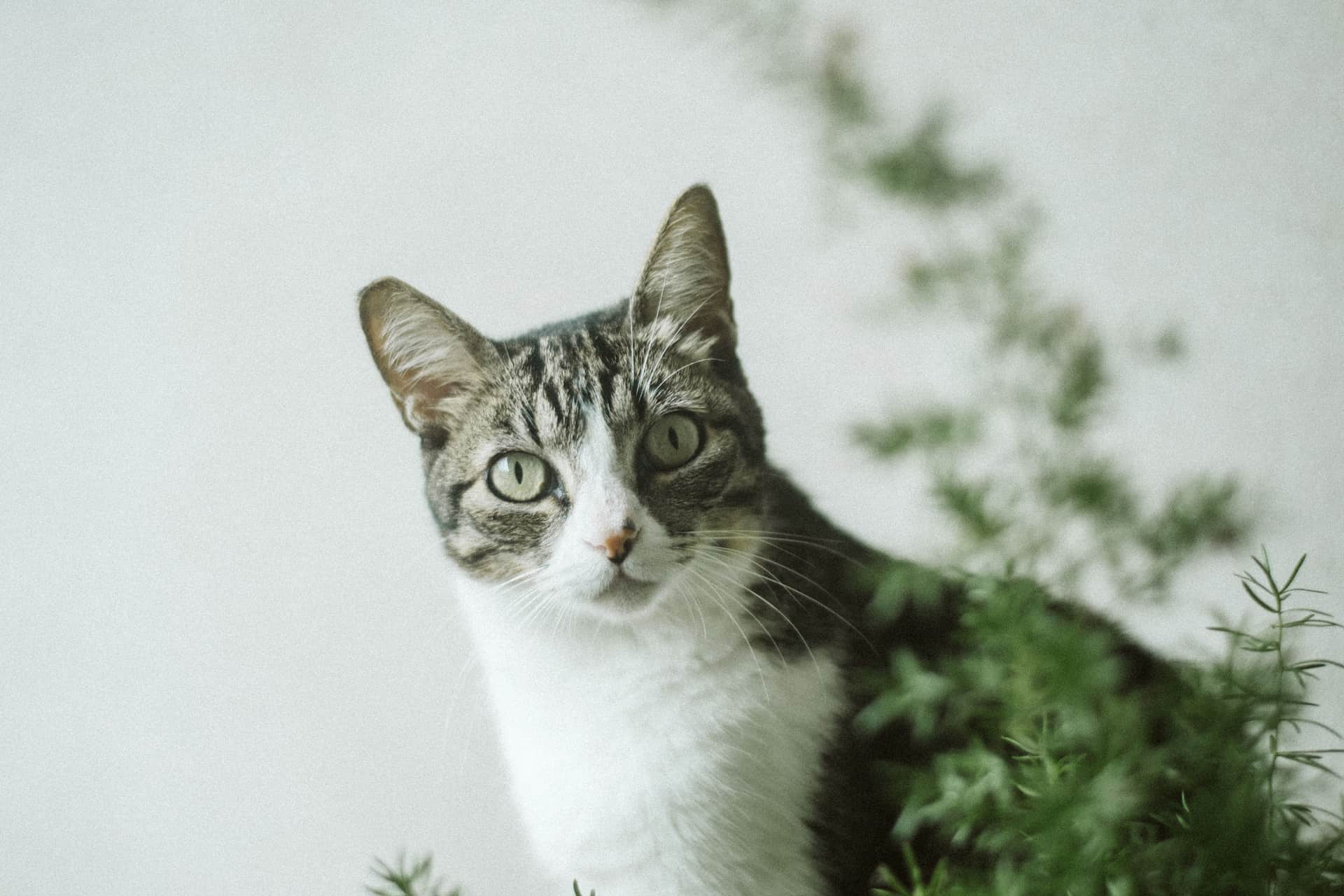
Check every plant on the ASPCA's toxic and non-toxic list before it comes home — it is the authoritative source and it is searchable by common name. Spider plants, Boston ferns, calathea, peperomia and parlor palms are listed as non-toxic; pothos, philodendron, monstera, snake plants, ZZ plants and peace lilies are not. Lilies are a medical emergency for cats, not a mild concern.
Disclosure Pot & Prop earns a commission when you buy through the Amazon links on this page, at no extra cost to you. It does not change which products get recommended or what we say about them, and we have not been given any of them. How this site is funded.
This page does not maintain its own toxicity list and will not repeat one at length, because there is an authoritative source that is kept current by people qualified to do it: the ASPCA's toxic and non-toxic plants database. It is searchable by common and botanical name, it covers hundreds of species, and it is linked at the bottom of this page. Check every plant against it before it comes into an apartment with a cat — including plants you have owned for years.
What this page can usefully add is the practical half: which of the plants a small-apartment keeper actually ends up wanting are on which side, and what to do about the ones that are not.
The common apartment plants, and where they sit
Verify each of these against the ASPCA entry rather than taking a table's word for it — including this table's. Names in this category overlap badly, and one common name can refer to several species.
| Plant | ASPCA listing | Note |
|---|---|---|
| Spider plant | Non-toxic | Cats often chew it; that is a plant problem, not a safety one |
| Boston fern | Non-toxic | Wants humidity more than most apartments provide |
| Calathea, prayer plant | Non-toxic | Fussy about water quality and humidity |
| Peperomia | Non-toxic | Compact; good for a shelf |
| Parlor palm | Non-toxic | Tolerates medium light well |
| African violet | Non-toxic | Wants bright indirect light |
| Pothos | Toxic | Very common; a leading reason to hang plants |
| Philodendron | Toxic | Same family, same issue |
| Monstera | Toxic | Large leaves at cat height on a floor plant |
| Snake plant | Toxic | Otherwise ideal for an apartment |
| ZZ plant | Toxic | As above |
| Peace lily | Toxic | Not a true lily, but still listed |
| True lilies | Toxic — severe | A veterinary emergency for cats, including pollen |
If your cat has eaten something
Contact a vet or an animal poison control service, and tell them the plant's name and roughly how much was eaten. Do not wait to see whether symptoms develop, particularly with lilies, where the window for effective treatment is short. Take a photo of the plant or bring a leaf. This is not a situation for a web page, including this one.
Keeping the plants that did not make the list
A great many of the plants that suit a small apartment are on the toxic side of the list, and the practical answer for most people is not to give them up but to put them genuinely out of reach. That is harder than it sounds, because cats climb — a shelf is not out of reach, and a plant on top of a bookcase is a destination rather than a deterrent.
- Hanging is the reliable answer, because a hanging pot has no approach route. That is a real use case for adhesive ceiling hooks — hung away from furniture a cat can launch from, and sized properly: a 10-inch pot is 14.7 lb of watered mix and needs a 23 lb rating.
- Watch the trailing length. A pothos hanging with three feet of trailing stem has brought itself back within reach. Trim it, or hang it higher.
- Nothing above a surface a cat sits on. A hanging pot over a sofa back is at cat height even though it is at your head height.
- Grass as a decoy. Cat grass is non-toxic and gives a cat something to chew that is not the pothos. It does not work on every cat and it is worth trying.
- Accept that some plants are not compatible with some cats. A determined chewer and a toxic plant is a problem no shelf placement solves.
Every pick, in full
We have not handled any of these. What follows is what each listing publishes, what that means once you put a watered pot on it, and who should buy something else.
1. The largest hanging pot a renter can hang
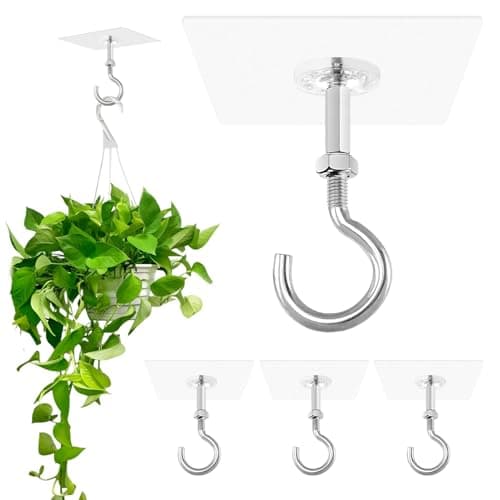
NINEFOX Adhesive Ceiling Hooks, 30 lb, 4 pack
The highest published no-drill ceiling rating in this roundup, and the only one here that clears a 10-inch pot at this site's margin.
#ad · Price as of October 18, 2026. How we are funded
- What the listing publishes
- Published 30 lb rating per hook; adhesive mount, no drilling
- Against a 10-inch pot
- Rated 30 lb against 14.7 lb of saturated mix in a 10-inch pot — 2x, clear of the 1.5x margin this site requires.
A 10-inch pot of saturated mix computes to 14.7 lb. At 30 lb published this is 2.0x, past the 1.5x margin this site requires before it calls a pairing safe.
Read the rating as a ceiling rating, because that is what it claims. Adhesive hooks sold for walls are rated in shear, where the load hangs down the face of the adhesive. A ceiling load pulls straight off it, which is the harder direction, and a wall-rated hook on a ceiling is the commonest mistake in this category.
Surface preparation is the whole game with adhesive. Textured or freshly painted ceilings do not hold, and no rating on any listing is a claim about a surface it was not stuck to.
What is good
- 30 lb published, the highest no-drill ceiling figure here
- Clears a 10-inch pot at the 1.5x margin
- Four hooks, so three plants and one you will get wrong
What is not
- Adhesive needs a smooth, clean, cured surface, so a textured ceiling is out
- Removal takes paint with it more often than the packaging suggests
- The rating assumes an ideal application, and yours will not be
Skip it if your ceiling is textured, artexed or freshly painted. No adhesive rating survives that surface, and a tension pole is the renter-safe alternative.
2. Hanging four plants and getting the hooks in the box
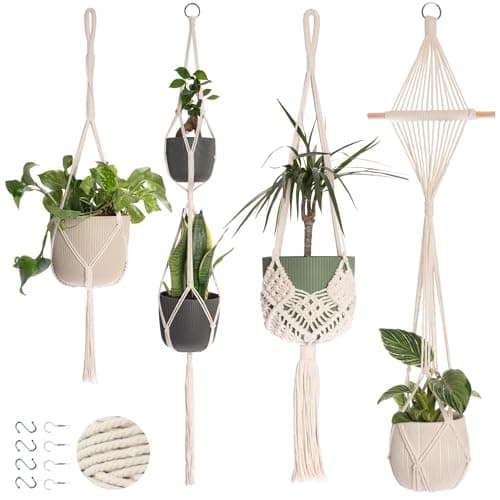
Nook Theory Macrame Plant Hangers with Hooks, 4 pack
Hangers with hooks included, which sounds trivial until you have bought hangers and discovered the hooks are the part with the weight rating.
#ad · Price as of October 18, 2026. How we are funded
- What the listing publishes
- Four macrame hangers supplied with eight hooks; cotton cord
- Against a 10-inch pot
- No weight rating is published for this product, so there is nothing to check. That counts against it here rather than being treated as neutral.
The hanger is almost never the weak link. Cotton macrame cord carries far more than the ceiling fixing above it, so the number that matters is on the hook rather than on the knot.
The included hooks are not the rated ceiling hooks elsewhere in this section, so treat them as a starting point and swap them for a published-rating hook if the pot is over 6 inches.
Cotton cord does stretch, and it stretches most in a humid room. A macrame hanger that sat level in January hangs an inch lower by July.
What is good
- Four hangers for the price hangers usually cost
- Hooks included
- Cotton cord is the strongest link in the chain
What is not
- The supplied hooks publish no rating
- Cotton stretches in humidity
- Macrame hides the pot, which is either the point or the problem
Skip it if you are hanging a large pot. Swap the supplied hooks for the 30 lb rated adhesive hooks, because that is where the load actually terminates.
Questions people actually ask
Are pothos plants toxic to cats?
Which houseplants are safe for cats?
How do I keep my cat away from my plants?
What should I do if my cat eats a toxic plant?
Sources
- ASPCA: toxic and non-toxic plants list
- Clemson HGIC: Indoor Plants — cleaning, fertilizing, containers and light requirements
- Cornell University, Greenhouse Management: bulk density of greenhouse media components
- Biology Insights: how much a cubic foot of potting soil weighs, dry and saturated
Product specifications are quoted from each seller's own listing and are the seller's claim, not a measurement of ours.