Planters
The Best Pots for a Monstera
A monstera is a climbing plant sold as a bush. The right pot drains fast, holds a pole upright, and is still light enough to carry to the sink.
By Scooter M., enthusiast · Published
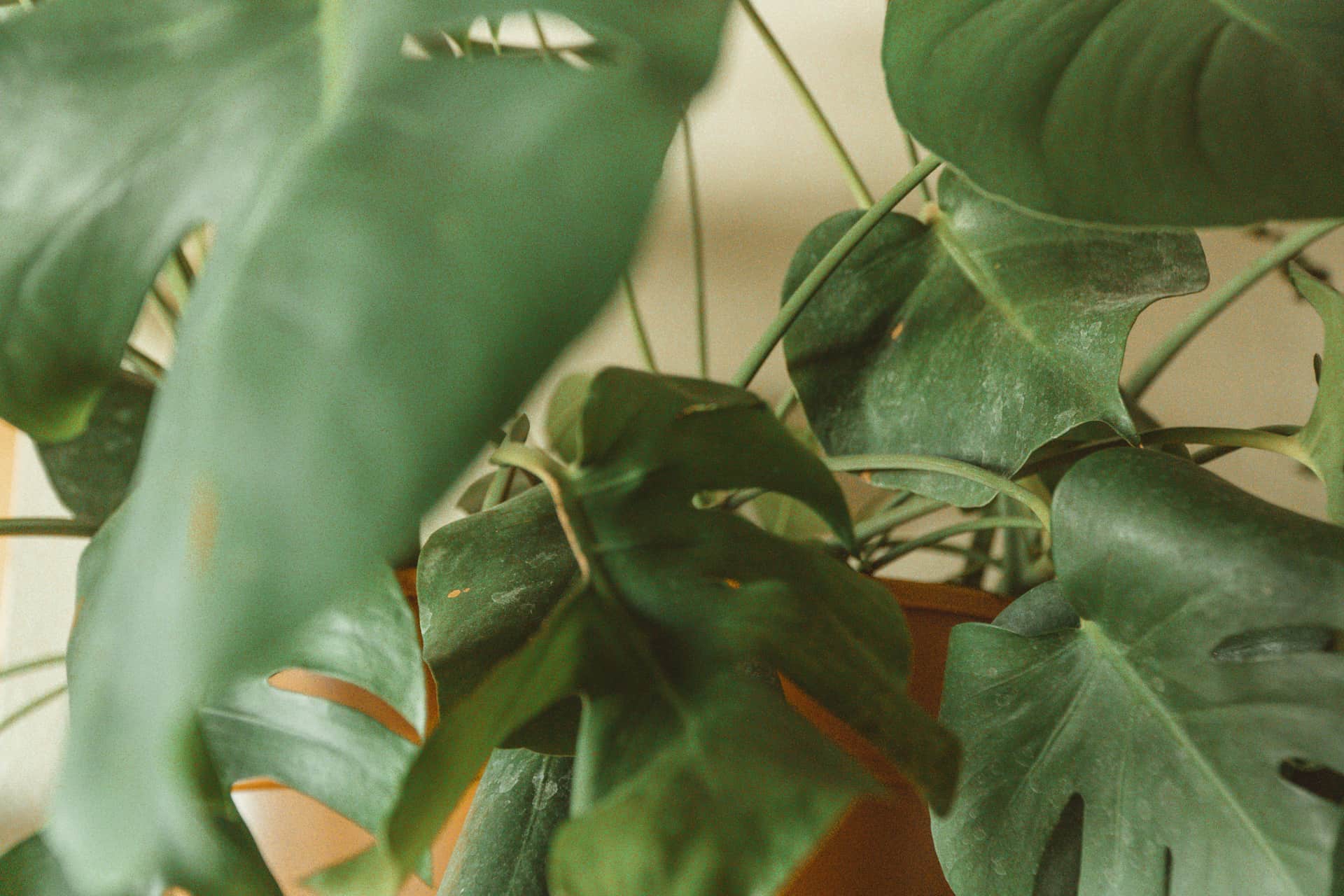
The short answer
Use a pot with a drainage hole that is one size — about two inches — wider than the one the monstera arrived in, and put a moss pole in it at the same time. A 12-inch ceramic pot with a saucer is the right size for most store-bought plants; a 10-inch terracotta pot suits anyone who overwaters. Go to a 14-inch plastic pot only when the plant needs it, because a 14-inch pot of wet mix computes to about 40 lb before the plant is counted.
Disclosure Pot & Prop earns a commission when you buy through the Amazon links on this page, at no extra cost to you. It does not change which products get recommended or what we say about them, and we have not been given any of them. How this site is funded.
A monstera is the most-searched plant on this site's planters pages by a wide margin, and almost every search is really two questions wearing one hat: what size pot, and why does mine keep leaning. The size question has an arithmetic answer. The leaning question has a product answer — a pole — and the two purchases belong together, because a pole is only stable in a pot that is heavy and deep enough to hold it.
The plant's habits set the brief. Monstera deliciosa is a climber with thick roots that want air; in the wild it grips a tree and sends aerial roots down. In a pot, that means it wants a mix that drains fast, a pot that dries in a reasonable number of days, and something vertical to hold on to. Everything below follows from those three, and the pots that fail monsteras are the ones that fail on the first two — oversized, or holed-less, or both.
What size pot a monstera actually needs
Go up one size at a time, which for pots means about two inches of diameter. That advice appears on every extension sheet on containers, and the reason is not aesthetic: a pot much larger than the root ball holds mix that no root is drinking from, and that mix stays wet for weeks. The volume arithmetic is worse than it looks, because volume rises with the cube of diameter.
volume ratio = (D2 / D1)^3
10 in to 12 in: (12/10)^3 = 1.7 times the mix. 10 in to 14 in: (14/10)^3 = 2.7 times the mix, which is why the tempting two-step jump is the one that rots roots.
Pot volume here is 0.46315 x D^3 cubic inches, the figure used across this site. The pot size chart works through the rest.
| Pot size | Mix volume | Dry | Watered | Rating needed |
|---|---|---|---|---|
| 8 in | 0.137 cu ft | 3 lb | 7.5 lb | 12 lb |
| 10 in | 0.268 cu ft | 5.9 lb | 14.7 lb | 23 lb |
| 12 in | 0.463 cu ft | 10.2 lb | 25.5 lb | 39 lb |
| 14 in | 0.735 cu ft | 16.2 lb | 40.5 lb | 61 lb |
| 16 in | 1.098 cu ft | 24.2 lb | 60.4 lb | 91 lb |
That table is the reason the picks below stop at 14 inches. A monstera in a 16-inch pot is a plausible plant, but a 16-inch pot of saturated mix computes to about 60 lb before the pot or the plant is counted, and at that point the plant caddy pages are the purchase, not the planter pages.
Drainage is not negotiable for this plant
Every pot below has a drainage hole, and this is the one criterion with no exception on this page. Monstera roots are thick and want oxygen; sitting in water rots them faster than almost any other common houseplant, and the first sign — yellowing lower leaves — is usually read as underwatering and answered with more water. If the pot you love has no hole, keep the plant in a holed nursery pot and drop it inside; the drainage argument in full is here.
Material is the second lever. Unglazed terracotta breathes through its wall and dries a pot noticeably faster than glazed ceramic or plastic. That is a feature if you overwater and a chore if you forget to water; the material comparison is the short version, and it is why one of the picks below is a plain clay pot two inches smaller than the ceramic one above it.
The pole is half the purchase
A monstera without something to climb leans toward the window, then sprawls, then snaps a petiole when someone brushes past. The fix is a moss pole set into the pot at repotting time, before the roots fill the mix, with the stem tied at two or three points. The aerial roots find the coir on their own; you do not need to bury them, and you do not need to soak the pole unless you want to encourage them.
- Set the pole at repotting. Pushing one into a full pot later cuts roots and never sits straight.
- Match the pole to the pot. A 30-inch pole is stable in a 10 or 12-inch pot; a 50-inch pole wants a 12-inch pot at least, and a plant tied to it at several points.
- Tie loosely. Soft ties in a figure-eight, never wire. The stem thickens.
- Expect to size up. A healthy monstera outgrows a 30-inch pole in a couple of seasons. The 50-inch set below is the second purchase, not the first.
Quick picks
Ranked, with the published figure each pick turns on. Tap a row for the full reasoning further down this page.
| # | Product | Best for | Price |
|---|---|---|---|
| 1 | 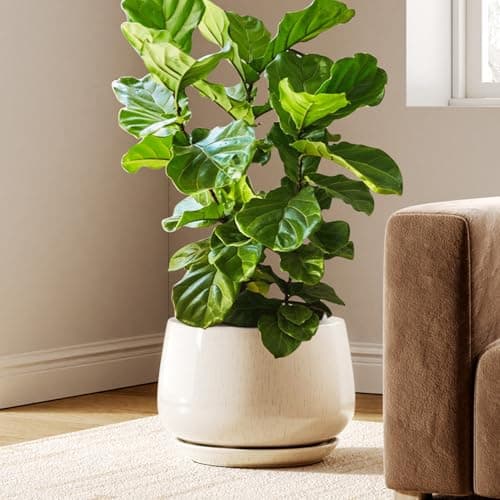 LE TAUCI 12 in Ceramic Planter with Drainage and SaucerA 12-inch glazed pot with a hole and a saucer, which is the size where the weight conversation starts and most people have not had it. | A floor plant in something that is not plastic | $84.99 at Amazon $89.99 · 6% off |
| 2 | 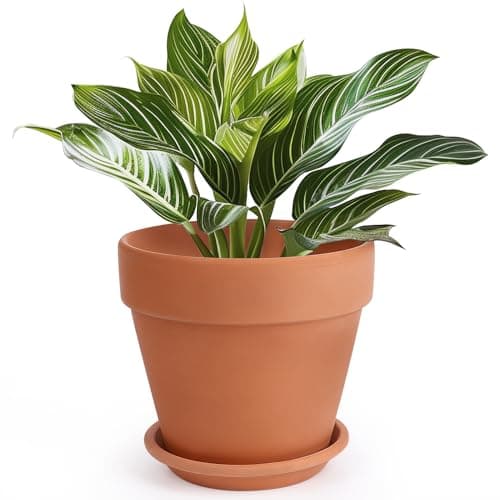 INGOFIN 10 in Terracotta Pot with SaucerTerracotta at the size where overwatering does the most damage, because a 10-inch pot of wet mix takes a long time to dry from the top alone. | A large plant that keeps rotting in plastic | |
| 3 | 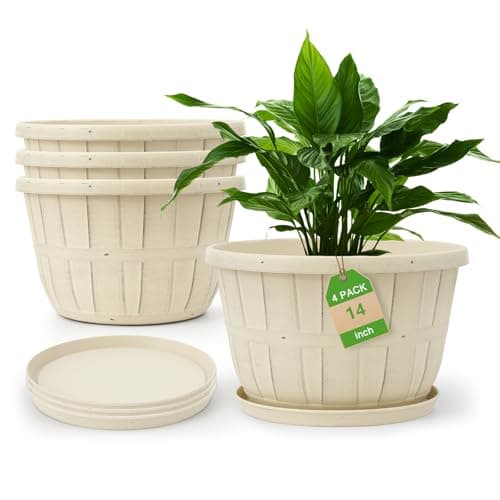 Quarut 14 in Plastic Planter with drainage and saucer, 5 gallon, 4 packThe only sensible way to put four floor plants in matching large pots without adding sixty pounds of pot to sixty pounds of soil. | Four large pots for the weight of one ceramic one | $41.50 at Amazon $43.69 · 5% off |
| 4 | 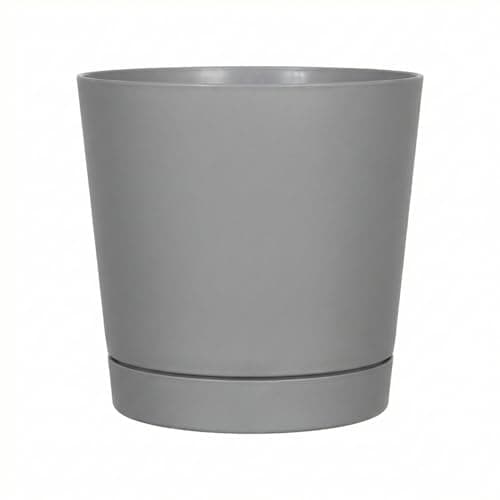 Root & Vessel 14 in Full Depth Cylinder Pot with built-in trayA full-depth cylinder rather than the usual tapered pot, which is the right shape for a plant with a deep root system and the wrong one for a shallow-rooted plant. | A deep root run for a tall floor plant | $28.99 at Amazon $31.99 · 9% off |
| 5 | 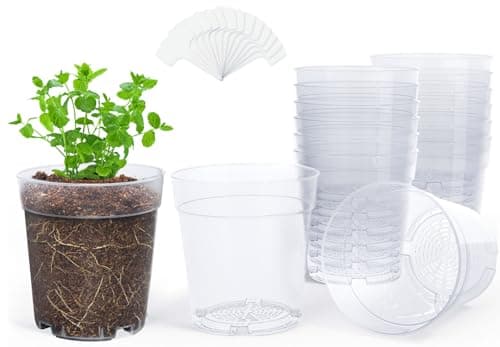 homenote 6.7 in Clear Plastic Nursery Pots with Drainage, 15 packClear walls, which turn the one variable you cannot otherwise check, what the roots are doing, into something you can just look at. | Watching roots instead of guessing | |
| 6 | 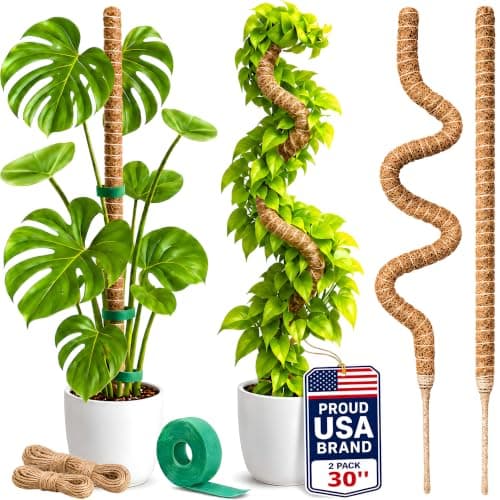 imezos 30 in Coco Coir Moss Pole, bendable aluminum core, 2 packThirty inches of coir on a bendable core, sold in a pair, which is exactly the size a monstera needs in the year it leaves a nursery pot. | The first pole for a monstera still in a 10 or 12 inch pot | |
| 7 | 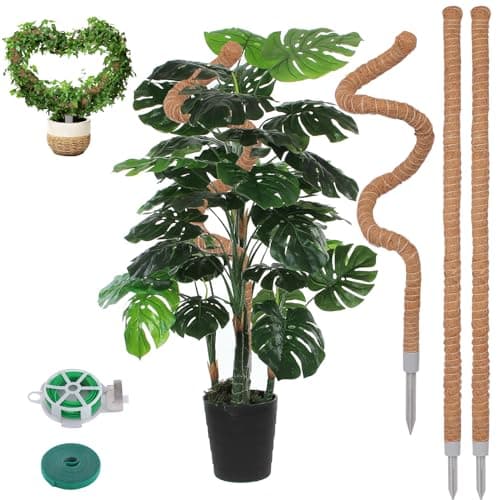 LifeNest 50 in Coco Coir Moss Pole with plant ties, 3 packFifty inches is the length a monstera actually reaches, and three of them in a pack is one for the plant and two for the plants it will become. | A monstera that has outgrown its first pole |
Links to Amazon are affiliate links. Prices and availability are Amazon's and change without notice.
How we ranked these for a monstera specifically
Drainage first, then a size a store-bought plant is actually ready for, then weight once planted. A ceramic 12-inch pot with its own saucer leads because it is the size most monsteras need at their first repot and it is still a one-person lift. The terracotta 10-inch is the pick for anyone who has already lost a plant to rot. The 14-inch plastic pots are there for the year the plant needs them, at a fraction of the weight of ceramic in that size, and the clear nursery pots are the honest answer for anyone who wants to see roots before deciding anything. The poles are ranked by the size of plant they suit, not by length.
| Your plant | Pot | Why |
|---|---|---|
| Just bought, in a 6 or 8 in nursery pot | 10 in terracotta or a clear nursery pot | One size up; fast drying while you learn its schedule |
| Established, roots at the drainage hole of a 10 in pot | 12 in ceramic with saucer | The standard first repot; still liftable |
| Large, in a 12 in pot for two years | 14 in plastic with saucer | Ceramic at 14 in is a two-person pot; plastic is not |
| Any size, leaning | The pot it is in, plus a pole | Leaning is a support problem, not a pot problem |
Watering a monstera in each of these
The rule is to let the top couple of inches dry and then water thoroughly until it runs from the hole, which is why the saucer matters and why a pot with no hole cannot be watered this way at all. How often that is depends on the pot: terracotta at 10 inches might want water twice as often as glazed ceramic at 12 inches in the same room. A chopstick pushed into the mix and read like a dipstick beats any schedule.
One computed figure worth having: a 12-inch pot holds roughly 7 liters of water between bone dry and saturated, derived from the dry and saturated mix densities on the methodology page. That is not what you pour each time — the mix is rarely bone dry — but it is the scale, and it explains why a monstera in a big pot goes two weeks between waterings while the same plant in a 6-inch pot wilts in four days.
What we deliberately do not recommend
Pots without drainage holes, for the reason above. Very tall narrow pots, which look right for a climbing plant and tip the moment a pole and a heavy plant lean the same way. Self-watering pots for this plant — the reservoir keeps the lower mix wet, which is exactly the condition monstera roots dislike, and the self-watering comparison says so at length. And any pot at 16 inches or above for a plant that has not filled a 14-inch one, however good the price.
Every pick, in full
We have not handled any of these. What follows is what each listing publishes, what that means once you put a watered pot on it, and who should buy something else.
1. A floor plant in something that is not plastic
LE TAUCI 12 in Ceramic Planter with Drainage and Saucer
A 12-inch glazed pot with a hole and a saucer, which is the size where the weight conversation starts and most people have not had it.
- What the listing publishes
- 12 in ceramic, drainage hole and saucer included
- Against a 10-inch pot
- No weight rating is published for this product, so there is nothing to check. That counts against it here rather than being treated as neutral.
12 inches of saturated mix computes to about 25.5 lb before the pot itself, and a glazed ceramic pot this size is not light empty. This is a floor pot, not a shelf pot, and putting it on an unrated tiered stand is the mistake this site is built around.
It is also the size at which you stop moving the plant. A rated caddy underneath is the difference between cleaning behind it twice a year and never.
The saucer is included, which at 12 inches is worth real money. Large saucers are priced oddly high when bought alone.
What is good
- Drainage hole and saucer at a size where both are usually extra
- Glazed, so it does not sweat onto the floor
- Heavy enough not to be knocked over
What is not
- About 25.5 lb of saturated mix before the pot's own weight, so floor only
- Ceramic at this size is genuinely fragile in a move
- Slow-drying for plants that want to dry out
Skip it if you were planning to put it on a tiered stand. None of the tiered stands here publish a weight rating, and this is the pot that finds out.
2. A large plant that keeps rotting in plastic
INGOFIN 10 in Terracotta Pot with Saucer
Terracotta at the size where overwatering does the most damage, because a 10-inch pot of wet mix takes a long time to dry from the top alone.
#ad · Price as of October 26, 2026. How we are funded
- What the listing publishes
- 10 in unglazed clay with drainage hole and saucer
- Against a 10-inch pot
- No weight rating is published for this product, so there is nothing to check. That counts against it here rather than being treated as neutral.
A 10-inch pot of saturated mix computes to about 14.7 lb, and unglazed clay adds several pounds of its own. This is a floor or a low sturdy shelf, not a tiered frame.
The larger the pot, the longer the middle of it stays wet, and the more the porous wall earns its keep. The material advantage that is marginal at 4 inches is substantial at 10.
Clay at this size is fragile in exactly one way that matters: the rim chips if it is set down hard on tile.
What is good
- The porous wall matters most at large pot sizes
- Saucer included at a size where they are expensive alone
- Heavy enough to anchor a top-heavy plant
What is not
- Heavy before the mix goes in
- Chips on tile
- Needs watering noticeably more often than a glazed pot the same size
Skip it if the pot is going on a shelf. At roughly 15 lb of saturated mix plus several pounds of clay, this belongs on the floor unless the shelf publishes a number.
3. Four large pots for the weight of one ceramic one
Quarut 14 in Plastic Planter with drainage and saucer, 5 gallon, 4 pack
The only sensible way to put four floor plants in matching large pots without adding sixty pounds of pot to sixty pounds of soil.
- What the listing publishes
- Published 14 in top diameter, 10.2 in base, 5 gallon capacity; four drainage holes; saucers included; recyclable polypropylene; 4 pack
- Against a 10-inch pot
- No weight rating is published for this product, so there is nothing to check. That counts against it here rather than being treated as neutral.
At 14 inches the mix alone computes to about 40.5 lb saturated. A ceramic pot that size adds real weight on top of that; polypropylene adds almost nothing, which is the entire argument for plastic at large sizes and the reason it is what garden centers grow in.
Publishing the base diameter as well as the top is genuinely useful for a large pot, because 10.2 inches of base is what determines whether it tips when the plant grows tall and whether it fits the caddy you already own.
Four drainage holes and included saucers means the system is complete in one purchase. At this size a mismatched saucer is not a small annoyance — it is a wet floor.
What is good
- Published top and base diameter, and capacity in gallons
- Four drainage holes and matched saucers included
- Negligible pot weight at a size where that matters most
What is not
- It reads as plastic, which at 14 inches is hard to hide
- A wide base needs floor space a decorative pot might not
- Whiskey-barrel styling is not neutral
Skip it if the pot is the thing you want to look at. At this size a decorative pot with a plastic nursery pot inside it is the better answer.
4. A deep root run for a tall floor plant
Root & Vessel 14 in Full Depth Cylinder Pot with built-in tray
A full-depth cylinder rather than the usual tapered pot, which is the right shape for a plant with a deep root system and the wrong one for a shallow-rooted plant.
- What the listing publishes
- Published 14 in; full-depth cylinder profile; built-in tray; lightweight plastic with a glossy finish; stated made in the USA
- Against a 10-inch pot
- No weight rating is published for this product, so there is nothing to check. That counts against it here rather than being treated as neutral.
Most decorative pots are tapered, which means a 14-inch pot holds noticeably less soil than its diameter suggests. A full-depth cylinder holds more — around a third more than this site's standard tapered model predicts, so expect it to be heavier than the 40.5 lb figure for a tapered 14-inch pot.
That extra depth is a real advantage for a tall plant that needs a deep root run and anchorage, and a real disadvantage for anything shallow-rooted, where the extra volume is mix no root reaches.
The built-in tray removes the mismatched-saucer problem at a size where saucers are hard to find and expensive.
What is good
- Built-in tray, so nothing to match separately
- Full depth suits deep-rooted floor plants
- Light for its size
What is not
- Deeper means heavier when watered than a tapered pot the same width
- Wrong shape for snake plants, succulents and other shallow-rooted plants
- Glossy plastic finish
Skip it if the plant is shallow-rooted. Depth it will not use is mix that stays wet.
5. Watching roots instead of guessing
homenote 6.7 in Clear Plastic Nursery Pots with Drainage, 15 pack
Clear walls, which turn the one variable you cannot otherwise check, what the roots are doing, into something you can just look at.
#ad · Price as of October 26, 2026. How we are funded
- What the listing publishes
- 6.7 in clear plastic with drainage holes, 15 per pack
- Against a 10-inch pot
- No weight rating is published for this product, so there is nothing to check. That counts against it here rather than being treated as neutral.
The reason to use a clear nursery pot inside an opaque cachepot is diagnostic: you can see root growth, you can see when water has actually reached the bottom, and you can see rot before the leaves tell you.
Fifteen pots is a whole shelf and a propagation run's worth of potting-up, at a per-pot price no ceramic reaches.
They are not attractive. They are meant to sit inside something else, which is also the arrangement that keeps a decorative pot with no drainage hole from killing a plant.
What is good
- Root visibility that no other pot format gives you
- Fifteen pots at nursery pricing
- The correct inner pot for a decorative cachepot with no hole
What is not
- Ugly on their own
- Algae grows on the inside of a clear pot in a bright window
- Thin plastic flexes when you lift a wet one
Skip it if you want the pot to be the visible object. These are working pots and they look it.
6. The first pole for a monstera still in a 10 or 12 inch pot
imezos 30 in Coco Coir Moss Pole, bendable aluminum core, 2 pack
Thirty inches of coir on a bendable core, sold in a pair, which is exactly the size a monstera needs in the year it leaves a nursery pot.
#ad · Price as of October 26, 2026. How we are funded
- What the listing publishes
- Published 30 in; 100 percent coconut fiber over a flexible aluminum rod; stated to work dry without soaking; 2 pack
- Against a 10-inch pot
- No weight rating is published for this product, so there is nothing to check. That counts against it here rather than being treated as neutral.
The pole is the part of a monstera purchase that most pot roundups leave out, and it is the part that decides whether the plant climbs or sprawls across the sofa. Thirty inches is the useful first size: tall enough to matter, short enough not to tip a 10-inch pot.
The aluminum core is the detail worth paying for. A rigid pole can only ever go straight up; a bendable one can follow a stem that has already leaned toward the window, which is every monstera bought from a store.
The listing states the coir works without soaking. Read that as convenience rather than performance — aerial roots still attach better to a pole that is kept damp, and nothing in the listing says otherwise.
What is good
- Two poles, so the second is there when the first is outgrown or a second plant arrives
- Bendable core follows a stem that already leans
- 30 in is short enough to stay stable in a 10 in pot
What is not
- No published core diameter, so how far it bends before it kinks is unknown
- 30 in is outgrown by a healthy monstera within a couple of seasons
- Coir sheds a little on the way into the pot
Skip it if the plant is already at knee height. A 30 in pole disappears inside a mature monstera, and the 50 in set below is the right length.
7. A monstera that has outgrown its first pole
LifeNest 50 in Coco Coir Moss Pole with plant ties, 3 pack
Fifty inches is the length a monstera actually reaches, and three of them in a pack is one for the plant and two for the plants it will become.
#ad · Price as of October 26, 2026. How we are funded
- What the listing publishes
- Published 50 in; coconut fiber over a solid aluminum bar stated to be rust-free; two kinds of plant ties included; 3 pack
- Against a 10-inch pot
- No weight rating is published for this product, so there is nothing to check. That counts against it here rather than being treated as neutral.
Length is the whole argument. A monstera that is climbing well adds a leaf node every few weeks, and the most common complaint about moss poles is that they are outgrown within a year. Fifty inches buys that year back.
The aluminum bar inside matters for a different reason than on the 30 in pole: at this height a pole carries real leverage from a plant that is a yard wide, and a solid metal core is what stops it folding when the pot is moved.
Ties are included, and two kinds of them. That sounds trivial until you are holding a stem against a pole with one hand and looking for string with the other.
What is good
- 50 in covers a monstera from repotting to the ceiling
- Solid aluminum core resists bending under a wide plant
- Ties in the box
What is not
- 50 in in a 12 in pot is top-heavy until the plant is tied at several points
- Three poles is more than most apartments need
- No published pole diameter
Skip it if the plant is in a 6 or 8 inch pot. A 50 in pole in a small pot is a lever, and the 30 in pair is the stable choice until the next repot.
Questions people actually ask
What size pot does a monstera need?
Do monsteras like terracotta or plastic pots?
Should a monstera be in a deep pot?
Does a monstera need a moss pole?
Can I put a monstera in a self-watering pot?
How heavy is a monstera in a 12-inch pot?
Sources
- Cornell University, Greenhouse Management: bulk density of greenhouse media components
- Biology Insights: how much a cubic foot of potting soil weighs, dry and saturated
- Clemson HGIC: Indoor Plants — cleaning, fertilizing, containers and light requirements
- Clemson HGIC: Indoor Plants — watering
- Michigan State University Extension: Smart Gardening — growing houseplants indoors
Product specifications are quoted from each seller's own listing and are the seller's claim, not a measurement of ours.