Planters
The Best Pots for a Fiddle Leaf Fig
A fiddle leaf fig is a tree you keep in a room. The pot has to drain, has to not be oversized, and — from 14 inches up — has to be on wheels.
By Scooter M., enthusiast · Published
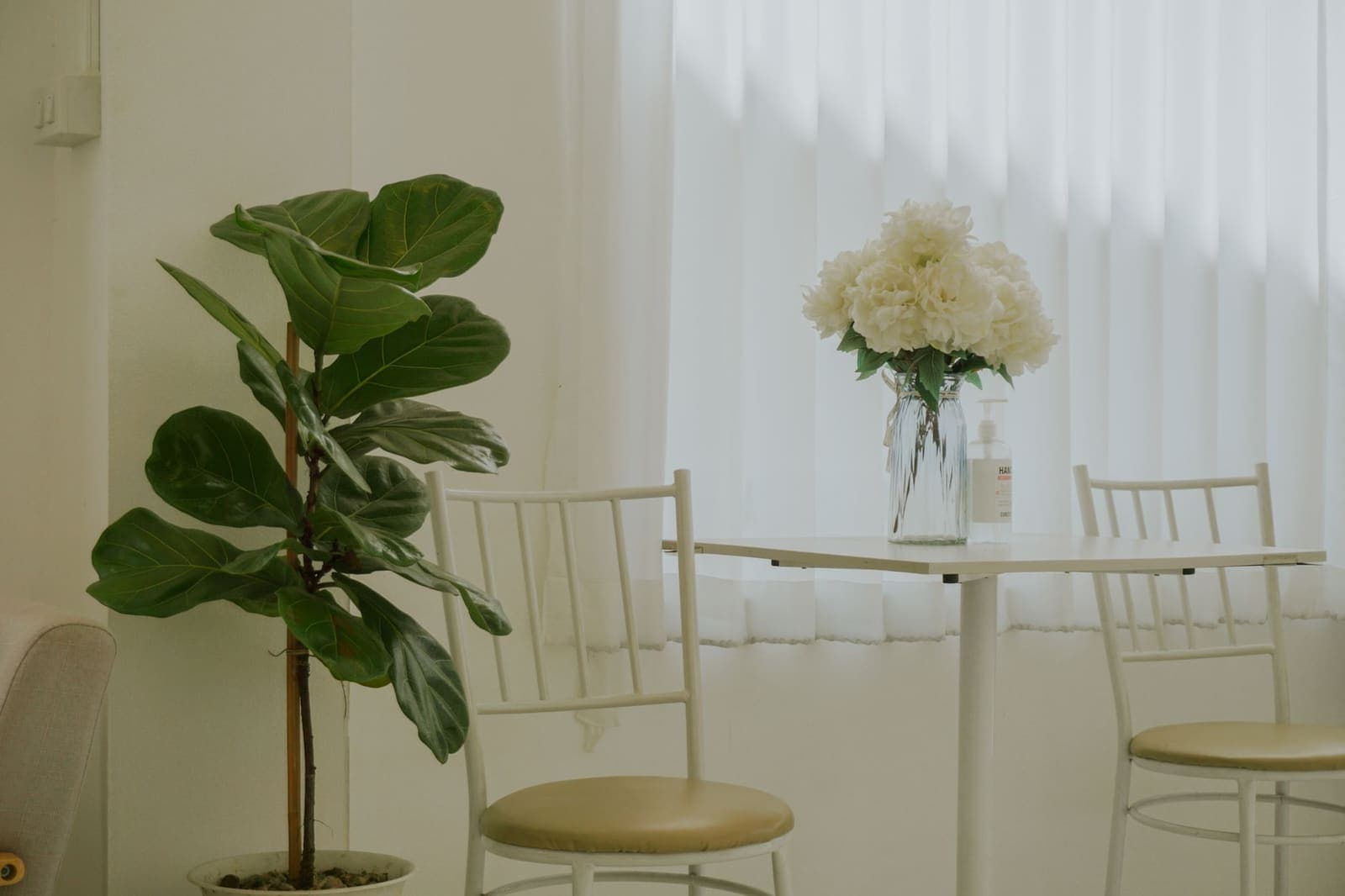
The short answer
Repot a fiddle leaf fig one size up — about two inches — into a pot with a drainage hole, and no larger, because it rots in wet mix it is not using. A 12-inch ceramic pot suits most plants sold at shoulder height; a 14-inch plastic pot is the next step and weighs a fraction of ceramic. Once the pot is 14 inches or more, put it on a rated caddy, because a 14-inch pot of wet mix computes to about 40 lb before the tree is counted.
Disclosure Pot & Prop earns a commission when you buy through the Amazon links on this page, at no extra cost to you. It does not change which products get recommended or what we say about them, and we have not been given any of them. How this site is funded.
A fiddle leaf fig is bought for its size, and its size is what makes the pot decision different from every other plant on this section. It is a tree. A plant sold at five feet is in a 10 or 12-inch pot; a plant that has lived in an apartment for three years is in 14 or 16, and at that point the pot is the heaviest object in the room that regularly gets moved. So this page is about drainage and sizing, as the others are, and then about weight, because a fiddle leaf fig's pot is a load before it is a pot.
The plant's habits sharpen the brief. It wants bright light and hates being moved — dropping leaves after a relocation is its signature complaint — which means the pot should be somewhere it can stay, and if it has to move for cleaning or a lease, it should roll rather than be carried. It wants to dry partway between waterings and rots readily in a pot that stays wet. And it is expensive, which is the reason to get the pot right the first time.
Size: one step up, and the cube rule
The tempting purchase is the big handsome floor pot — 16 or 18 inches — for a plant in a 10-inch nursery pot, because the plant is tall and the small pot looks wrong under it. Do not. The unused mix in an oversized pot stays wet for weeks, the roots at the bottom rot, and the tree drops leaves from the bottom up while its owner waters it more. Extension guidance on containers is consistent: one size at a time, about two inches, when roots have filled the current pot.
volume ratio = (D2 / D1)^3
10 in to 12 in: (12/10)^3 = 1.7 times the mix. 10 in to 16 in: (16/10)^3 = 4.1 times the mix — four times the wet soil around a root ball that has not grown at all.
Volume is 0.46315 x D^3 cubic inches on every page of this site. The pot size chart lists the steps.
| Pot size | Mix volume | Dry | Watered | Rating needed |
|---|---|---|---|---|
| 10 in | 0.268 cu ft | 5.9 lb | 14.7 lb | 23 lb |
| 12 in | 0.463 cu ft | 10.2 lb | 25.5 lb | 39 lb |
| 14 in | 0.735 cu ft | 16.2 lb | 40.5 lb | 61 lb |
| 16 in | 1.098 cu ft | 24.2 lb | 60.4 lb | 91 lb |
| 20 in | 2.144 cu ft | 47.2 lb | 117.9 lb | 177 lb |
That table is the reason there are two caddies in a pot roundup. A 14-inch pot of saturated mix computes to about 40 lb; a 16-inch pot to about 60; a 20-inch pot to about 118 lb, which is the weight of an adult. Nobody carries that to a sink, and nobody should be dragging it across a floor by the rim. The plant caddy page is the one part of this site where every product publishes a load rating, and two of them are here because a fiddle leaf fig's pot is not a complete purchase without one.
Drainage, and what the saucer has to hold
Every pot below has a drainage hole or a built-in tray; there is no exception on this page. The watering method is to soak until it runs from the hole, then let the top few inches dry, and that method needs somewhere for the run-off to go. At these sizes the run-off is not a dribble: a 12-inch pot holds about 7 liters of water between dry and wet, computed from the densities on the methodology page, and even a partial watering can put a cup or two into the saucer. Empty it. A fiddle leaf fig standing in its own saucer is the second most common way it dies, after the oversized pot.
Material follows from weight. At 12 inches, ceramic with a saucer is still a reasonable one-person pot and looks like furniture, which is what a tree in a living room should look like. At 14 inches and above, plastic is the honest recommendation: it weighs a fraction of ceramic, it does not crack when the pot is rolled over a threshold, and the good ones publish their dimensions. The material comparison has the full trade; for this plant, weight decides it.
Do not move it, and when you must, roll it
A fiddle leaf fig that is moved drops leaves. The advice from every extension source on this plant is the same — find the bright spot and leave it there — and the pot can help with that by making the rare move a roll rather than a lift. A caddy under the pot from the start means the plant can turn a quarter every two weeks for even growth, roll out for the floor to be cleaned, and roll back to the same spot, none of which counts as a move to the plant. A caddy fitted after the pot is full requires lifting the 40 lb pot onto it, once, with help.
Quick picks
Ranked, with the published figure each pick turns on. Tap a row for the full reasoning further down this page.
| # | Product | Best for | Price |
|---|---|---|---|
| 1 | 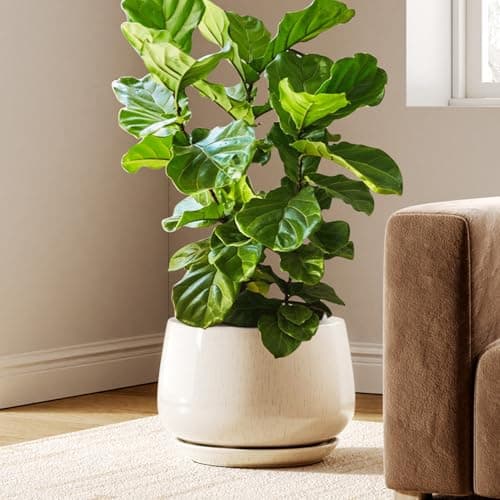 LE TAUCI 12 in Ceramic Planter with Drainage and SaucerA 12-inch glazed pot with a hole and a saucer, which is the size where the weight conversation starts and most people have not had it. | A floor plant in something that is not plastic | $84.99 at Amazon $89.99 · 6% off |
| 2 | 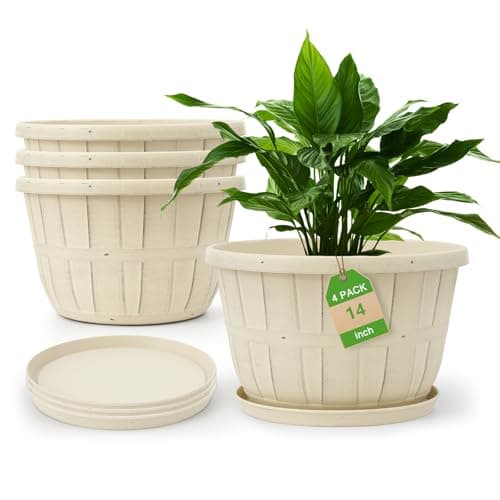 Quarut 14 in Plastic Planter with drainage and saucer, 5 gallon, 4 packThe only sensible way to put four floor plants in matching large pots without adding sixty pounds of pot to sixty pounds of soil. | Four large pots for the weight of one ceramic one | $41.50 at Amazon $43.69 · 5% off |
| 3 | 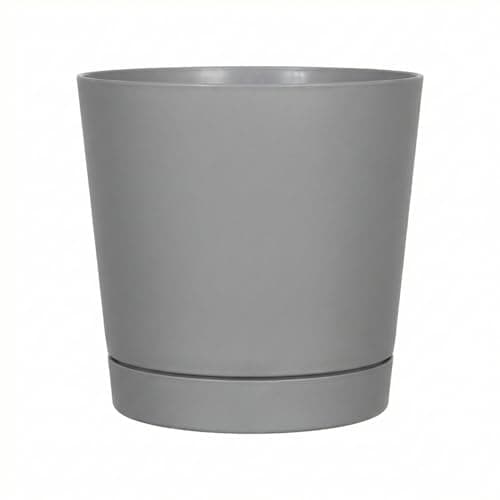 Root & Vessel 14 in Full Depth Cylinder Pot with built-in trayA full-depth cylinder rather than the usual tapered pot, which is the right shape for a plant with a deep root system and the wrong one for a shallow-rooted plant. | A deep root run for a tall floor plant | $28.99 at Amazon $31.99 · 9% off |
| 4 | 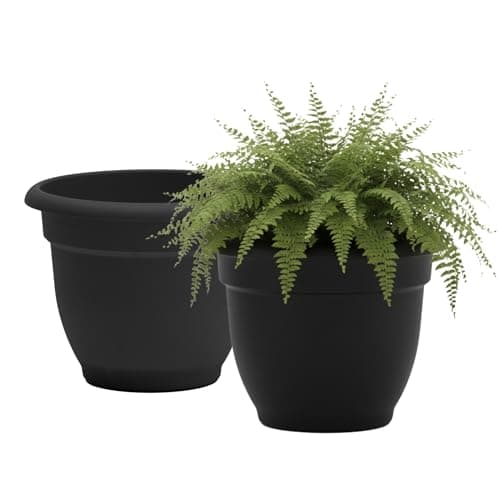 Bloem Ariana Self Watering Planter, 20 in, 2 packFloor-plant scale, which is where the weight arithmetic on this site stops being academic. This is the pot that needs a caddy underneath from day one. | A statement floor plant | $74.99 at Amazon $84.99 · 12% off |
| 5 | 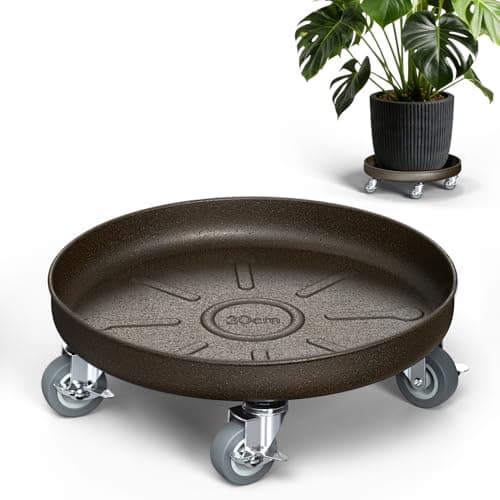 HOLKIE 12 in Plant Stand with Wheels, 320 lb, with brakeSized for the pot most apartment floor plants actually live in, with a brake and a tray that catches water rather than letting it onto the floor. | A 12-inch pot, which is most apartment floor plants | |
| 6 | 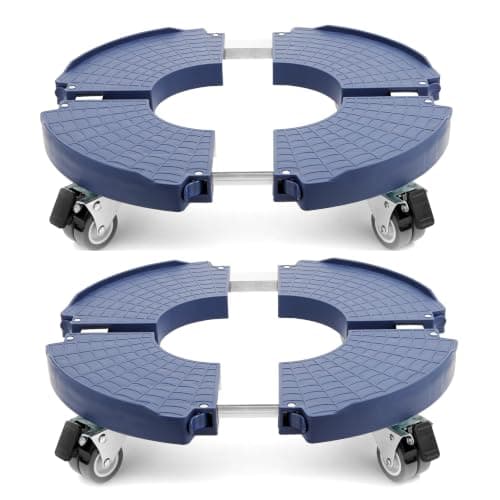 W B D WEIBIDA Plant Caddy with Wheels, 440 lb, adjustable 15 to 21 inA published rating with an order of magnitude of headroom over anything an apartment actually holds, and adjustable arms so it fits the pot you already own. | The heaviest pot in the apartment |
Links to Amazon are affiliate links. Prices and availability are Amazon's and change without notice.
How we ranked these for a fiddle leaf fig
Drainage first, then the size a plant sold at shoulder height actually needs at its first repot, then weight. The 12-inch ceramic pot leads because it is the right first repot for most plants and it is the last size that looks like furniture without being a two-person object. The 14-inch plastic pots are the step after, ranked ahead of the cylinder for their drainage holes and saucers; the cylinder is the pick for someone who wants a deep root run and a built-in tray. The 20-inch self-watering pot is on the page for one owner — a large established tree in a warm bright room — and the caddies are ranked by the pot size they fit.
| Your plant | Pot | Why |
|---|---|---|
| Sold at shoulder height, in a 10 in nursery pot | 12 in ceramic with saucer | One size up, still a one-person lift |
| Established, roots at the hole of a 12 in pot | 14 in plastic with saucer, on the 12 in caddy | The pot's published 10.2 in base sits on a 12 in tray; plastic keeps a 40 lb pot movable |
| Tall and top-heavy | 14 in full-depth cylinder | Deeper root run for a tree that leans |
| Large tree in a bright warm room, dries fast | 20 in self-watering, on the 440 lb caddy | Reservoir buys days; the caddy makes it movable at all |
The 20-inch question
A 20-inch pot is on this page with a warning attached. It is the right pot for a large, established tree that has genuinely filled a 16-inch pot, in a bright warm room where it drinks fast enough for a reservoir to be a help rather than a hazard. It is the wrong pot for anything smaller, and the cube rule makes it very wrong: 20 inches is about 2.1 cubic feet of mix, nearly five times a 12-inch pot. Buy it for the tree you have, not the one you are hoping for. And put it on the caddy before the mix goes in.
What we deliberately do not recommend
The oversized statement pot, for the reasons above. Pots without drainage at any size — at 12 inches and above a sealed pot holds liters of water the roots cannot escape. Ceramic at 16 inches and above for anyone who will ever move it: it is a two-person lift empty and a three-person one full. And self-watering pots for a young plant; the reservoir suits a large tree that drinks, not a nursery-pot plant that wants to dry out.
Every pick, in full
We have not handled any of these. What follows is what each listing publishes, what that means once you put a watered pot on it, and who should buy something else.
1. A floor plant in something that is not plastic
LE TAUCI 12 in Ceramic Planter with Drainage and Saucer
A 12-inch glazed pot with a hole and a saucer, which is the size where the weight conversation starts and most people have not had it.
- What the listing publishes
- 12 in ceramic, drainage hole and saucer included
- Against a 10-inch pot
- No weight rating is published for this product, so there is nothing to check. That counts against it here rather than being treated as neutral.
12 inches of saturated mix computes to about 25.5 lb before the pot itself, and a glazed ceramic pot this size is not light empty. This is a floor pot, not a shelf pot, and putting it on an unrated tiered stand is the mistake this site is built around.
It is also the size at which you stop moving the plant. A rated caddy underneath is the difference between cleaning behind it twice a year and never.
The saucer is included, which at 12 inches is worth real money. Large saucers are priced oddly high when bought alone.
What is good
- Drainage hole and saucer at a size where both are usually extra
- Glazed, so it does not sweat onto the floor
- Heavy enough not to be knocked over
What is not
- About 25.5 lb of saturated mix before the pot's own weight, so floor only
- Ceramic at this size is genuinely fragile in a move
- Slow-drying for plants that want to dry out
Skip it if you were planning to put it on a tiered stand. None of the tiered stands here publish a weight rating, and this is the pot that finds out.
2. Four large pots for the weight of one ceramic one
Quarut 14 in Plastic Planter with drainage and saucer, 5 gallon, 4 pack
The only sensible way to put four floor plants in matching large pots without adding sixty pounds of pot to sixty pounds of soil.
- What the listing publishes
- Published 14 in top diameter, 10.2 in base, 5 gallon capacity; four drainage holes; saucers included; recyclable polypropylene; 4 pack
- Against a 10-inch pot
- No weight rating is published for this product, so there is nothing to check. That counts against it here rather than being treated as neutral.
At 14 inches the mix alone computes to about 40.5 lb saturated. A ceramic pot that size adds real weight on top of that; polypropylene adds almost nothing, which is the entire argument for plastic at large sizes and the reason it is what garden centers grow in.
Publishing the base diameter as well as the top is genuinely useful for a large pot, because 10.2 inches of base is what determines whether it tips when the plant grows tall and whether it fits the caddy you already own.
Four drainage holes and included saucers means the system is complete in one purchase. At this size a mismatched saucer is not a small annoyance — it is a wet floor.
What is good
- Published top and base diameter, and capacity in gallons
- Four drainage holes and matched saucers included
- Negligible pot weight at a size where that matters most
What is not
- It reads as plastic, which at 14 inches is hard to hide
- A wide base needs floor space a decorative pot might not
- Whiskey-barrel styling is not neutral
Skip it if the pot is the thing you want to look at. At this size a decorative pot with a plastic nursery pot inside it is the better answer.
3. A deep root run for a tall floor plant
Root & Vessel 14 in Full Depth Cylinder Pot with built-in tray
A full-depth cylinder rather than the usual tapered pot, which is the right shape for a plant with a deep root system and the wrong one for a shallow-rooted plant.
- What the listing publishes
- Published 14 in; full-depth cylinder profile; built-in tray; lightweight plastic with a glossy finish; stated made in the USA
- Against a 10-inch pot
- No weight rating is published for this product, so there is nothing to check. That counts against it here rather than being treated as neutral.
Most decorative pots are tapered, which means a 14-inch pot holds noticeably less soil than its diameter suggests. A full-depth cylinder holds more — around a third more than this site's standard tapered model predicts, so expect it to be heavier than the 40.5 lb figure for a tapered 14-inch pot.
That extra depth is a real advantage for a tall plant that needs a deep root run and anchorage, and a real disadvantage for anything shallow-rooted, where the extra volume is mix no root reaches.
The built-in tray removes the mismatched-saucer problem at a size where saucers are hard to find and expensive.
What is good
- Built-in tray, so nothing to match separately
- Full depth suits deep-rooted floor plants
- Light for its size
What is not
- Deeper means heavier when watered than a tapered pot the same width
- Wrong shape for snake plants, succulents and other shallow-rooted plants
- Glossy plastic finish
Skip it if the plant is shallow-rooted. Depth it will not use is mix that stays wet.
4. A statement floor plant
Bloem Ariana Self Watering Planter, 20 in, 2 pack
Floor-plant scale, which is where the weight arithmetic on this site stops being academic. This is the pot that needs a caddy underneath from day one.
- What the listing publishes
- Published 20 in; built-in self-watering grid rather than a stated reservoir volume; UV-resistant BPA-free plastic; sold as a 2 pack
- Against a 10-inch pot
- No weight rating is published for this product, so there is nothing to check. That counts against it here rather than being treated as neutral.
A 20-inch pot of saturated mix computes to roughly 118 lb before the reservoir is filled or the plant is counted. Nobody moves that to vacuum behind it.
That number is the single best argument for the rated caddies in the plant stands section. A 440 lb caddy under a 118 lb pot is not overkill, it is the only way the pot ever moves again.
At this size a reservoir genuinely earns its place, because hand-watering a 20-inch pot means carrying several liters at a time.
What is good
- Floor-plant size with a reservoir built in
- Reduces how often you carry water across a room
- Stable by sheer mass
What is not
- Roughly 118 lb of saturated mix before water or plant
- Reservoir volume is not published — the listing states a self-watering grid and no capacity
- Needs a rated caddy to ever be moved again, and it is a 2 pack, so budget for two
Skip it if you rent and move often. A 20-inch planted pot is a two-person object and it does not go down stairs easily.
5. A 12-inch pot, which is most apartment floor plants
HOLKIE 12 in Plant Stand with Wheels, 320 lb, with brake
Sized for the pot most apartment floor plants actually live in, with a brake and a tray that catches water rather than letting it onto the floor.
#ad · Price as of October 25, 2026. How we are funded
- What the listing publishes
- Published 320 lb total capacity; 12 in tray; brake; doubles as a saucer
- Against a 10-inch pot
- Rated 320 lb against 14.7 lb of saturated mix in a 10-inch pot — 21.8x, clear of the 1.5x margin this site requires.
A 12-inch pot computes to about 25.5 lb of saturated mix, so a 320 lb rating is over twelve times the load. That is the right amount of nothing to worry about.
The saucer function is the quiet win. A caddy that is also a drip tray removes a separate purchase and, more importantly, removes the gap between caddy and saucer where water finds carpet.
12 inches is a fixed size. It is the right fixed size for more apartments than 14 or 21 inches are.
What is good
- Published rating, a brake, and a tray that catches water
- Sized for the pot most apartment plants are already in
- Cheaper than the adjustable large-format caddies
What is not
- Fixed 12 in
- Tray depth is shallow: it catches a spill, not a flood
- Small casters do not like thick rugs
Skip it if you are buying for a floor plant in a 16-inch pot. It will overhang, and an overhanging pot on a caddy tips.
6. The heaviest pot in the apartment
W B D WEIBIDA Plant Caddy with Wheels, 440 lb, adjustable 15 to 21 in
A published rating with an order of magnitude of headroom over anything an apartment actually holds, and adjustable arms so it fits the pot you already own.
#ad · Price as of October 25, 2026. How we are funded
- What the listing publishes
- Published 440 lb capacity; adjustable arms fit 15 to 21 inch pots
- Against a 10-inch pot
- Rated 440 lb against 14.7 lb of saturated mix in a 10-inch pot — 29.9x, clear of the 1.5x margin this site requires.
A 16-inch pot of saturated mix computes to about 60 lb. A 440 lb rating is roughly seven times that, the kind of margin that makes the number boring, and boring is what you want under a floor pot.
The adjustable 15 to 21 inch span is why this beats a fixed-diameter caddy. Pot diameters in this category are not standardized, and a caddy that fits one pot and not the next is a caddy you buy twice.
The rating is for the caddy as a unit on an apartment floor. It is not a claim about rolling a 400 lb load over a threshold, and no caddy listing means it that way.
What is good
- Publishes a real number, which most of this category does not
- Adjustable span fits pots from 15 to 21 inches
- Turns a pot you cannot lift into one you can move to clean behind
What is not
- Wheels lift the pot an inch or two, which matters under a low sill
- Adjustable arms are more parts to assemble than a solid tray
- Casters mark soft vinyl over time
Skip it if your pots are under 12 inches. You are paying for a rating you will never approach, and a 12-inch fixed caddy costs less and rolls the same.
Questions people actually ask
What size pot does a fiddle leaf fig need?
Does a fiddle leaf fig need a drainage hole?
How heavy is a fiddle leaf fig in a pot?
Should a fiddle leaf fig be in plastic or ceramic?
Can a fiddle leaf fig go in a self-watering pot?
Why does my fiddle leaf fig drop leaves after I move it?
Sources
- Cornell University, Greenhouse Management: bulk density of greenhouse media components
- Biology Insights: how much a cubic foot of potting soil weighs, dry and saturated
- Clemson HGIC: Indoor Plants — cleaning, fertilizing, containers and light requirements
- Clemson HGIC: Indoor Plants — watering
- University of Georgia Extension B1318: Growing Indoor Plants with Success
Product specifications are quoted from each seller's own listing and are the seller's claim, not a measurement of ours.