Propagation
How to Propagate a Snake Plant
Three methods, one important catch about variegated plants, and an honest warning that this is the slow one.
By Scooter M., enthusiast · Published · Last updated
The short answer
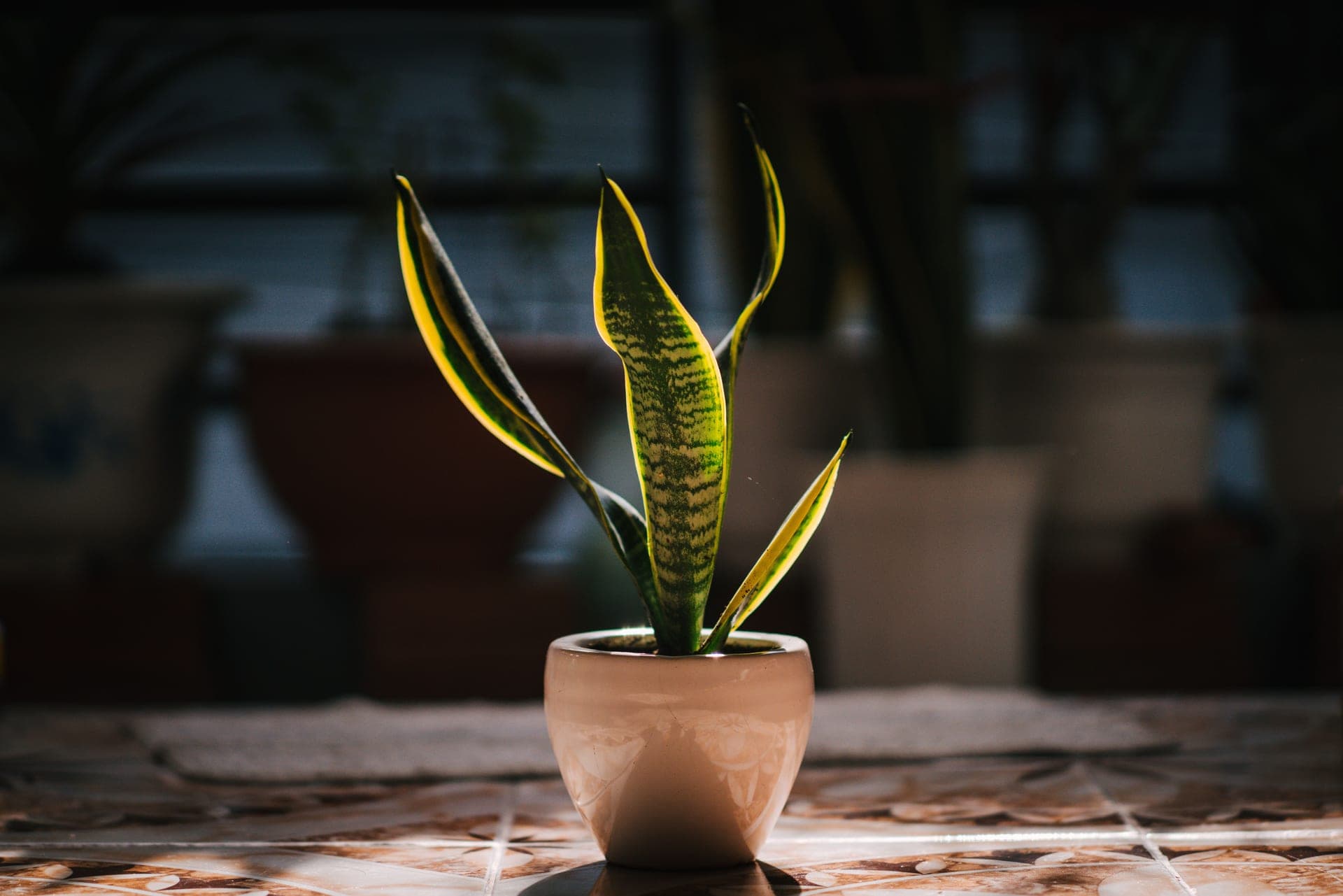
Division is fastest and gives you a real plant immediately; leaf cuttings in water or soil work but take months. If your snake plant is variegated — a yellow or cream edge — leaf cuttings will produce plain green offspring, and only division preserves the variegation. Whatever you do, this plant rots easily, so keep water shallow and the mix dry.
Disclosure Pot & Prop earns a commission when you buy through the Amazon links on this page, at no extra cost to you. It does not change which products get recommended or what we say about them, and we have not been given any of them. How this site is funded.
Snake plants are the plant people most often try to propagate second, after pothos, and the experience is completely different. Pothos roots in a fortnight and rewards you constantly. A snake plant leaf cutting sits in a jar looking exactly the same for six to ten weeks, and then, if all has gone well, produces a small root. It is genuinely worth doing and it is worth knowing what you are signing up for.
The variegation catch, which comes first
If your snake plant has a yellow or cream margin — the common Laurentii type — a leaf cutting will not reproduce it. New growth from a leaf cutting typically comes back plain green, because the variegated tissue is a layer that does not regenerate from a leaf fragment. Only division, which keeps a piece of the underground rhizome attached, preserves the pattern. Nobody mentions this until after you have waited three months, so it is here at the top.
Method one: division, which is what most people should do
- Slide the whole plant out of its pot and look at the base. A snake plant grows in clumps from a thick underground rhizome, and separate fans of leaves are usually separate growth points.
- Find a natural division — a fan with its own roots attached. Sometimes it pulls apart by hand; sometimes it needs a clean knife through the rhizome.
- Cut with a clean blade and make sure each division has both leaves and roots.
- Let the cut surfaces dry for a day. A callused cut is much less likely to rot, and rot is the main risk with this plant.
- Pot into a gritty, free-draining mix in a pot barely larger than the roots. Wait a week before watering.
Method two: leaf cuttings in water
- Cut a healthy leaf near the base with a clean blade.
- Note which end was down. A snake plant leaf will only root from its original bottom end, and a leaf placed upside down does nothing at all. Marking the bottom with a small notch is the standard trick.
- Let the cut end dry for a day, then stand the leaf in an inch of water, bottom end down.
- Change the water weekly and be patient. Roots in six to ten weeks; a pup — a new shoot from the base — considerably later.
- Pot up once there are roots and a visible pup. Roots alone are not yet a plant.
Method three: leaf cuttings in soil
The same as the water method, but the dried leaf section goes an inch into gritty mix instead of into water, and the mix is kept barely damp. It is slower to show progress because you cannot see anything, and it produces roots better adapted to soil, so the eventual transition is easier. For a plant this slow, either method requires the same virtue.
How long each takes
| Method | Time to roots | Time to a real plant | Keeps variegation |
|---|---|---|---|
| Division | Already rooted | Immediately | Yes |
| Leaf in water | 6 to 10 weeks | Several months | No |
| Leaf in soil | Similar, unseen | Several months | No |
Every pick, in full
We have not handled any of these. What follows is what each listing publishes, what that means once you put a watered pot on it, and who should buy something else.
1. Thin cuttings, minimum water, minimum space
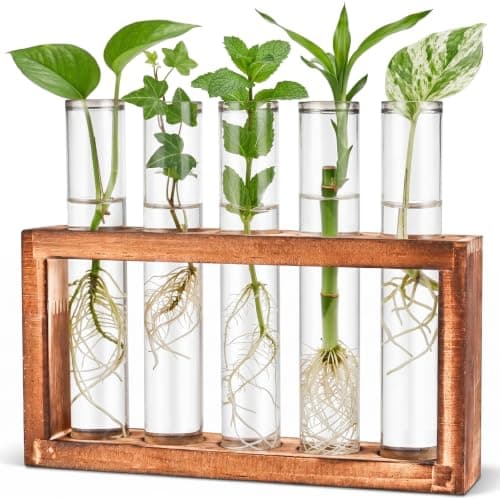
Tigvio 5 Test Tube Desktop Propagation Station, wooden stand
The narrow-tube format: less water, less evaporation, more cuttings per inch of desk, and a real limit on how thick a cutting it takes.
#ad · Price as of October 18, 2026. How we are funded
- What the listing publishes
- Five glass test tubes in a wooden rack
- Against a 10-inch pot
- No weight rating is published for this product, so there is nothing to check. That counts against it here rather than being treated as neutral.
A test tube holds a fraction of what a jar does, which means the water goes stale faster and needs changing more often, not less. Small volume is not less maintenance.
Five tubes on about 10 by 3 inches is a fifth of a square foot. Nothing else on this site puts five living things in that.
Tubes suit pothos, tradescantia, philodendron and herb cuttings. They do not suit monstera, and forcing a thick node into one snaps the aerial root.
What is good
- The smallest footprint of any propagation format here
- A wooden rack is stable and does not slide
- Cheap enough to buy two
What is not
- Small water volume goes stale quickly
- Too narrow for thick cuttings
- A tube rack tips if a cutting grows tall and leans
Skip it if you are propagating monstera. The node and its aerial root will not fit, and a wide jar is the right tool.
2. Plants that must dry out between waterings
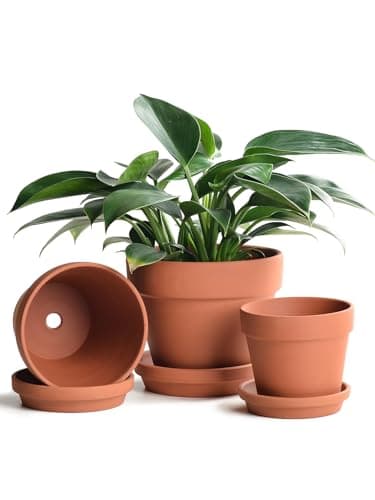
INGOFIN Terracotta Pots with Saucers, 5, 6 and 7 in
Porous clay, the only pot material that actively removes water from the mix, and the reason succulents live longer in terracotta than in anything else.
#ad · Price as of October 18, 2026. How we are funded
- What the listing publishes
- 5, 6 and 7 in unglazed clay, drainage hole and saucer per pot
- Against a 10-inch pot
- No weight rating is published for this product, so there is nothing to check. That counts against it here rather than being treated as neutral.
Unglazed terracotta breathes through the wall, so the mix dries from the sides as well as the top. For a plant that rots when wet that is a feature you cannot get from a plastic pot with a bigger hole.
It also means the pot itself is damp. Terracotta sitting directly on wood leaves a ring, which is what the pot feet elsewhere in this section exist for.
Clay adds real weight for its size. On a shelf with no published rating, a set of three terracotta pots is meaningfully heavier than the same set in plastic.
What is good
- Dries the mix from the sides, not just the top
- Three sizes for potting up
- A heavy base resists being knocked over
What is not
- Damp clay marks wood floors and shelves
- Heavier than plastic at the same size
- Dries so fast that thirsty plants need watering twice as often
Skip it if you travel or forget to water. Terracotta is the least forgiving material for an under-waterer, and glazed ceramic is the fix.
Questions people actually ask
Can you propagate a snake plant in water?
Why will my snake plant cutting not root?
Will a snake plant cutting keep its yellow edges?
How do you divide a snake plant?
Sources
- University of Illinois Extension: Houseplants — propagation
- Clemson HGIC: Indoor Plants — watering
- Michigan State University Extension: Smart Gardening — growing houseplants indoors
Product specifications are quoted from each seller's own listing and are the seller's claim, not a measurement of ours.