Planters
The Best Fungus Gnat Traps for Houseplants
Yellow cards catch the gnats you can see. The ones you cannot see are in the medium, and no card reaches them. Here is the whole job.
By Scooter M., enthusiast · Published
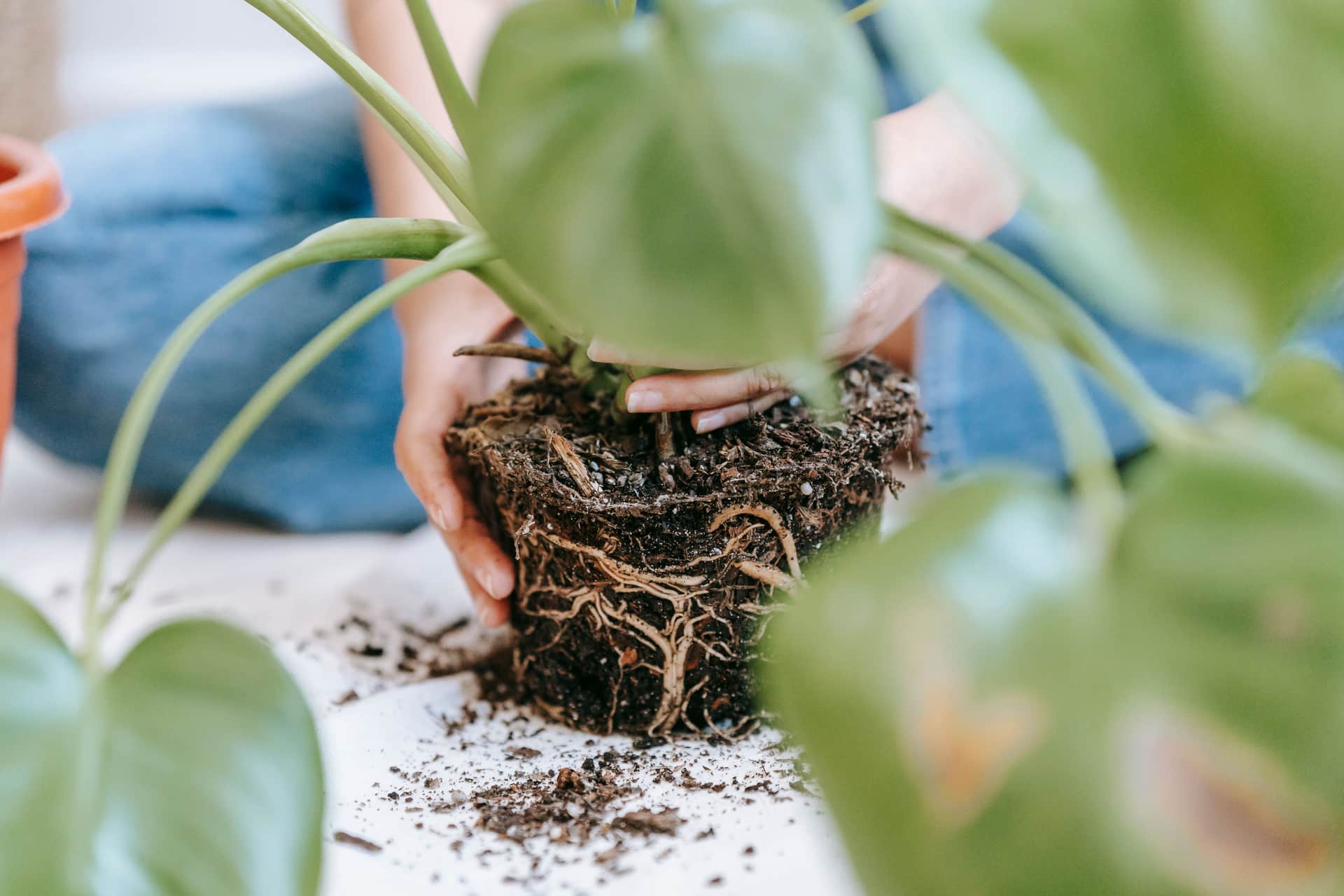
The short answer
Buy a large pack of double-sided yellow cards and put one in every pot, not a couple in the room — gnats emerge from the medium, so you want to intercept them where they hatch. But understand what you have bought: cards catch flying adults and cannot touch what is in the pot. The actual fix is drying the top of the medium out between waterings, and the fastest way to know when you have is to stop guessing and measure. Keep trapping until the cards stop filling, then stop. That is an observable finish line rather than a guessed one.
Disclosure Pot & Prop earns a commission when you buy through the Amazon links on this page, at no extra cost to you. It does not change which products get recommended or what we say about them, and we have not been given any of them. How this site is funded.
Fungus gnats are the most common houseplant pest and the least dangerous, which is a bad combination — they are alarming enough to send you shopping and harmless enough that the shopping usually solves nothing. You buy yellow cards, the cards fill up, and three weeks later there are still gnats.
That is not because the cards are bad. It is because of what a card is: a surface that catches things that fly into it. The gnats flying around your monstera are the visible end of a population that is not flying at all.
What a sticky card can and cannot do
Every product in this roundup is upfront about catching flying pests, which is exactly the right claim and exactly the limit. And one product here gives the game away on the rest of the category. It is a bundle: twelve sticky traps and a bottle of spray, and the spray's published instruction is to apply it to the soil to target pests, eggs and larvae.
So the honest framing is this: cards are interception and measurement. They reduce the adults you see, they stop some of them laying again, and — the underrated part — they tell you whether you are winning. A card that fills in two days is a different situation from a card that stays clean for a week.
One card per pot, at soil level
The commonest deployment mistake is treating cards as room decor: two on a windowsill, one near the door. Adults emerge from medium, so the pot is where the interception rate is highest. A card two feet away catches whatever happens to drift past it.
That reframes the purchase entirely. You are not buying "some traps" — you are buying a number of pots' worth, with replacements. Count your plants, then buy for that.
| Pack | Cards | Pots covered, one each | With one replacement round |
|---|---|---|---|
| 100 pack | 100 | 100 | 50 |
| 58 pack | 58 | 58 | 29 |
| 48 pack | 48 | 48 | 24 |
| Spray bundle | 12 | 12 | 6 |
Replacement is not optional and it comes sooner than it looks. A card stops working once the adhesive is covered, and it gets covered by dust, potting debris and pet hair as readily as by insects. One listing here states the rule plainly: replace when the surface is covered. At a hundred cards you can actually follow it.
What to judge a card on
| Feature | Why it matters | What to look for |
|---|---|---|
| Card count | One per pot, plus replacements | Count your pots and double it |
| Double-sided adhesive | Twice the catching area, same footprint | Stated on both faces |
| Rigid stake | A limp card folds into the foliage | A plastic stake, not just a wire |
| Shape | Whether it reads as decor or as pest control | Cut shapes for a living room |
Notice what is not on that list: adhesive strength, which no listing here quantifies, and catch rate, which none of them publishes either. Those are the things you would most like to compare and there is nothing checkable to compare them on. Count, sidedness, stake and shape are what is actually stated.
Now the part that ends it
A fungus gnat problem is a wet-medium problem. The eggs and larvae the spray listing refers to are in damp growing medium near the surface, and the single most effective thing you can do costs nothing: stop keeping the top of the pot permanently moist.
That is harder than it sounds, because most people water on a schedule rather than on a condition, and because several of the setups this site otherwise recommends make it easy to keep a pot wetter than you realize.
- Let the top of the medium dry before watering again. Extension guidance on container plants is consistent that pots should not be kept continuously saturated, and the top inch is exactly where gnats are breeding.
- Stop guessing at it. A finger tells you about the surface. A moisture meter reads deeper, and this is the one situation where knowing the top is dry while the root zone is not is precisely the information you need.
- Empty the cachepot. The cachepot page is about invisible standing water in a decorative cover, and standing water under a nursery pot is a permanently damp surface no amount of top-watering discipline will fix.
- Water from the bottom where the plant allows it. The medium wets from below and the surface stays dry, which is the same argument the African violet page makes for a different reason.
- Check the saucer. A saucer left full re-wets the bottom of the pot indefinitely; pot feet keep the base above it.
- Consider the medium itself. LECA is fired clay with no organic matter in it — an inhospitable place to be a larva, and the most drastic version of this fix.
Quick picks
Ranked, with the published figure each pick turns on. Tap a row for the full reasoning further down this page.
| # | Product | Best for | Price |
|---|---|---|---|
| 1 | 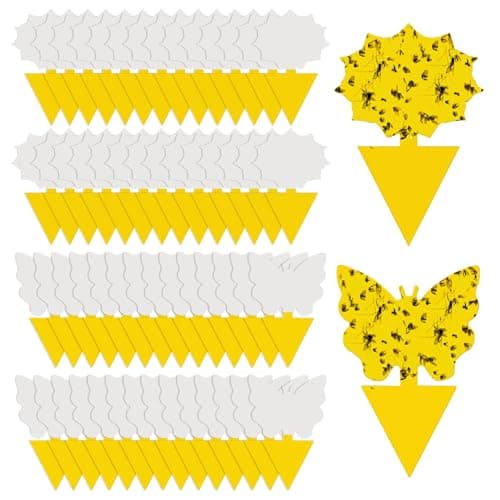 Cleanuper Yellow Sticky Gnat Traps, 58 pack, stake mountedEnough cards to put one in every pot you own, in a shape that reads as decoration rather than as an admission of a pest problem. | A collection of plants, where one trap per pot is the whole strategy | $5.99 at Amazon $9.99 · 40% off |
| 2 | 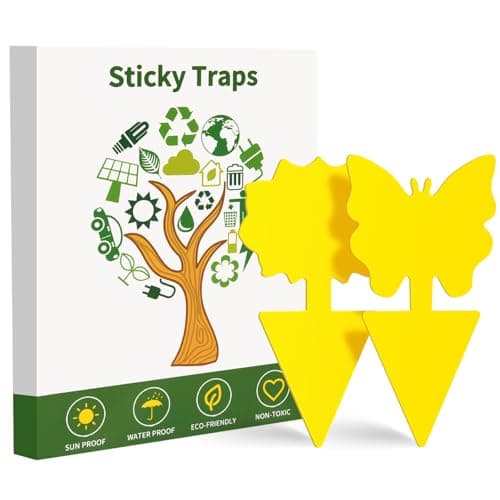 Boromine Yellow Sticky Traps, 100 packThe quantity that lets you treat cards as disposable, which is how they should be treated — a saturated card is a dead card. | Replacing cards weekly until they stop filling, without rationing | |
| 3 | 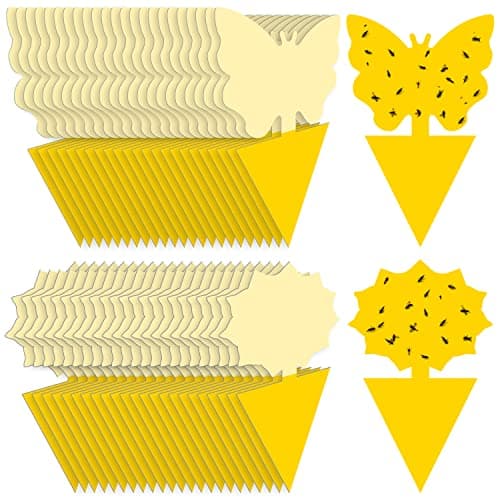 Landisun Yellow Sticky Traps, 48 pack, two shapesThe only listing here that calls the cards a monitoring tool as well as a control, which is the more honest description of what they do. | Finding out whether you have a gnat problem before committing to one | |
| 4 | 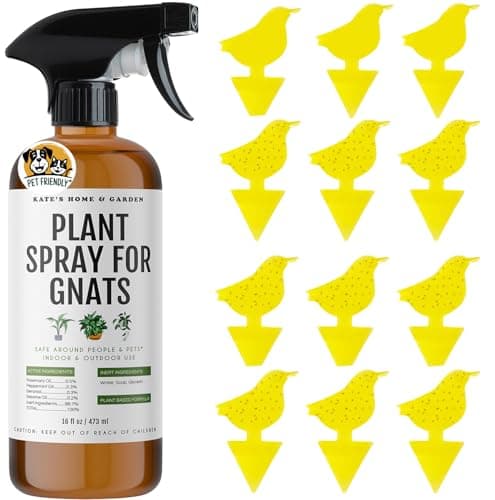 Kate's Home & Garden Plant Spray for Insects and Gnats, 16 oz, with 12 trapsThe only product here that addresses the medium, and its own listing is the clearest evidence on this page that cards alone are half a solution. | The half of the problem that sticky cards physically cannot reach | |
| 5 | 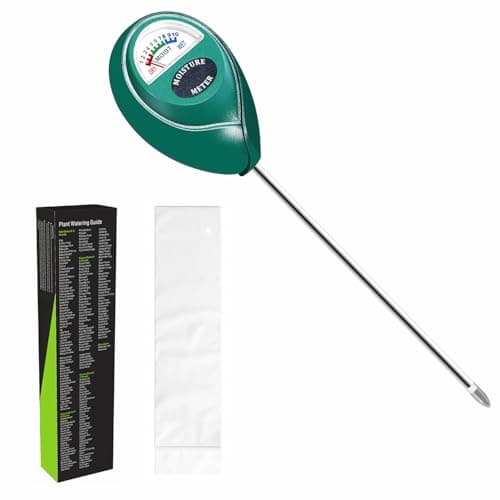 XLUX Soil Moisture Meter, 26 cm, battery-freeThe plain version of the long-probe meter above, at a slightly lower price and a probe short enough that a large floor pot will out-depth it. | The default cheap meter, for pots of ordinary depth |
Links to Amazon are affiliate links. Prices and availability are Amazon's and change without notice.
How we ranked these
On cards per pot first, then on whether the adhesive is on both faces, then on whether the card will actually stand up in medium, then on how it looks in a room. The 58-pack leads because it pairs a high count with a rigid stake and shaped cards, which is the combination that gets them deployed in every pot rather than hidden in two. The 100-pack is second and is the right buy if the plants are on a shelf rather than in a living room — the count is high enough that replacing cards weekly stops being a decision. The 48-pack is third and is the one that describes itself as a monitoring tool, which is the most honest sentence in the category. The spray bundle is fourth and is not really a trap purchase at all: it is the soil half, and its twelve cards are a token. The moisture meter is last and is the actual answer — the tool that tells you when the top of the pot is dry, which is the thing that ends the problem rather than counting it.
| Your situation | Buy | Why |
|---|---|---|
| Not sure they are gnats | 48 pack | Cheapest way to find out, and it says so |
| A collection in a living room | 58 pack | Stake plus shaped cards in every pot |
| A plant shelf, appearance no issue | 100 pack | Replace weekly without rationing |
| Established problem, cards filling fast | Spray bundle plus a card pack | Something has to reach the medium |
| You want it to stop coming back | Moisture meter | The problem is how wet the top stays |
| Sensitive or fuzzy foliage | Cards plus a watering change | Skip the spray; test-patching is not worth it |
What we deliberately do not recommend
Buying two cards for a room of plants and expecting a result. Leaving a saturated card in place because it still looks yellow at the edges. Treating cards as a cure rather than as interception and measurement. Spraying anything on fuzzy-leaved plants, or on any plant, without doing the patch test the listing itself instructs. Adding a layer of sand or gravel on top of the medium as a barrier, which is the internet's favorite fix and simply moves the wet zone rather than removing it — the same reasoning the drainage guide applies to gravel at the bottom of a pot. And continuing to water on a schedule while wondering why the cards keep filling.
Every pick, in full
We have not handled any of these. What follows is what each listing publishes, what that means once you put a watered pot on it, and who should buy something else.
1. A collection of plants, where one trap per pot is the whole strategy
Cleanuper Yellow Sticky Gnat Traps, 58 pack, stake mounted
Enough cards to put one in every pot you own, in a shape that reads as decoration rather than as an admission of a pest problem.
- What the listing publishes
- Published 58 traps (29 sunflower and 29 butterfly shapes) with adhesive on both faces; rigid plastic stake that inserts at soil level plus an included wire for hanging; stated UV-resistant and waterproof; stated to catch fungus gnats, aphids, fruit flies, thrips and whiteflies
- Against a 10-inch pot
- No weight rating is published for this product, so there is nothing to check. That counts against it here rather than being treated as neutral.
Trap count is the specification that actually decides this purchase, because the correct deployment is one card per pot rather than a couple in the room. Gnats emerge from the medium, so a card in the pot intercepts them at the source; a card across the room catches whatever happens to fly past. Fifty-eight cards covers a serious collection with replacements.
Adhesive on both faces doubles the catching surface for the same footprint, and every card in this set has it. It also means you cannot lay a used card down anywhere you care about.
The rigid stake matters more than the shape. Flimsy cards on wire bend into the foliage and stick to leaves; a stiff stake holds the card upright at soil level where the gnats are emerging.
What is good
- Highest practical count here per pot at this price
- Adhesive on both faces, and a stake stiff enough to stay upright
- Shapes that look deliberate in a plant display
What is not
- Catches flying adults only — the larvae in the medium are untouched
- The glue picks up dust and pet hair as readily as insects
- Yellow cards in every pot are visible, whatever shape they are cut into
Skip it if you want the problem solved rather than monitored. Cards are the interception half; the medium is the other half and no card reaches it.
2. Replacing cards weekly until they stop filling, without rationing
Boromine Yellow Sticky Traps, 100 pack
The quantity that lets you treat cards as disposable, which is how they should be treated — a saturated card is a dead card.
#ad · Price as of September 27, 2026. How we are funded
- What the listing publishes
- Published 100 traps with double-sided thickened adhesive; stated UV-resistant and waterproof; stated to be used until insects cover the surface; inserted directly into the soil; stated non-toxic and odorless with no chemical additives
- Against a 10-inch pot
- No weight rating is published for this product, so there is nothing to check. That counts against it here rather than being treated as neutral.
A trap stops working long before it looks full. Once the adhesive is covered by dust, debris and the first wave of insects, the card is decoration. The listing's own guidance is to replace when the bugs cover it, and at a hundred cards you can actually do that rather than squeezing another week out of one.
This is the plainest product in the set: cards, adhesive, no stake, no shaping. Everything goes into count. If the traps are for your own shelf rather than a display in a living room, that is the right trade.
No stake means you are pushing the card itself into the medium, which works in a firm mix and folds over in a loose or chunky one.
What is good
- The highest count here, so replacement stops being a decision
- Double-sided thickened adhesive, stated waterproof
- No fragrance, no chemistry, nothing to keep away from pets beyond the glue
What is not
- Still adults only, like every card in this category
- No rigid stake, so cards bend in loose or bark-heavy medium
- Plain yellow rectangles look exactly like what they are
Skip it if the plants are in a living room you care about the look of. These are functional cards and they will read as pest control on the shelf.
3. Finding out whether you have a gnat problem before committing to one
Landisun Yellow Sticky Traps, 48 pack, two shapes
The only listing here that calls the cards a monitoring tool as well as a control, which is the more honest description of what they do.
#ad · Price as of September 27, 2026. How we are funded
- What the listing publishes
- Published 48 traps in sunflower and butterfly shapes with a double-sided design; stated chemical-free, non-toxic and odorless; listing states the double-sided design helps monitor infestation levels as well as catch
- Against a 10-inch pot
- No weight rating is published for this product, so there is nothing to check. That counts against it here rather than being treated as neutral.
"Helping monitor infestation levels" is the sentence worth buying this for. That is what a sticky card genuinely is: a population counter you can read at a glance. A card filling fast means larvae are still hatching; a card that stays clean for a week means the medium has dried out enough to break the cycle.
Using them as a gauge changes the stopping rule from a guess to an observation. You stop when cards stop filling, not after an arbitrary two weeks, and nobody has to claim a generation time to make that work.
Forty-eight cards is a middling count and the cheapest entry here, which suits the case where you are not yet sure whether the flying things around your monstera are gnats at all.
What is good
- Publishes its monitoring role rather than only its catching role
- Two shapes, double-sided, at the lowest price in this set
- Enough cards for a medium collection without over-buying
What is not
- Adults only — the same fundamental limit as every card here
- No published stake, so placement depends on the medium's firmness
- Cards lose grip to dust well before they look used up
Skip it if you already know the infestation is established. At that point you want the larger counts here and something that reaches the medium.
4. The half of the problem that sticky cards physically cannot reach
Kate's Home & Garden Plant Spray for Insects and Gnats, 16 oz, with 12 traps
The only product here that addresses the medium, and its own listing is the clearest evidence on this page that cards alone are half a solution.
#ad · Price as of September 27, 2026. How we are funded
- What the listing publishes
- Published 16 oz spray with 12 sticky traps; stated natural peppermint and rosemary oil formulation made in the USA; listing states it is applied liberally on the soil to target pests, eggs and larvae, and directs a patch test on one or two leaves with a six-hour wait before full application
- Against a 10-inch pot
- No weight rating is published for this product, so there is nothing to check. That counts against it here rather than being treated as neutral.
Read the listing's instruction: apply liberally on soil to target pests, eggs and larvae. That is a seller of sticky traps telling you, in the same bundle, that the sticky traps do not reach where the population is. It is the most useful sentence in this category and it appears in the marketing copy.
The patch-test instruction is also published and should be followed rather than skipped. Essential-oil sprays vary in how plants tolerate them, and the listing's own direction is to test on one or two leaves and wait six hours before doing the whole plant.
Twelve traps is a token count next to the card packs here, so treat this as the soil half of a purchase rather than a complete kit. The economics only work if you already have cards or buy a pack alongside.
What is good
- Targets the soil, where cards by definition cannot
- Publishes a patch-test procedure instead of assuming tolerance
- Named actives rather than an unspecified natural blend
What is not
- Twelve traps is far too few to cover a collection
- No published concentration for either oil, so strength cannot be checked
- Most expensive item here and the spray is the consumable part
Skip it if your plants include anything with sensitive or fuzzy foliage you would rather not spray. Drying the top of the medium out is free and carries no leaf risk.
5. The default cheap meter, for pots of ordinary depth
XLUX Soil Moisture Meter, 26 cm, battery-free
The plain version of the long-probe meter above, at a slightly lower price and a probe short enough that a large floor pot will out-depth it.
#ad · Price as of September 27, 2026. How we are funded
- What the listing publishes
- Published 26 cm overall, 47 g; single 304 stainless probe; battery-free dial with ten scales across dry, moist and wet; listing states soil use only
- Against a 10-inch pot
- No weight rating is published for this product, so there is nothing to check. That counts against it here rather than being treated as neutral.
This is the meter most people picture when they picture a moisture meter: a green dial, a single steel probe, no battery. For a 6 to 8-inch pot it reaches far enough to tell you something your finger could not.
At 26 cm overall the probe itself is shorter than the long version, and the useful length is shorter still once the dial housing is accounted for. In a 12-inch pot that is a problem, because the reading you get is from the zone that dries first rather than the zone the roots are in.
The listing leans on its rating count rather than on a specification. That is not evidence of accuracy; it is evidence of sales. Nothing here publishes tolerance, units or a way to calibrate, so the honest use is comparative — same pot, same spot, two different days.
What is good
- Cheapest route to a probe that reaches past finger depth
- Stainless probe and no battery to replace
- Publishes its overall length and weight
What is not
- Probe too short for large floor pots, which is where a meter is most useful
- No published accuracy, units or calibration
- Sold on rating count rather than on any specification
Skip it if your biggest pot is 12 inches or more. Buy the long-probe version instead; the extra few dollars is the entire point of the tool.
Questions people actually ask
Do sticky traps get rid of fungus gnats?
How many fungus gnat traps do I need?
Where should I put fungus gnat traps?
How long does it take to get rid of fungus gnats?
What actually kills fungus gnats in soil?
Does putting sand on top of the soil stop fungus gnats?
Are fungus gnats harmful to plants?
Sources
- Clemson HGIC: Indoor Plants — cleaning, fertilizing, containers and light requirements
- Clemson HGIC: Indoor Plants — watering
- Michigan State University Extension: Smart Gardening — growing houseplants indoors
Product specifications are quoted from each seller's own listing and are the seller's claim, not a measurement of ours.