Planters
The Best Pots for Spider Plants
Spider plant roots are fat, fast and push the whole plant upward. The right pot drains, gives them room, and hangs from a hook that is rated for it.
By Scooter M., enthusiast · Published
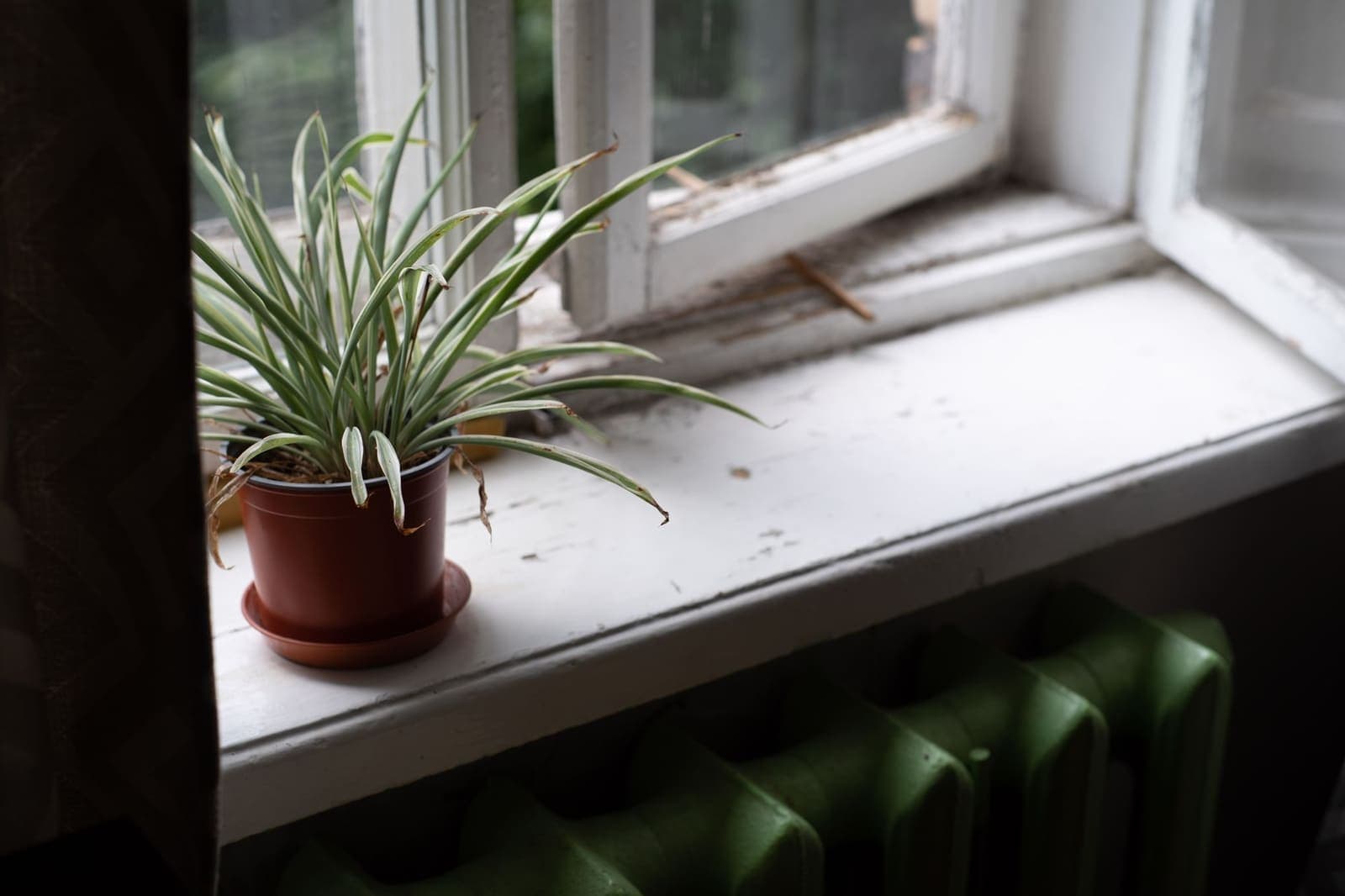
The short answer
A spider plant wants a pot with a drainage hole, one size wider than the root ball, in plastic or glazed ceramic rather than terracotta — its fleshy roots store water and the plant browns at the tips when it dries too hard. A 10-inch hanging pot with drainage is the classic home for a plant with babies; an 8-inch pot with a saucer is right for a shelf. If it hangs, the hook needs to hold about 15 lb for a 10-inch pot watered, plus margin.
Disclosure Pot & Prop earns a commission when you buy through the Amazon links on this page, at no extra cost to you. It does not change which products get recommended or what we say about them, and we have not been given any of them. How this site is funded.
A spider plant is the plant people buy because it is indestructible, and then search for a pot because it has done something alarming: risen an inch out of its pot, split a plastic one, or turned the tips of every leaf brown. All three come from the same source. The roots are thick, fleshy and fast — they store water, they fill a pot within a season, and when they run out of room they push upward instead of stopping. The pot's job is to give them somewhere to go and to drain when they are watered.
That makes this a different brief from most of the planters pages. The plant is not fussy about light, is forgiving of a missed watering, and is nearly always sold with a chain because the babies look best trailing. So the decisions are: hang or shelf, plastic or ceramic, and what size — and for the hanging half, what the hook has to hold.
Why spider plants climb out of their pots
The roots are the reason, and it is worth understanding before buying anything. Spider plant roots are tuberous — swollen storage organs rather than fine threads — and a happy plant fills a pot with them fast. A pot-bound plant does not sulk the way a fern would; it produces babies, which is the behavior people want, and then it lifts. A plant sitting proud of the rim by an inch, with roots visible at the surface, is not sick. It needs one size up.
One size up means about two inches, and the cube rule applies: a 6-inch pot to an 8-inch pot is 2.4 times the mix, which is plenty. Going straight from 6 inches to 10 is 4.6 times, and the plant will sit in wet mix for weeks while the roots catch up. The pot size chart sets out the steps.
| Pot size | Mix volume | Dry | Watered | Rating needed |
|---|---|---|---|---|
| 6 in | 0.058 cu ft | 1.3 lb | 3.2 lb | 5 lb |
| 8 in | 0.137 cu ft | 3 lb | 7.5 lb | 12 lb |
| 10 in | 0.268 cu ft | 5.9 lb | 14.7 lb | 23 lb |
| 12 in | 0.463 cu ft | 10.2 lb | 25.5 lb | 39 lb |
Hanging: the hook is the real limit
Most spider plants end up hanging, and the pot is the easy half of that purchase. The hard half is the point it hangs from. A 10-inch pot watered computes to about 15 lb of mix before the pot, chain and plant are counted, and a ceiling hook in a rental has to hold that with the 1.5x margin this site applies to every load — call it 22 lb, and more for a 12-inch pot. The renter-safe hanging load guide works through the hooks; hanging without drilling covers what to do when the lease says no.
The other hanging criterion is drainage, and it is where hanging pots go wrong. A pot that drains onto a floor is a pot nobody waters properly; a pot with no hole at all rots the roots. The picks below all have either a plug you can remove to water in the sink and refit to hang, or a built-in tray that catches the run-off. One of them publishes its chain rating, which almost none do, and it is ranked accordingly.
On a shelf: plastic or ceramic
For a plant that lives on a shelf, plastic with a saucer is the honest recommendation and the reason is those roots again. They can split a thin pot, but the more common outcome is that a spider plant in a plastic pot is easy to slide out and size up, and a spider plant in a ceramic pot has to be cut out with a knife once the roots have wedged against the wall. Ceramic is the pick when the pot is on show; plastic when it is doing a job.
Terracotta is the one material we steer away from for this plant, and it is a mild steer. Unglazed clay dries a pot fast, and a spider plant that dries hard between waterings browns at the tips. It will not die — very little kills this plant — but if the goal is green tips, glazed ceramic or plastic holds the moisture a little longer. The material comparison covers the trade in full.
Quick picks
Ranked, with the published figure each pick turns on. Tap a row for the full reasoning further down this page.
| # | Product | Best for | Price |
|---|---|---|---|
| 1 | 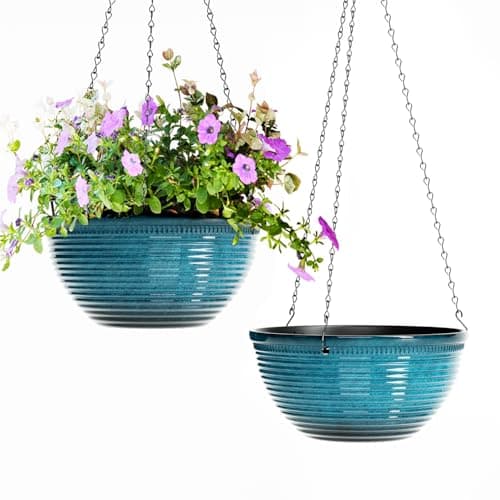 10 in Hanging Planter, glazed finish, drainage holes with plug, 2 packThe plug is the whole idea: drainage open on a balcony, plugged indoors so it does not water your floor. | Indoors and outdoors without buying twice | |
| 2 | 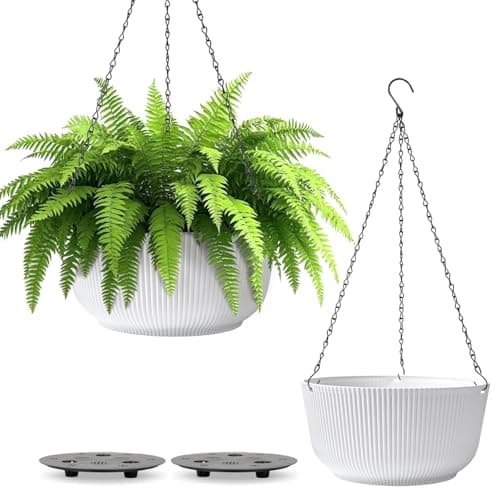 T4U 10 in Self Watering Hanging Planter, chain rated 6 kg, 2 packOne of very few hanging planters that publishes a chain rating at all, and the number is the reason every other listing should be read with suspicion. | Showing exactly why published chain ratings matter | |
| 3 | 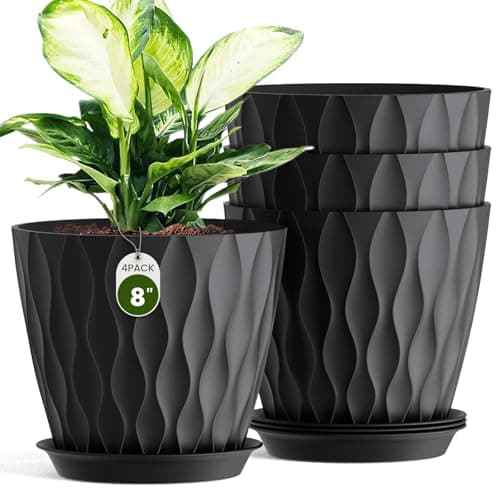 Areutxbis 8 in Plastic Planters with Drainage and Saucers, 4 packPlastic at 8 inches, which is the size where the material choice stops being cosmetic and starts being a load decision. | Four matching pots on a shelf that is not rated | |
| 4 | 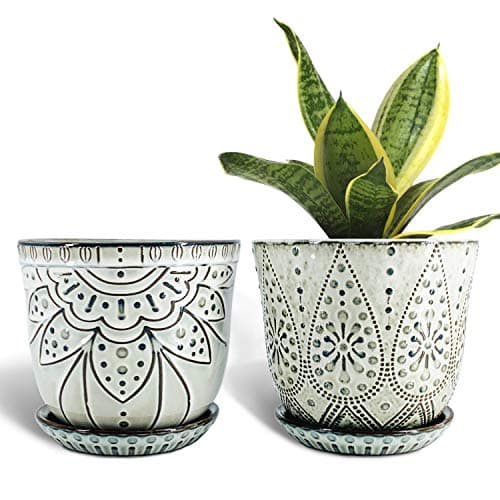 Gepege 6 in Ceramic Plant Pots with Drainage and SaucersThe size most houseplants are sold in and the size most shelves are built for, with the hole that the decorative version of the same pot leaves out. | The default shelf pot | $19.49 at Amazon $24.99 · 22% off |
| 5 | 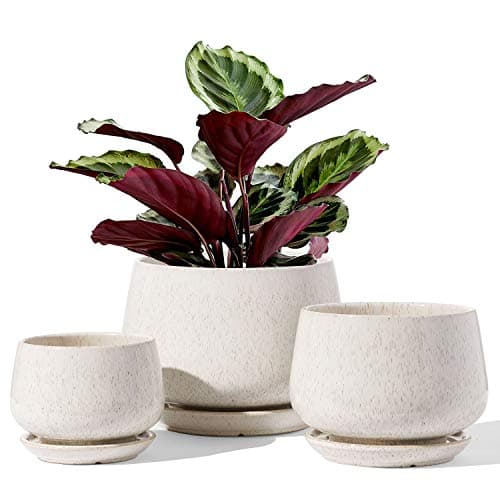 LE TAUCI Ceramic Plant Pots with Drainage and Saucer, set of 3Three graduated sizes with a real hole and a matched saucer in each, which is a lower bar than it sounds and one most decorative ceramic fails. | Three sizes that actually drain | $29.99 at Amazon $36.99 · 19% off |
| 6 | 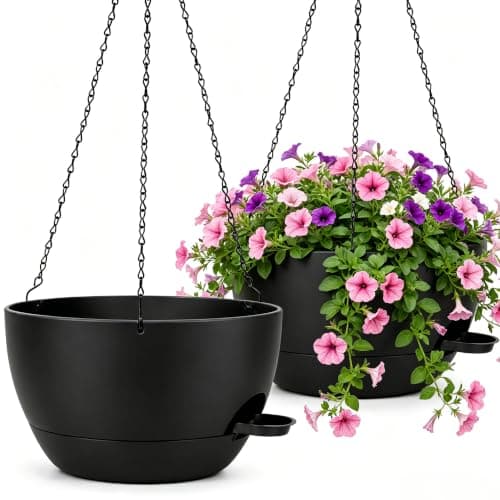 zople 12 in Self Watering Hanging Planter with chain, 2 packA hanging pot with both a reservoir and drainage holes, which is rarer than it should be and is the combination that makes a hanging plant survivable. | A hanging plant you leave alone for a fortnight | $19.99 at Amazon $23.49 · 15% off |
Links to Amazon are affiliate links. Prices and availability are Amazon's and change without notice.
How we ranked these for a spider plant
Drainage first, then whether the pot can be watered somewhere other than over the carpet, then — for the hanging pots — whether the listing publishes anything about the hanger's rating. The glazed-look 10-inch hanging pot leads because it drains, plugs and works indoors or out, which covers the spider plant's whole year. The T4U pot ranks high on one fact: it is the only hanging pot in this section whose chain has a published capacity. The shelf pots are ordered by how easily the plant comes out of them again, which for this plant is a real criterion.
| Your plant | Pot | Why |
|---|---|---|
| A plant with babies, to hang in a window | 10 in hanging with a plug | Drains, hangs, and comes down to the sink |
| A plant to hang where you cannot check it often | 12 in self-watering hanging | The reservoir buys days; the drainage holes stop it drowning |
| A shelf plant, growing fast | 8 in plastic with saucer | Easy to size up when it lifts |
| A shelf plant, on show | 6 in or 6.5 in ceramic with saucer | Looks right; expect to cut it out in a year |
| Babies you have rooted | 4.1 in from the three-piece set | The right size for a rooted plantlet |
Brown tips, and what the pot has to do with it
Brown leaf tips are the spider plant's one complaint, and they are usually blamed on the water. The pot is part of the story too. A plant that dries hard because the pot is small, unglazed and in sun will tip-brown; a plant in a pot with no drainage hole, sitting wet, will do the same from the other direction. A glazed pot with a hole, one size up, watered thoroughly and allowed to dry partway, removes the pot from the list of suspects. The rest is the water and the room, which are outside this page's remit.
What we deliberately do not recommend
Hanging pots with no drainage and no tray, which is most of the decorative ones. Macrame hangers holding a pot with no saucer over a floor you care about — the macrame page covers which hangers are rated and which are decoration. Any pot more than one size up, however many babies the plant has. And terracotta on a sunny sill for anyone who wants green tips.
Every pick, in full
We have not handled any of these. What follows is what each listing publishes, what that means once you put a watered pot on it, and who should buy something else.
1. Indoors and outdoors without buying twice
10 in Hanging Planter, glazed finish, drainage holes with plug, 2 pack
The plug is the whole idea: drainage open on a balcony, plugged indoors so it does not water your floor.
#ad · Price as of October 25, 2026. How we are funded
- What the listing publishes
- Published 10 in; drainage holes with an included plug; 3-point chain hanger and hooks; glazed-look plastic; 2 pack
- Against a 10-inch pot
- No weight rating is published for this product, so there is nothing to check. That counts against it here rather than being treated as neutral.
A hanging plant indoors has a problem no floor plant has — there is no saucer, so anything that drains lands on whatever is beneath it. A removable plug lets the same pot drain outside and hold indoors, which is genuinely useful in an apartment with a balcony.
The catch, and it is the same catch as every no-drainage pot on this site: plugged, this is a pot with no way for excess water to leave. Water it conservatively by volume when the plug is in, and pull the plug occasionally to flush it.
A 3-point chain hangs more level than a 2-point one, which matters when a trailing plant grows heavier on one side.
What is good
- Drainage with a plug, so one pot works in two places
- 3-point chain hangs level
- Lighter than the ceramic it imitates
What is not
- Plugged, it is a no-drainage pot with the risks that carries
- Glazed-look plastic is still plastic up close
- 10 in of saturated mix is 14.7 lb, which needs a 23 lb rated hook
Skip it if you will never remember to pull the plug. A plain drainage pot with a saucer beneath it is more forgiving.
2. Showing exactly why published chain ratings matter
T4U 10 in Self Watering Hanging Planter, chain rated 6 kg, 2 pack
One of very few hanging planters that publishes a chain rating at all, and the number is the reason every other listing should be read with suspicion.
#ad · Price as of October 25, 2026. How we are funded
- What the listing publishes
- Published 10 in; internal plate separating soil from recycled water; chain published at 6 kg (about 13 lb) weight capacity; 2 pack
- Against a 10-inch pot
- Rated 13 lb against 14.7 lb of saturated mix in a 10-inch pot. The rating is below the load before the pot is even weighed.
The published chain capacity is 6 kg, which is about 13 lb. A 10-inch pot of saturated potting mix computes to 14.7 lb of mix alone, before the pot, the plant or the water in the reservoir. On those two published numbers the pot is heavier than its own chain is rated for.
That is not a reason to avoid this planter so much as a reason to understand what you are buying. Self-watering hanging pots hold less mix than a solid pot of the same diameter because the reservoir takes up the bottom, and most people do not fill to the brim — so in practice the load is lower than the full-pot figure. But the margin is thin and the listing is the only one here honest enough to let you notice.
Use it with a light, open mix rather than dense compost, do not top-water heavily while it hangs, and hang it from a fixing rated well above the chain.
What is good
- Publishes a chain rating, which almost none of these do
- Internal plate keeps mix out of standing water
- Can be hung or stood on a surface
What is not
- The published 13 lb chain rating is below the computed 14.7 lb of saturated mix for a 10-inch pot
- No drainage to the outside, only internal recycling
- White plastic marks
Skip it if you plan to fill it with dense, heavy potting compost and water it hard. The published numbers do not support that.
3. Four matching pots on a shelf that is not rated
Areutxbis 8 in Plastic Planters with Drainage and Saucers, 4 pack
Plastic at 8 inches, which is the size where the material choice stops being cosmetic and starts being a load decision.
#ad · Price as of October 25, 2026. How we are funded
- What the listing publishes
- 8 in plastic, drainage holes and saucers, four per pack
- Against a 10-inch pot
- No weight rating is published for this product, so there is nothing to check. That counts against it here rather than being treated as neutral.
An 8-inch pot of saturated mix computes to about 7.5 lb. In plastic the pot adds ounces; in glazed ceramic it can add several pounds, and on an unrated tiered stand with four of them that difference is the whole safety margin.
Four matching pots is also how a shelf stops looking like a collection of separate shopping trips.
Plastic dries slower at the walls than terracotta and faster than glaze, which puts it in the middle of the moisture range and makes it the safest default if you are not sure.
What is good
- Adds almost nothing to the computed load
- Four matching pots and saucers
- Middle of the road for drying speed
What is not
- Light enough to be knocked over by a cat
- Plastic goes brittle in a sunny window over years
- Looks like what it is
Skip it if the pots are going somewhere visible and the look matters more than the load. A ceramic set is the answer, and 8 inches is still light enough to get away with it.
4. The default shelf pot
Gepege 6 in Ceramic Plant Pots with Drainage and Saucers
The size most houseplants are sold in and the size most shelves are built for, with the hole that the decorative version of the same pot leaves out.
- What the listing publishes
- 6 in ceramic with drainage hole and saucer
- Against a 10-inch pot
- No weight rating is published for this product, so there is nothing to check. That counts against it here rather than being treated as neutral.
A 6-inch pot of saturated mix computes to about 3.2 lb. Any stand on this site holds it, which is why 6 inches is where you can buy on looks rather than on arithmetic.
It is also the size where the no-drainage-hole trap is most common, because 6-inch pots are sold as decor as often as they are sold as pots.
Nursery plants usually arrive in a plastic 6-inch. Dropping that pot straight into a ceramic cachepot is a legitimate alternative to repotting, as long as you lift it to water.
What is good
- The correct default size for most houseplants
- Hole and saucer included
- Light enough for any shelf here
What is not
- Outgrown within a year by anything vigorous
- Glazed ceramic holds moisture longer than plastic
- One pot per order at this price point
Skip it if your plant came in a 6-inch nursery pot and is root-bound. You need the next size up, not the same size in ceramic.
5. Three sizes that actually drain
LE TAUCI Ceramic Plant Pots with Drainage and Saucer, set of 3
Three graduated sizes with a real hole and a matched saucer in each, which is a lower bar than it sounds and one most decorative ceramic fails.
- What the listing publishes
- 4.1, 5.1 and 6.5 in; drainage hole and a matched saucer on every pot
- Against a 10-inch pot
- No weight rating is published for this product, so there is nothing to check. That counts against it here rather than being treated as neutral.
Saturated mix in these three sizes computes to about 0.9, 1.8 and 3.7 lb, light enough that any shelf holds them and the interesting question is drainage rather than load.
A matched saucer is not decoration. Buying a saucer separately means guessing a diameter, and a saucer an inch too small overflows onto whatever is underneath.
Graduated sets are how you pot up a plant without a second order. A rooted cutting goes in the 4-inch, moves to the 5-inch in a season and the 6.5-inch after that.
What is good
- Every pot has a hole and a matching saucer
- Three sizes cover a potting-up sequence
- Glazed inside, so they do not wick like bare terracotta
What is not
- Nothing here fits a plant bigger than a small pothos
- Ceramic chips if it goes over
- Glazed pots dry slower than terracotta, which suits some plants and kills others
Skip it if you overwater. A glazed, non-porous pot is the least forgiving container for that habit, and terracotta is the fix.
6. A hanging plant you leave alone for a fortnight
zople 12 in Self Watering Hanging Planter with chain, 2 pack
A hanging pot with both a reservoir and drainage holes, which is rarer than it should be and is the combination that makes a hanging plant survivable.
- What the listing publishes
- Published 12 in; built-in reservoir stated to last up to 2 weeks; drainage holes at the base; iron chain adjustable up to 24 in; 2 pack
- Against a 10-inch pot
- No weight rating is published for this product, so there is nothing to check. That counts against it here rather than being treated as neutral.
Hanging plants are the ones that get forgotten, because they are above eye level and you do not walk past their soil. A reservoir is more useful here than anywhere else in an apartment.
The important detail is that this publishes drainage holes as well as a reservoir. A sealed hanging pot with a wick has nowhere for a heavy watering to go, and the overflow lands on your floor or stays in the mix.
At 12 inches this is a large hanging pot. A 12-inch pot computes to about 25.5 lb of saturated mix, which is more than any adhesive ceiling hook on this site publishes a rating for — hang this from a proper fixing, not from a stick-on hook.
What is good
- Reservoir and drainage holes, not one or the other
- Published 2-week reservoir claim
- Adjustable chain up to 24 in
What is not
- 12 in is heavier than renter-safe adhesive hardware can carry
- Plastic, and it looks it
- The reservoir adds weight on top of the mix
Skip it if you are hanging from an adhesive hook. At this size the arithmetic does not work, and the honest answer is a smaller pot.
Questions people actually ask
Do spider plants like to be root bound?
What kind of pot is best for a spider plant?
Can a spider plant live in a hanging pot without drainage?
How much weight does a hanging spider plant put on a hook?
How often should I repot a spider plant?
Why are my spider plant's tips turning brown?
Sources
- Cornell University, Greenhouse Management: bulk density of greenhouse media components
- Biology Insights: how much a cubic foot of potting soil weighs, dry and saturated
- Clemson HGIC: Indoor Plants — cleaning, fertilizing, containers and light requirements
- Clemson HGIC: Indoor Plants — watering
- Michigan State University Extension: Smart Gardening — growing houseplants indoors
Product specifications are quoted from each seller's own listing and are the seller's claim, not a measurement of ours.