Planters
The Best Pots for a Christmas Cactus
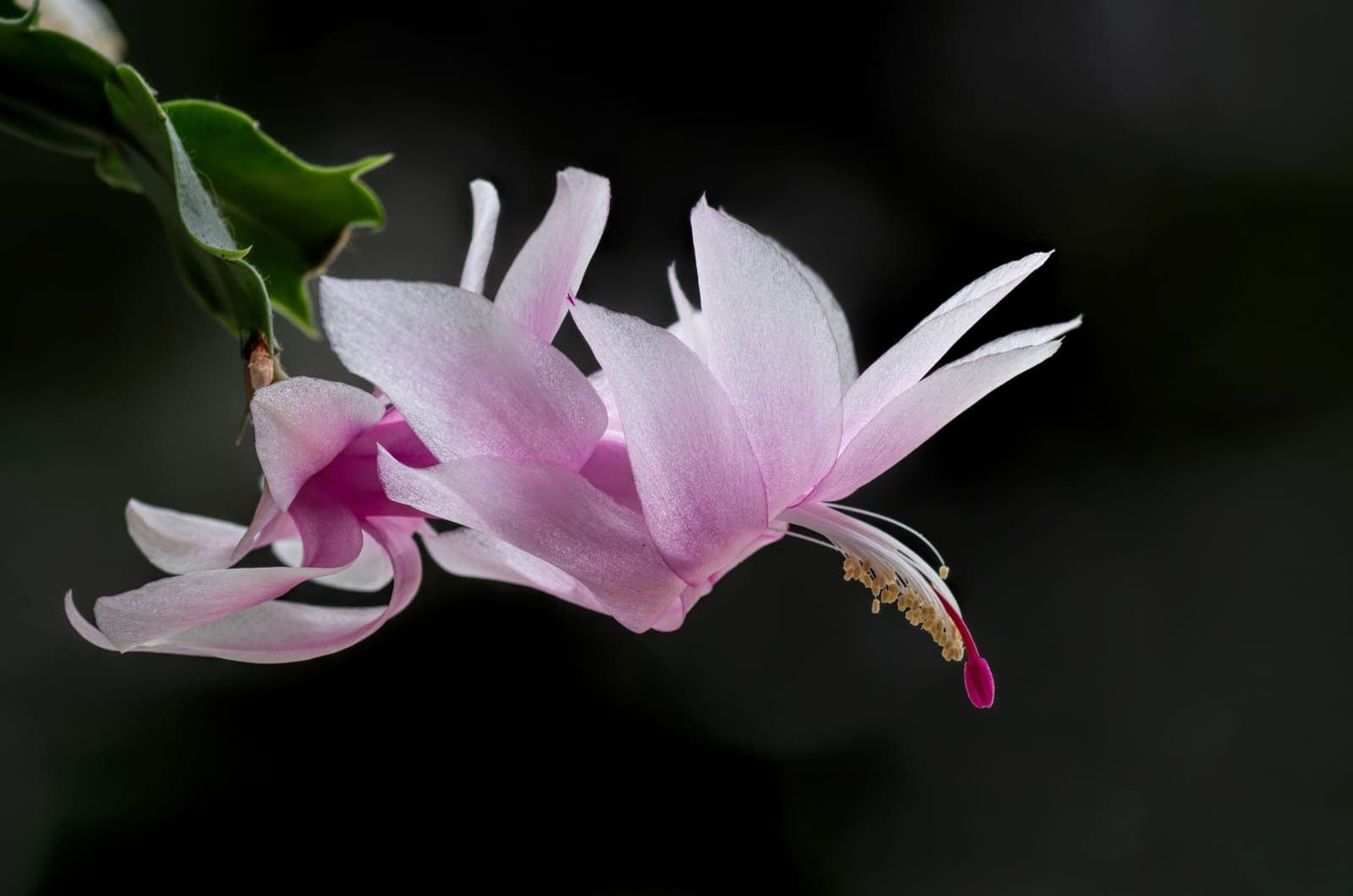
It is a tropical plant that grows on trees, not a desert cactus. The pot should be small, shallow, drained — and often hanging.
By Scooter M., enthusiast · Published
The short answer
Keep a Christmas cactus in a small pot with a drainage hole — 6 inches suits most plants, 8 inches a large old one — and resist sizing up, because this plant flowers better once it has filled its pot. Choose glazed ceramic or plastic rather than unglazed terracotta: it is a tropical forest plant and wants more moisture than a desert cactus. If the stems trail, hang it. A 6-inch pot planted and watered computes to about 5.6 lb, so a rated 11 lb ceiling hook clears it with margin; an 8-inch pot does not.
Disclosure Pot & Prop earns a commission when you buy through the Amazon links on this page, at no extra cost to you. It does not change which products get recommended or what we say about them, and we have not been given any of them. How this site is funded.
Almost everything that goes wrong with a Christmas cactus starts with its name. People hear cactus, buy a gritty desert mix and an unglazed terracotta pot, let it dry out hard between waterings, and then wonder why a plant sold in full flower never blooms again. Schlumbergera is not a desert plant. It is a tropical epiphyte from Brazilian forests, where it grows on tree branches and in rock crevices, rooting into pockets of leaf litter rather than into sand.
That single fact rearranges the whole pot decision, and it rearranges it away from the advice this site gives for a genuine succulent. The aloe page argues for wide, heavy, unglazed clay that dries fast. This page argues for small, shallow, glazed pots that hold a little more moisture — and, for a mature plant, for getting it off the shelf and onto a hook.
Do not size up, which is the opposite of our usual advice
Nearly every other plant page on this site tells you to move up one pot size when the roots fill the current one. For a Christmas cactus, hold off. This plant is widely grown snug on purpose: a root system that has filled its pot is the normal condition for it, and repotting a plant that is about to bud is a reliable way to get no flowers that year. The pot you want is small enough that the plant fills it and stays there for several seasons.
The container arithmetic explains why the usual advice does damage here. Volume rises with the cube of diameter, so a well-meant jump from a 4-inch nursery pot to an 8-inch decorative one is not twice the mix — it is eight times it. For a plant with a modest, shallow root system that is a large volume of permanently wet medium wrapped around roots that cannot reach it.
volume ratio = (D2 / D1)^3
4 in to 6 in: (6/4)^3 = 3.4 times the mix. 4 in to 8 in: (8/4)^3 = 8 times the mix, around a root ball that has not changed size at all.
Pot volume on this site is 0.46315 x D^3 cubic inches throughout. The pot size chart has every step.
| Your plant | Pot diameter | Why |
|---|---|---|
| A supermarket plant in a 4 in nursery pot | Leave it, or 5 in | It is about to flower or has just finished; disturbing it costs blooms |
| An established plant, roots filling a 5 in pot | 6 in | One modest step, and the size most of these live in for years |
| A large old plant, stems trailing well past the rim | 8 in | Width for a spreading root system, still not deep |
| A specimen plant you have had for a decade | 10 in, hanging | The only case here for a large pot, and it belongs on a hook |
| Segments you have rooted | 4 in | A cutting in a big pot is the classic way to lose it |
Shallow, drained, and not terracotta
Two of the three criteria are the same as for any succulent. The roots are shallow and spreading, so a pot wider than it is deep puts the volume where the roots actually are. And a drainage hole is not negotiable — an epiphyte's roots are adapted to air moving past them, and standing water is the fastest way to rot the base of the plant. The drainage argument is set out in full here.
The third criterion is where this plant parts company with the succulents. Unglazed terracotta passes water and air through its wall and dries a pot from every side, which is exactly right for an aloe and slightly wrong for a forest plant that wants its medium to stay lightly moist while it is growing. Glazed ceramic or plastic holds that moisture a little longer without holding it too long, provided the pot has a hole. The material comparison covers the trade in general; for this plant it points at glaze.
Hanging it, and what the hook has to hold
A mature Christmas cactus is a trailing plant. The flattened stem segments arch out and then hang, and on a shelf the lower half of the plant ends up pressed against the furniture. On a hook it does what it evolved to do. That makes this one of the few plants where a hanging pot is the better container rather than merely the prettier one — and it brings the hook into the purchase.
This site sizes hooks by computing the load and applying a 1.5x margin, and for once both halves of that computation are published rather than estimated. The Mkono pots below state their own empty weights — 2.4 lb for the 6-inch and 2.2 lb for the 8-inch — and the saturated weight of the medium comes from the densities on the methodology page.
required rating = (empty pot + saturated mix) x 1.5
6-inch pot: 3.2 lb of mix + 2.4 lb of pot = 5.6 lb, x1.5 = 8.4 lb required. 8-inch pot: 7.5 lb of mix + 2.2 lb of pot = 9.7 lb, x1.5 = 14.6 lb required.
So a rated 11 lb adhesive ceiling hook clears the 6-inch pot at 2.0x and does NOT clear the 8-inch one, which comes in at 1.1x. For the 8-inch pot, and for any 10-inch hanging pot, use the 30 lb rating. The hook table is here.
| Pot size | Mix volume | Dry | Watered | Rating needed |
|---|---|---|---|---|
| 4 in | 0.017 cu ft | 0.4 lb | 0.9 lb | 2 lb |
| 5 in | 0.034 cu ft | 0.7 lb | 1.8 lb | 3 lb |
| 6 in | 0.058 cu ft | 1.3 lb | 3.2 lb | 5 lb |
| 8 in | 0.137 cu ft | 3 lb | 7.5 lb | 12 lb |
| 10 in | 0.268 cu ft | 5.9 lb | 14.7 lb | 23 lb |
Quick picks
Ranked, with the published figure each pick turns on. Tap a row for the full reasoning further down this page.
| # | Product | Best for | Price |
|---|---|---|---|
| 1 | 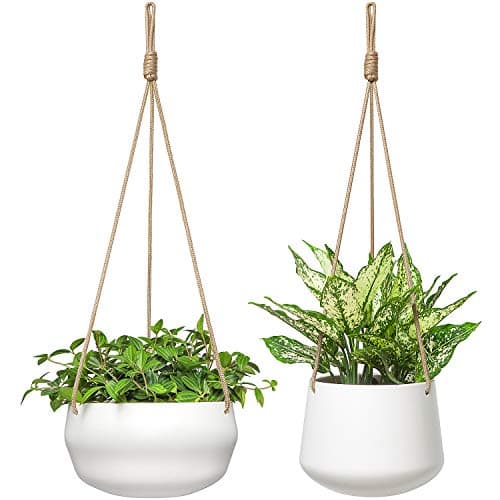 Mkono Ceramic Hanging Planters, 8 in shallow and 6 in deep, 2 packTwo small hanging pots that publish their own weight and their own drainage, which between them answer the two questions this category normally leaves open. | A trailing plant that should stay in a small pot | |
| 2 | 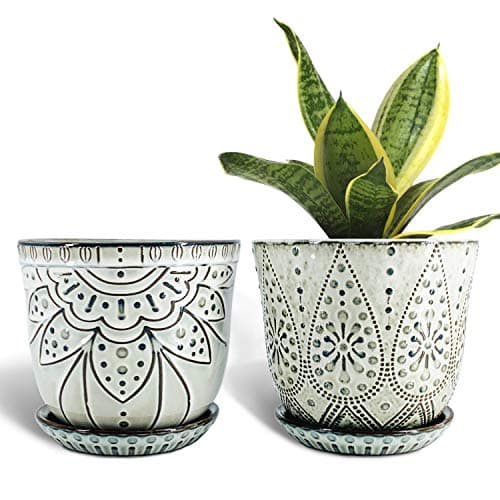 Gepege 6 in Ceramic Plant Pots with Drainage and SaucersThe size most houseplants are sold in and the size most shelves are built for, with the hole that the decorative version of the same pot leaves out. | The default shelf pot | |
| 3 | 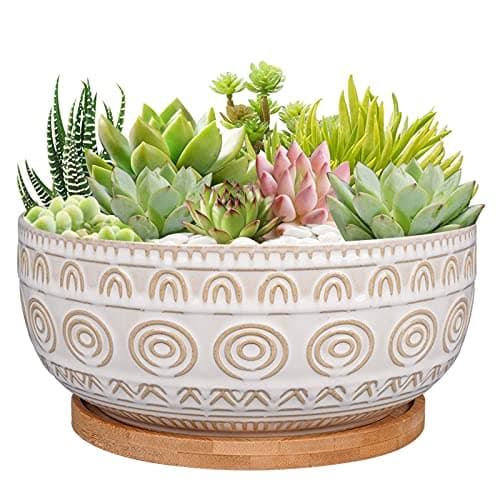 Eightpot 8 in Shallow Ceramic Succulent Pot with Drainage and SaucerShallow rather than deep, which is the correct shape for shallow-rooted plants and the reason succulents die in standard pots. | A succulent arrangement that does not rot | |
| 4 | 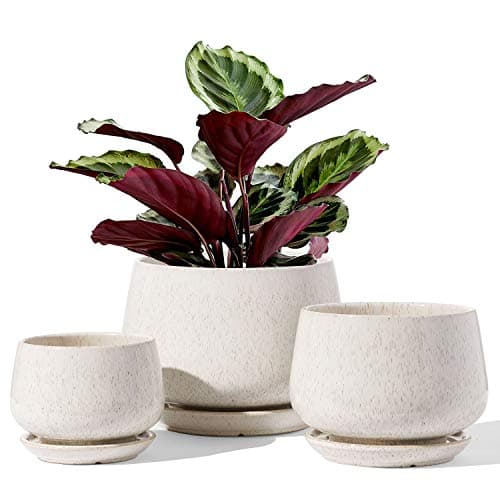 LE TAUCI Ceramic Plant Pots with Drainage and Saucer, set of 3Three graduated sizes with a real hole and a matched saucer in each, which is a lower bar than it sounds and one most decorative ceramic fails. | Three sizes that actually drain | |
| 5 | 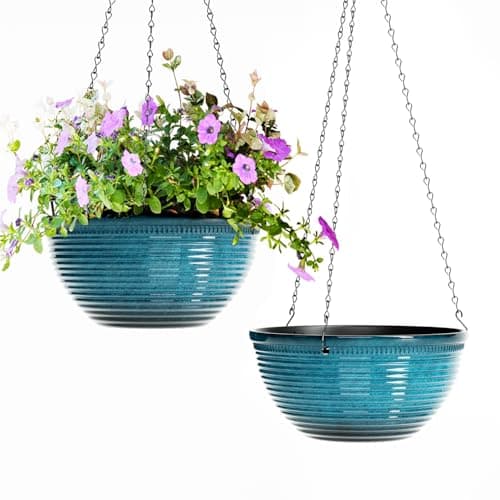 10 in Hanging Planter, glazed finish, drainage holes with plug, 2 packThe plug is the whole idea: drainage open on a balcony, plugged indoors so it does not water your floor. | Indoors and outdoors without buying twice | $22.79 at Amazon $24.99 · 9% off |
| 6 | 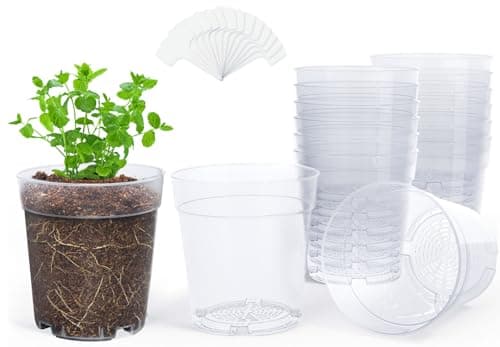 homenote 6.7 in Clear Plastic Nursery Pots with Drainage, 15 packClear walls, which turn the one variable you cannot otherwise check, what the roots are doing, into something you can just look at. | Watching roots instead of guessing | |
| 7 | 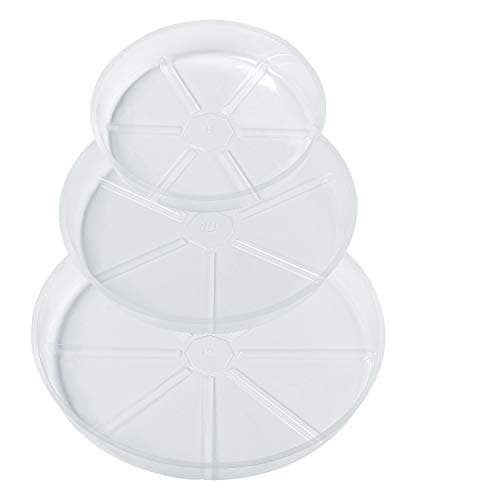 Idyllize Clear Plant Saucers, 6, 8 and 10 in, 15 packFifteen saucers in the three sizes that cover almost every pot in a normal apartment, which is a cheaper fix for a floor than a new pot is. | Fixing the pots you already own | $16.99 at Amazon $17.99 · 6% off |
Links to Amazon are affiliate links. Prices and availability are Amazon's and change without notice.
How we ranked these for a Christmas cactus
Size first — small beats large for this plant, which inverts the usual order — then drainage, then whether the pot can hang, then what the listing publishes. The Mkono pair leads because 6 and 8 inches is exactly the range this plant should live in, both pots have a real hole with a plug so they can be watered over a sink and hung back up, and they are the only hanging planters in this registry that publish their own weight. The Gepege 6-inch is the shelf default and the size most of these plants want. The Eightpot bowl is the shallow step up for a large old plant. The three-piece set is for rooted segments, the 10-inch hanging pot is for a true specimen, the clear nursery pots are for anyone who wants to see what the roots are doing, and the saucers are the cheap part that decides whether the rest works.
| Situation | Pick | Why |
|---|---|---|
| Stems trailing, you have a ceiling hook | 6 in deep hanging ceramic | Small, drained, plugged, and its weight is published |
| Trailing, but you want the wider shallow shape | 8 in shallow hanging ceramic | Same pair; check the hook clears 14.6 lb |
| A shelf plant, the common case | 6 in glazed ceramic with saucer | The size this plant flowers best in |
| A large old plant that filled its 6 in pot | 8 in shallow ceramic bowl | Wider without getting deeper |
| Segments you rooted this summer | 4.1 in from the three-piece set | Small pot, real hole, matched saucer |
| A decade-old specimen | 10 in hanging with a plug | Use the 30 lb hook, not the 11 lb one |
| You are not sure when to water it | Clear nursery pots | See the moisture and the roots instead of guessing |
Watering, in numbers
The routine is to water thoroughly, let the pot drain completely, and wait until the top of the medium is dry before doing it again — more often while the plant is growing and in bud, less in the rest period after flowering. Thoroughly is the word that needs a number, and it falls out of the same densities used everywhere on this site: the gap between dry and saturated medium is 33 lb per cubic foot, which converts to roughly 870 ml of water for a 6-inch pot and about 2 liters for an 8-inch one.
Those are upper bounds rather than doses — a pot is rarely bone dry when you water it — but they are the right scale, and they explain why a small cup poured into an 8-inch pot wets the top inch and nothing else. They are also the argument for taking a hanging pot down to water it rather than trying to do the job in place.
Segments, and the pots they need
This is one of the easiest houseplants to propagate and one of the reasons a single plant tends to become several. Twist off a piece two or three segments long, let the broken end dry for a day or two so it calluses, then push it a short way into moist medium in a small pot. No hormone, no water glass, no equipment. The pot is the only decision, and it is the same decision as everywhere else on this page: small, with a hole. A 4-inch pot per cutting is right, and the three-piece set below covers a few at once.
Christmas, Thanksgiving or Easter
Much of what is sold as Christmas cactus is a closely related Schlumbergera that flowers a few weeks earlier, and the Easter cactus is a different genus again. Growers and garden centers use the names loosely. For the purposes of this page it does not matter: the pot requirements are the same across the group, and nothing here changes based on which one you have. It matters only if you are trying to work out why yours flowers in November.
What we deliberately do not recommend
Pots without drainage holes, which for a plant with this rot risk is the main way people lose one — use a cachepot with a holed nursery pot inside if the container you love has no hole. Unglazed terracotta, which is right for an aloe and dries this plant harder than it wants. Deep pots, because the roots are shallow and the lower medium just stays wet. Repotting a plant in bud, which trades this year's flowers for nothing. Self-watering pots, which keep the medium at a constant moisture this plant does not want during its rest period. And hanging an 8 or 10-inch pot from a hook rated for a small one — the arithmetic above says which hooks clear and which do not.
Every pick, in full
We have not handled any of these. What follows is what each listing publishes, what that means once you put a watered pot on it, and who should buy something else.
1. A trailing plant that should stay in a small pot
Mkono Ceramic Hanging Planters, 8 in shallow and 6 in deep, 2 pack
Two small hanging pots that publish their own weight and their own drainage, which between them answer the two questions this category normally leaves open.
#ad · Price as of September 15, 2026. How we are funded
- What the listing publishes
- Published shallow pot 8 in wide by 4.5 in high at 2.2 lb, deep pot 6 in wide by 5.3 in high at 2.4 lb; 26 in total height with the rope; drainage hole and a detachable rubber plug on each; ceramic on polyester rope
- Against a 10-inch pot
- No weight rating is published for this product, so there is nothing to check. That counts against it here rather than being treated as neutral.
Almost every hanging planter sold for indoor plants starts at 10 inches, which is a size most trailing houseplants do not need and some actively dislike. Six and eight inches is the range a plant that flowers better when snug should be in, and getting it on a rope rather than a shelf is the whole point.
Both pots have a real drainage hole plus a plug you can push in. That combination is what makes a hanging pot workable: unplug it and water over a sink, let it finish draining, plug it and hang it back up. A hanging pot with no hole cannot be watered properly, and one with a permanently open hole waters the floor.
The published weights — 2.2 lb and 2.4 lb empty — are unusual and genuinely useful. Every other hanging pot on this site forces you to estimate the pot and compute only the mix; here both halves of the hook load are real numbers.
What is good
- Publishes the empty weight of each pot, which almost no hanging planter does
- Drainage hole with a removable plug on both, so they can be watered at a sink
- Two sizes and two shapes — a shallow 8 in and a deep 6 in — in one purchase
What is not
- Ceramic on rope: heavier and more fragile than the plastic hanging pots here
- No saucer, so the plug is doing the work and has to be seated properly
- The rope sets the drop at 26 in total and is not adjustable the way a chain is
Skip it if the plant is already large and trailing hard. Six and eight inches is deliberately small, and a mature specimen wants the 10-inch hanging pots ranked elsewhere on this site.
2. The default shelf pot
Gepege 6 in Ceramic Plant Pots with Drainage and Saucers
The size most houseplants are sold in and the size most shelves are built for, with the hole that the decorative version of the same pot leaves out.
#ad · Price as of September 15, 2026. How we are funded
- What the listing publishes
- 6 in ceramic with drainage hole and saucer
- Against a 10-inch pot
- No weight rating is published for this product, so there is nothing to check. That counts against it here rather than being treated as neutral.
A 6-inch pot of saturated mix computes to about 3.2 lb. Any stand on this site holds it, which is why 6 inches is where you can buy on looks rather than on arithmetic.
It is also the size where the no-drainage-hole trap is most common, because 6-inch pots are sold as decor as often as they are sold as pots.
Nursery plants usually arrive in a plastic 6-inch. Dropping that pot straight into a ceramic cachepot is a legitimate alternative to repotting, as long as you lift it to water.
What is good
- The correct default size for most houseplants
- Hole and saucer included
- Light enough for any shelf here
What is not
- Outgrown within a year by anything vigorous
- Glazed ceramic holds moisture longer than plastic
- One pot per order at this price point
Skip it if your plant came in a 6-inch nursery pot and is root-bound. You need the next size up, not the same size in ceramic.
3. A succulent arrangement that does not rot
Eightpot 8 in Shallow Ceramic Succulent Pot with Drainage and Saucer
Shallow rather than deep, which is the correct shape for shallow-rooted plants and the reason succulents die in standard pots.
#ad · Price as of September 15, 2026. How we are funded
- What the listing publishes
- 8 in diameter, shallow bowl profile, drainage hole and saucer
- Against a 10-inch pot
- No weight rating is published for this product, so there is nothing to check. That counts against it here rather than being treated as neutral.
Succulent roots occupy the top few inches. In a standard-depth 8-inch pot the bottom half is mix that never dries and never gets used, which is exactly the condition rot needs.
A shallow bowl also weighs far less than the frustum model predicts for its diameter, because the model assumes standard proportions. For a bowl, take the computed figure as an upper bound.
The drainage hole is the other half. Shallow plus draining is a system; shallow with no hole is a puddle.
What is good
- The correct depth for shallow-rooted plants
- Weighs less than a standard pot the same width
- Hole and saucer included
What is not
- Wrong for anything deep-rooted
- Dries fast enough to need attention in summer
- Ceramic bowls chip at the rim
Skip it if you are potting a pothos, a monstera or anything else that puts roots down. A shallow bowl starves them.
4. Three sizes that actually drain
LE TAUCI Ceramic Plant Pots with Drainage and Saucer, set of 3
Three graduated sizes with a real hole and a matched saucer in each, which is a lower bar than it sounds and one most decorative ceramic fails.
#ad · Price as of September 15, 2026. How we are funded
- What the listing publishes
- 4.1, 5.1 and 6.5 in; drainage hole and a matched saucer on every pot
- Against a 10-inch pot
- No weight rating is published for this product, so there is nothing to check. That counts against it here rather than being treated as neutral.
Saturated mix in these three sizes computes to about 0.9, 1.8 and 3.7 lb, light enough that any shelf holds them and the interesting question is drainage rather than load.
A matched saucer is not decoration. Buying a saucer separately means guessing a diameter, and a saucer an inch too small overflows onto whatever is underneath.
Graduated sets are how you pot up a plant without a second order. A rooted cutting goes in the 4-inch, moves to the 5-inch in a season and the 6.5-inch after that.
What is good
- Every pot has a hole and a matching saucer
- Three sizes cover a potting-up sequence
- Glazed inside, so they do not wick like bare terracotta
What is not
- Nothing here fits a plant bigger than a small pothos
- Ceramic chips if it goes over
- Glazed pots dry slower than terracotta, which suits some plants and kills others
Skip it if you overwater. A glazed, non-porous pot is the least forgiving container for that habit, and terracotta is the fix.
5. Indoors and outdoors without buying twice
10 in Hanging Planter, glazed finish, drainage holes with plug, 2 pack
The plug is the whole idea: drainage open on a balcony, plugged indoors so it does not water your floor.
- What the listing publishes
- Published 10 in; drainage holes with an included plug; 3-point chain hanger and hooks; glazed-look plastic; 2 pack
- Against a 10-inch pot
- No weight rating is published for this product, so there is nothing to check. That counts against it here rather than being treated as neutral.
A hanging plant indoors has a problem no floor plant has — there is no saucer, so anything that drains lands on whatever is beneath it. A removable plug lets the same pot drain outside and hold indoors, which is genuinely useful in an apartment with a balcony.
The catch, and it is the same catch as every no-drainage pot on this site: plugged, this is a pot with no way for excess water to leave. Water it conservatively by volume when the plug is in, and pull the plug occasionally to flush it.
A 3-point chain hangs more level than a 2-point one, which matters when a trailing plant grows heavier on one side.
What is good
- Drainage with a plug, so one pot works in two places
- 3-point chain hangs level
- Lighter than the ceramic it imitates
What is not
- Plugged, it is a no-drainage pot with the risks that carries
- Glazed-look plastic is still plastic up close
- 10 in of saturated mix is 14.7 lb, which needs a 23 lb rated hook
Skip it if you will never remember to pull the plug. A plain drainage pot with a saucer beneath it is more forgiving.
6. Watching roots instead of guessing
homenote 6.7 in Clear Plastic Nursery Pots with Drainage, 15 pack
Clear walls, which turn the one variable you cannot otherwise check, what the roots are doing, into something you can just look at.
#ad · Price as of September 15, 2026. How we are funded
- What the listing publishes
- 6.7 in clear plastic with drainage holes, 15 per pack
- Against a 10-inch pot
- No weight rating is published for this product, so there is nothing to check. That counts against it here rather than being treated as neutral.
The reason to use a clear nursery pot inside an opaque cachepot is diagnostic: you can see root growth, you can see when water has actually reached the bottom, and you can see rot before the leaves tell you.
Fifteen pots is a whole shelf and a propagation run's worth of potting-up, at a per-pot price no ceramic reaches.
They are not attractive. They are meant to sit inside something else, which is also the arrangement that keeps a decorative pot with no drainage hole from killing a plant.
What is good
- Root visibility that no other pot format gives you
- Fifteen pots at nursery pricing
- The correct inner pot for a decorative cachepot with no hole
What is not
- Ugly on their own
- Algae grows on the inside of a clear pot in a bright window
- Thin plastic flexes when you lift a wet one
Skip it if you want the pot to be the visible object. These are working pots and they look it.
7. Fixing the pots you already own
Idyllize Clear Plant Saucers, 6, 8 and 10 in, 15 pack
Fifteen saucers in the three sizes that cover almost every pot in a normal apartment, which is a cheaper fix for a floor than a new pot is.
- What the listing publishes
- Published five each of 6, 8 and 10 in; clear plastic, stated lightweight and durable
- Against a 10-inch pot
- No weight rating is published for this product, so there is nothing to check. That counts against it here rather than being treated as neutral.
The commonest reason a plant lives in a pot with no drainage is that the owner has no saucer for it. Fifteen saucers removes that reason for a whole collection at once.
Clear saucers show standing water, which is the thing you actually need to see. An opaque saucer with two inches of water in it looks exactly like an empty one.
A saucer is only half the answer. A pot sitting flat in its own drainage wicks it back up, so pair these with pot feet.
What is good
- Covers three common pot sizes in one order
- Clear, so standing water is visible
- Cheaper than replacing a single pot
What is not
- Thin plastic cracks if a heavy pot is dragged across it
- Clear plastic clouds over a couple of years
- Does not solve wicking on its own
Skip it if all your pots are already in cachepots. A cachepot is a saucer with sides, and stacking a saucer inside it just hides the water.
Questions people actually ask
What size pot does a Christmas cactus need?
Do Christmas cacti like to be root bound?
Should a Christmas cactus be in terracotta?
Can you hang a Christmas cactus?
Does a Christmas cactus need a drainage hole?
What pot do I use for Christmas cactus cuttings?
Sources
- Cornell University, Greenhouse Management: bulk density of greenhouse media components
- Biology Insights: how much a cubic foot of potting soil weighs, dry and saturated
- Clemson HGIC: Indoor Plants — cleaning, fertilizing, containers and light requirements
- Clemson HGIC: Indoor Plants — watering
- Michigan State University Extension: Smart Gardening — growing houseplants indoors
Product specifications are quoted from each seller's own listing and are the seller's claim, not a measurement of ours.