Propagation
Water, Mix or LECA: Where Should a Cutting Root?
Water is the easiest place to grow a root and the hardest place to leave one. That trade is the entire decision.
By Scooter M., enthusiast · Published
The short answer
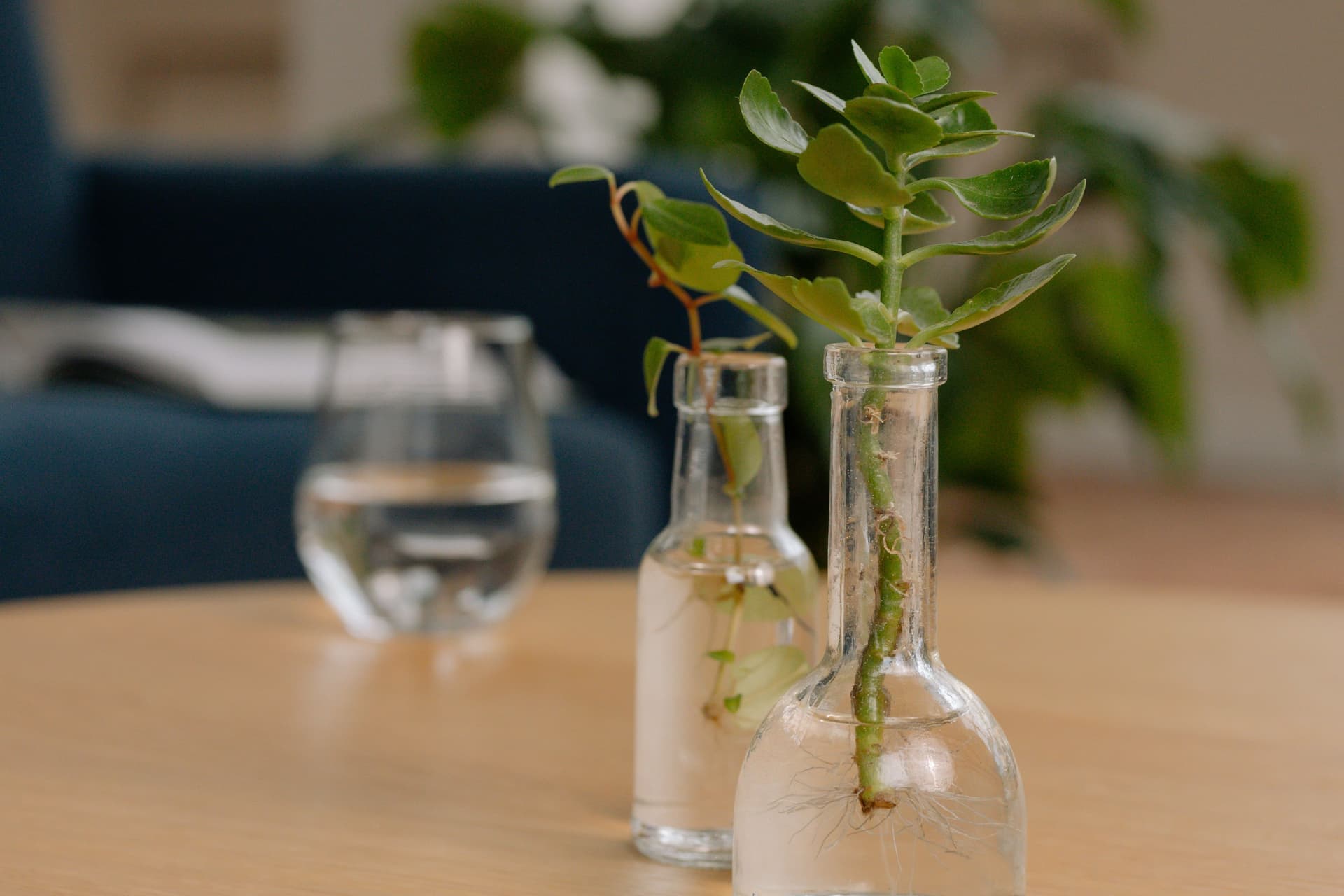
Root in water if the plant is one of the easy ones — pothos, tradescantia, philodendron, monstera — and you want to watch it happen; it is nearly free and nothing roots faster. Root straight into a chunky mix if you would rather skip the potting-up stage entirely, which is where water-rooted cuttings actually die, and for the plants Illinois Extension notes root better in medium than in water. Use LECA only if you intend to keep the plant in it permanently and feed it hydroponically, because LECA holds no nutrients at all. The decision is not really about rooting speed, because water wins that: it is about which failure you would rather risk, a slow start in mix or a collapse at transplant from water.
Disclosure Pot & Prop earns a commission when you buy through the Amazon links on this page, at no extra cost to you. It does not change which products get recommended or what we say about them, and we have not been given any of them. How this site is funded.
Almost all propagation content starts from water. Put the cutting in a jar, watch the roots, pot it up. It works, it is free, and it is genuinely the right answer for a lot of plants. What it skips is that choosing water is a choice with a consequence attached, and the consequence arrives weeks later at the one stage nobody photographs.
This site already has the eight-step water process and it is the page to read once you have decided. This one is the decision.
Water roots are not the same organ as soil roots
This is the fact the whole comparison turns on and it is rarely stated. A root grown submerged develops in an environment with abundant water and little oxygen, and it is structurally different from a root grown in mix — thinner-walled, with less of the fine branching and fewer of the root hairs that absorb water from a solid medium.
Which means moving a water-rooted cutting into a pot is not a transplant, exactly. It is asking the plant to grow a second, different root system while the first one is dying back, and it is why a cutting that looked triumphant in a jar can wilt flat three days after potting. That stage is survivable and this site's own propagation guide spends a section on it — it is just not free, and a cutting rooted in mix never has to do it.
| Water | Chunky mix | LECA | |
|---|---|---|---|
| Roots appear | Fastest of the three | Slower, and you cannot see it | Fast, with air at the root |
| Can you watch progress | Yes, which is most of the appeal | No, unless the pot is clear | Partly, in a clear inner pot |
| Transplant shock | The real cost — roots must re-form | None; it is already in its medium | None if it stays in LECA, severe if it moves to mix |
| Rooting hormone helps | Barely — it washes off | Yes, this is what it is for | Barely, for the same reason |
| Feeding needed while rooting | No | No | Yes, from the start — LECA has no nutrients |
| Ongoing commitment | None | None | Permanent hydroponic feed, or the plant starves |
| Setup cost | A jar you own | A nursery pot and a bag of perlite | A bag of LECA, an inner pot, hydroponic nutrient |
| Smell and maintenance | Change the water weekly | None | Flush and top up the reservoir |
| Fungus gnats | None in water itself | The mix is where they breed | Inert, so nothing to breed in |
Which plants actually suit which
This part is not a matter of preference. University of Illinois Extension's propagation guidance notes that a few common houseplants root far better in mix than in water, and this site's own propagation hub says the same thing twice: the easy ones — pothos, tradescantia, philodendron — show roots in one to three weeks in water, others take longer, and some do not root in water at all.
| Cutting | Start in | Why |
|---|---|---|
| Pothos, tradescantia, philodendron | Water | Roots in one to three weeks; the textbook case |
| Monstera with an aerial root | Water | The aerial root is already adapted to air and moisture; the method is here |
| Snake plant leaf sections | Shallow water or dry mix | Rots easily, so keep water shallow and mix dry; division is faster than either; see the guide |
| Succulents and jade leaves | Dry mix, barely watered | A succulent leaf in water rots before it roots |
| Woody or semi-woody stems | Mix, with hormone | Slower to root, and hormone only works in a medium |
| Anything you want to keep in LECA | LECA | Rooting it straight into its final medium avoids a second transition |
| African violet leaf petioles | Mix | The published propagation route for them is a leaf petiole in medium |
The rooting-hormone consequence
Choosing water quietly removes a tool from the box, and it is worth knowing before rather than after. Rooting hormone is a powder or gel you dip a cut stem into, and it only stays where you put it if the stem then goes into something solid. In a jar of water it mostly washes off, which this site's rooting hormone page says plainly.
For a pothos cutting that roots in ten days regardless, this costs nothing. For a slow or semi-woody cutting it is the difference between a route that works and one that sits in a jar going brown — and that is the single clearest case for starting in mix.
LECA is a commitment, not a medium swap
LECA deserves separating out because the enthusiasm around it obscures one property that decides everything. Fired clay pebbles are completely inert: they do not break down, do not change pH, do not harbor gnat larvae, and contain no nutrients whatsoever. The full argument is on the LECA page.
In mix, a plant is fed by the medium between your fertiliser applications. In LECA it is fed only by what is in the water, permanently. That makes LECA an excellent place to root a cutting — great oxygen at the root, nothing to rot, and roots that are already adapted to a wet, airy medium — and it makes "root it in LECA then pot it into soil" the worst of the available plans, because it adds a second root transition on top of the first.
What each route costs to set up
All three are cheap in absolute terms, and they are cheap in different ways, which matters more than the totals.
- Water has the lowest floor and no floor at all if you own a jam jar. The reason to buy a vessel is that a narrow neck holds a cutting at the right depth without the leaves going under — which is the one mistake that kills most water propagation, and the vase comparison is here.
- Mix costs a nursery pot and a bag of coarse perlite. Clear nursery pots are worth the small premium here specifically because they let you see root development through the side, which is the one advantage water propagation has and the main reason people choose it.
- LECA costs the most to start and keeps costing, because the hydroponic nutrient is not optional. A 2 lb bag is one pot or a propagation tray; converting a collection is a 10 lb purchase.
- Light is the input all three share, and the one most people get wrong. Bright indirect, not a windowsill in full sun, which cooks a jar and scorches a cutting. If you are unsure whether a spot qualifies, a meter settles it.
Quick picks
Ranked, with the published figure each pick turns on. Tap a row for the full reasoning further down this page.
| # | Product | Best for | Price |
|---|---|---|---|
| 1 | 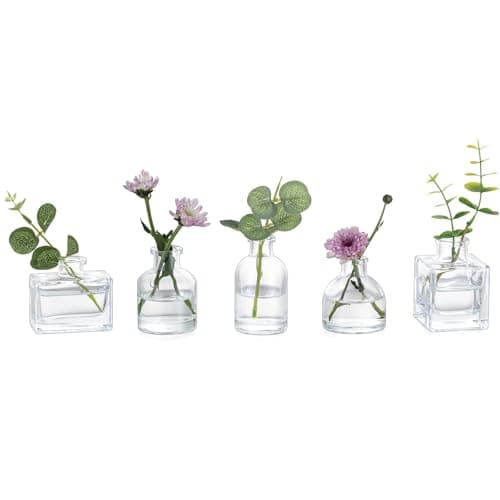 Glasseam Mini Glass Propagation Vases, set of 5No rack at all: five loose vessels that go wherever there is light, which is the most flexible and least tidy way to propagate. | Cuttings that live on a shelf, not a rack | |
| 2 | 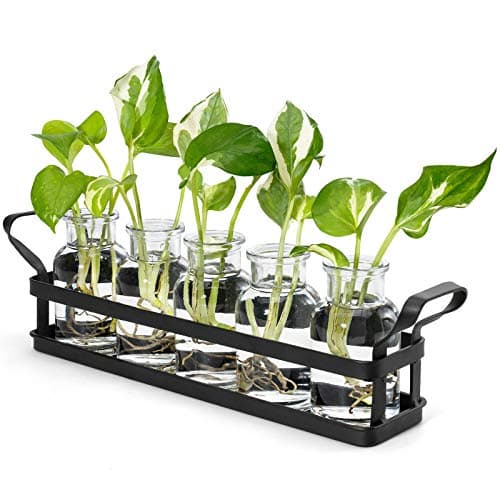 Mkono 5 Jar Desktop Propagation Station with StandWide-mouth jars rather than narrow test tubes, which is the difference between changing the water in ten seconds and fishing a cutting out with tweezers. | Cuttings you want to actually watch root | |
| 3 | 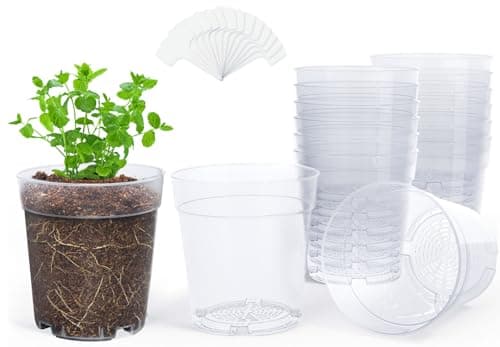 homenote 6.7 in Clear Plastic Nursery Pots with Drainage, 15 packClear walls, which turn the one variable you cannot otherwise check, what the roots are doing, into something you can just look at. | Watching roots instead of guessing | |
| 4 | 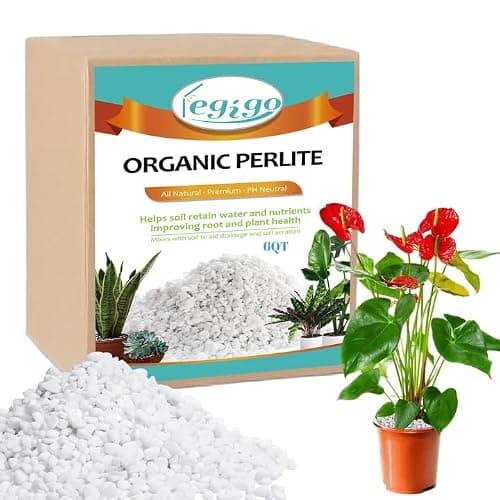 Legigo Coarse Perlite, 6 quartsThe amendment you add for air, in the size that happens to match a standard bag of potting mix almost exactly. | Opening up a bagged potting mix that holds water longer than you want | $15.99 at Amazon $16.99 · 6% off |
| 5 | 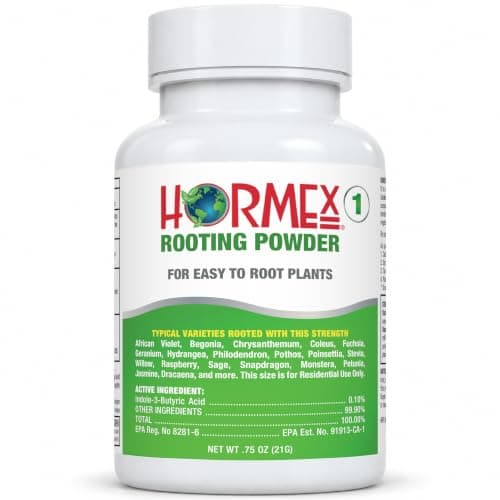 Hormex Rooting Hormone Powder #1, 0.10% IBA, for softwood cuttingsPublishes the one number that lets you match a hormone to a cutting, and sells four strengths so you can actually act on it — which nothing else in this category does. | The only brand here that publishes its strength | |
| 6 | 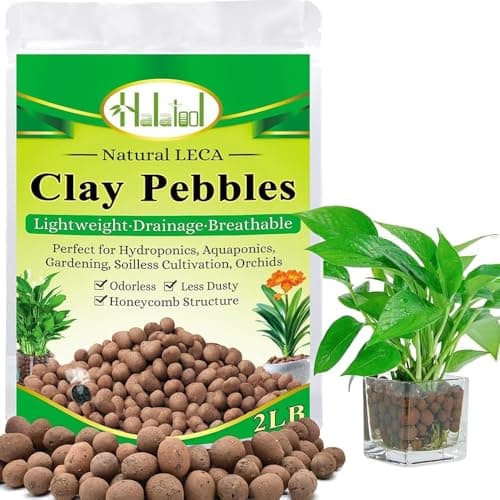 Halatool LECA Clay Pebbles, 2 lb, 4 to 16 mmThe right amount to find out whether you want to do this at all, and the right amount for propagation, which is where leca is least controversial. | Rooting cuttings, or trying semi-hydro on exactly one plant | $9.99 at Amazon $11.99 · 17% off |
Links to Amazon are affiliate links. Prices and availability are Amazon's and change without notice.
How we ranked these
Not as six competing products — as the kit for three different routes, ordered by how many people each route suits. The bud vases lead because water is the right starting medium for the plants most people are actually cutting, and because a narrow-necked vessel solves the waterline problem a jam jar does not. The five-jar station is second as the version of the same thing for someone propagating several plants at once. The clear nursery pots are third and are the whole mix route in one purchase, chosen specifically because you can see roots through the wall. The coarse perlite is fourth as the thing that makes a mix chunky enough to root into rather than rot in. The hormone powder is fifth and only earns its place on the mix route, which is the point. The LECA is last, not because it is worst but because it is the only route here that commits you to something after the cutting has rooted.
What we deliberately do not recommend
Rooting in water and then potting into dense mix, which is the standard advice and the standard failure — if it must go into mix, make the mix chunky and keep it genuinely damp for the first two weeks. Rooting in LECA with a plan to move to soil later. Using rooting hormone on a stem that then goes in a jar. Leaving leaves below the waterline, which is the most common cause of a rotted cutting and is free to avoid. Topping up a propagation jar rather than changing the water. And choosing a medium on the basis of which one roots fastest, when the stage that actually loses cuttings is the one after that.
Every pick, in full
We have not handled any of these. What follows is what each listing publishes, what that means once you put a watered pot on it, and who should buy something else.
1. Cuttings that live on a shelf, not a rack
Glasseam Mini Glass Propagation Vases, set of 5
No rack at all: five loose vessels that go wherever there is light, which is the most flexible and least tidy way to propagate.
#ad · Price as of October 18, 2026. How we are funded
- What the listing publishes
- Five assorted small clear glass vases, no stand
- Against a 10-inch pot
- No weight rating is published for this product, so there is nothing to check. That counts against it here rather than being treated as neutral.
A rack forces every cutting into the same light. Loose vases let the pothos sit in a dim corner and the herb cutting take the sill, which is how they actually root fastest.
Assorted shapes means assorted neck widths, which by accident covers both thick and thin cuttings.
Loose glass on a shelf is the format most likely to get knocked off. A rack at least keeps them upright together.
What is good
- Each cutting goes where its light is
- Assorted necks fit assorted cuttings
- The cheapest way into propagation
What is not
- No stand, so they go over easily
- Looks like clutter rather than a display
- Small volumes need frequent water changes
Skip it if you want the station to be a feature. This is five jars on a shelf and it looks like it.
2. Cuttings you want to actually watch root
Mkono 5 Jar Desktop Propagation Station with Stand
Wide-mouth jars rather than narrow test tubes, which is the difference between changing the water in ten seconds and fishing a cutting out with tweezers.
#ad · Price as of October 18, 2026. How we are funded
- What the listing publishes
- Five wide-mouth glass jars in a stand; wide openings for water changes
- Against a 10-inch pot
- No weight rating is published for this product, so there is nothing to check. That counts against it here rather than being treated as neutral.
Neck diameter is the specification nobody compares and everybody feels. A narrow tube means you cannot get a finger in to clean the algae, and algae is what ends most propagation stations.
Five jars on roughly a 12 by 4 inch footprint is a third of a square foot for five cuttings, the densest thing on the site by a wide margin, because water weighs less than mix.
Wide jars also take a thicker cutting. A monstera node with an aerial root does not fit a 15 mm test tube.
What is good
- Wide mouths make water changes and cleaning trivial
- Fits thick cuttings and aerial roots
- Five positions in a third of a square foot
What is not
- Wider jars mean more water and more evaporation surface
- Jars lift out, which is convenient and also means they get knocked out
- Glass on a desk with a cat is a decision
Skip it if you are rooting thin herb cuttings in bulk. Narrow tubes hold more cuttings per inch and use a fraction of the water.
3. Watching roots instead of guessing
homenote 6.7 in Clear Plastic Nursery Pots with Drainage, 15 pack
Clear walls, which turn the one variable you cannot otherwise check, what the roots are doing, into something you can just look at.
#ad · Price as of October 18, 2026. How we are funded
- What the listing publishes
- 6.7 in clear plastic with drainage holes, 15 per pack
- Against a 10-inch pot
- No weight rating is published for this product, so there is nothing to check. That counts against it here rather than being treated as neutral.
The reason to use a clear nursery pot inside an opaque cachepot is diagnostic: you can see root growth, you can see when water has actually reached the bottom, and you can see rot before the leaves tell you.
Fifteen pots is a whole shelf and a propagation run's worth of potting-up, at a per-pot price no ceramic reaches.
They are not attractive. They are meant to sit inside something else, which is also the arrangement that keeps a decorative pot with no drainage hole from killing a plant.
What is good
- Root visibility that no other pot format gives you
- Fifteen pots at nursery pricing
- The correct inner pot for a decorative cachepot with no hole
What is not
- Ugly on their own
- Algae grows on the inside of a clear pot in a bright window
- Thin plastic flexes when you lift a wet one
Skip it if you want the pot to be the visible object. These are working pots and they look it.
4. Opening up a bagged potting mix that holds water longer than you want
Legigo Coarse Perlite, 6 quarts
The amendment you add for air, in the size that happens to match a standard bag of potting mix almost exactly.
- What the listing publishes
- Published 6 quarts of coarse, evenly sized horticultural perlite; stated pH neutral expanded volcanic glass; stated to hold up to 4 times its weight in moisture; heavy-duty resealable pouch; stated for potting mixes, succulent top dressing and indoor plants
- Against a 10-inch pot
- No weight rating is published for this product, so there is nothing to check. That counts against it here rather than being treated as neutral.
Six quarts is a better-chosen quantity than it looks. A standard cubic-foot bag of potting mix is about 25.7 dry quarts, and the common one-part-perlite-to-four-parts-mix ratio needs roughly 6.4 quarts for that bag. One pouch amends one bag, which is a tidier answer than this category usually gives.
Coarse is the grade you want and the listing says so. Fine perlite packs into the spaces it was supposed to open up; coarse particles hold their structure and keep air channels through the mix. Where a listing does not state a grade, assume it is the finer one.
Note the honesty problem in the listing's own claim: it states the perlite holds up to four times its weight in moisture. That is true — perlite has surface pores — and it is also the opposite of the reason people buy it. What perlite really contributes is air-filled space between particles, and no listing in this category publishes that figure.
What is good
- States a coarse grade rather than leaving it unspecified
- Six quarts amends one standard cubic-foot bag of mix at 1:4
- Resealable pouch, which matters for something used a scoop at a time
What is not
- Publishes water retention but not air-filled porosity, the property you want
- Perlite dust is unpleasant; the bag benefits from a splash of water first
- Light enough that it floats to the surface of a pot over time
Skip it if your problem is that pots dry out too fast. Perlite accelerates that, and the coco products here are the amendment for the opposite problem.
5. The only brand here that publishes its strength
Hormex Rooting Hormone Powder #1, 0.10% IBA, for softwood cuttings
Publishes the one number that lets you match a hormone to a cutting, and sells four strengths so you can actually act on it — which nothing else in this category does.
#ad · Price as of October 18, 2026. How we are funded
- What the listing publishes
- Published 0.10% IBA for softwood cuttings; listing states the range runs 0.1, 0.3, 0.8 and 1.6% IBA across four numbered strengths matched to softwood, semi-hardwood and hardwood cuttings; stated made in the USA
- Against a 10-inch pot
- No weight rating is published for this product, so there is nothing to check. That counts against it here rather than being treated as neutral.
Rooting hormone is indole-3-butyric acid at some concentration, and the concentration is the whole product. A softwood houseplant cutting and a woody stem want very different strengths, and every other listing on this page leaves you to guess which you are holding.
This one does not. The #1 is stated at 0.10% IBA and the listing sets out the whole ladder — 0.1, 0.3, 0.8, 1.6 — against softwood, semi-hardwood and hardwood. For the cuttings this site is about, monstera, philodendron, pothos, the soft end is the right end, and #1 is the one to buy.
The honest caveat is that a published number is not the same as a tested result. Nothing here has been trialed against an untreated control, and University of Illinois Extension's own position is that many houseplants root so easily that hormone is not important at all.
What is good
- Publishes 0.10% IBA, and the full four-strength ladder alongside it
- Strength is matched to cutting hardness rather than left generic
- Powder form, which the extension guidance calls ready to use
What is not
- Costs more than the unlabeled powders that probably contain the same 0.1%
- Four strengths means one more decision for a beginner
- The numbering is meaningless unless you know how woody your cutting is
Skip it if you are rooting pothos or a monstera node in water. Those root on their own, and the extension guidance says so plainly.
6. Rooting cuttings, or trying semi-hydro on exactly one plant
Halatool LECA Clay Pebbles, 2 lb, 4 to 16 mm
The right amount to find out whether you want to do this at all, and the right amount for propagation, which is where leca is least controversial.
- What the listing publishes
- Published 2 lb of expanded clay at 4 to 16 mm; stated inert, pH-neutral, porous and lightweight; listing states it is baked at high temperature with less chalking in water and is reusable after cleaning
- Against a 10-inch pot
- No weight rating is published for this product, so there is nothing to check. That counts against it here rather than being treated as neutral.
Propagation is leca's strongest case. A cutting sitting in pebbles with its base just in water gets air around the new roots in a way a glass of water does not, and roots formed that way transition to a pot far better than water roots do.
Two pounds is roughly one medium pot's worth, or a propagation tray's worth several times over. For finding out whether the whole approach suits you, that is exactly the right quantity to risk.
"Less chalking in water" is the listing's way of addressing the dust problem. Treat it the way you would any comparative claim with nothing to compare against: rinse the pebbles thoroughly before the first use, which every listing here also tells you to do.
What is good
- Small enough to try the method without committing
- Reusable after cleaning, so the cost is once rather than ongoing
- Ideal quantity for rooting cuttings, leca's least disputed use
What is not
- Publishes a 4 to 16 mm range and no distribution within it
- Barely fills one medium pot, so it is not a conversion quantity
- Listing suggests use as a pot drainage layer, which this site argues against
Skip it if you have already decided to move a collection across. You will be reordering immediately, and the bulk bag exists for that.
Questions people actually ask
Is it better to propagate in water or soil?
Why do water-propagated cuttings wilt after potting?
Can you root cuttings directly in LECA?
Does rooting hormone work in water?
How often should you change propagation water?
Which plants will not root in water?
Sources
- University of Illinois Extension: Houseplants — propagation
- Clemson HGIC: Indoor Plants — cleaning, fertilizing, containers and light requirements
- Michigan State University Extension: Smart Gardening — growing houseplants indoors
Product specifications are quoted from each seller's own listing and are the seller's claim, not a measurement of ours.