Propagation
The Best Propagation Vase Sets
No rack, no frame, no mounting decision. Individual vessels you can put where the light is and move when it changes.
By Scooter M., enthusiast · Published · Last updated

The short answer
Buy a set of loose vases if you want cuttings distributed around the apartment rather than gathered in one place — the light is rarely all in one spot, and five vessels on five surfaces catch more of it than five in a rack. Buy a bulk test tube set if you are building your own station or propagating at volume.
Disclosure Pot & Prop earns a commission when you buy through the Amazon links on this page, at no extra cost to you. It does not change which products get recommended or what we say about them, and we have not been given any of them. How this site is funded.
A rack solves tidiness. It does not solve light, and in an apartment with one good window and several mediocre ones, distributing cuttings can genuinely root them faster than gathering them. Loose vases also cost less than a station, survive being knocked over individually rather than collectively, and go in a cupboard when you are done rather than becoming furniture.
The bulk test tube sets on this page have a second use worth flagging: they are the components for a homemade station, which is the only monetized part of a DIY build we will recommend. The DIY guide covers what to do with them, and it deliberately does not sell you a finished station at the end.
Quick picks
Ranked, with the published figure each pick turns on. Tap a row for the full reasoning further down this page.
| # | Product | Best for | Price |
|---|---|---|---|
| 1 | 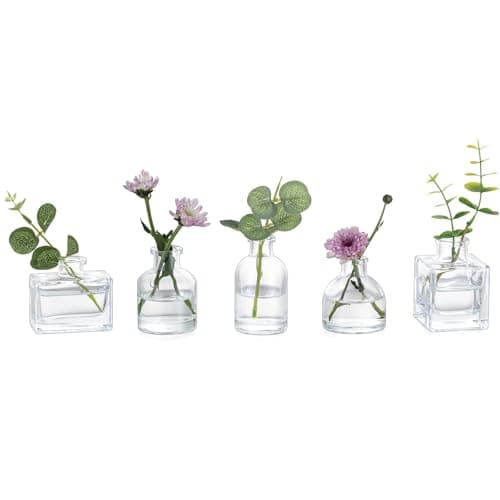 Glasseam Mini Glass Propagation Vases, set of 5No rack at all: five loose vessels that go wherever there is light, which is the most flexible and least tidy way to propagate. | Cuttings that live on a shelf, not a rack | |
| 2 | 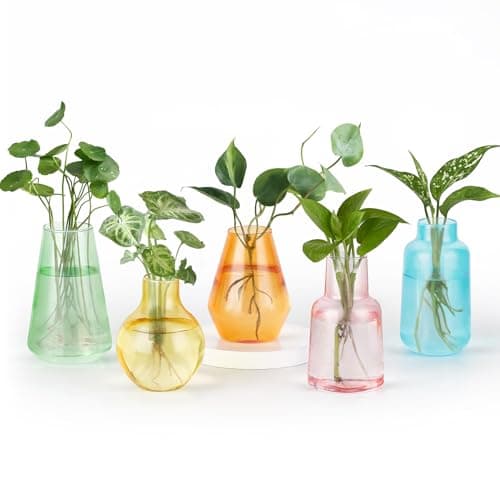 Mkono Propagation Vases, 5 glass jars, assorted shapesDeliberately mismatched, which is the cheapest way to work out whether you are a wide-jar propagator or a narrow-tube one before committing to a rack. | One of each shape, to find out what you use | |
| 3 | 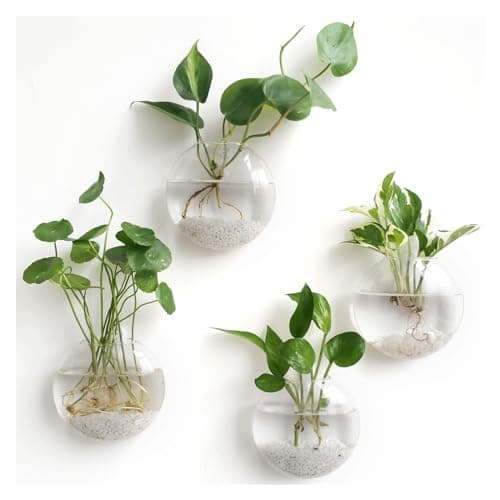 Mkono Wall Propagation Planters, oblate hanging vases, 4 packFour separate vessels instead of one rack, so each one can hang from whatever fixing that spot allows, including a rated adhesive hook. | Individual vessels you can place anywhere | |
| 4 | 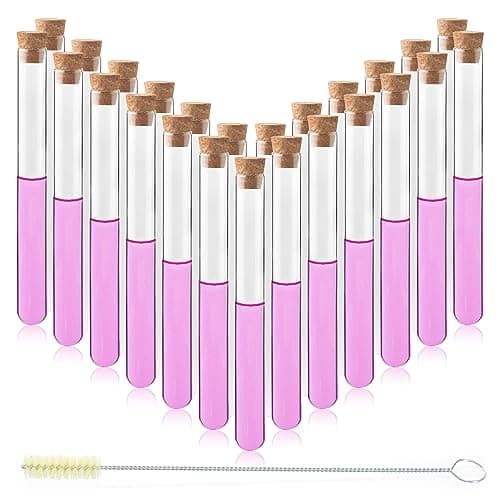 Labvida 20 ml Glass Test Tubes with Cork Stoppers and Brush, 50 packThe component, not the product. Fifty borosilicate tubes cost less than a five-tube station, which is the whole argument for building your own rack rather than buying one. | Building your own station |
Links to Amazon are affiliate links. Prices and availability are Amazon's and change without notice.
What we looked at, in order
- Opening width. Same first question as every propagation purchase: a narrow bud vase takes a thin stem only, and no amount of styling changes that.
- Stability when a cutting leans. A tall narrow vase with a heavy cutting in it tips. Wide bases and oblate shapes do not.
- Do they work as a group? A matched set of five reads as intentional on a shelf. Five mismatched jars read as washing-up.
- Can you clean them? Bottle-brush access, again. This is the specification that decides whether a vessel is still in use in six months.
Where to put loose vases
The advantage of loose vessels is that you can put them in several places and let the results tell you where your light actually is. Bright indirect is the target: near a window but out of the direct beam, which heats the water and stresses a cutting with no roots to replace what it loses. Kitchen windowsills work well because you are at the sink anyway and the water gets changed. Bathroom windows work well for humidity if there is any daylight at all. The full siting guide is here.
What we do not recommend
Narrow-necked bud vases for anything but the thinnest stems, because you cannot get a brush inside them and they are impossible to clean once cloudy. Sealed terrarium-style vessels, which have no airflow. And decorative bottles with an opening smaller than the cutting's eventual root ball — a cutting you cannot get out without breaking the vessel is a cutting you will leave in water too long.
Every pick, in full
We have not handled any of these. What follows is what each listing publishes, what that means once you put a watered pot on it, and who should buy something else.
1. Cuttings that live on a shelf, not a rack
Glasseam Mini Glass Propagation Vases, set of 5
No rack at all: five loose vessels that go wherever there is light, which is the most flexible and least tidy way to propagate.
#ad · Price as of October 18, 2026. How we are funded
- What the listing publishes
- Five assorted small clear glass vases, no stand
- Against a 10-inch pot
- No weight rating is published for this product, so there is nothing to check. That counts against it here rather than being treated as neutral.
A rack forces every cutting into the same light. Loose vases let the pothos sit in a dim corner and the herb cutting take the sill, which is how they actually root fastest.
Assorted shapes means assorted neck widths, which by accident covers both thick and thin cuttings.
Loose glass on a shelf is the format most likely to get knocked off. A rack at least keeps them upright together.
What is good
- Each cutting goes where its light is
- Assorted necks fit assorted cuttings
- The cheapest way into propagation
What is not
- No stand, so they go over easily
- Looks like clutter rather than a display
- Small volumes need frequent water changes
Skip it if you want the station to be a feature. This is five jars on a shelf and it looks like it.
2. One of each shape, to find out what you use
Mkono Propagation Vases, 5 glass jars, assorted shapes
Deliberately mismatched, which is the cheapest way to work out whether you are a wide-jar propagator or a narrow-tube one before committing to a rack.
#ad · Price as of October 18, 2026. How we are funded
- What the listing publishes
- Five glass vessels in assorted shapes and sizes
- Against a 10-inch pot
- No weight rating is published for this product, so there is nothing to check. That counts against it here rather than being treated as neutral.
Vessel shape is the decision people make last and should make first. A set of assorted shapes answers it in one season for the price of one rack.
Assorted also means nothing stacks or aligns, so this is a shelf arrangement rather than a display piece.
The bigger vessels in the set hold enough water to go a week; the small ones will not.
What is good
- Answers the wide-versus-narrow question without buying twice
- Bigger vessels stretch to a week between changes
- No stand to fit on a shelf
What is not
- Nothing matches
- No stand, so they get knocked
- Mixed volumes mean mixed maintenance schedules
Skip it if you already know your cuttings. Buy the rack that fits them rather than five shapes you will use two of.
3. Individual vessels you can place anywhere
Mkono Wall Propagation Planters, oblate hanging vases, 4 pack
Four separate vessels instead of one rack, so each one can hang from whatever fixing that spot allows, including a rated adhesive hook.
#ad · Price as of October 18, 2026. How we are funded
- What the listing publishes
- Four flat-backed glass vases, each hung individually
- Against a 10-inch pot
- No weight rating is published for this product, so there is nothing to check. That counts against it here rather than being treated as neutral.
This is the wall format that survives a no-drilling lease, because a single small glass vase is light enough for an adhesive hook rated in the tens of pounds rather than the hundreds.
Independent vessels also let you spread cuttings across the light you have, rather than putting all of them wherever the rack fits.
Flat-backed vases hold less water than a jar and sit closer to the wall, which means condensation marks the paint behind them over time.
What is good
- Light enough per vessel for a rated adhesive hook
- Place each one where the light actually is
- The cheapest wall option here
What is not
- Four fixings instead of one
- Flat-backed vases mark the wall behind them with condensation
- Small water volume needs frequent changes
Skip it if you want one tidy installation. Four separate vases on four hooks is more holes, or more hooks, than a single rack.
4. Building your own station
Labvida 20 ml Glass Test Tubes with Cork Stoppers and Brush, 50 pack
The component, not the product. Fifty borosilicate tubes cost less than a five-tube station, which is the whole argument for building your own rack rather than buying one.
#ad · Price as of October 18, 2026. How we are funded
- What the listing publishes
- Published 50 tubes, 20 ml, 20 by 100 mm borosilicate glass, round bottom; cork stoppers and a cleaning brush included
- Against a 10-inch pot
- No weight rating is published for this product, so there is nothing to check. That counts against it here rather than being treated as neutral.
20 mm outside diameter is the number to build to. It is wider than the 15 to 16 mm tubes most commercial racks are drilled for, which is a problem if you were planning to buy a rack and a non-issue if you are drilling a board — you simply drill to 20 mm.
The brush is the part that matters. Algae in a tube this narrow cannot be reached with a finger, and a tube you cannot clean is a tube you throw away.
This is the pick for the do-it-yourself route on this site, which monetizes components only and never a finished station dressed up as a project.
What is good
- 20 mm bore takes a thicker cutting than a standard 15 mm propagation tube
- Includes the cleaning brush that makes tubes reusable
- Fifty tubes for less than a five-tube station
What is not
- No stand, and at 20 mm they will not drop into a rack drilled for standard 15 to 16 mm tubes
- Cork stoppers swell and are not needed for propagation
- Thin laboratory glass breaks more easily than a jar
Skip it if you want something that works out of the box. These are components, and a five-tube desktop station is the finished answer.
Questions people actually ask
Do I need a special vase to propagate cuttings?
How much water should be in a propagation vase?
Can I use these for cut flowers too?
Are test tubes better than jars?
Sources
Product specifications are quoted from each seller's own listing and are the seller's claim, not a measurement of ours.