Plant Stands
Plant Stand or Side Table?
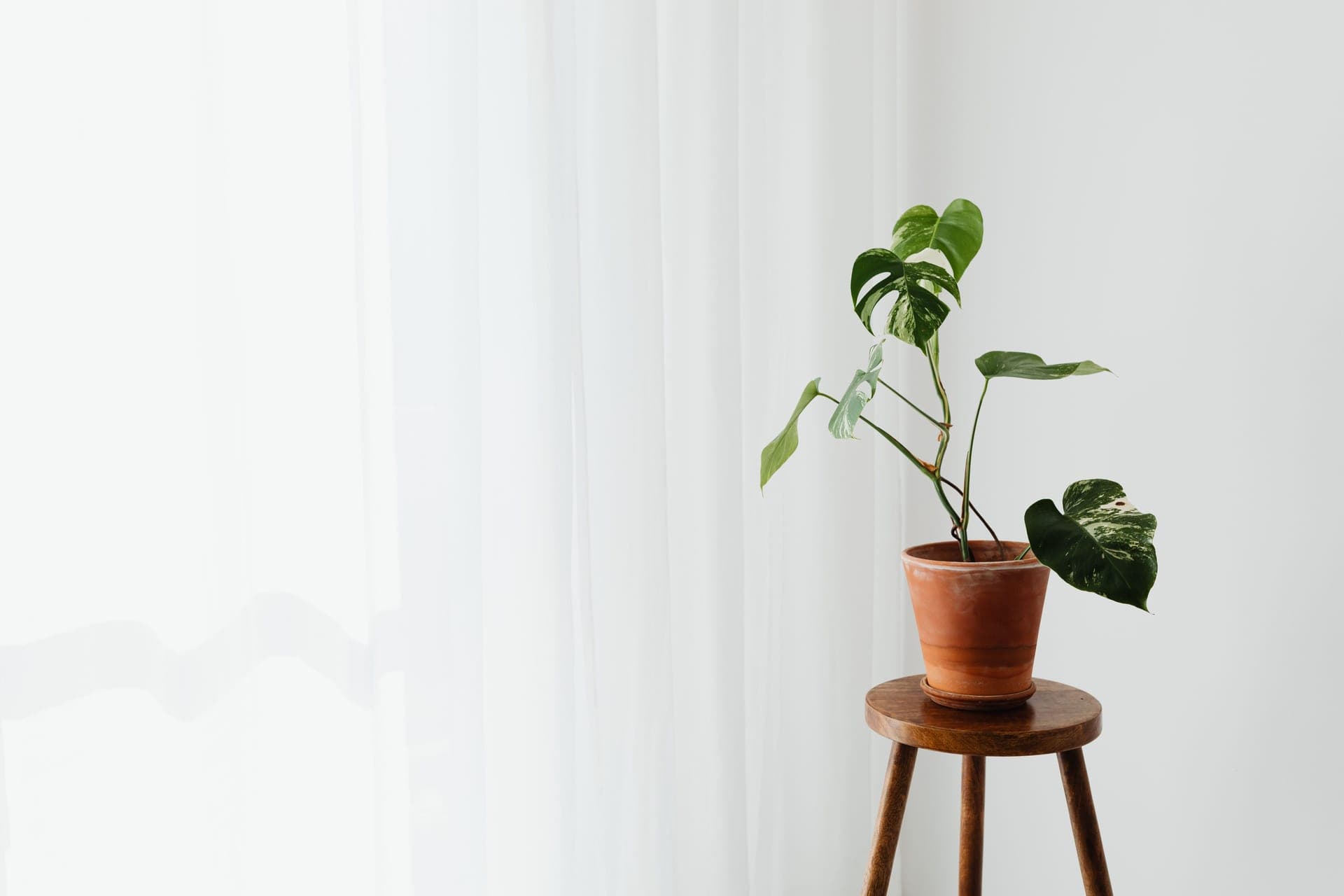
Both put a plant at height on about a square foot of floor. Only one of them is also a place to put a drink, and only one holds more than one plant.
By Scooter M., enthusiast · Published
The short answer
Buy a side table if the plant is an excuse and you actually want a surface — one plant, plus a lamp, a book and a drink. Buy a plant stand if you want plants: a tiered stand puts three to five of them on the same floor a side table uses for one. In a small apartment the deciding question is whether that square foot has to do a second job.
Disclosure Pot & Prop earns a commission when you buy through the Amazon links on this page, at no extra cost to you. It does not change which products get recommended or what we say about them, and we have not been given any of them. How this site is funded.
This is one of the most common searches in the category and it is almost never answered honestly, because the two products are sold by different departments to the same person. A side table and a single-tier plant stand are the same object with different marketing: a flat surface on legs, roughly knee to hip height, occupying about a square foot of floor. The differences that matter are what else the surface can do and how many plants it holds.
In a house that difference barely registers. In a 500 square foot apartment, where every square foot of floor is contested, it is the entire decision — and the metric that settles it is the one this site computes for every stand: plant positions per square foot of floor. The full method is here.
The two side by side
| Side table or stool | Tiered plant stand | |
|---|---|---|
| Plants held | One, sometimes two | Three to six |
| Plants per square foot | About 1 | About 2 to 3.4 |
| Also holds a drink or a lamp | Yes — the point | No |
| Water rings on the surface | Your problem | Expected; most have open shelves |
| Looks right with no plant on it | Yes | No — it reads as empty shelving |
| Height of the plant | One fixed height | Several, staggered |
| Cost per plant position | Highest here | Lowest here |
| Suits a trailing plant | Yes, at the edge | Yes, from the top tier |
The case for the side table
It does two jobs, and in a small apartment a piece of furniture that does two jobs is worth more than the sum of its parts. A side table beside a sofa holds a plant most of the time and a mug, a book and a laptop when it needs to. A plant stand beside a sofa holds plants and resents anything else being put on it.
It also looks correct when the plant dies, moves or goes through a bad winter — which is not a small consideration. An empty tiered plant stand is unmistakably a thing waiting for plants; an empty side table is furniture.
The practical catch is water. A wooden side table under a watered pot needs a saucer and pot feet at minimum, and a wet ring on a table surface is far more visible than the same ring on an open metal shelf. If the plant is going on furniture, the saucers and pot feet page is the companion purchase and it is not optional.
The case for the plant stand
Density, and it is not close. A three-tier stand on a 16 by 12 inch footprint holds three plants on about 1.3 square feet, which is roughly 2.3 plants per square foot. A side table of a similar footprint holds one, which is 1. If your problem is that you have more plants than positions — the normal condition of anyone who has started propagating — that ratio is the whole argument.
Staggered heights are the second, quieter advantage. Plants at three heights in front of a window all get light; three plants on one flat surface shade each other as they grow. That is why tiered stands are the default recommendation in the small-space roundup even though a side table is often cheaper.
The middle option nobody mentions: a pedestal
A tall single-position pedestal is the worst product in this category by the density metric — one plant on a square foot of floor, exactly like a side table, with no ability to hold a mug. And it is still sometimes the right purchase, for one specific reason: height. A trailing plant needs somewhere to trail from, and a pothos at 31 inches reads completely differently from the same plant at 18. Spend that square foot deliberately, on one plant that earns it.
The comparison with a plant riser — the short, wide platform that lifts a floor pot a few inches — is a different question and is covered on plant stand against plant riser.
Quick picks
Ranked, with the published figure each pick turns on. Tap a row for the full reasoning further down this page.
| # | Product | Best for | Price |
|---|---|---|---|
| 1 | 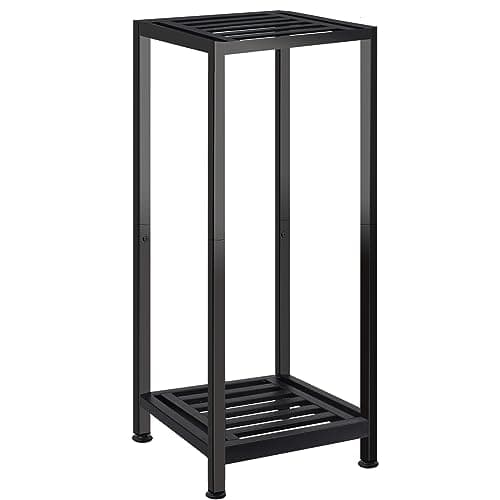 Lilybud--lily Wrought Iron Pedestal Plant Stand, 30.7 in, 200 lbA single-position column that publishes a 200 lb capacity, which makes it one of the few stands on this site where the load question has an answer instead of an estimate. | One feature plant lifted, on a rating you can check | |
| 2 | 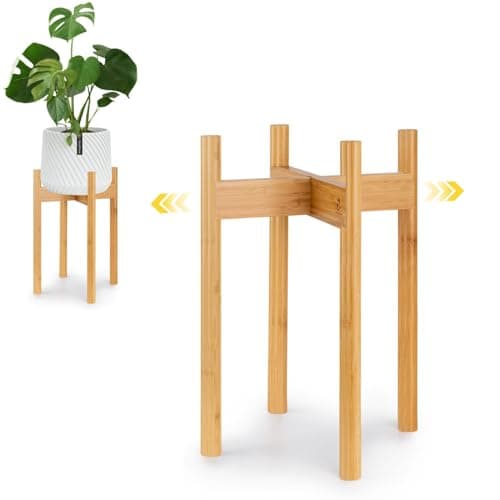 Fox & Fern Large Adjustable Bamboo Plant Stand, 8 to 12 in, 200 lbA single-pot pedestal that publishes a number, which is rare in the decorative half of this category where ratings stop being printed the moment a stand starts looking like furniture. | Lifting one good plant to eye level | |
| 3 | 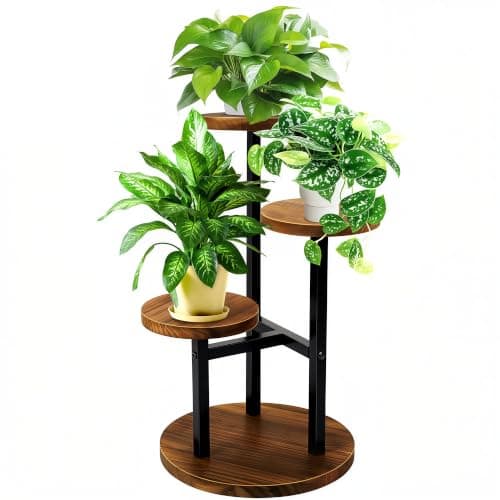 GEEBOBO 3 Tier Metal and Wood Corner Plant StandFlat wooden boards instead of rings or wire, which is the format that takes whatever pot you already own. | Three medium pots without a tower |
Links to Amazon are affiliate links. Prices and availability are Amazon's and change without notice.
The weight question, which applies to both
Almost nothing in either category publishes a weight rating. Of the stands, caddies and shelves researched for this site, the ones that publish a capacity are overwhelmingly the plant caddies — furniture-shaped products publish nothing at all. That matters more on a side table than on a stand, because a side table invites a bigger pot.
| Pot size | Mix volume | Dry | Watered | Rating needed |
|---|---|---|---|---|
| 6 in | 0.058 cu ft | 1.3 lb | 3.2 lb | 5 lb |
| 8 in | 0.137 cu ft | 3 lb | 7.5 lb | 12 lb |
| 10 in | 0.268 cu ft | 5.9 lb | 14.7 lb | 23 lb |
| 12 in | 0.463 cu ft | 10.2 lb | 25.5 lb | 39 lb |
What we deliberately do not recommend
Glass-topped side tables under plants, which show every water ring and every mineral deposit and which chip at the edges in a way that is expensive in a rented apartment. We also do not recommend nesting stools as plant stands — they look ideal and the small one is invariably too narrow for the pot base, so it tips. And we do not recommend buying either product before measuring the pot base rather than the pot rim, since that is the dimension that has to fit the surface.
Every pick, in full
We have not handled any of these. What follows is what each listing publishes, what that means once you put a watered pot on it, and who should buy something else.
1. One feature plant lifted, on a rating you can check
Lilybud--lily Wrought Iron Pedestal Plant Stand, 30.7 in, 200 lb
A single-position column that publishes a 200 lb capacity, which makes it one of the few stands on this site where the load question has an answer instead of an estimate.
#ad · Price as of October 21, 2026. How we are funded
- What the listing publishes
- Published 30.7 in tall on a 12 by 12 in footprint; all-metal construction in 0.8 in tube; published maximum load capacity 200 lb; 6.97 lb empty; the listing does not publish a top-plate diameter
- Against a 10-inch pot
- Rated 200 lb against 14.7 lb of saturated mix in a 10-inch pot — 13.6x, clear of the 1.5x margin this site requires.
Thirty inches is the height at which a trailing plant stops pooling on the floor, and a pedestal gets it there with no fixings at all — the answer when the lease forbids a ceiling hook and the pothos is currently a puddle.
The published 200 lb figure is the reason to prefer this over the unrated columns. A 10-inch pot of saturated mix computes to 14.7 lb, so the rating is roughly thirteen times the load this will ever see. That margin is not the point; being able to check it at all is.
What the listing does not publish is the diameter of the top plate, and on a wrought-iron pedestal that is the number that decides whether your pot actually sits on it. Measure the base of the pot before ordering, because a 12-inch footprint does not mean a 12-inch top.
What is good
- Publishes a 200 lb maximum load, which almost nothing in this category does
- Lifts one plant with no drilling and no ceiling fixing
- All-metal 0.8 in tube, so it does not rely on a board staying flat
What is not
- The top-plate diameter is not published, so pot fit is a measurement you have to make
- Costs a square foot of floor for a single plant
- Metal and dark: it reads as hardware rather than furniture in a soft room
Skip it if you can put one adhesive hook in the ceiling. A rated 30 lb hook holds the same trailing plant, costs less and takes no floor at all.
2. Lifting one good plant to eye level
Fox & Fern Large Adjustable Bamboo Plant Stand, 8 to 12 in, 200 lb
A single-pot pedestal that publishes a number, which is rare in the decorative half of this category where ratings stop being printed the moment a stand starts looking like furniture.
#ad · Price as of October 21, 2026. How we are funded
- What the listing publishes
- Published 200 lb capacity; adjustable to fit 8 to 12 in pots; bamboo
- Against a 10-inch pot
- Rated 200 lb against 14.7 lb of saturated mix in a 10-inch pot — 13.6x, clear of the 1.5x margin this site requires.
200 lb against 25.5 lb of saturated mix in a 12-inch pot is about eight times over, comfortably past the 1.5x margin this site requires, and past it for every pot size up to 16 inches.
The adjustable 8 to 12 inch span means one stand covers the range most single feature plants live in, rather than fitting only the pot you have today.
A pedestal buys height, not positions. It is the opposite trade from a tiered corner frame and it is the right one when the plant is the point.
What is good
- Publishes a rating, which decorative stands usually do not
- Adjusts across the common 8 to 12 inch range
- Raises one plant into the light instead of crowding five
What is not
- One plant, one square foot
- Bamboo and a leaking saucer are a bad pairing
- Costs more per plant than any tiered stand here
Skip it if you are short on floor. A pedestal is the least floor-efficient format on this site, and that is exactly what you are paying for.
3. Three medium pots without a tower
GEEBOBO 3 Tier Metal and Wood Corner Plant Stand
Flat wooden boards instead of rings or wire, which is the format that takes whatever pot you already own.
#ad · Price as of October 21, 2026. How we are funded
- What the listing publishes
- 3 tiers, wood shelf boards on a metal frame; no published weight rating
- Against a 10-inch pot
- No weight rating is published for this product, so there is nothing to check. That counts against it here rather than being treated as neutral.
A flat board is the most forgiving surface in this category: any pot, any saucer, any diameter up to the board. That flexibility is worth more to most renters than a tighter plants-per-square-foot number.
Three positions on roughly 1.3 square feet is about 2.3 plants per square foot, mid-pack, and the price of taking mixed pot sizes.
Board stands are also where a missing weight rating bites least, because the load spreads across a board rather than pressing on a wire ring.
What is good
- Flat boards take any pot you already own
- Low enough that the top shelf is still in window light
- Room for a saucer under every pot
What is not
- No published weight rating
- Wood boards stain where a saucer overflows
- Only three positions for the footprint it uses
Skip it if you are optimizing purely for plant count. The tiered corner frames here hold twice as many plants on the same floor.
Questions people actually ask
Can I use a side table as a plant stand?
Is a plant stand better than a stool?
How much weight can a side table hold with a plant on it?
What is the most space-efficient way to display one plant?
Sources
- Cornell University, Greenhouse Management: bulk density of greenhouse media components
- Biology Insights: how much a cubic foot of potting soil weighs, dry and saturated
- Clemson HGIC: Indoor Plants — cleaning, fertilizing, containers and light requirements
- University of Illinois Extension: Houseplants — lighting
Product specifications are quoted from each seller's own listing and are the seller's claim, not a measurement of ours.