Plant Stands
Plant Stand vs Plant Riser
One raises the plant to eye level. The other raises it three quarters of an inch and stops it sitting in its own drainage. Only one of them is about height.
By Scooter M., enthusiast · Published · Last updated
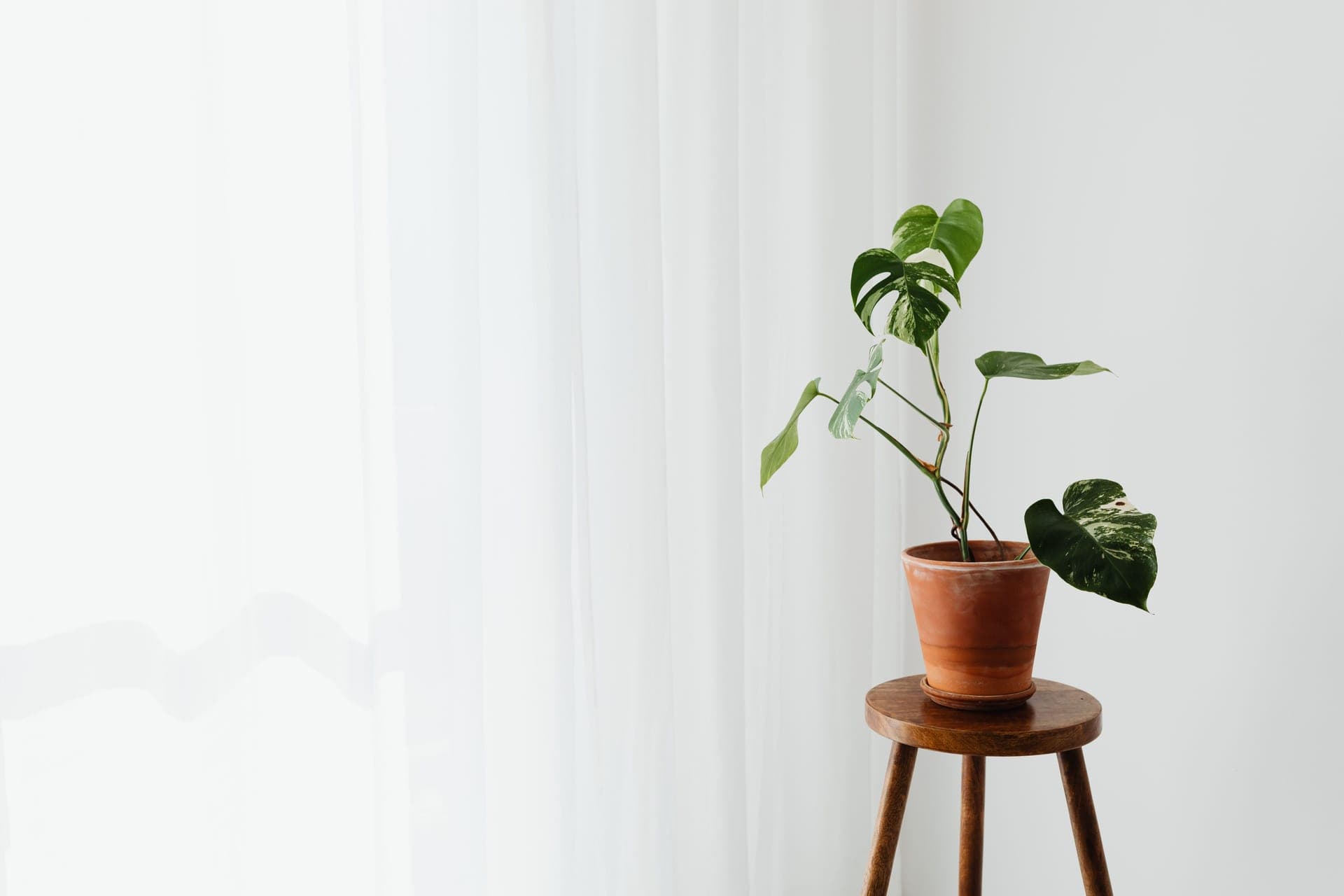
The short answer
A plant stand raises a plant for display and costs floor space. A plant riser lifts the pot base three quarters of an inch off its saucer so it stops wicking water back up, and costs nothing. They are not alternatives — most apartments should own both, and the riser is the one people have never heard of.
Disclosure Pot & Prop earns a commission when you buy through the Amazon links on this page, at no extra cost to you. It does not change which products get recommended or what we say about them, and we have not been given any of them. How this site is funded.
These two products get compared because of their names and almost never because of what they do. A plant stand is furniture: it holds a pot at a chosen height and takes up floor. A plant riser is a set of small feet that go under the pot inside its saucer, lifting the base by well under an inch. One is a display decision, the other is a drainage decision, and confusing them is how people end up buying a pedestal to solve root rot.
What each one actually does
| Plant stand | Plant riser / pot feet | |
|---|---|---|
| What it changes | Height, by inches or feet | Height, by about 3/4 inch |
| Problem it solves | Plants at floor level, wasted vertical space | Pot base sitting in its own drainage |
| Floor space cost | One to two square feet | None |
| Protects the floor? | Only indirectly | Yes, keeps a damp pot base off wood |
| Typical cost | Tens of dollars | A few dollars for a set |
| Published rating | Sometimes, on caddies and one pedestal | Not applicable |
Why the riser matters more than it sounds
A pot with a drainage hole standing apartment in a saucer has a problem: the water it just drained is now touching the same hole it came out of, and potting mix wicks. So the bottom inch of the root ball stays wet indefinitely, which is the exact condition root rot needs, and it happens in a setup that looks correct from the outside.
Three quarters of an inch of air under the pot breaks that contact completely. It is the cheapest intervention on this entire site and it is invisible once installed, which is presumably why nobody talks about it. Clemson's extension guidance points the same way from a different angle: never let pots sit in direct contact with the floor or furniture, because the moisture damages what is underneath.
When you genuinely need a stand instead
When the plant is in the wrong place vertically rather than the wrong place hydrologically. A trailing plant on the floor cannot trail. A plant below the windowsill in a single-window room is in a different light environment from one on the sill. A feature plant at ankle height is not a feature. Those are all height problems and a riser does nothing for any of them.
If height is the problem and the plant is large, note that a pedestal costs you a square foot for one plant, which is the least floor-efficient thing on this site. A ceiling hook does the same job for a trailing plant and costs no floor at all, if your lease allows one.
The verdict
Buy the riser regardless — it is a few dollars, it fixes a failure mode that is invisible until the plant is already sick, and it protects a floor you are probably renting. Buy the stand only if you have a height problem you can name. They are complementary, and the reason they get compared at all is that the search results for one keep returning the other.
Every pick, in full
We have not handled any of these. What follows is what each listing publishes, what that means once you put a watered pot on it, and who should buy something else.
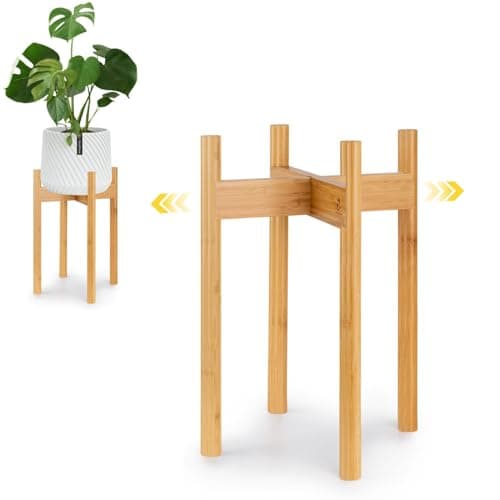
1. Lifting one good plant to eye level
Fox & Fern Large Adjustable Bamboo Plant Stand, 8 to 12 in, 200 lb
A single-pot pedestal that publishes a number, which is rare in the decorative half of this category where ratings stop being printed the moment a stand starts looking like furniture.
#ad · Price as of October 18, 2026. How we are funded
- What the listing publishes
- Published 200 lb capacity; adjustable to fit 8 to 12 in pots; bamboo
- Against a 10-inch pot
- Rated 200 lb against 14.7 lb of saturated mix in a 10-inch pot — 13.6x, clear of the 1.5x margin this site requires.
200 lb against 25.5 lb of saturated mix in a 12-inch pot is about eight times over, comfortably past the 1.5x margin this site requires, and past it for every pot size up to 16 inches.
The adjustable 8 to 12 inch span means one stand covers the range most single feature plants live in, rather than fitting only the pot you have today.
A pedestal buys height, not positions. It is the opposite trade from a tiered corner frame and it is the right one when the plant is the point.
What is good
- Publishes a rating, which decorative stands usually do not
- Adjusts across the common 8 to 12 inch range
- Raises one plant into the light instead of crowding five
What is not
- One plant, one square foot
- Bamboo and a leaking saucer are a bad pairing
- Costs more per plant than any tiered stand here
Skip it if you are short on floor. A pedestal is the least floor-efficient format on this site, and that is exactly what you are paying for.
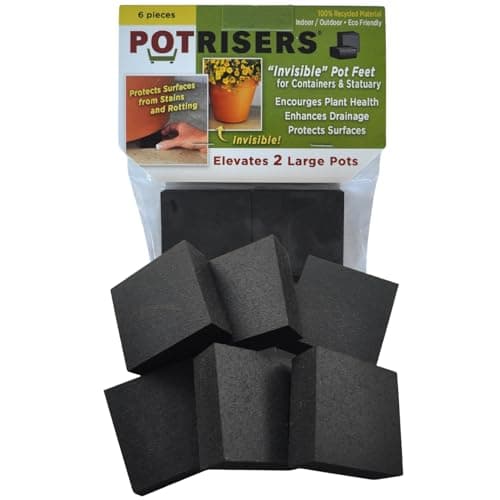
2. Airflow under a pot with no height cost
POTRISERS Invisible Pot Feet and Plant Risers, 2 in wide, 6 pack
Three quarters of an inch of lift, which is not a plant stand at all and solves a problem no plant stand solves: the pot base sitting in its own drainage.
#ad · Price as of October 18, 2026. How we are funded
- What the listing publishes
- 2 in wide by 3/4 in tall feet; lifts the pot base clear of its saucer
- Against a 10-inch pot
- No weight rating is published for this product, so there is nothing to check. That counts against it here rather than being treated as neutral.
A pot standing apartment in a saucer wicks the water it just drained straight back up. Feet break that contact, which is the difference between drainage that works and a saucer that is a reservoir.
It also protects the floor. Terracotta sitting wet on wood for a year leaves a ring that does not come out, and a few cents of plastic prevents it.
Six feet is two or three pots. Buy per pot, not per apartment.
What is good
- Fixes the wicking problem that drainage holes alone do not
- Keeps wet pot bases off wood floors
- Costs and weighs almost nothing
What is not
- Six feet only covers two or three pots
- Raises the pot enough to matter under a tight sill
- Not a substitute for a saucer
Skip it if your pots are already in cachepots with a gap at the bottom. You have the airflow, and feet just make the pot taller.
Questions people actually ask
What is a plant riser for?
Do I need pot feet if my pot has a drainage hole?
Is a plant stand or a riser better for root rot?
Can I use a plant stand and pot feet together?
Sources
- Clemson HGIC: Indoor Plants — cleaning, fertilizing, containers and light requirements
- Clemson HGIC: Indoor Plants — watering
- Cornell University, Greenhouse Management: bulk density of greenhouse media components
- Biology Insights: how much a cubic foot of potting soil weighs, dry and saturated
Product specifications are quoted from each seller's own listing and are the seller's claim, not a measurement of ours.