Plant Stands
The Best Wooden Plant Stands
Two phrases show up in this category and they are not the same thing. Here is how to tell them apart before the first spill rather than after.
By Scooter M., enthusiast · Published
The short answer
Read the material phrase before anything else. "100% solid acacia wood" names a species and a solid section; "walnut grain composition" describes a surface over a composite core, and the two behave completely differently once water gets into a damaged edge. Then check the load: oddly, in this set only the composite stand publishes a figure, because its legs are metal. A 12-inch pot carries about 25 lb of watered mix, so anything rated 100 lb is comfortable and anything unrated is a judgment you are making without data.
Disclosure Pot & Prop earns a commission when you buy through the Amazon links on this page, at no extra cost to you. It does not change which products get recommended or what we say about them, and we have not been given any of them. How this site is funded.
Search for a wooden plant stand and you get two products wearing the same photograph. One is a solid section of hardwood with a species on the label. The other is a board with a printed or veneered wood grain on top of it. From the front, at listing-photo distance, they are indistinguishable.
They are not indistinguishable once you have owned one for a year, because a plant stand is the single piece of furniture in your home guaranteed to be rained on. So this page starts with the material phrase and works outward.
The two phrases
| Phrase | What it means | In this set |
|---|---|---|
| "100% solid acacia wood" | Named species, solid section | Two stands |
| "carbonized solid wood" | Solid, thermally heat-treated | One stand |
| "wood and walnut grain composition" | Wood-look surface over a core | One stand |
| "wood-tone" / "wooden finish" | Almost always a surface | Common elsewhere |
None of these is dishonest. The composite stand here says "quality wood and walnut grain composition" in its first bullet — it is telling you, in language most buyers skim past. The job is simply to read it.
Why it matters on a plant stand specifically
Put the same material under a lamp and it would not matter much. Under a pot it does, because of what happens when water sits on an edge.
- Solid timber absorbs and releases. Repeated wetting raises grain, darkens the surface and can eventually split it along the grain. It is visible damage and it is repairable — sanding and re-oiling a solid top is a Saturday morning.
- Composite board swells and stays swollen. Water entering a chipped or cut edge expands the core irreversibly. The top goes lumpy near the edge and no amount of drying returns it. It is not repairable; it is replaceable.
- Heat-treated timber sits between them. One stand here states carbonized, heat-treated wood — thermal modification aimed specifically at reducing moisture uptake and movement, which is precisely the right target for this application.
- A raised lip changes the odds for either. The composite stand here is the only one with an edge to catch the first drip, which is a genuine mitigation of its own weakness.
The practical upshot is not "never buy composite". It is: if you buy composite, use a saucer religiously and never let water stand on the top — and know that a chipped edge is the beginning of the end. If you buy solid, you can be more relaxed and the worst case is cosmetic.
Then check it against the pot
The second specification is load, and in this set it produces a genuinely odd result: the only stand publishing a rating is the composite one, because its capacity comes from metal legs rather than from timber. Every solid-wood stand here states its species and says nothing about weight.
| Pot size | Mix volume | Dry | Watered | Rating needed |
|---|---|---|---|---|
| 4 in | 0.017 cu ft | 0.4 lb | 0.9 lb | 2 lb |
| 5 in | 0.034 cu ft | 0.7 lb | 1.8 lb | 3 lb |
| 6 in | 0.058 cu ft | 1.3 lb | 3.2 lb | 5 lb |
| 8 in | 0.137 cu ft | 3 lb | 7.5 lb | 12 lb |
| 10 in | 0.268 cu ft | 5.9 lb | 14.7 lb | 23 lb |
| 12 in | 0.463 cu ft | 10.2 lb | 25.5 lb | 39 lb |
| 14 in | 0.735 cu ft | 16.2 lb | 40.5 lb | 61 lb |
| 16 in | 1.098 cu ft | 24.2 lb | 60.4 lb | 91 lb |
A 10-inch pot is 14.7 lb of watered mix and a 12-inch pot is 25.5 lb, before the pot and the plant. A published 100 lb rating clears either comfortably. An unpublished rating on a chunky acacia stand is probably fine — solid hardwood is strong and these are small spans — but "probably fine" is an inference, and this site's whole habit is to prefer the number. The model is here.
Shape: one pot or several
Wooden stands split into single-pot pedestals and tiered stands, and the split matters more here than in metal because timber tiers are heavier and more expensive to make. A single-pot pedestal is the classic mid-century form and it does one job well: raises one plant to a height where its foliage reads at eye level.
Tiered wooden stands trade that for positions. Be honest about the cost: an upper tier shades the lower one, which is fine for a pothos underneath a snake plant and wrong for two plants that both want light. The footprint guide covers the plants-per-square-foot side of that trade.
Quick picks
Ranked, with the published figure each pick turns on. Tap a row for the full reasoning further down this page.
| # | Product | Best for | Price |
|---|---|---|---|
| 1 | 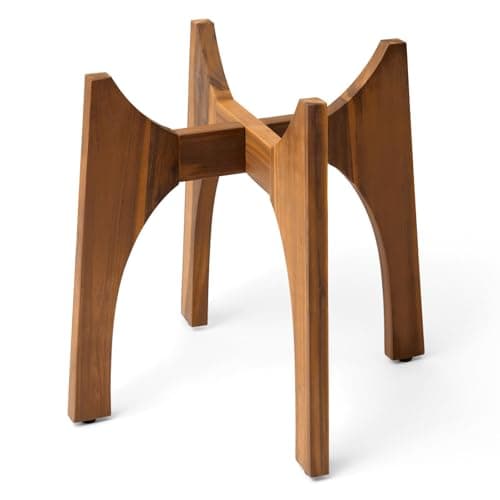 KUTE NEST Solid Acacia Plant Stand, 17 in tall, 19.3 in wideStates its species and states that it is solid, which in a category full of wood-toned surfaces is the specification you are actually paying for. | A floor plant you want standing on furniture rather than on a rack | |
| 2 | 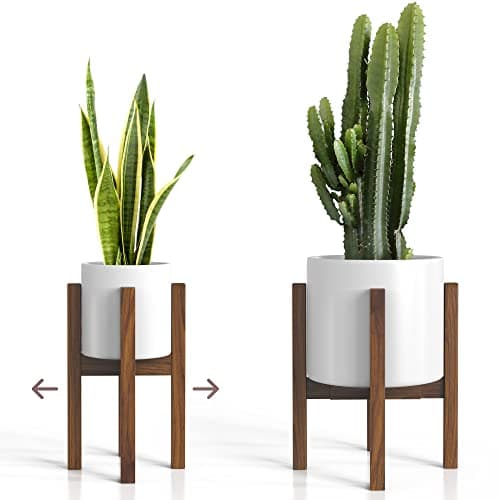 Sophia Mills Adjustable Acacia Plant Stand, 16 in tall, fits 8 to 12 in potsThe only stand here that adjusts to the pot instead of asking the pot to match it, which removes the single most common sizing mistake in this category. | Not having to know your pot diameter before you buy | |
| 3 | 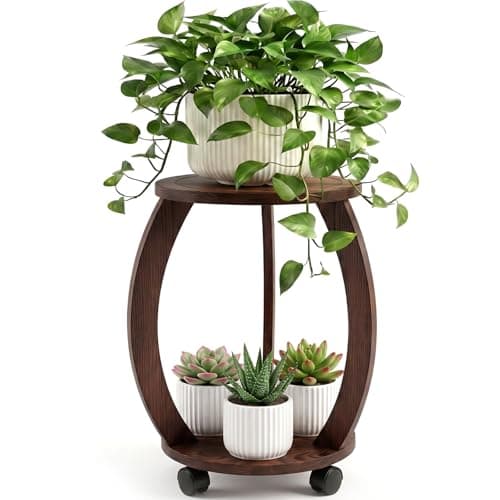 WooOrganix 2 Tier Wooden Plant Stand with Wheels, 18.8 in tallSolid wood that also rolls, which solves the real problem with heavy plants: they are heavy, and you still have to clean the floor under them. | A heavy plant you need to move to clean behind, or to chase the light | |
| 4 | 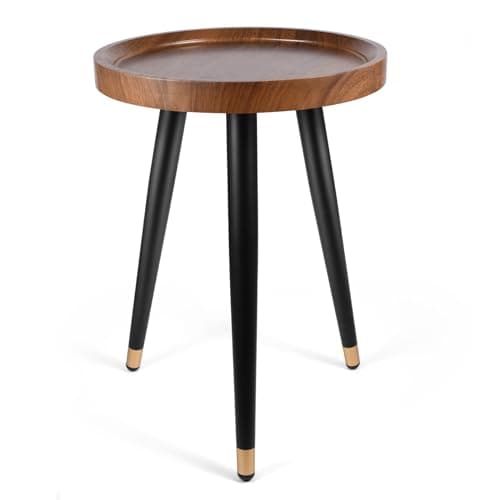 KGPLOME Walnut-Grain Plant Table with Metal Legs, 100 lb rated, 12 by 17 inPublishes 100 lb where every solid-wood stand here publishes nothing — and pays for it by not being solid wood. | The only stand here that publishes a number you can check a pot against | $26.09 at Amazon $28.99 · 10% off |
| 5 | 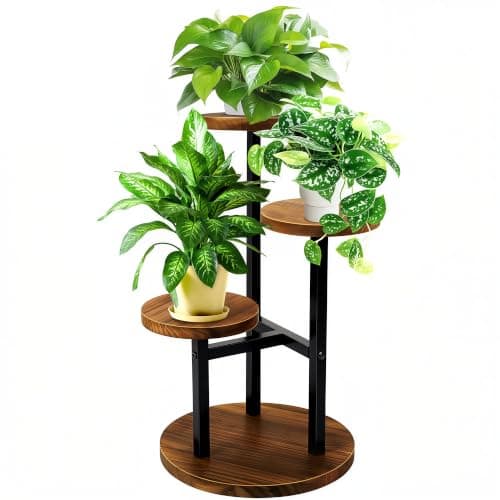 GEEBOBO 3 Tier Metal and Wood Corner Plant StandFlat wooden boards instead of rings or wire, which is the format that takes whatever pot you already own. | Three medium pots without a tower | $22.40 at Amazon $23.75 · 6% off |
Links to Amazon are affiliate links. Prices and availability are Amazon's and change without notice.
How we ranked these
On what the listing says the material actually is, then on published load, then on whether the shape solves something. The wide acacia stand leads because it states 100% solid acacia and gives the pot the most room to sit inside the edge, which is what makes a pedestal look like furniture rather than like a stool. The adjustable acacia stand is second for removing the sizing gamble entirely — 8 to 12 inches covers every pot a houseplant arrives in and survives a repot. The rolling two-tier is third and is the practical choice for a heavy plant, with heat-treated timber aimed at the right failure and wheels that mean you will actually clean behind it. The composite table is fourth: the only published rating here at 100 lb, a raised lip that catches drips, and a top that is a wood-grain surface rather than timber, stated plainly in its own first bullet. The metal-and-wood three-tier is last as the existing option on this site that splits the difference, and it publishes no weight rating either.
| Your situation | Buy | Why |
|---|---|---|
| One plant, want it to look like furniture | Wide solid acacia | Solid species, widest top here |
| Do not know your pot diameter | Adjustable acacia | 8 to 12 in, and survives a repot |
| Heavy plant you need to move | Rolling 2-tier | Two locking wheels; 12 in pot is 25 lb watered |
| Want a published weight rating | Composite table, 100 lb | The only figure in this set |
| You water carelessly | Any solid wood stand | Composite edges swell permanently |
| Several small plants, one footprint | Metal and wood 3-tier | Positions rather than a pedestal |
Making a wooden stand last
- Use a saucer, always. This is the whole ballgame. Nothing on this page is waterproof and a saucer costs a couple of dollars — the saucer and pot feet page covers the options.
- Wipe spills rather than letting them dry. A ring on solid wood is cosmetic; the same water sitting on a composite edge is structural.
- Watch the edges on composite tops. Chips and cut edges are where water gets into the core. A dab of clear finish over a chip is worth doing the day it happens.
- Re-oil solid tops occasionally. Acacia and similar hardwoods take a wipe of furniture oil happily, and it restores water resistance along with the color.
- Do not water in place on a stand you care about. Lift the pot to a sink, water it, let it drain, and put it back — the same routine the cachepot page recommends for a different reason.
- Tighten leg fixings after a month. Screw-in legs and wheel plates settle, and a stand that has loosened rocks before it fails.
What we deliberately do not recommend
Buying on the word "wooden" without reading which kind. Assuming a stand with no published rating can take a 12-inch floor plant. Putting a composite-topped stand where water will sit on it. Watering a plant in place on a wooden top and hoping the saucer catches everything. Treating a tiered wooden stand as two equally-lit positions. And sanding back a swollen composite edge, which removes the surface without fixing the core underneath it.
Every pick, in full
We have not handled any of these. What follows is what each listing publishes, what that means once you put a watered pot on it, and who should buy something else.
1. A floor plant you want standing on furniture rather than on a rack
KUTE NEST Solid Acacia Plant Stand, 17 in tall, 19.3 in wide
States its species and states that it is solid, which in a category full of wood-toned surfaces is the specification you are actually paying for.
#ad · Price as of September 27, 2026. How we are funded
- What the listing publishes
- Published 100% solid acacia wood with stated natural grain; 17 in high by 19.3 in wide; stated solid wood legs with a balanced base and floor protection; assembly required; no weight rating stated on the listing
- Against a 10-inch pot
- No weight rating is published for this product, so there is nothing to check. That counts against it here rather than being treated as neutral.
"100% solid acacia" is a checkable claim about material, not a description of a finish. Acacia is a dense hardwood with visible grain variation, and a solid section of it behaves nothing like a wood-look panel when it gets wet — which, on a plant stand, it will.
Nineteen inches across is generous for a single-pot stand and it is the reason this one reads as furniture. A wide top means the pot sits well inside the edge rather than overhanging it, which is both safer and better-looking.
No load rating is published, which is the standing trade in this category: the solid-wood stands here state their material and stay quiet about capacity, while the composite one does the reverse.
What is good
- States 100% solid acacia rather than a wood tone
- Widest top here, so the pot sits well inside the edge
- Solid wood legs rather than a metal frame with a wooden lid
What is not
- No published weight rating anywhere on the listing
- Most expensive stand in this set
- A single position — one pot, no tiers
Skip it if you are putting a large, heavy floor plant on it. With no published rating you would be relying on the manufacturer's silence, and the metal-legged stand here publishes 100 lb.
2. Not having to know your pot diameter before you buy
Sophia Mills Adjustable Acacia Plant Stand, 16 in tall, fits 8 to 12 in pots
The only stand here that adjusts to the pot instead of asking the pot to match it, which removes the single most common sizing mistake in this category.
#ad · Price as of September 27, 2026. How we are funded
- What the listing publishes
- Published solid acacia, stated handmade; adjustable width from 8 to 12 in with a footed planter design; 16 in tall; stated 4.37 lb; no weight rating stated on the listing
- Against a 10-inch pot
- No weight rating is published for this product, so there is nothing to check. That counts against it here rather than being treated as neutral.
Adjustable width from 8 to 12 inches covers essentially every pot a houseplant arrives in, and it means the stand survives the plant being repotted. Most stands here are a fixed diameter, and a fixed diameter is a reason to replace a stand you otherwise liked.
The footed design means the pot rests on rails rather than on a solid top. That is good for air circulation underneath and bad if you are relying on the stand to catch a drip — you will still want a saucer.
Solid acacia again, and again no published load figure. At 4.37 lb this is a light object, which is worth knowing: light stands with tall plants on them are the ones that get knocked over rather than the ones that break.
What is good
- Adjusts from 8 to 12 in, so pot diameter stops being a gamble
- Solid acacia, stated handmade
- Survives a repot that would strand a fixed-diameter stand
What is not
- No published weight rating
- Rails rather than a solid top, so it catches nothing that drips
- At 4.37 lb it is light enough to be knocked rather than broken
Skip it if you want a top you can also put a book or a glass on. This is a pot holder rather than a small table, and the round-topped stands here do both.
3. A heavy plant you need to move to clean behind, or to chase the light
WooOrganix 2 Tier Wooden Plant Stand with Wheels, 18.8 in tall
Solid wood that also rolls, which solves the real problem with heavy plants: they are heavy, and you still have to clean the floor under them.
#ad · Price as of September 27, 2026. How we are funded
- What the listing publishes
- Published carbonized solid wood, stated heat-treated; two tiers stated to take 6 to 12 in pots; four 360 degree swivel wheels of which two lock; published 12 by 12 by 18.8 in; stated for larger plants including snake plants, monstera, bird-of-paradise and small rubber trees; no weight rating stated on the listing
- Against a 10-inch pot
- No weight rating is published for this product, so there is nothing to check. That counts against it here rather than being treated as neutral.
Wheels are the feature that changes how a plant is actually lived with. A 12-inch pot holds about 25 lb of watered mix on its own — enough that moving it to vacuum, or to rotate it toward a window, is a two-handed job you will quietly stop doing. Four swivel wheels with two locks removes that entirely.
Carbonized and heat-treated is a real process claim rather than a finish: the timber is thermally modified, which is done to reduce moisture uptake and movement. On a plant stand — the one piece of furniture in your home that is guaranteed to get watered on — that is aimed at the right failure.
Two tiers in a 12-inch square footprint is efficient, but read the second tier honestly: it is a shelf at mid height, so the plant above shades the plant below.
What is good
- Rolls, with two locking wheels, so heavy pots stay movable
- Heat-treated solid wood, which targets moisture movement
- Two positions in a 12 by 12 in footprint
What is not
- No published weight rating despite being sold for large plants
- The upper tier shades the lower one
- Wheels on a wooden stand add a joint that can loosen over time
Skip it if the stand will never need to move. Wheels add height, cost and a wear point, and a fixed stand is steadier for the same money.
4. The only stand here that publishes a number you can check a pot against
KGPLOME Walnut-Grain Plant Table with Metal Legs, 100 lb rated, 12 by 17 in
Publishes 100 lb where every solid-wood stand here publishes nothing — and pays for it by not being solid wood.
- What the listing publishes
- Published 100 lb capacity on metal legs; stated "quality wood and walnut grain composition" for the top; published 12 in diameter by 17 in tall; raised tray edge stated to stop pots slipping and to contain drips; three screw-in legs, no tools required
- Against a 10-inch pot
- Rated 100 lb against 14.7 lb of saturated mix in a 10-inch pot — 6.8x, clear of the 1.5x margin this site requires.
Read the material phrase carefully: "quality wood and walnut grain composition". That is not a species and it is not a solid section; it is a wood-grain surface over a composite core. The listing is not hiding it, and it is the reason the legs are metal.
It is also the only stand on this page you can size against a plant. A 12-inch pot carries about 25 lb of watered mix, so 100 lb clears it about four times over — and that is a figure you can check rather than infer. The full weight model is here.
The raised edge is the other genuine feature. Every other stand here is a flat top or a set of rails; this one has a lip, which keeps a pot from sliding and catches the first drip rather than passing it to the floor.
What is good
- Publishes a 100 lb rating, alone in this set
- Raised tray edge stops slipping and catches drips
- Three screw-in legs, assembled without tools
What is not
- Wood-grain composite top, not solid timber
- A composite core swells permanently if water sits on a damaged edge
- 12 in top is the smallest here, so larger pots will overhang
Skip it if you want real wood. The phrase on this listing is "walnut grain composition", and the two acacia stands here state a species and state that it is solid.
5. Three medium pots without a tower
GEEBOBO 3 Tier Metal and Wood Corner Plant Stand
Flat wooden boards instead of rings or wire, which is the format that takes whatever pot you already own.
- What the listing publishes
- 3 tiers, wood shelf boards on a metal frame; no published weight rating
- Against a 10-inch pot
- No weight rating is published for this product, so there is nothing to check. That counts against it here rather than being treated as neutral.
A flat board is the most forgiving surface in this category: any pot, any saucer, any diameter up to the board. That flexibility is worth more to most renters than a tighter plants-per-square-foot number.
Three positions on roughly 1.3 square feet is about 2.3 plants per square foot, mid-pack, and the price of taking mixed pot sizes.
Board stands are also where a missing weight rating bites least, because the load spreads across a board rather than pressing on a wire ring.
What is good
- Flat boards take any pot you already own
- Low enough that the top shelf is still in window light
- Room for a saucer under every pot
What is not
- No published weight rating
- Wood boards stain where a saucer overflows
- Only three positions for the footprint it uses
Skip it if you are optimizing purely for plant count. The tiered corner frames here hold twice as many plants on the same floor.
Questions people actually ask
What should I look for in a wooden plant stand?
Is solid wood better than engineered wood for a plant stand?
How much weight can a wooden plant stand hold?
Will a wooden plant stand get damaged by watering?
What is carbonized wood on a plant stand?
Are mid century plant stands just a style?
Sources
- Cornell University, Greenhouse Management: bulk density of greenhouse media components
- Biology Insights: how much a cubic foot of potting soil weighs, dry and saturated
- Clemson HGIC: Indoor Plants — cleaning, fertilizing, containers and light requirements
Product specifications are quoted from each seller's own listing and are the seller's claim, not a measurement of ours.