Plant Stands
Corner Plant Stand vs Tiered Shelf
Two shapes, one decision, and it turns entirely on whether the floor you are filling is a corner or a wall.
By Scooter M., enthusiast · Published · Last updated
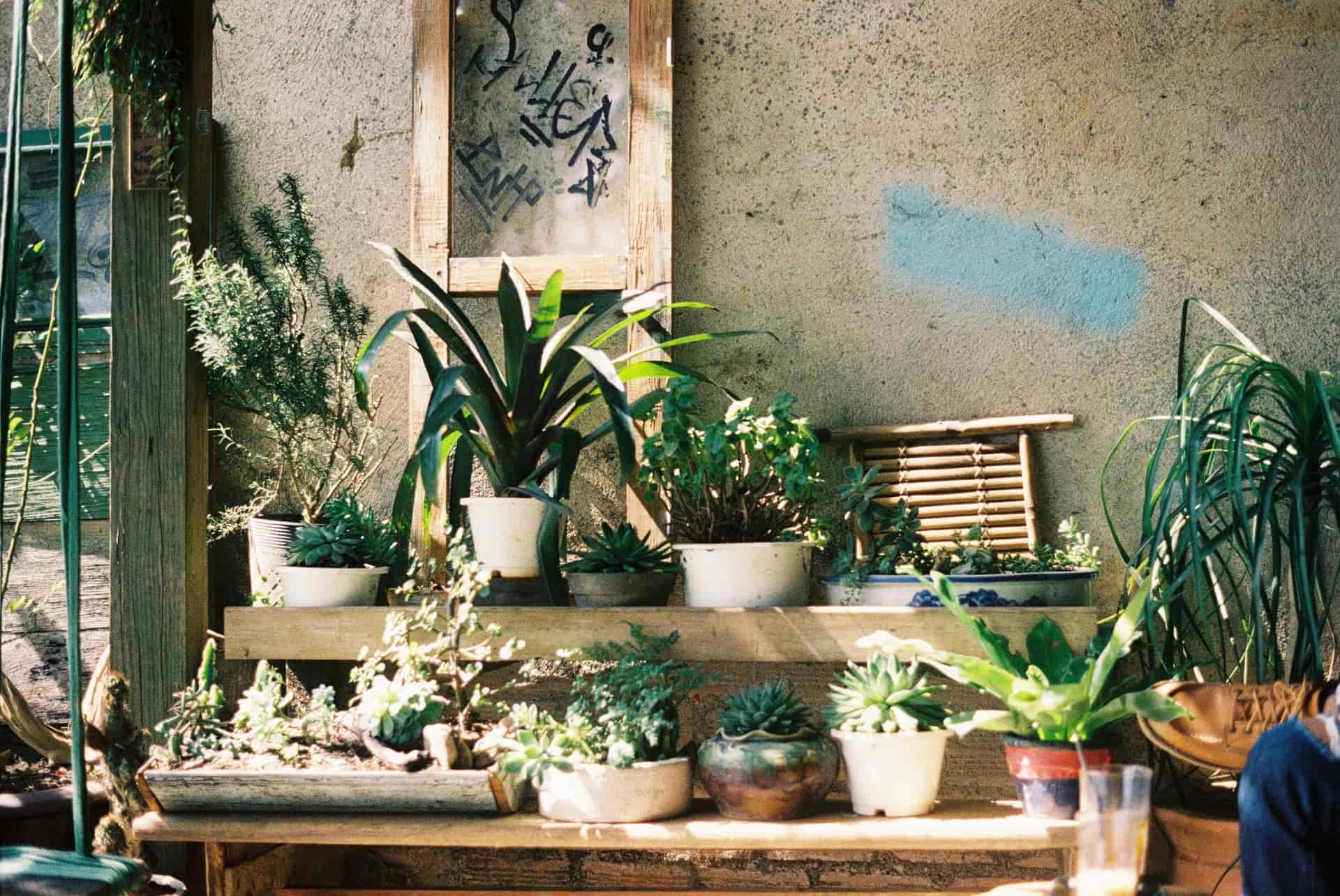
The short answer
Buy a corner frame if the space is genuinely a corner: it is the only shape that uses the triangular floor two walls create, at about three plants per square foot. Buy a flat tiered shelf for a straight wall, where a corner frame wastes a triangle of floor on either side. Shape follows the wall, not the plants.
Disclosure Pot & Prop earns a commission when you buy through the Amazon links on this page, at no extra cost to you. It does not change which products get recommended or what we say about them, and we have not been given any of them. How this site is funded.
This is a decision people make on looks and should make on geometry. A corner frame has a triangular or quarter-round footprint that fits the space where two walls meet. A flat tiered shelf has a rectangular footprint that fits along one wall. Put either one in the other's place and you waste floor — which, in an apartment, is the only thing you were trying not to do.
The numbers
| Corner frame | Flat tiered shelf | |
|---|---|---|
| Footprint shape | Triangular or quarter-round | Rectangular |
| Typical positions | 5 to 6 | 4 to 5 |
| Plants per square foot | About 3 | About 4 on a narrow frame |
| Wasted floor on a straight wall | Two triangles either side | None |
| Wasted floor in a corner | None | The corner itself stays empty |
| Stability | Two walls limit how far it can tip | Depends entirely on its own base |
| Published weight rating | None found | None found |
Where the corner frame wins
In the corner, obviously, but the less obvious win is stability. A tall narrow frame in a corner has two walls limiting how far it can go before something stops it. The same frame in the middle of a wall has nothing on either side. Neither publishes a tipping figure, so this is a structural argument rather than a measured one — but it is a real difference and it points the same way as the floor-efficiency argument.
The corner is also usually the least useful floor in the room. Filling it costs you nothing you were using, which is not true of the floor along a wall where furniture wants to go.
Where the flat tiered shelf wins
On plants per square foot, when the frame is narrow. A ring-holder shelf 16 inches wide and 11 inches deep holds five pots on about 1.2 square feet, which works out at over four plants per square foot — better than any corner frame here. It wins that comparison by being deeper into the room's usable floor rather than into its dead floor, which is a real cost the ratio does not show.
It also wins wherever the room has no free corner, which is more apartments than you would think once a bed, a sofa and a radiator have taken theirs.
The verdict
One caveat that applies to both: neither format publishes a weight rating, so both are 6-to-8-inch-pot products until proven otherwise. If your plants are larger, the flat-board and caddy options are the shortlist instead, and the weight table shows why.
Every pick, in full
We have not handled any of these. What follows is what each listing publishes, what that means once you put a watered pot on it, and who should buy something else.
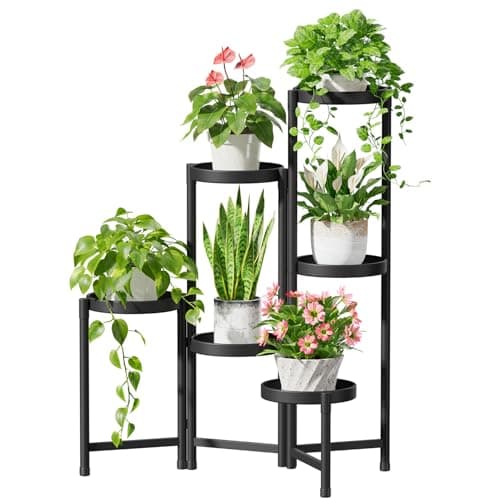
1. A tall corner with headroom above the window
iDavosic.ly 6 Tier Metal Corner Plant Stand, folding
The same frame as the five-tier with one more step, which buys a sixth position for no extra floor and puts the top plant close to ceiling height.
- What the listing publishes
- 6 staggered tiers, folding corner frame; no published weight rating
- Against a 10-inch pot
- No weight rating is published for this product, so there is nothing to check. That counts against it here rather than being treated as neutral.
Six positions on the same roughly 17 by 17 inch footprint takes the ratio to about three plants per square foot. Nothing else in this roundup gets there.
The sixth tier is above most windows, which means the top plant gets the least light in a north-facing apartment. Plan that position for something tolerant rather than the plant you care about.
Also unrated. The same caution applies as on the five-tier: fine for 6 inch pots, a guess at 10 inch.
What is good
- Six plant positions on about two square feet
- Folds apartment for a move
- Puts a plant at eye level and above without any wall fixing
What is not
- No published weight rating
- The top tier is high enough that watering it means a step
- Top position gets the worst light in a single-window room
Skip it if you have low ceilings or a window that stops at five feet. The sixth tier then holds a plant in the dark, and the five-tier costs less floor to reach.
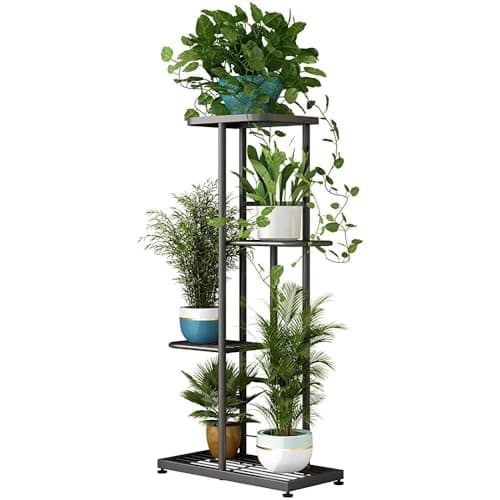
2. A narrow gap beside a sofa or radiator
LINZINAR 4 Tier Metal Flower Pot Display Shelf, 5 pots
Ring holders rather than apartment shelves, so the pot drops through and sits lower. On a stand this narrow that is a real gain in stability.
#ad · Price as of October 18, 2026. How we are funded
- What the listing publishes
- 4 tiers holding 5 pots; ring-style holders sized to the pot rim
- Against a 10-inch pot
- No weight rating is published for this product, so there is nothing to check. That counts against it here rather than being treated as neutral.
A ring holder captures the pot instead of balancing it. On a narrow frame that is the difference between a knock tipping a plant and a knock moving the stand.
The trade is that the ring diameter is the pot size. A pot narrower than the ring falls through; a pot wider sits on the rim and defeats the point. Measure before buying.
Roughly 16 by 11 inches is about 1.2 square feet for five positions, a little over four plants per square foot. That is the tightest ratio here, at the cost of only fitting one pot size.
What is good
- Ring holders drop the pot's center of gravity into the frame
- Narrow enough for the gap most apartments have and cannot use
- Five positions on a little over one square foot
What is not
- No published weight rating
- The rings only fit a narrow band of pot diameters
- Nowhere for a saucer, so watering means lifting each pot out
Skip it if your pots are a mix of sizes. Ring stands are the least forgiving format in this category, and a collection that grows by acquisition will not fit them.
Questions people actually ask
Which holds more plants, a corner stand or a tiered shelf?
Are corner plant stands more stable?
Can I use a corner plant stand against a flat wall?
Sources
- Cornell University, Greenhouse Management: bulk density of greenhouse media components
- Biology Insights: how much a cubic foot of potting soil weighs, dry and saturated
Product specifications are quoted from each seller's own listing and are the seller's claim, not a measurement of ours.