Hanging
The Best Ceiling Hooks for Hanging Plants
The hook's rating is not the ceiling's rating. Here is the difference, what a watered pot really weighs, and the hooks that survive the comparison.
By Scooter M., enthusiast · Published
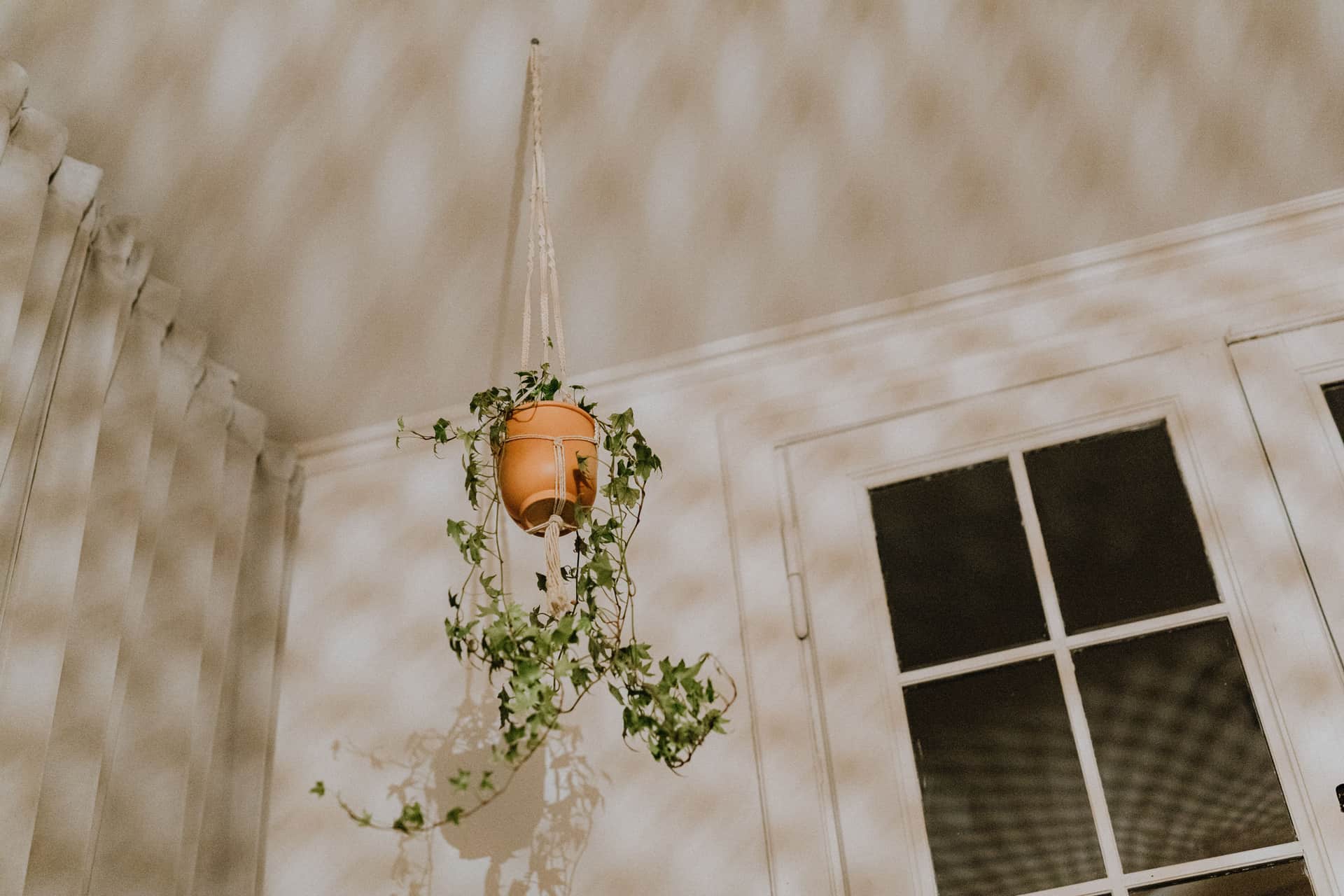
The short answer
Into a wood joist, almost any steel ceiling hook is strong enough: a 10-inch hanging pot needs 23 lb at this site's 1.5x margin and these hooks publish 30 to 40 lb. Into bare plasterboard the hook stops being the question and the anchor becomes it — use a spring toggle, never a plastic plug, and take the listing's hollow-ceiling figure rather than its headline one. Of the hooks here only the 2.4 in swag hook publishes a drywall rating (25 lb) that clears a 10-inch pot. If you may not drill at all, use adhesive and read the renter load guide instead.
Disclosure Pot & Prop earns a commission when you buy through the Amazon links on this page, at no extra cost to you. It does not change which products get recommended or what we say about them, and we have not been given any of them. How this site is funded.
This site has covered hanging plants from the renter's side for a while: adhesive hooks, tension rods, over-door hangers, nothing that leaves a mark. This page is the other case. You own the place, or your lease is relaxed, and you are willing to put a drill into the ceiling. That changes the numbers by a factor of three or four and it changes which question matters.
With adhesive, the interesting variable is the surface — paint age, pad area, how the strip peels. With a screw hook, the surface is irrelevant and the interesting variable is what is behind it. A ceiling is either solid material you can bite into, or half an inch of plasterboard with air behind it, and those two ceilings have almost nothing in common even though they look identical from underneath.
The number that has to be cleared
Before any hook is worth looking at, you need the load. A hanging pot's weight is not published anywhere — the plant does not come with one, and the pot listing gives you a diameter. But it is computable from the mix volume and the sourced densities this site already publishes, and the answer is a lot heavier than people expect once the pot has been watered.
| Pot size | Mix volume | Dry | Watered | Rating needed |
|---|---|---|---|---|
| 4 in | 0.017 cu ft | 0.4 lb | 0.9 lb | 2 lb |
| 5 in | 0.034 cu ft | 0.7 lb | 1.8 lb | 3 lb |
| 6 in | 0.058 cu ft | 1.3 lb | 3.2 lb | 5 lb |
| 8 in | 0.137 cu ft | 3 lb | 7.5 lb | 12 lb |
| 10 in | 0.268 cu ft | 5.9 lb | 14.7 lb | 23 lb |
| 12 in | 0.463 cu ft | 10.2 lb | 25.5 lb | 39 lb |
| 14 in | 0.735 cu ft | 16.2 lb | 40.5 lb | 61 lb |
| 16 in | 1.098 cu ft | 24.2 lb | 60.4 lb | 91 lb |
That last column is the mix weight multiplied by 1.5. The margin is not decoration: it covers the pot itself, the plant, and the fact that a hanging pot is a dynamic load rather than a static one — it swings when you water it, when a door opens, when a cat decides to investigate. The full model is on the pot weight guide.
The practical upshot is a short list. A 6-inch hanging pot needs 5 lb and everything on the market clears it. An 8-inch pot needs 12 lb. A 10-inch pot — which is the size most hanging planters sold as "large" actually are — needs 23 lb, and that is the threshold that starts eliminating products. A 12-inch pot needs 39 lb and eliminates almost all of them.
Why the published rating is not the answer
Here is the thing almost no listing makes obvious. When a hook says 40 lb, that is the strength of the piece of steel. It tells you the hook will not straighten out. It tells you nothing whatsoever about whether the ceiling will keep hold of it, and in a plasterboard ceiling the ceiling is always the weaker half.
| Ceiling | What holds the weight | Realistic capacity |
|---|---|---|
| Wood joist | Screw threads in solid timber | The hook's own published rating |
| Concrete | Hardened screw in a drilled hole | The hook's own published rating |
| Drywall, spring toggle | Toggle wings spread across the board | The listing's hollow figure, typically 20-25 lb |
| Drywall, plastic plug | The crumbly core of the plasterboard | Rarely published, and the reason hooks fall |
| Drywall, screw alone | Nothing | Do not do this |
This is why two of the three new hooks on this page publish two ratings and why the one that does not is ranked third. A listing that gives you 35 lb on wood and 20 lb on drywall is telling you something you can act on. A listing that gives you one number is telling you about the steel.
Find the joist. It solves everything.
If you take one thing from this page: a hook in a joist is a different product from the same hook in plasterboard. It roughly doubles the capacity, it removes the anchor as a failure point, and it costs nothing but ten minutes with a stud finder or a knuckle.
- Sweep for the joist with a stud finder, or tap along the ceiling and listen for the change from hollow to solid. Ceiling joists usually run at a regular spacing across the shorter span of the room.
- Confirm with a fine pilot hole before you commit. A 1/16 in bit tells you whether you are into timber, and the hole disappears under a dab of filler if you are not.
- Drill the pilot to the screw's core diameter, not to its thread diameter, so the threads have material to bite.
- Drive the hook until the shoulder sits tight against the ceiling. A hook you can rock is a hook that will work its hole larger.
- If there is no joist where you want the plant, use a spring toggle and take the listing's hollow rating — or move the plant a few inches to where the joist is.
The last one is the choice most people refuse to make and most should. Nobody looking up at a hanging pothos can tell whether it is four inches left of where it was originally planned. Everybody notices when it comes down.
The buckle, and why it is worth a dollar
A plain hook is an open curve. Whatever hangs on it can come off it — not through failure, just through motion. A cord walks up the throat as the pot swings; a macrame hanger's loop gets nudged when you dust; a pot that spins over months loosens its own position. Two hooks here close that gap with a sprung gate, and it is the cheapest safety feature in the category.
It matters most on the things that move: a pot near a door, near a heating vent, near an open window, or anywhere a cat can reach. It matters least on a macrame hanger with a long loop hung in a still corner. The macrame page covers what the other end of the cord should look like.
Quick picks
Ranked, with the published figure each pick turns on. Tap a row for the full reasoning further down this page.
| # | Product | Best for | Price |
|---|---|---|---|
| 1 | 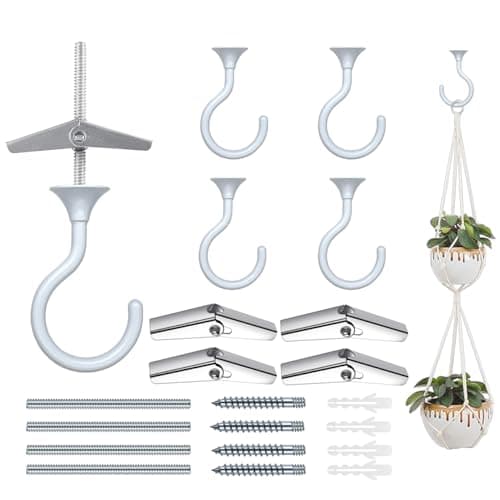 Evsteluo Ceiling Swag Hooks, 2.4 in, 4 pack, whiteThe best drywall number in this set by a clear margin, in the shape people actually mean when they search for a swag hook. | Hanging four plants at once in a color that disappears into the ceiling | |
| 2 | 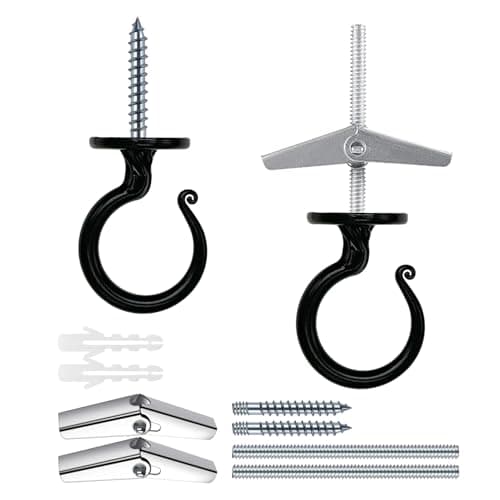 Evsteluo Heavy Duty Ceiling Hook Set with Anchors, 2 packThe only hook here that ships the hardware for all three ceilings and publishes a separate rating for each, which is the honest way to sell into a ceiling nobody can see inside. | A ceiling where you do not know what is behind the plasterboard | |
| 3 | 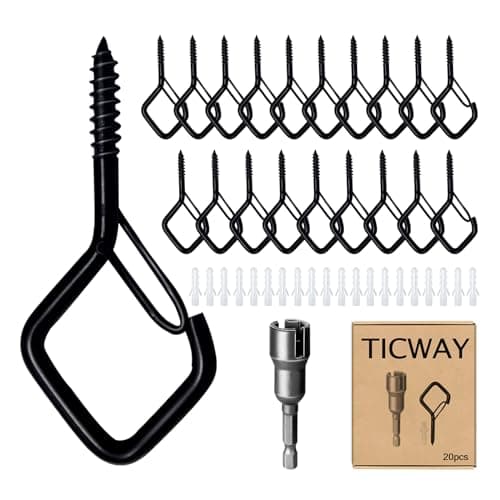 Ticway Ceiling Screw Hooks with Safety Buckle, 20 packForty pounds and a closing buckle for the price of a coffee, provided you are driving them into wood — the supplied plastic anchors are a different proposition entirely. | Screwing straight into wood joists, in quantity | |
| 4 | 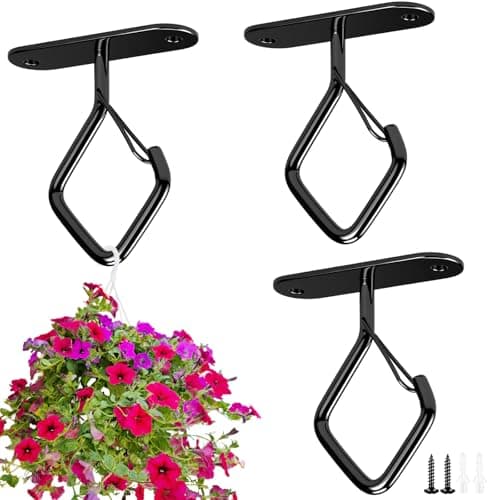 Emiluil Ceiling Plant Hooks with Safety Buckle, 3 packA screwed fixing with a gate that stops the hanger jumping off the hook, which is a failure mode adhesive hooks do not have and open hooks do. | When you are allowed to put a screw in | |
| 5 | 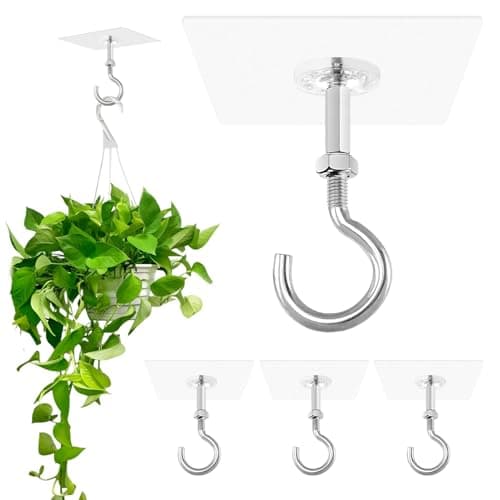 NINEFOX Adhesive Ceiling Hooks, 30 lb, 4 packThe highest published no-drill ceiling rating in this roundup, and the only one here that clears a 10-inch pot at this site's margin. | The largest hanging pot a renter can hang |
Links to Amazon are affiliate links. Prices and availability are Amazon's and change without notice.
How we ranked these
On the published hollow-ceiling rating first, because plasterboard is what most people have and it is where the numbers get tight; then on whether the listing publishes a substrate breakdown at all; then on the buckle. The white swag hook leads because 25 lb on drywall is the only figure in this set that clears a 10-inch pot without finding a joist, and because a swag hook is the shape most people picture. The anchor kit is second on hardware honesty — three ceilings, three fixings, two published numbers — and is marked down because 20 lb on a toggle is short of that same 10-inch pot. The Ticway pack is third: the strongest hook here at 40 lb and the weakest anchors, which is fine into a joist and not fine otherwise. The Emiluil hooks follow as the buckled screw-in option, ranked below products that publish a load figure because it publishes none. The adhesive 30 lb hooks are last and are here as the escape hatch, for the reader who has got this far and remembered they are renting.
| Your situation | Hook | Why |
|---|---|---|
| Joist found, 10-12 in pot | 20 pack with buckle | 40 lb into timber, and the buckle closes |
| Plasterboard, 10 in pot | 2.4 in swag hook, 4 pack | 25 lb on drywall is the only figure that clears 23 lb |
| Unknown ceiling, one plant | Anchor set | Ships the fixing for whatever you find |
| Plasterboard, 6-8 in pot | Any of them on a toggle | 5 to 12 lb required; every hollow rating here clears it |
| You may not drill | Adhesive 30 lb hooks | No hole, and the renter guide has the caveats |
Hanging it so it stays up
- Hang it dry, then water it. Water the pot over a sink, let it drain, and hang it once it has stopped dripping. Lifting a fully saturated 10-inch pot overhead is the heaviest that pot will ever be and the worst moment to discover the hook is loose.
- Use two hooks for anything over 10 inches. Redundancy is a dollar. A single point of failure over a hard floor is not worth saving it.
- Never hang a plant over a bed, a sofa, a cot or a desk, whatever the arithmetic says. The margin on this site is 1.5x, not infinity, and the correct consequence of being wrong is a mess rather than an injury.
- Check it after a week and again after a month. A hook that has turned even slightly is telling you about the hole, not about the hook.
- Watch the ceiling, not just the hook. A ring of hairline cracking around a fixing in plasterboard means the board is yielding and the load needs to move to a joist.
What we deliberately do not recommend
A wood screw driven straight into plasterboard with no anchor at all, which holds a coat and will not hold a plant. Plastic expansion plugs in a ceiling, where the load is in tension and the plug pulls through the board's soft core. Taking a wall hook's rating as a ceiling rating. Hanging a 12-inch pot from anything that is not in a joist. Hooks with no published load figure of any kind, which is why the one on this list that has none is ranked where it is. And drilling into a ceiling you share with a neighbor below without knowing what is in it — a plant is not worth a pipe.
Every pick, in full
We have not handled any of these. What follows is what each listing publishes, what that means once you put a watered pot on it, and who should buy something else.
1. Hanging four plants at once in a color that disappears into the ceiling
Evsteluo Ceiling Swag Hooks, 2.4 in, 4 pack, white
The best drywall number in this set by a clear margin, in the shape people actually mean when they search for a swag hook.
#ad · Price as of September 21, 2026. How we are funded
- What the listing publishes
- Published 30 lb per hook on solid wood or concrete and 25 lb on drywall or plaster; 2.4 in swag hook in zinc alloy with a white lacquered finish; pointed screws for solid material and toggle bolts for hollow ceilings included
- Against a 10-inch pot
- Rated 25 lb against 14.7 lb of saturated mix in a 10-inch pot — 1.7x, clear of the 1.5x margin this site requires.
Twenty-five pounds on drywall or plaster is the highest hollow-ceiling figure of anything here, and it is the number that decides most purchases. A 10-inch hanging pot needs 23 lb at this site's 1.5x margin, so this is the only hook in the set that clears it on plasterboard without finding a joist first.
A swag hook is the large, exposed, decorative hook a chain or cord loops over, as opposed to a small utility screw hook. That is what the 2.4-inch size is for, and it is why this listing answers a search that most ceiling hardware does not.
White lacquer over zinc is a finish decision with a practical consequence: on a white ceiling the hardware reads as part of the fitting rather than as an object, which is most of the reason people accept hanging plants in a living room at all.
What is good
- Highest published drywall rating in this set at 25 lb
- Four hooks, so a row of plants is one purchase
- White finish disappears against a painted ceiling
What is not
- No safety buckle, so a cord can lift off the hook
- White lacquer chips on the threads during installation
- The 2.4 in hook is deliberately conspicuous, which not everyone wants
Skip it if you are hanging something you will take down and rehang constantly. An open swag hook is a hook you can knock a pot off; the buckled hooks here close over the cord.
2. A ceiling where you do not know what is behind the plasterboard
Evsteluo Heavy Duty Ceiling Hook Set with Anchors, 2 pack
The only hook here that ships the hardware for all three ceilings and publishes a separate rating for each, which is the honest way to sell into a ceiling nobody can see inside.
#ad · Price as of September 21, 2026. How we are funded
- What the listing publishes
- Published 35 lb per hook on solid wood or concrete and 20 lb on drywall installed with the supplied toggle; zinc alloy, 2.1 in hook; kit ships pointed screws for wood, hardened screws for concrete and a long bolt with spring toggle wings for hollow plasterboard
- Against a 10-inch pot
- Rated 20 lb against 14.7 lb of saturated mix in a 10-inch pot. That is only 1.4x, inside the rating but short of the 1.5x margin once you add the pot and the plant.
Two numbers instead of one is the whole reason this leads. Most hook listings print a single figure and leave you to assume it applies to your ceiling; this one states 35 lb into solid wood or concrete and 20 lb into drywall on a toggle. That is a roughly 40 percent derating for the hollow case, and it is real on every hook ever sold — this listing is simply one of the few that admits it.
Note what the drywall figure does not cover. A 10-inch hanging pot needs 23 lb at this site's margin, so 20 lb on a toggle is short of it; into a joist at 35 lb the same hook clears comfortably. That is the difference a stud finder makes, visible inside a single product.
The spring toggle is the mechanism that matters. A toggle opens inside the cavity and spreads the pull across a wide patch of board, where a plastic expansion plug relies on the crumbly core of the plasterboard itself. In a ceiling, where the load hangs in pure tension, that distinction decides whether the hook holds.
What is good
- Publishes a separate rating for solid and for hollow ceilings
- Ships spring toggles, not just plastic plugs
- One kit covers wood joists, concrete and bare drywall
What is not
- Two hooks per pack, so a row of plants means several packs
- The 20 lb drywall figure is short of a 10 in pot at this site's margin
- Zinc alloy at a 2.1 in hook is a visible piece of hardware, not a discreet one
Skip it if you cannot drill at all. Nothing in this kit is reversible, and the adhesive ceiling hooks on this site exist for exactly that case.
3. Screwing straight into wood joists, in quantity
Ticway Ceiling Screw Hooks with Safety Buckle, 20 pack
Forty pounds and a closing buckle for the price of a coffee, provided you are driving them into wood — the supplied plastic anchors are a different proposition entirely.
#ad · Price as of September 21, 2026. How we are funded
- What the listing publishes
- Published 40 lb steel hook with a release safety buckle; 20 hooks, 20 plastic expansion tubes and a wing nut driver; listing states they hammer or screw into wood and need a pre-drilled hole in hard surfaces
- Against a 10-inch pot
- Rated 40 lb against 14.7 lb of saturated mix in a 10-inch pot — 2.7x, clear of the 1.5x margin this site requires.
The 40 lb figure is the hook's own strength, and the hook's own strength is almost never the limiting factor. Drive one into a joist and 40 lb is the real number, which clears a 12-inch hanging pot at this site's margin. Drive one into a plastic expansion tube in plasterboard and the anchor governs instead, and the listing publishes no figure for that case.
The safety buckle is the feature worth the purchase. It is a sprung gate that closes across the throat of the hook, so a cord or chain cannot lift off if the pot swings, gets knocked, or is caught by a door draft. Hanging hardware in a home with cats or children should have one.
Twenty hooks and a driver for under ten dollars is the kind of quantity that changes behavior. You stop rationing hooks and start putting two on anything heavy, which is the correct instinct.
What is good
- 40 lb published hook strength, the highest here
- Safety buckle closes the throat so a cord cannot lift off
- Twenty hooks and a driver, so redundancy costs nothing
What is not
- Supplied anchors are plastic expansion tubes, not toggles
- No published rating for the drywall case at all
- Bare steel with paint, so the threads mark on installation
Skip it if your ceiling is plasterboard and you cannot find a joist. The hook is strong and the anchor it ships with is not, and in a ceiling the anchor is what fails.
4. When you are allowed to put a screw in
Emiluil Ceiling Plant Hooks with Safety Buckle, 3 pack
A screwed fixing with a gate that stops the hanger jumping off the hook, which is a failure mode adhesive hooks do not have and open hooks do.
#ad · Price as of September 21, 2026. How we are funded
- What the listing publishes
- Screw-in metal ceiling hook with a closing safety buckle; no published load figure
- Against a 10-inch pot
- No weight rating is published for this product, so there is nothing to check. That counts against it here rather than being treated as neutral.
A screw into a joist is stronger than every adhesive hook on this page by an order of magnitude, and the limit stops being the fixing and becomes the plasterboard, the anchor, or the hanger.
The safety buckle addresses the other failure: a macrame hanger or a chain lifting off an open hook when the plant is nudged. It is a small feature and it is the difference between a swing and a fall.
No load figure is published, which for a mechanical fixing is less alarming than for an adhesive one, since the strength lives in what it is screwed into rather than in the hook. It still means there is no number to check.
What is good
- A mechanical fixing is far stronger than any adhesive here
- The safety buckle stops the hanger lifting off
- Once in a joist it is permanent in the good sense
What is not
- It is a hole in the ceiling, which most leases have an opinion about
- No published load rating
- Needs a joist or a proper anchor; into bare plasterboard it is worse than adhesive
Skip it if you rent. This is the one hanging product on the site that is not renter-safe, and the 30 lb adhesive hook is the substitute.
5. The largest hanging pot a renter can hang
NINEFOX Adhesive Ceiling Hooks, 30 lb, 4 pack
The highest published no-drill ceiling rating in this roundup, and the only one here that clears a 10-inch pot at this site's margin.
#ad · Price as of September 21, 2026. How we are funded
- What the listing publishes
- Published 30 lb rating per hook; adhesive mount, no drilling
- Against a 10-inch pot
- Rated 30 lb against 14.7 lb of saturated mix in a 10-inch pot — 2x, clear of the 1.5x margin this site requires.
A 10-inch pot of saturated mix computes to 14.7 lb. At 30 lb published this is 2.0x, past the 1.5x margin this site requires before it calls a pairing safe.
Read the rating as a ceiling rating, because that is what it claims. Adhesive hooks sold for walls are rated in shear, where the load hangs down the face of the adhesive. A ceiling load pulls straight off it, which is the harder direction, and a wall-rated hook on a ceiling is the commonest mistake in this category.
Surface preparation is the whole game with adhesive. Textured or freshly painted ceilings do not hold, and no rating on any listing is a claim about a surface it was not stuck to.
What is good
- 30 lb published, the highest no-drill ceiling figure here
- Clears a 10-inch pot at the 1.5x margin
- Four hooks, so three plants and one you will get wrong
What is not
- Adhesive needs a smooth, clean, cured surface, so a textured ceiling is out
- Removal takes paint with it more often than the packaging suggests
- The rating assumes an ideal application, and yours will not be
Skip it if your ceiling is textured, artexed or freshly painted. No adhesive rating survives that surface, and a tension pole is the renter-safe alternative.
Questions people actually ask
How much weight can a ceiling hook hold for a hanging plant?
What size ceiling hook do I need for a 10 inch hanging pot?
Do I need to hang a plant from a ceiling joist?
What is a swag hook?
Can I use a drywall anchor for a hanging plant?
Is a ceiling hook stronger than an adhesive hook?
Sources
- Cornell University, Greenhouse Management: bulk density of greenhouse media components
- Biology Insights: how much a cubic foot of potting soil weighs, dry and saturated
- Clemson HGIC: Indoor Plants — cleaning, fertilizing, containers and light requirements
- Michigan State University Extension: Smart Gardening — growing houseplants indoors
Product specifications are quoted from each seller's own listing and are the seller's claim, not a measurement of ours.